

Hydroponics or soil: which should you choose for growing indoors?
Growth, water, cost, upkeep, failures and plant choice: an honest comparison between soil-free growing and pot-grown crops, and the right choice for your profile.
In this guide
Choose hydroponics if you want salad leaves and herbs that grow quickly in a kitchen, without compost, and you're happy to monitor a nutrient solution and often depend on electricity. Choose soil if you want to start on a small budget, a way of growing that forgives the odd missed watering, and the widest choice of plants, particularly for seedlings destined for the garden. Both work indoors, and neither replaces light. Here are the differences, point by point.
What really changes between the two
In soil, the pot holds a reserve. Compost stores water and nutrients between waterings, and air between its particles. If you forget to water, the plant draws on this reserve; if you overdo the fertiliser, the compost cushions the mistake to some extent.
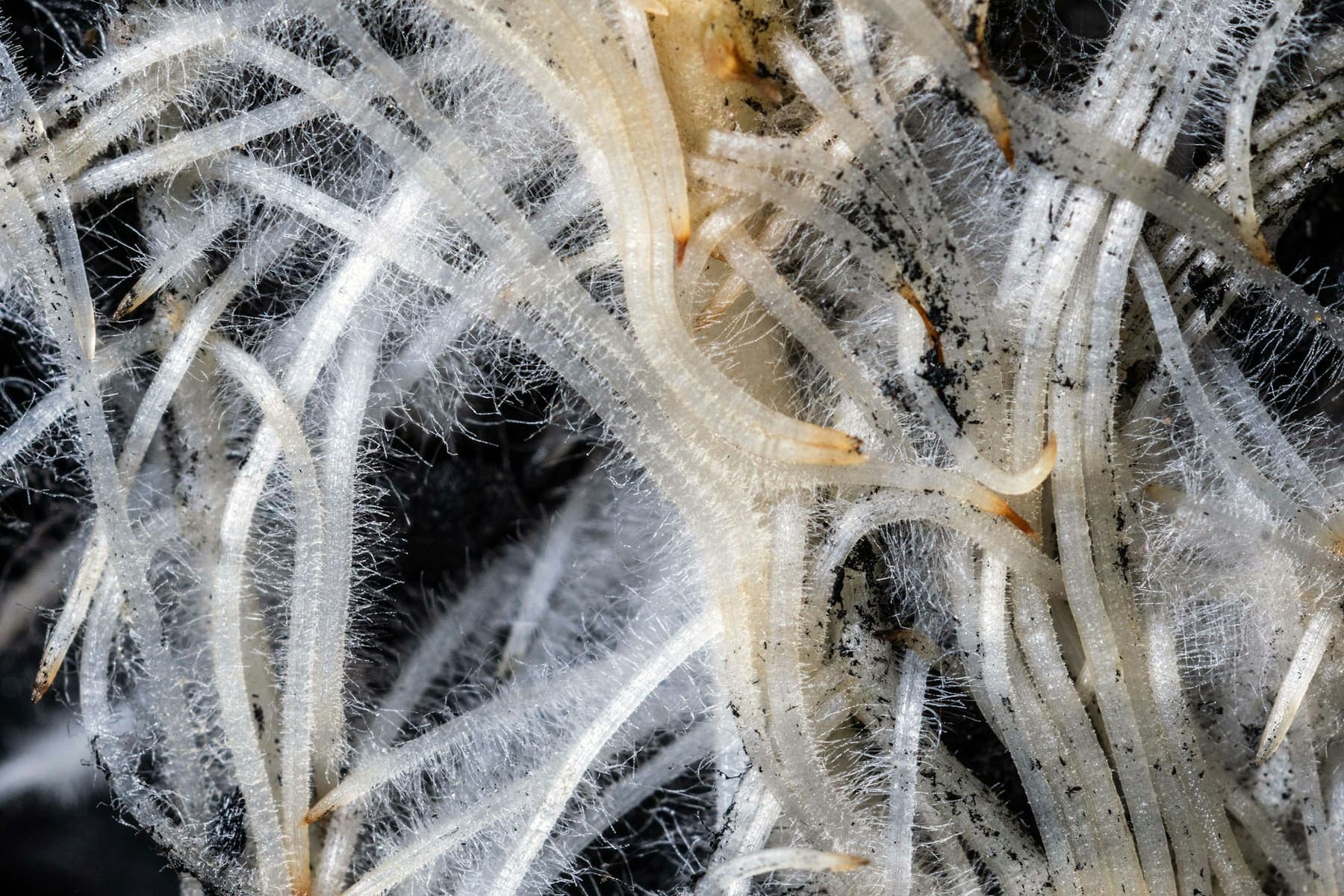
In hydroponics, that reserve disappears. The plant receives mineral salts dissolved in water, and its roots depend entirely on the system to drink, feed and breathe. That's what makes soil-free growing fast and precise, but also less forgiving: a setting that's off shows up quickly. For the details of how it works, read how hydroponics works.
Growth and harvest
According to the University of Illinois, plants grown hydroponically often reach maturity faster and yield more than in soil. The roots find water and nutrients without effort, all the time.
That "often" matters: the advantage only shows if the other conditions follow. A plant short of light will grow poorly either way. In soil, growth is generally slower, but still entirely satisfactory for well-lit potted herbs.
Water use
Hydroponics can use up to 90% less water than growing in soil, again according to the University of Illinois. In most systems, water that isn't absorbed returns to the reservoir instead of draining out of the bottom of the pot. The RHS also points out that a recirculating solution costs less and pollutes less than one that's lost.
In soil, some of the watering runs off through drainage and evaporation. Across a few indoor pots, the difference stays modest on the bill, but it adds up if you grow a lot.
Cost
We won't give prices, as they vary too much by equipment. The principle, though, is clear: a hydroponic system costs more to set up than a pot, a bag of compost and a packet of seeds.
- In soil: pots, compost, seeds, possibly a fertiliser and a lamp. No running cost aside from lighting.
- In hydroponics: the system, a fertiliser designed for hydroponics, often a pH tester, sometimes a pump, plus the electricity for the pump and the lamp.
There's one exception: passive methods, wick-based or with no circulation, work with no pump or electricity, just a simple opaque tub. They let you try hydroponics for almost nothing.
Day-to-day maintenance
In hydroponics, the routine is short but regular: monitor the water level, the solution's concentration and pH, top up with clean water, renew the solution from time to time and clean the system between crops. The reservoir needs to stay out of the light to avoid algae.
In soil, the key is watering at the right time: not too much, since waterlogged roots lack air, and not too little. During growth, you apply a suitable fertiliser, and repot once the roots have filled the pot. A liquid organic fertiliser simply gets added to the watering can.
Risks and failures
- Power cuts: a prolonged outage can kill plants in hydroponics. In a nutrient film system with no medium, if the pump stops, the plants decline very fast. Soil, on the other hand, doesn't depend on anything.
- Soil-borne diseases and pests: these cause fewer problems in hydroponics, since there's no soil. Pests that attack the foliage, however, don't discriminate either way.
- Dosing errors: in hydroponics, an overdose or a poorly adjusted pH quickly affects the whole crop. In soil, the effects are slower and easier to correct.
- Absences: a reservoir keeps watering going for a few days, but a failed pump gives no warning. A soil pot dries out, but it forgives a short lapse better.
Choosing plants
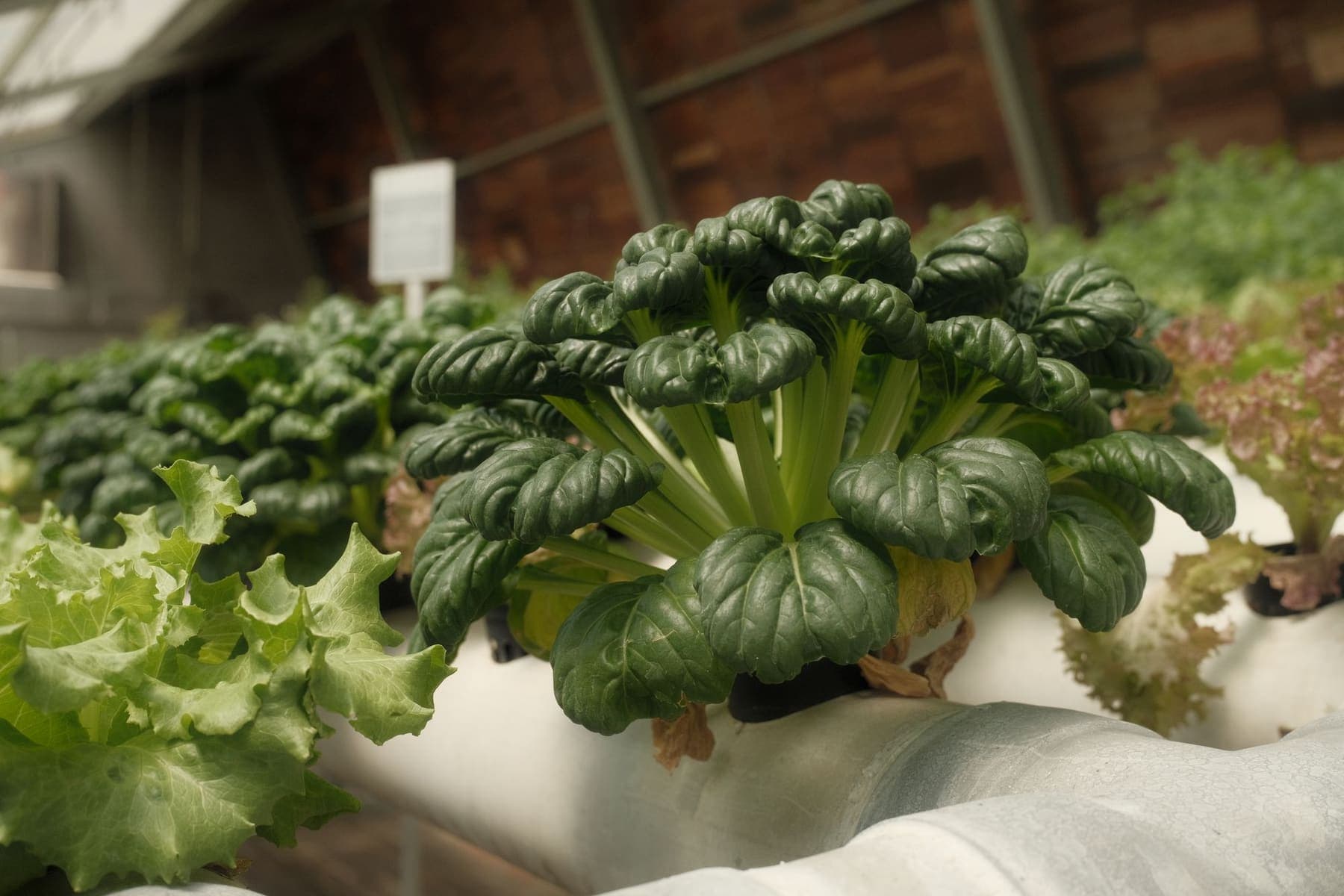
In theory, almost any plant can grow without soil: tomatoes, peppers and greenhouse cucumbers are even common hydroponic crops among professional growers. At home, salad leaves and herbs remain the best crops to start with, as they grow quickly and take up little space. Tomatoes work, but produce more slowly and need much more space. Our guide to easy plants for hydroponics sorts through the options.
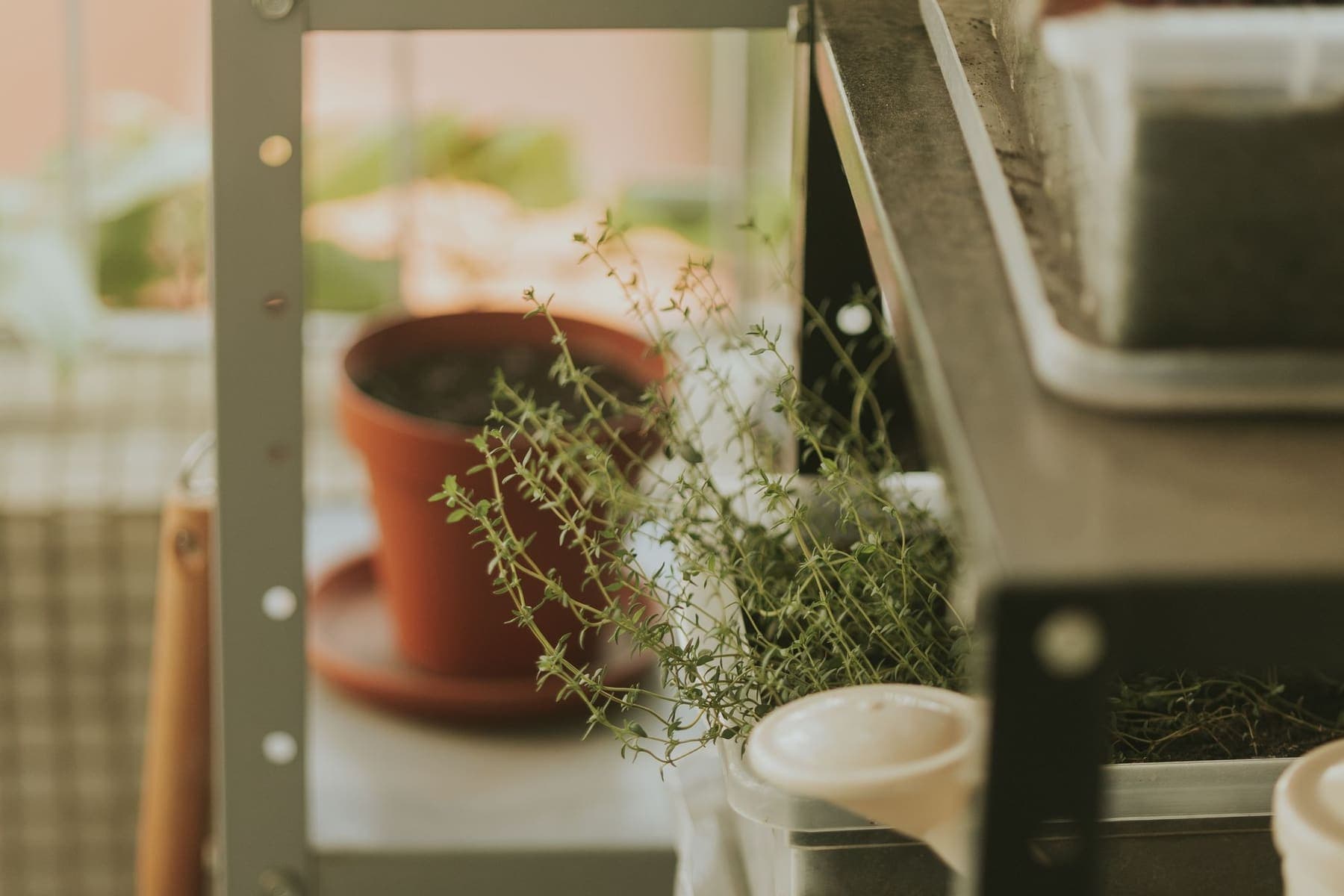
Soil remains the natural choice for vegetable seedlings destined for the balcony or garden. Tomatoes, peppers and aubergines start in modules of compost, then get planted outside after the last frosts: our indoor sowing calendar gives the dates.
Four myths
"In hydroponics, plants don't need light." False. The growing method changes how the roots feed, not the leaves' need for light. Indoors, supplementary lighting is often needed either way.
"Hydroponics is chemical." The nutrient solution supplies, dissolved in water, the same elements a plant also draws from soil: nitrogen, phosphorus, potassium, magnesium, sulphur and trace elements. The difference lies in the form of the supply, not the nature of these elements.
"Growing in soil is automatically organic." It all depends on what you apply. Some liquid organic fertilisers, such as Biobizz's Bio·Grow, carry certification showing they can be used in organic farming; other pot fertilisers are mineral-based.
"With a hydroponic system, you can't get anything wrong." The reservoir prevents missed waterings, but a poorly adjusted pH, an overly concentrated solution or a stopped pump takes its toll fast. Soil-free growing is more precise, not more forgiving.
The comparison at a glance
- Speed: advantage to hydroponics, if the light keeps up.
- Water: advantage to hydroponics.
- Starting cost: advantage to soil, except for passive methods.
- Tolerance to mistakes and failures: advantage to soil.
- Cleanliness in the kitchen: advantage to hydroponics, with no compost to handle.
- Choice of plants: advantage to soil.
- Soil-borne diseases: advantage to hydroponics.
Which profile suits which?
Hydroponics will suit you if you live in a flat, want herbs and salad leaves on hand all year round, enjoy precise routines and aren't afraid to measure a pH.
Soil will suit you if you're starting out on a small budget, are raising seedlings for a balcony or garden, grow a wide variety of plants, or prefer a method that forgives the odd lapse.
And if you're torn, start with both on a small scale: a few herbs in a pot on one side, a jar run as a non-circulating system on the other. After a month, you'll know which one suits you.
The gear
For soil, a peat-free seed compost and a liquid organic fertiliser are enough to get started. For hydroponics, seedling plugs are the starting point for every system.
Compare the two approaches in our hydroponics and pots and growing media sections.
Sources
- Growing without soil: getting started with hydroponics at home — University of Illinois Extension
- Hydroponics — Royal Horticultural Society
- A Suspended Net-Pot, Non-Circulating Hydroponic Method for Commercial Production of Leafy, Romaine, and Semi-Head Lettuce — University of Hawaiʻi, CTAHR
- How to sow seeds indoors — Royal Horticultural Society
- Bio·Grow — Biobizz
Frequently asked questions
Can I use an organic compost fertiliser in hydroponics?
Check what the manufacturer says first. An organic fertiliser designed for soil and growing-media mixes isn't necessarily suited to a hydroponic reservoir: for a soil-free system, choose a fertiliser explicitly formulated for hydroponics.
Do I need a lamp either way?
Often, yes. Indoors, and especially in winter, light from a window isn't always enough, whether the plant grows in soil or in water. The growing method makes no difference to this need.
Do hydroponic plants get fewer pests?
They escape the diseases and pests that live in soil. Insects that attack the foliage, however, can settle in either way: check the underside of the leaves regularly.
Hydroponics or soil: which is more cost-effective?
There's no general answer. Hydroponics costs more upfront but often produces faster; soil costs little but grows more slowly. For a few herbs, soil is enough; for regular production, hydroponics makes better sense.