

Which plants to grow hydroponically? The easiest for indoors
Lettuce, pak choi, basil, coriander or watercress: the plants that do best in indoor hydroponics, those that need more space, and those to leave aside when starting out.
In this guide
To start out in hydroponics, choose leafy plants: lettuce, pak choi, spinach or kale, and herbs such as basil or coriander. They grow quickly, stay compact, and can be harvested without waiting for flowers or fruit. Tomatoes, peppers or strawberries can also grow without soil, but they need more space, more light and more time: save them for a second project. Here's how to recognise an easy plant, and which ones to set up first.
What makes a plant easy in hydroponics?
Four criteria make the difference in a small indoor system:
- Fast growth. A plant harvested within a few weeks leaves little time for problems to take hold, and you learn quickly from your settings.
- A small footprint. Growing spots sit close together, and the lamp is often fixed at a low height. A plant that stays compact fits in well.
- A leaf harvest. You eat what the plant produces first, without depending on flowering or pollination.
- Modest water needs. Some simple systems, such as the non-circulating method developed at the University of Hawaiʻi, are designed for crops that drink little over their whole cycle.
The University of Illinois sums up these criteria: leafy vegetables and herbs are the best plants to start with, because they grow quickly and take up little space.
Lettuces and leafy vegetables
Lettuces
This is the hydroponic crop par excellence. Cut-and-come-again lettuce, romaine and soft-leaved butterhead lettuce have all been grown successfully in University of Hawaiʻi trials, even without a pump. For a staggered harvest, pick the outer leaves as you go rather than the whole lettuce. Lettuces prefer cool conditions: Hawaiʻi researchers note they grow best between around 16 and 21 °C.
Pak choi and Asian greens
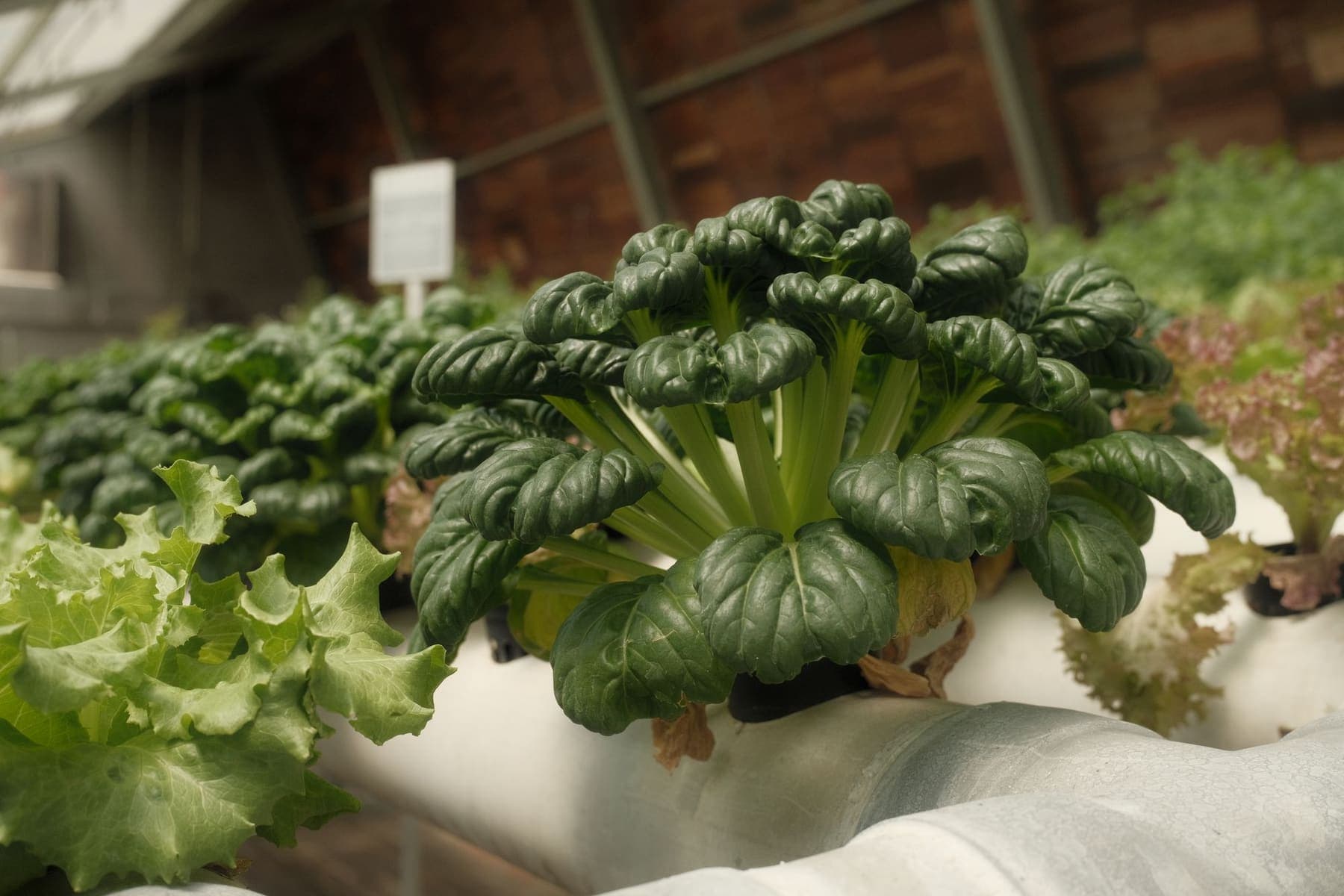
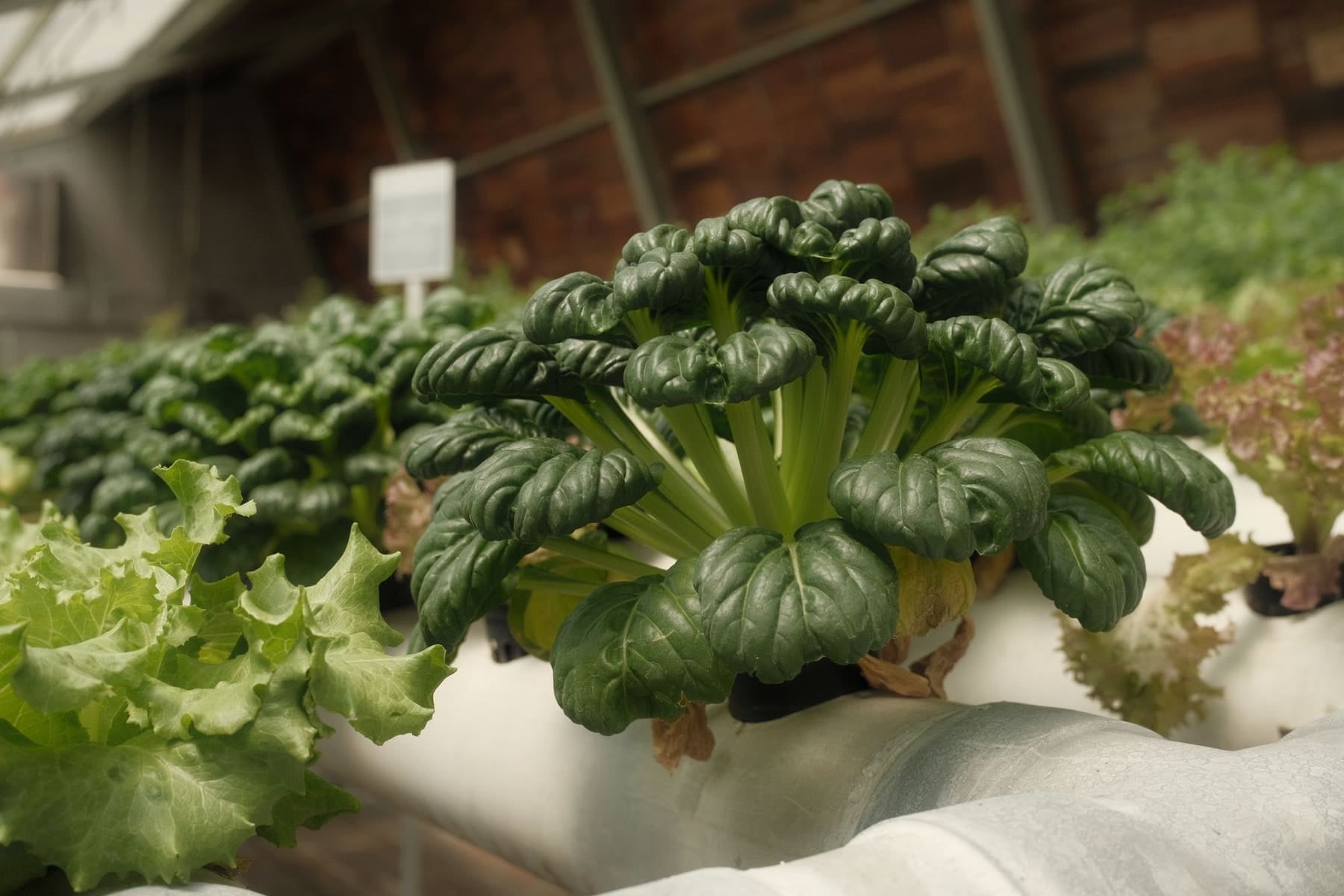
Pak choi and kai choy are among the crops recommended for the non-circulating method. They quickly form a fleshy rosette and can be harvested young, leaf by leaf or whole.
Spinach and kale
Both are among the leafy vegetables recommended for beginners. Harvested young, they stay compact and tender.
Watercress
Watercress naturally likes wet environments and is also among the crops suited to the non-circulating method. It's cut and eaten fresh, in salads or soup.
Herbs
Basil
The most widely grown herb in indoor hydroponics. It has two requirements: warmth and pruning. Its leaves can blacken at temperatures as low as 10 °C, and it only branches out if you regularly pinch off the tips of the stems. Also pinch off flower buds as soon as they appear, as they change the flavour of the leaves. Our guide Basil in hydroponics covers sowing, pruning and common problems in detail.
Coriander
Coriander is among the crops recommended for the non-circulating method. It's harvested leaf by leaf, cutting the outer stems.
Spring onions
Chives and young onions grown for their green stems also do well without soil. Cut the stems above the base, which keeps growing.
Possible, but not for starting out
Almost any plant can be grown hydroponically. Among professionals, tomatoes, peppers and greenhouse cucumbers are even the most common crops, and strawberries are produced this way on a large scale.
But these professional crops have greenhouses, plenty of light and precise control. In a flat, things are different:
- Tomatoes will produce, but much more slowly than lettuces, and need considerably more space.
- Peppers and cucumbers also need vertical space, intense light and support.
- Strawberries need light and time before they fruit.
These plants remain a fine second project, once you've got the hang of the nutrient solution routine.
Ones we don't recommend for beginners
- Root vegetables and tubers, such as carrots or potatoes. The edible part forms within the growing medium, and small indoor systems aren't designed for this.
- Large, thirsty plants in pump-free systems. The non-circulating method is designed for crops that drink little: a large plant would empty the reservoir before the end of its cycle.
- Large perennial or woody plants, which end up outgrowing the space and the lamp's height.
Signs a plant isn't happy
An easy plant is still a living plant: it quickly signals what's wrong. Learn to read these signs before blaming the variety.
- Long, thin stems and widely spaced leaves: light is lacking. Move the lamp closer or extend the lighting period, within the limits set by your equipment.
- Basil leaves that blacken suddenly: it's been cold. Move the system away from windows and draughts.
- Leaves yellowing for no obvious reason: check the solution's pH. Outside the 5.5 to 6.5 range, some nutrients are less well absorbed.
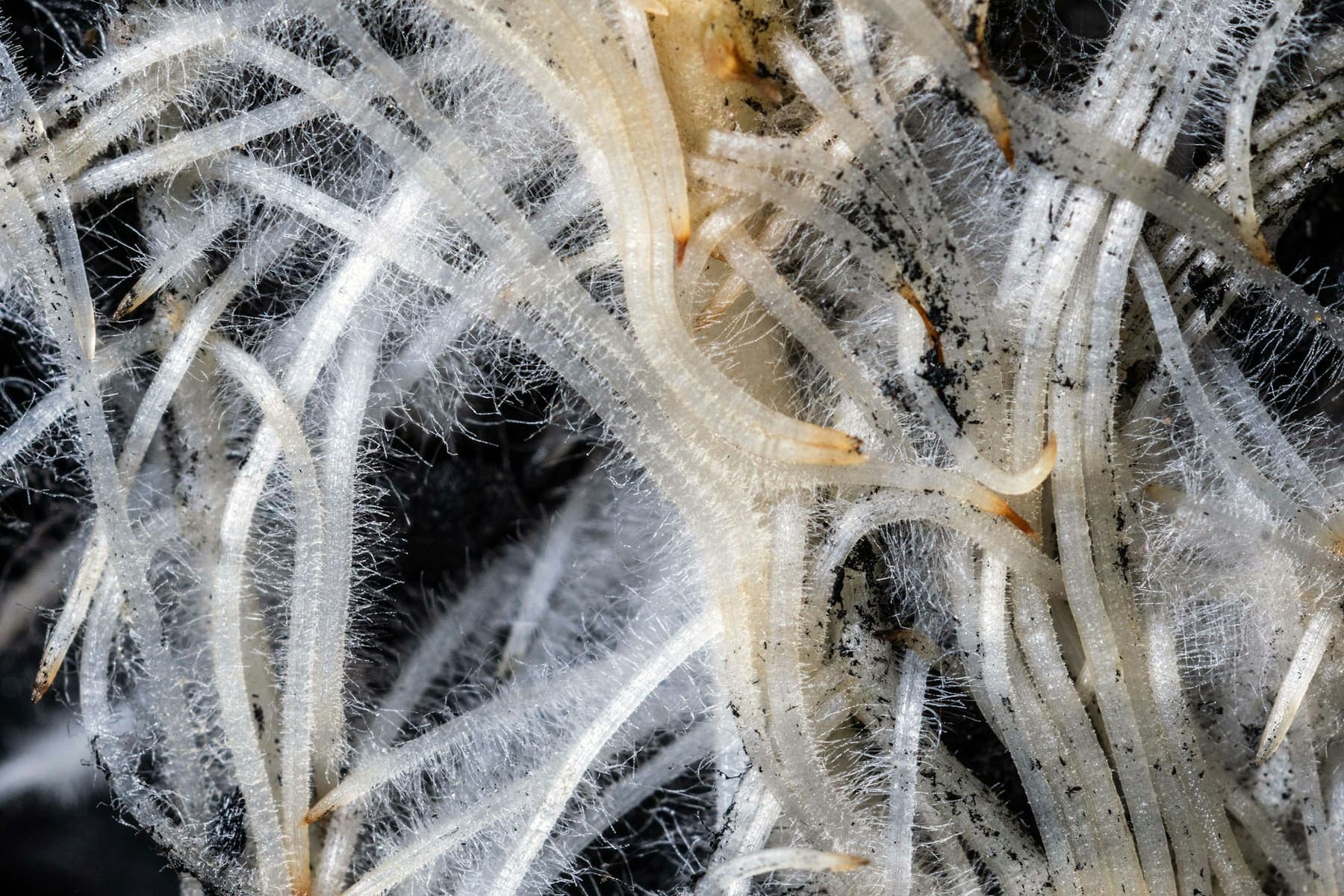
- A plant wilting even though the reservoir is full: pull out a basket and look at the roots. Brown and mushy, they're short of oxygen: the roots of most plants die in stagnant water. Check the pump or aeration, then refresh the solution.
- A lettuce or basil that bolts: the plant is ending its cycle. Harvest without delay, pinch off basil's flowers and plan new sowings.
Combining several plants in one system
All the plants in the same reservoir share the same solution and, often, the same lamp. So combine plants with similar needs:
- Crops with the same pace. Lettuces and pak choi, harvested young, progress at roughly the same rate.
- Compatible sizes. Place the tallest plants, such as basil, where they won't shade the others.
- A shared temperature. Basil suffers in the cold; lettuces prefer cool conditions. A room at around 20 °C suits both.
- Staggered sowings. Sow part of the spaces every two or three weeks so everything isn't ready on the same day.
The RHS notes that in commercial production, the nutrient solution is adjusted for each crop. At home, a hydroponic fertiliser suits a mix of lettuces and herbs; this is precisely why it's best to avoid mixing these plants with fruiting tomatoes, whose needs are very different.
Where to start?
For a first system, we recommend three crops: a cut-and-come-again lettuce, basil and coriander. Sow them in coco plugs, then install them in the system once the roots emerge from the plug.
If you haven't chosen your system yet, first read how hydroponics works and our comparison hydroponics or soil. And for an even faster harvest, with no system at all, try sunflower and radish microgreens. The equipment is gathered in the hydroponics section.
Sources
- Growing without soil: getting started with hydroponics at home — University of Illinois Extension
- A Suspended Net-Pot, Non-Circulating Hydroponic Method for Commercial Production of Leafy, Romaine, and Semi-Head Lettuce — University of Hawaiʻi, CTAHR
- Hydroponics — Royal Horticultural Society
- Growing crops with hydroponics — Royal Horticultural Society
- Basil — University of Illinois Extension
Frequently asked questions
Which lettuce grows best in hydroponics?
Leaf lettuces, romaine and soft-leaved butterhead lettuces do very well, even in a pump-free system. For a staggered harvest, choose a cut-and-come-again lettuce.
Can you grow strawberries hydroponically at home?
It's possible, and strawberries are grown this way commercially. In a flat, though, they need plenty of light, space and patience: it's not the best plant for a first system.
Do you need a different nutrient solution for each plant?
In commercial production, the solution is adjusted for each crop. At home, a hydroponic fertiliser suits a group of lettuces and herbs with similar needs, growing in the same reservoir.