

Sunflower, radish and pea microgreens: growing guides
Soaking, seed density, weighted germination and harvest: the benchmarks variety by variety for growing sunflower, radish, pea, rocket and broccoli, plus the safety precautions.
In this guide
Radish microgreens are the simplest: no soaking, one to two days in the dark, and a harvest eight to twelve days after sowing. Sunflower needs a little more care: twelve hours of soaking, three days in the dark, then a harvest around nine to ten days. The benchmarks below, variety by variety, come from a Utah State University guide. They're followed by the safety precautions to know, since microgreens are eaten raw.
The method common to every variety
Whatever the seed, the method stays the same:
- Suitable seeds. Choose seeds sold for microgreens or sprouting, from a supplier that guarantees them fit for food use.
- A perforated tray set inside a solid tray. The medium can be seed compost, coco coir or a growing mat. Moisten it to the consistency of a wrung-out sponge: your hand comes away wet when you press it, but no drop falls.
- Watering from below. Pour the water into the solid tray rather than onto the shoots: the stems and leaves stay dry.
- An even spread. Weigh out the quantity of seed and spread it over the whole surface.
- Germination in the dark, in two stages. First, place a second tray directly on top of the seeds, weighted with roughly one to two kilos. This forces the roots to dig into the medium instead of lifting the seeds. Then flip that tray so it covers the shoots without touching them: still in the dark, they stretch a little.
- Light after that. A lamp gives you the most control; a well-lit window can be enough. The Utah guide lights for eighteen hours a day, followed by six hours of darkness, and recommends gentle, continuous ventilation.
- A moderate temperature. This guide's benchmarks are around 23°C during germination, 22°C with the lamp on and 20°C with it off. In a cooler room, allow a few extra days.
The doses given correspond to a standard horticultural tray, called a "1020" tray in the United States, roughly 25 × 50cm. For a smaller tray, reduce the quantity in proportion to the surface area.
Benchmarks by variety
Radish
- Soaking: none.
- Dose: around 42g of seed per standard tray.
- In the dark: one to two days in total, tray weighted for the first half.
- Harvest: eight to twelve days after sowing.
- Flavour: peppery, with a hint of hazelnut.
Radish is the ideal variety for a first tray: it germinates fast and evenly. Some varieties give purple stems, very decorative on a plate.
Sunflower
- Soaking: twelve hours.
- Dose: around 48g per standard tray.
- In the dark: three days in total, tray weighted for the first half.
- Harvest: nine to ten days after sowing.
- Flavour: mild, crunchy, with a hint of hazelnut.
The weight is essential for sunflower: without it, the seeds lift instead of rooting. Hulls sometimes stay stuck to the first leaves; remove them gently by hand before cutting.
Pea
- Soaking: six hours.
- Dose: around 150g per standard tray.
- In the dark: three days in total, tray weighted for the first half.
- Harvest: eight to ten days after sowing.
- Flavour: sweet, like fresh peas.
Pea seeds are large: you need far more by weight than for radish. Pack them into a single layer, without stacking.
Rocket
- Soaking: none.
- Dose: around 10g per standard tray.
- In the dark: one to two days in total, tray weighted for the first half.
- Harvest: six to eight days after sowing.
- Flavour: peppery, sharp.
Rocket is the fastest of this selection. Its seeds are tiny: a small dose is enough to cover the tray.
Broccoli
- Soaking: none.
- Dose: around 28g per standard tray.
- In the dark: two to four days in total, tray weighted for the first half.
- Harvest: eight to twelve days after sowing.
- Flavour: mild, reminiscent of broccoli.
The "in the dark" period is the total time spent under cover. Keep the tray weighted, in contact with the medium, for the first half of this time; then flip it for the second half, and uncover the shoots once they've stretched a little. For radish, that's roughly one day weighted then one day flipped, not one to two days each. For every variety, harvest is possible as soon as the first true leaves appear, or even a little before: taste at several stages to find the one you prefer. Cut the stems above the medium with clean scissors, leaving the roots behind.
Which ones can you combine on the same tray?
On the same tray, combine varieties that share the same soaking needs, a similar time in the dark and the same harvest date. Otherwise, one will be ready while the other is still too young or already too big.
- Radish and broccoli: no soaking, harvest between eight and twelve days. Aim for two days in the dark, a compromise between the two: one day weighted, then one day flipped.
- Pea and sunflower: both need soaking and stay three days in the dark, for a harvest around eight to ten days. Soak them separately, since the times differ, then sow them together.
- Rocket on its own: it's ready earlier than the others, and its small shoots risk being smothered by taller neighbours.
Sow each variety in its own band rather than mixed together: you'll be able to harvest one without damaging the other if they don't progress at the same pace.
Flavours and uses in the kitchen
- Radish livens up a cream cheese sandwich, eggs or a bowl of rice.
- Sunflower adds crunch to salads and sandwiches; it holds up well against a sauce.
- Pea is eaten raw in salads or just seared in a pan at the end of cooking.
- Rocket goes on a pizza fresh out of the oven, or on pasta.
- Broccoli, milder, tops off a soup or a velouté at the last moment.
Microgreens and sprouted seeds: what are the health risks?
The two products aren't the same. Sprouted seeds are harvested with the seed still attached, with no leaves, after a few days of sprouting. Microgreens are cut with scissors, without the seed or the roots, once their first true leaves appear.
Raw sprouted seeds have caused serious outbreaks. In 2011, E. coli infections linked to their consumption affected France and Germany; French authorities then recommended, as a precaution, not eating raw sprouted seeds. Anses (the French food safety agency) now advises pregnant women and other at-risk groups to avoid raw sprouted seeds, which are among the foods most frequently contaminated with Listeria.
For microgreens, the data are more reassuring, without being a guarantee. A University of Nevada publication states that in the United States, between 1998 and 2017, no known outbreak was linked to microgreens, compared with more than fifty for sprouted seeds and young shoots. But the seed itself can carry bacteria. We found no Anses recommendation specific to microgreens: as a precaution, if you're pregnant, elderly or immunocompromised, ask your doctor for advice or choose to cook them instead.
For growing sprouts at home, Anses highlights two hygiene steps:
- Wash your hands before and after handling the seeds and shoots.
- Thoroughly clean and disinfect your trays and jars between crops.
Add three commonsense precautions:
- Use seeds intended for consumption, never treated seeds or bird-feed mixes.
- Soak the seeds in drinking water and change it regularly.
- Discard a tray that smells bad or develops mould.
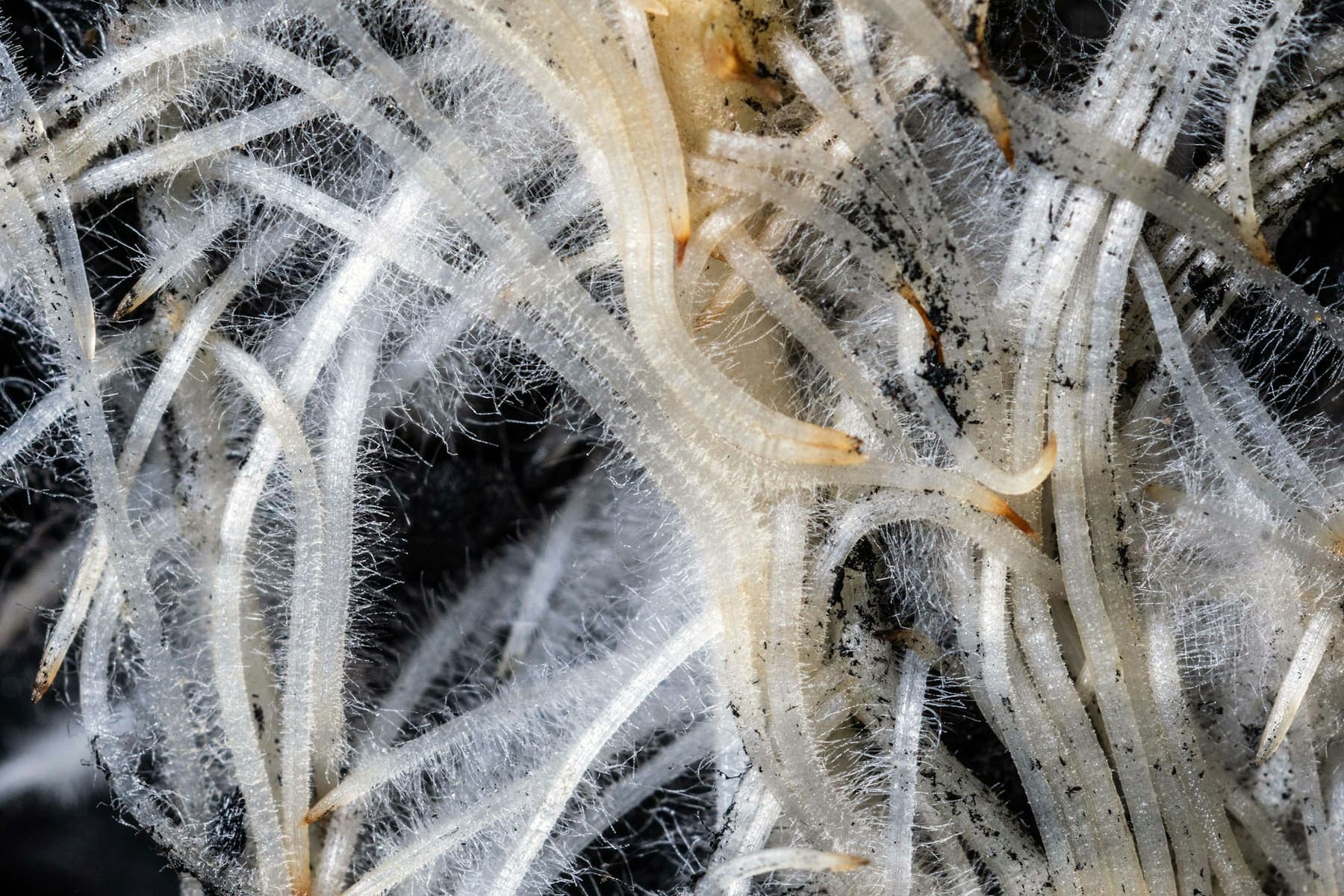
A white fuzz at the base of the stems isn't always mould: it can be root hairs. Our guide to getting microgreens right from the start explains how to tell the difference.
The gear
A tray, suitable seeds and a clean medium are enough. Seed compost makes a simple medium for trays; coco coir or a growing mat also work well.
Find seeds and accessories in our microgreens section. And if you want to go beyond trays, our indoor sowing calendar shows what to sow each month.
Sources
- Grow Your Own Microgreens — Utah State University Extension
- A Step-By-Step Guide for Growing Microgreens at Home — Penn State Extension
- Microgreens and Produce Safety — University of Nevada, Reno
- Caractéristiques et sources de Listeria monocytogenes — Anses
- Avis relatif à la consommation de graines germées crues (saisine 2011-SA-0198) — Anses
Frequently asked questions
Can you use bird-feed sunflower seeds for microgreens?
No. These seeds aren't intended for human consumption and their hygiene isn't controlled for that use. Choose seeds sold for sprouting or microgreens, whose fitness for food use is guaranteed by the supplier.
Should you wash microgreens before eating them?
Yes. Anses recommends washing vegetables and herbs thoroughly before eating or cooking them. Rinse microgreens just before serving them, not before storing them.
Why don't my sunflower microgreens shed their hulls?
Usually, the seeds weren't pressed firmly enough against the medium during germination. A weight placed on the covering tray helps the roots anchor themselves; any remaining hulls can be removed by hand before cutting.
Can radish microgreens grow without light?
Only during germination, which lasts a few days in the dark. After that, they need light to green up and form their first leaves; without it, they stretch out and stay pale.