




Microgreens
Kits, trays, growing mats and sprouting seeds for growing microgreens in one to two weeks.
Microgreens: our advice
A harvest in one to two weeks, on your worktop
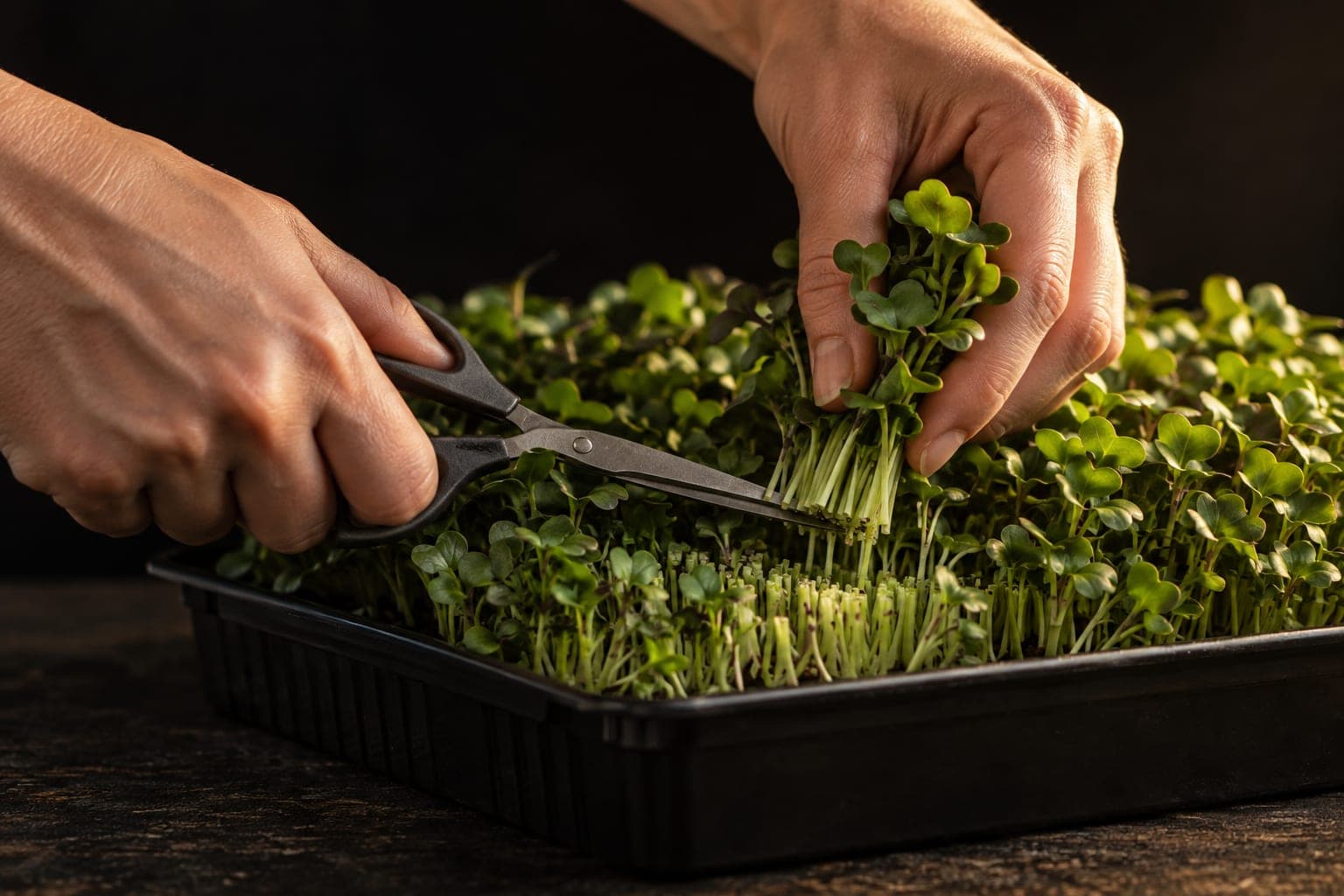
Microgreens are young plants harvested at the first-leaf stage, one to two weeks after sowing. They're cut with scissors above the growing medium, which sets them apart from sprouted seeds, eaten whole with their roots. They add colour and flavour to a plate, and they're the fastest indoor crop to start with.
All you need is a tray, a hemp growing mat or a thin layer of compost, and seeds intended for sprouting. Radish, rocket, mustard, peas or sunflower are the easiest varieties. The seeds spend a few days in the dark to germinate, then move into the light to turn green.
Two points need attention: airflow, which limits mould, and the difference between mould and root hairs, which are often confused. Our microgreens guide covers both, and the variety-by-variety guide gives the benchmarks for each seed.
Microgreens or sprouted seeds
Sprouted seeds are eaten whole, root included, after a few days in a jar. Microgreens, on the other hand, grow on a medium and in the light until the first leaves appear: they're cut above the roots, generally between 7 and 14 days depending on the variety. Their flavour is often stronger than that of the adult plant.
The useful equipment
- A tray, shallow and easy to clean. A perforated tray placed inside a solid one lets you water from below.
- A growing medium: hemp mat, coir or a thin layer of compost. The mat is the cleanest option to start with.
- Seeds intended for sprouting, untreated.
- A lid or a second tray, for the dark phase.
The key steps
- Soak large seeds, such as peas or sunflower, for a few hours.
- Sow densely and evenly, without overlapping the seeds.
- Cover and leave in the dark for two to four days, keeping the medium moist.
- Uncover as soon as the shoots lift the lid and move them into the light.
- Harvest with scissors, then eat promptly.
Avoiding mould
Excess water and lack of air are the main causes of failure. Water from below, air out the room and avoid sowing too densely. Don't mistake mould for root hairs: these fine white filaments, evenly spread around the roots, are normal and flatten when misted.
Getting it right first time
Follow the tutorial Getting microgreens right first time and the variety-by-variety guide.
FAQ
Questions about microgreens
Which varieties should I choose to start with?
Radish, mustard, rocket, broccoli or peas come up fast and reliably. Basil or coriander are slower and need more patience.
Can I reuse a growing mat?
No. A hemp or coir mat is used for a single crop: any leftover roots would encourage mould. Once used, it can go on the compost.
Do microgreens need a lamp?
A bright window is often enough. If the shoots stretch, turn pale or lean over heavily, light is lacking: a grow light solves the problem, particularly in winter.