

Lettuce and salads in hydroponics: varieties, cycle and harvest
Loose-leaf salads in four to six weeks, hearting lettuces in ten to fourteen: which varieties to choose, what temperature to grow them at, and how to harvest the same plant several times.
In this guide
Salads are the safest crop for a first hydroponic unit: a cut-and-come-again lettuce is ready about four to six weeks after sowing, while a butterhead, cos or batavia takes more like ten to fourteen weeks. All of them prefer it cool, around 16 to 21 °C, and that is where success is decided: in the warmth, the seed germinates badly and the plants bolt, which turns the leaves bitter. The rest comes down to three settings: the light, the pH of the solution and how often it is changed.
What lettuce asks for, and why growing without soil gives it
Lettuce is a cool-season plant with a short cycle, grown for its leaves alone. It has no fruit to ripen and no root to swell: everything it takes up goes into the foliage, and that is what makes it so quick without soil.
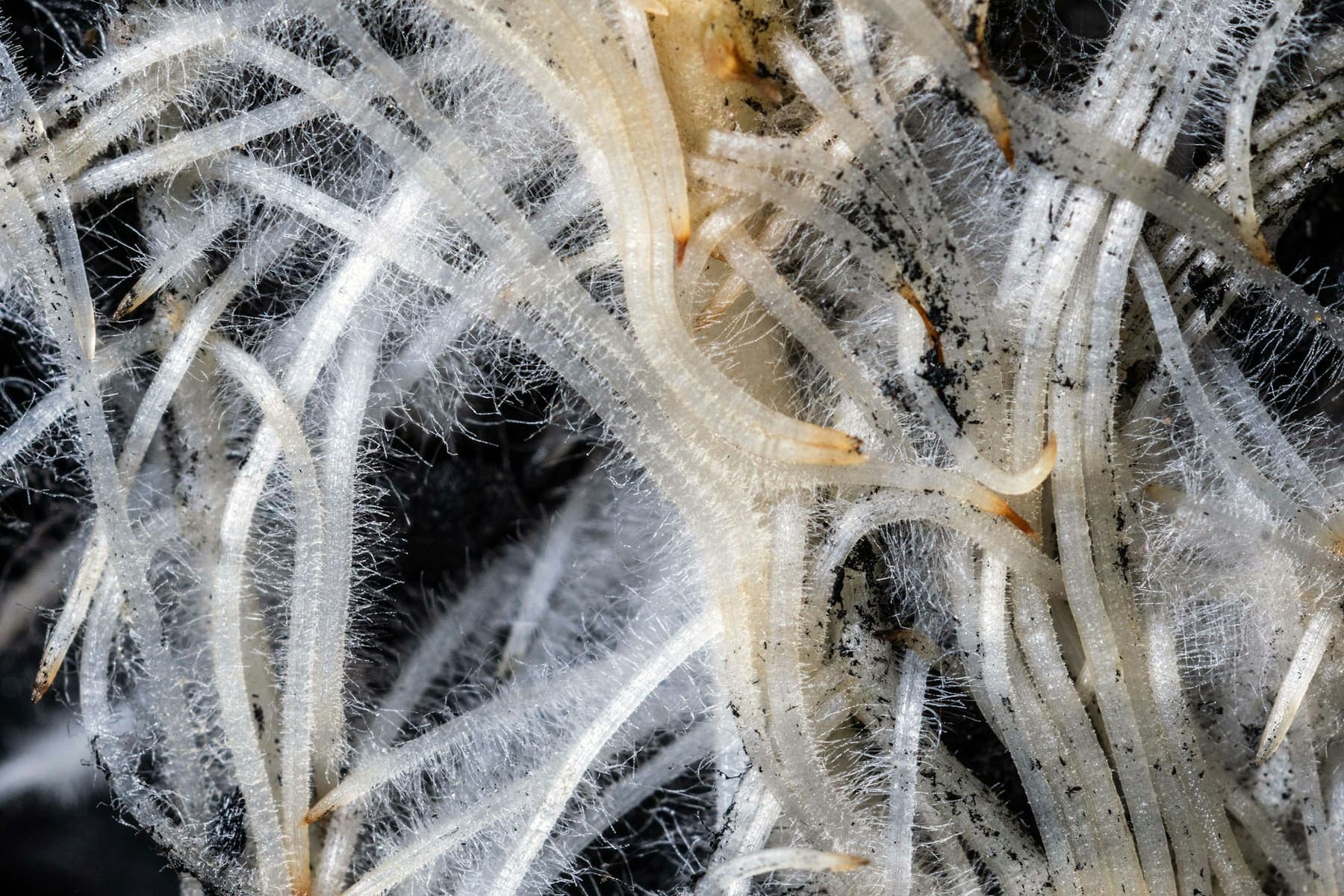
Its roots want water and air at the same time. In a pot these two needs often work against each other: over-watered compost suffocates, dry compost wilts the plant within hours. A properly oxygenated hydroponic unit removes that see-saw, and the plant no longer suffers any jolts.
It uses little. The University of Hawaii trials on pump-free systems name lettuce among the crops that empty a reservoir slowly, which makes it easy to manage even in a small volume. If the principle of growing without soil is not yet clear, start with how hydroponics works.
It does not demand full-sun light. A leaf crop makes do with more modest lighting than a tomato or a pepper, which have to ripen fruit. That is what makes salads realistic in a flat, where fruiting vegetables almost always disappoint.
Which salad to choose for an indoor unit
The first criterion is not the variety but the type: cut-and-come-again, or hearting lettuce harvested in one go. The two ask for neither the same space nor the same patience.
| Type | Common examples | Indicative time | How it is harvested |
|---|---|---|---|
| Loose-leaf lettuces | Oak Leaf, Lollo, Salad Bowl | 4 to 6 weeks | A few leaves per plant, several times |
| Hearting lettuces | Butterhead, batavia, iceberg | 10 to 14 weeks | The whole plant, in one go |
| Cos | Green cos, Little Gem | 10 to 14 weeks | The whole plant, or the outer leaves |
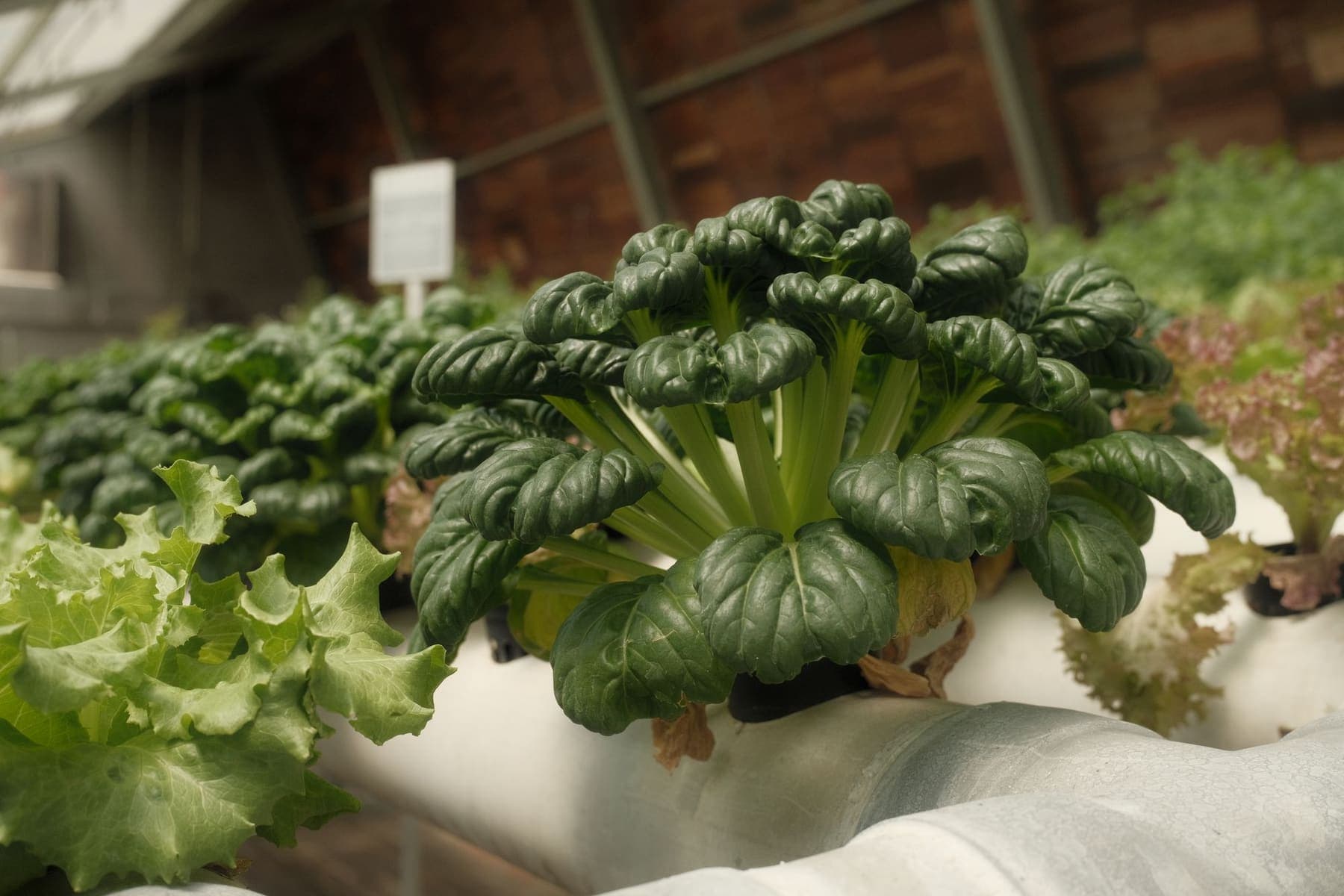
| Other quick leaves | Rocket, pak choi, spinach | 4 to 6 weeks | Leaves as you go |
For a first attempt, loose-leaf lettuces are clearly preferable. They hold a slot for less time, they forgive a setting error since you harvest before the problem takes hold, and they give usable leaves as soon as they reach about ten centimetres.
Hearting lettuces are not out of reach, but they tie up a slot for close to three months, and a failed plant is three months lost. Keep them for a system where slots are not in short supply. The varieties described as bolt-resistant, among the cos and batavia types in particular, are a good choice for a room that warms up in the afternoon.
From sowing to the net pot: the first three weeks
Lettuce seed is small and flat. It does not need burying deeply, and too much covering delays germination.
- Soak the growing plugs for ten minutes in clean, tepid water, then squeeze out the excess. They should be damp, never sodden.
- Drop two or three seeds into the hole in each plug and barely cover them, by the thickness of the seed.
- Keep them cool and in the light. Unlike basil, lettuce dislikes warmth for germination: above about 25 to 30 °C, some varieties simply refuse to come up.
- Thin out as soon as the first true leaves appear, keeping only the strongest seedling per plug. Two lettuces in one net pot get in each other's way and give two small plants instead of one good one.
- Set the plug in its net pot when the roots start to come out, generally after two to three weeks.
Sow a small batch every two to three weeks rather than the whole unit at once: that is what stops you having twelve lettuces ready on the same day, then nothing for a month.
Coolness, light and nutrient solution
Temperature is the decisive setting. The University of Hawaii researchers put optimal lettuce growth between about 16 and 21 °C. The University of Illinois extension service classes lettuce among the cool-season crops, which want about ten degrees Fahrenheit less than basil or tomato. In practice, keep the unit away from a radiator and do not put it behind a south-facing window in summer.
Light is set by duration, not by intensity alone. Fourteen to sixteen hours a day suits salads and herbs, with a real night. Stems that stretch and leaves that grow further apart signal a shortfall; bleached leaves at the top mean the lamp is too close. The guide choosing a grow light sets out the distances.
The nutrient solution is easy to manage. A fertiliser formulated for hydroponics, dosed as the label says, and a pH held between 5.5 and 6.5: beyond that range some elements, iron in particular, become less available and yellowing appears even in a rich solution. Change the solution completely every two to three weeks in a small system. The full routine is in indoor hydroponics without the jargon.
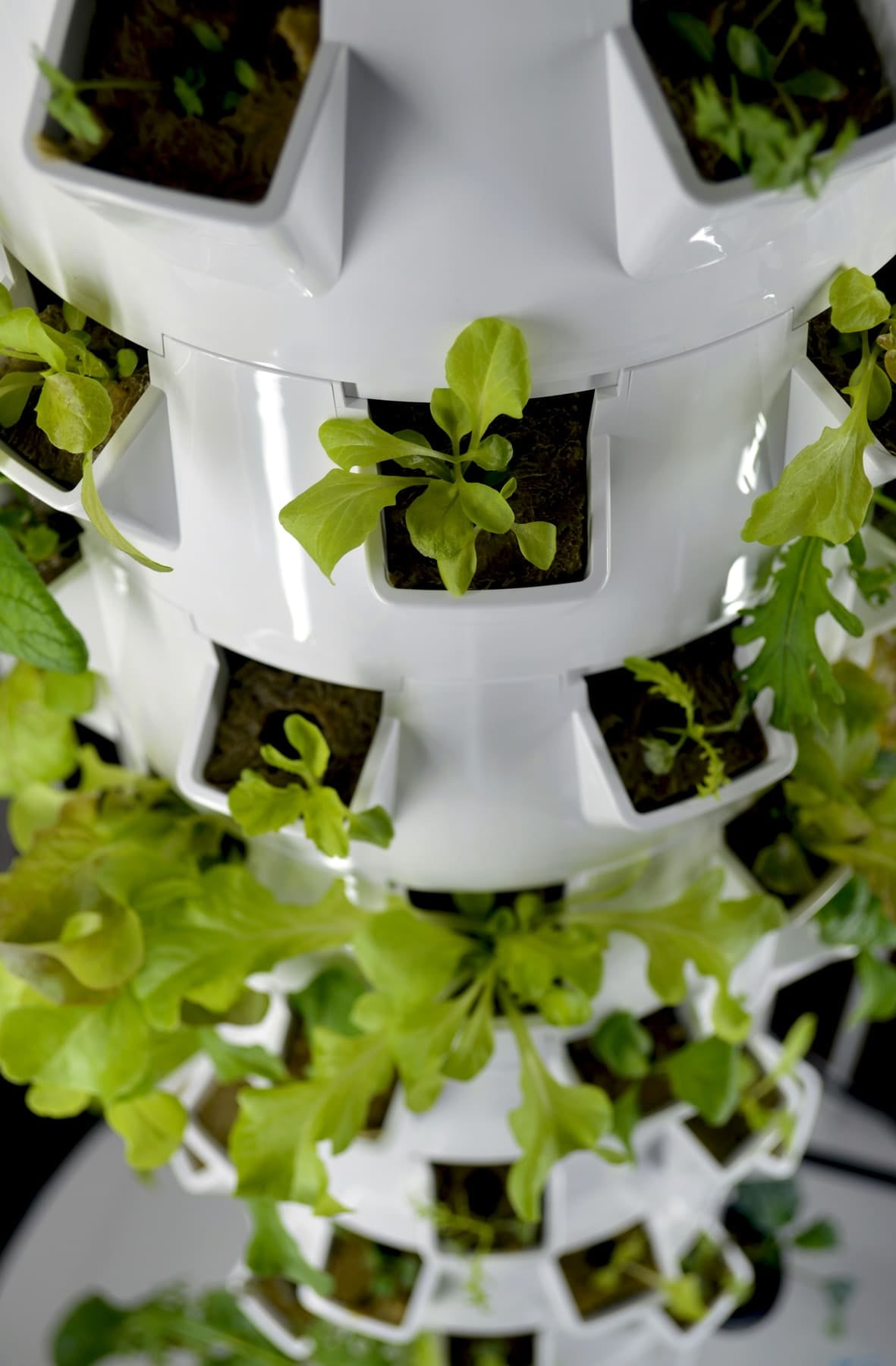
A vertical tower changes mainly how much you harvest, not the method: the settings stay the same, but the volume of solution and the number of plants call for slightly closer monitoring.
Harvesting the same plant several times
This is the main appeal of loose-leaf salads, and it is often poorly used.
On a loose-leaf lettuce, take a few outer leaves per plant as soon as they are about ten centimetres long, always leaving the heart intact. The plant carries on producing from the centre, and one plant gives several pickings spread over a few weeks.
On a hearting or cos lettuce, wait until the heart is firm, then cut the head off leaving a stump of about 2.5 cm above the net pot. That stump regrows and generally gives one, sometimes two further harvests, smaller than the first.
Harvest in the morning if you can, when the leaves are turgid. Salads picked in the afternoon, after several hours under the lamp, keep less well.
Lastly, keep the nutrient solution off the leaves: the University of New Hampshire extension service points out that this solution sits at room temperature for several days and must not come into contact with the part you eat.
The three most frequent failures
Bolting. The plant stretches from the centre, a stem runs up, the leaves turn bitter. Warmth and long days are the cause, and it cannot be reversed. Keep the room cool, hold the lighting between fourteen and sixteen hours, and harvest without delay any plant that starts to rise.
Nothing coming up. If nothing shows after ten days, there are two suspects: seed that is too old, or sowing done in a room that is too warm. Sow in the evening in summer, with cool water, and buy fresh seed if the packet is several seasons old.
Brown leaf tips. They usually betray a solution that is too concentrated: overdosing the feed burns the edge of the leaf instead of speeding growth up. Go back to the dose on the label, change the solution and let the plant start again on its new leaves.
To put together a full unit with other plants that need the same things, see which plants to grow in hydroponics, and browse the hydroponics section for systems and consumables.
Sources
- How to grow lettuce — Royal Horticultural Society
- Hydroponics — Royal Horticultural Society
- Home Hydroponics, practical handouts — University of Illinois Extension
- A Suspended Net-Pot, Non-Circulating Hydroponic Method for Commercial Production of Leafy, Romaine, and Semi-Head Lettuce — University of Hawaiʻi, CTAHR
- Hydroponics at Home — UNH Extension
Frequently asked questions
How long does a hydroponic lettuce take to harvest?
A loose-leaf salad is ready about four to six weeks after sowing, depending on warmth and light. A butterhead, cos or batavia takes far longer: ten to fourteen weeks. The gap comes from the fact that the first is picked leaf by leaf as soon as the leaves are usable, while the second has to form a firm heart before it is cut. Indoors under a lamp, these times often stretch a little if the lighting is weak.
Why do my salads bolt indoors?
Bolting is triggered by warmth and by long days. A unit placed near a radiator, in a conservatory or under lighting that runs well beyond sixteen hours a day pushes the plant to flower instead of making leaves. The leaves then turn bitter and tough, and it is too late to go back. Bring the temperature down towards 16 to 21 °C, cut the lighting back to fourteen or sixteen hours, and harvest without delay any plant starting to stretch at the centre.
Can salads and basil be grown in the same unit?
Yes, as long as you accept a compromise on temperature. Lettuces prefer it cool, around 16 to 21 °C, while basil suffers from 10 °C and is much happier warmer. A room around 20 °C suits both without putting either in difficulty. They share the same nutrient solution and the same lighting hours without any trouble.
Do lettuce seeds need replacing every year?
That is what the Royal Horticultural Society recommends: lettuce seed keeps less well than most other vegetable seed and its germination rate falls quickly. An opened packet generally keeps a decent strike rate for one or two seasons if it stays dry, cool and out of the light. After that you have to sow more thickly to make up for the gaps. If a whole batch fails to come up although the temperature is right, the age of the seed is the first suspect.