

Your first terrarium: the beginner's guide
Which container, which plants, what budget, how long it takes: everything to settle before building your first terrarium, and the four mistakes that doom it.
In this guide
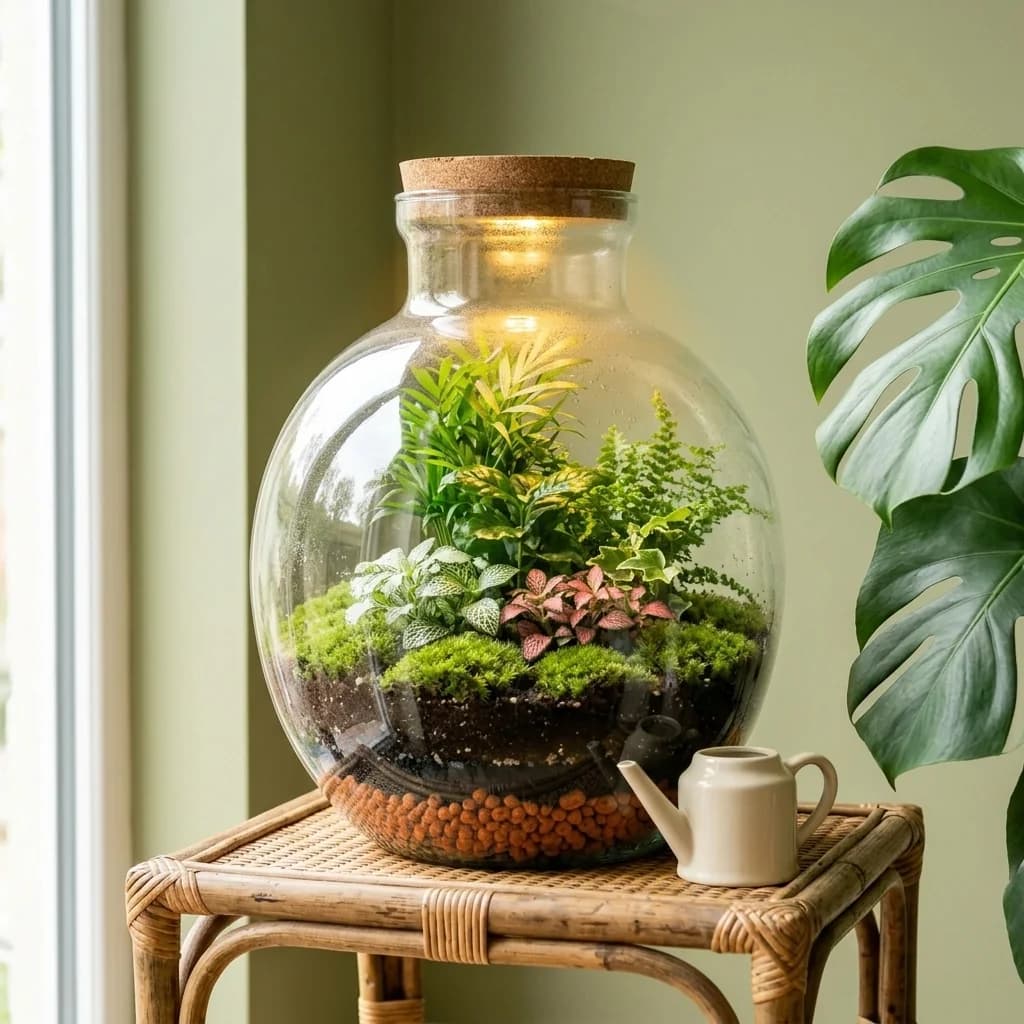
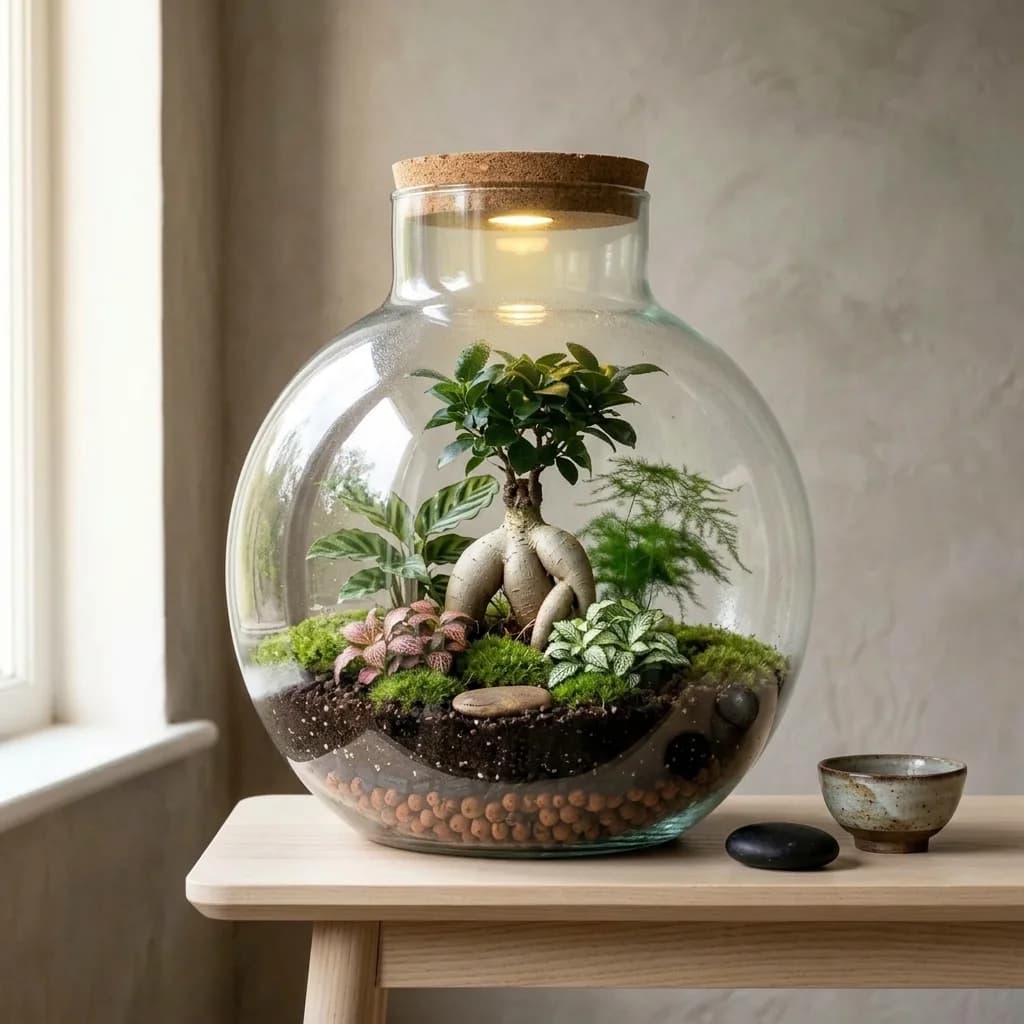
For a first terrarium, choose a closed container of 5 to 10 litres with a wide opening, three small woodland plants, moss, terrarium substrate and something to drain the base. Allow 40 to 80 € and two hours of building. The difficulty of a terrarium does not lie in the handiwork, which is simple, but in four decisions taken at the outset: the type of terrarium, the container, the plants and the spot. This guide takes them one at a time.
Decision 1: closed or open
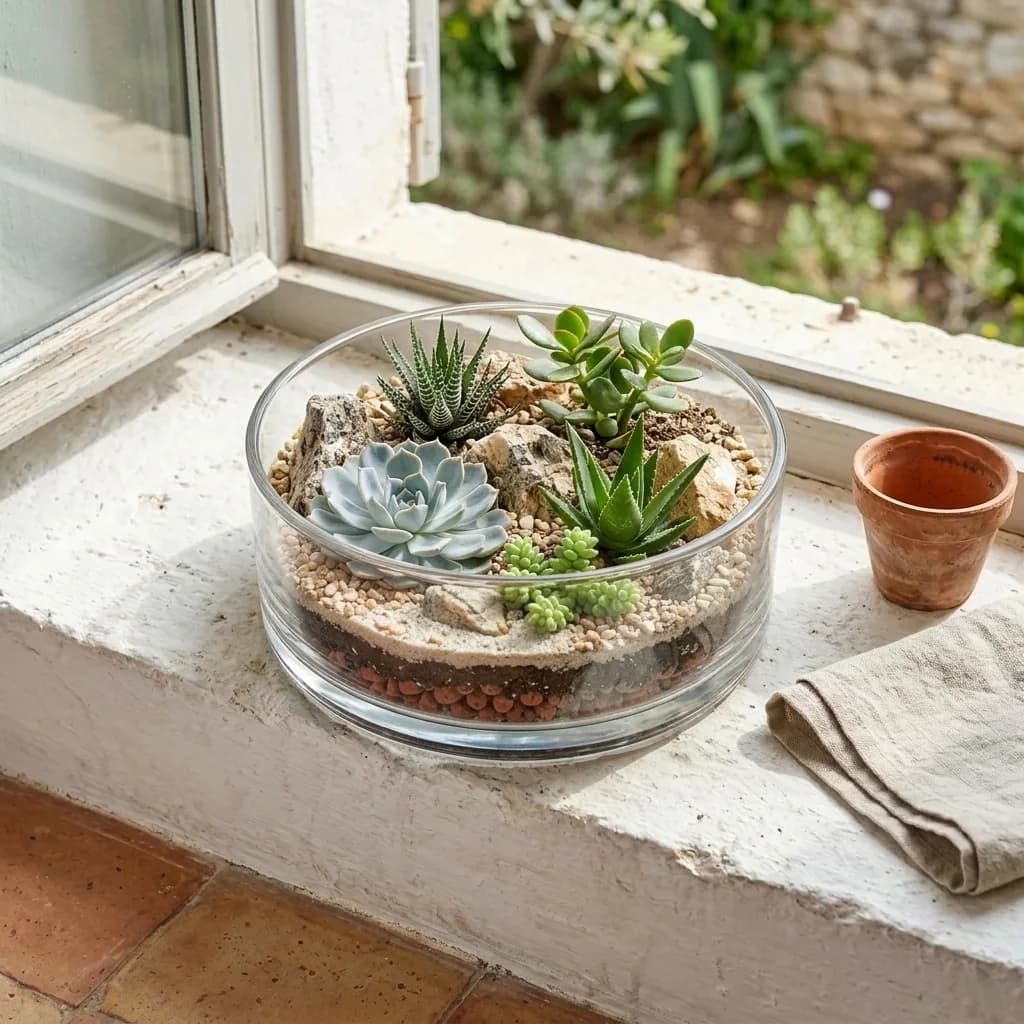
This is the choice that governs all the others. A closed terrarium recycles its water: condensation falls back onto the substrate, and tropical plants live there for months without watering. An open terrarium lets water evaporate: that is the regime of succulents and cacti, which rot in a confined environment.
For a first attempt we recommend the closed kind. It forgives more: forgetting to water a closed terrarium for two months usually has no consequence at all, whereas a badly placed succulent stretches within weeks. The full comparison is in Closed or open terrarium.
Decision 2: the container
Three criteria, in this order.
Volume. At least 5 litres. Below that, humidity swings too fast and the slightest deviation shows immediately. Between 5 and 10 litres the terrarium settles and stays compact enough for a desk.
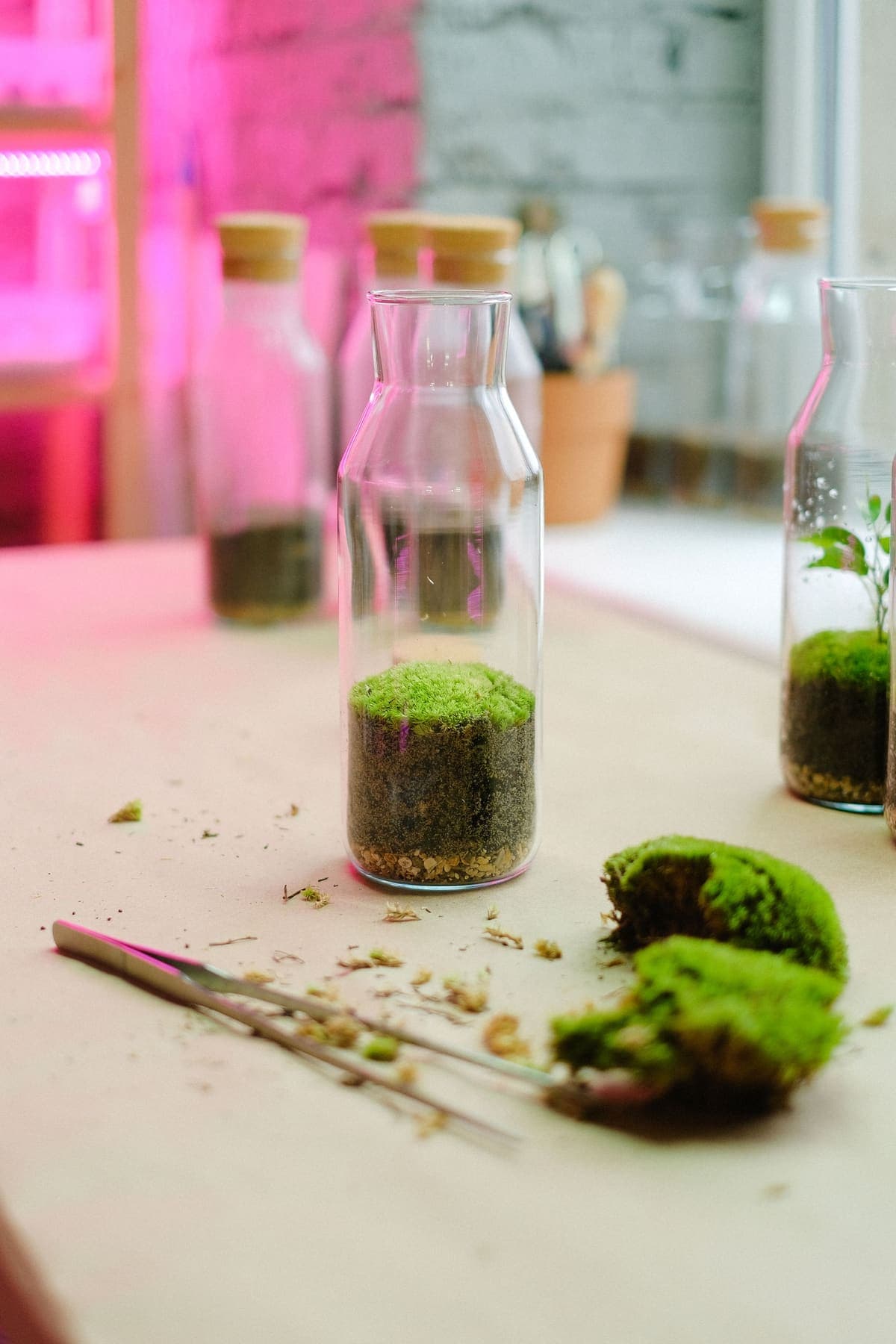
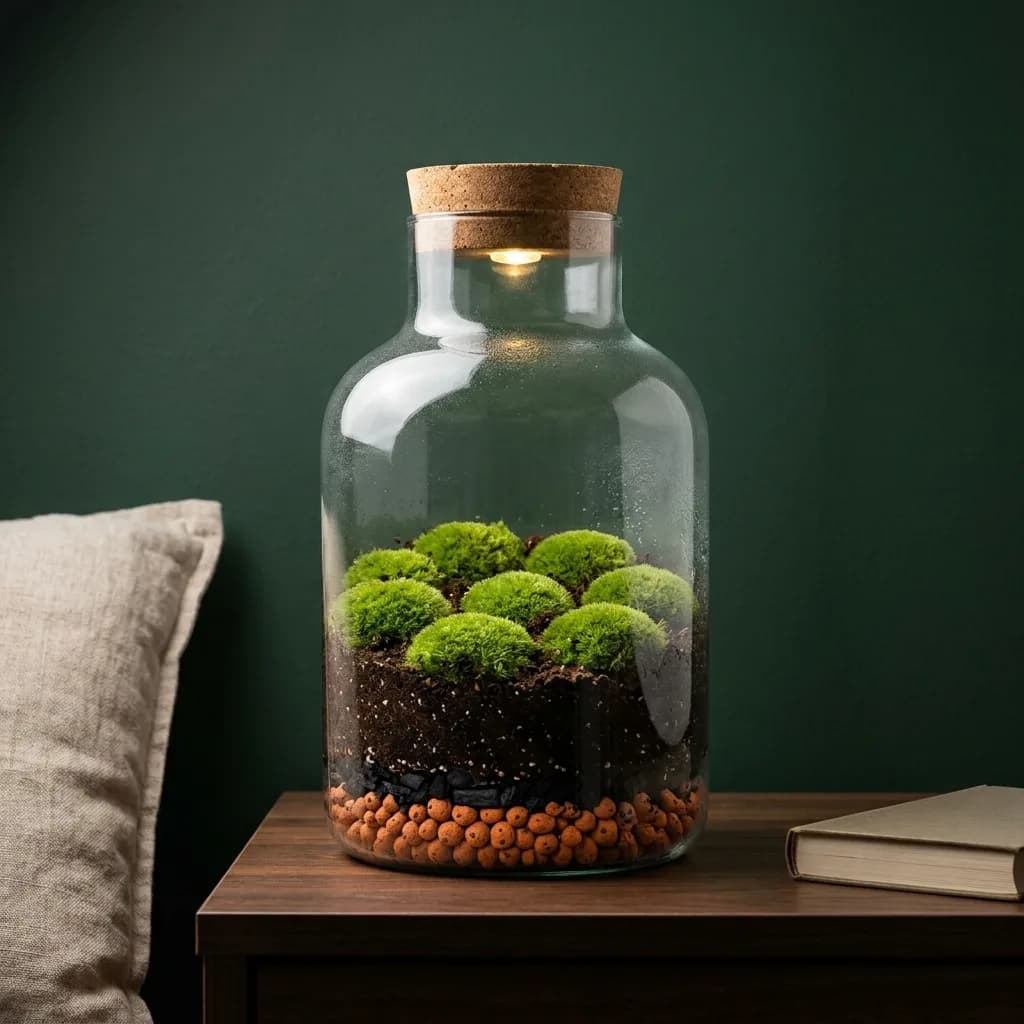
The opening. Wide, for a first build. A jar with a cork stopper can be planted by hand, corrected, reopened for pruning. A narrow-necked carboy is spectacular, but calls for long tools and a technique that has to be learned: save it for your second.
The seal. A lid that genuinely closes, in cork or with a rubber gasket. A container that does not close behaves like an open terrarium, whatever plants you put in it.
The tour of the formats is in Which container for a terrarium, and our selection in the closed terrariums range.
Decision 3: the plants
The rule fits in one sentence: every plant in a composition must want the same thing. A fittonia and a succulent in the same jar means one of the two is doomed.
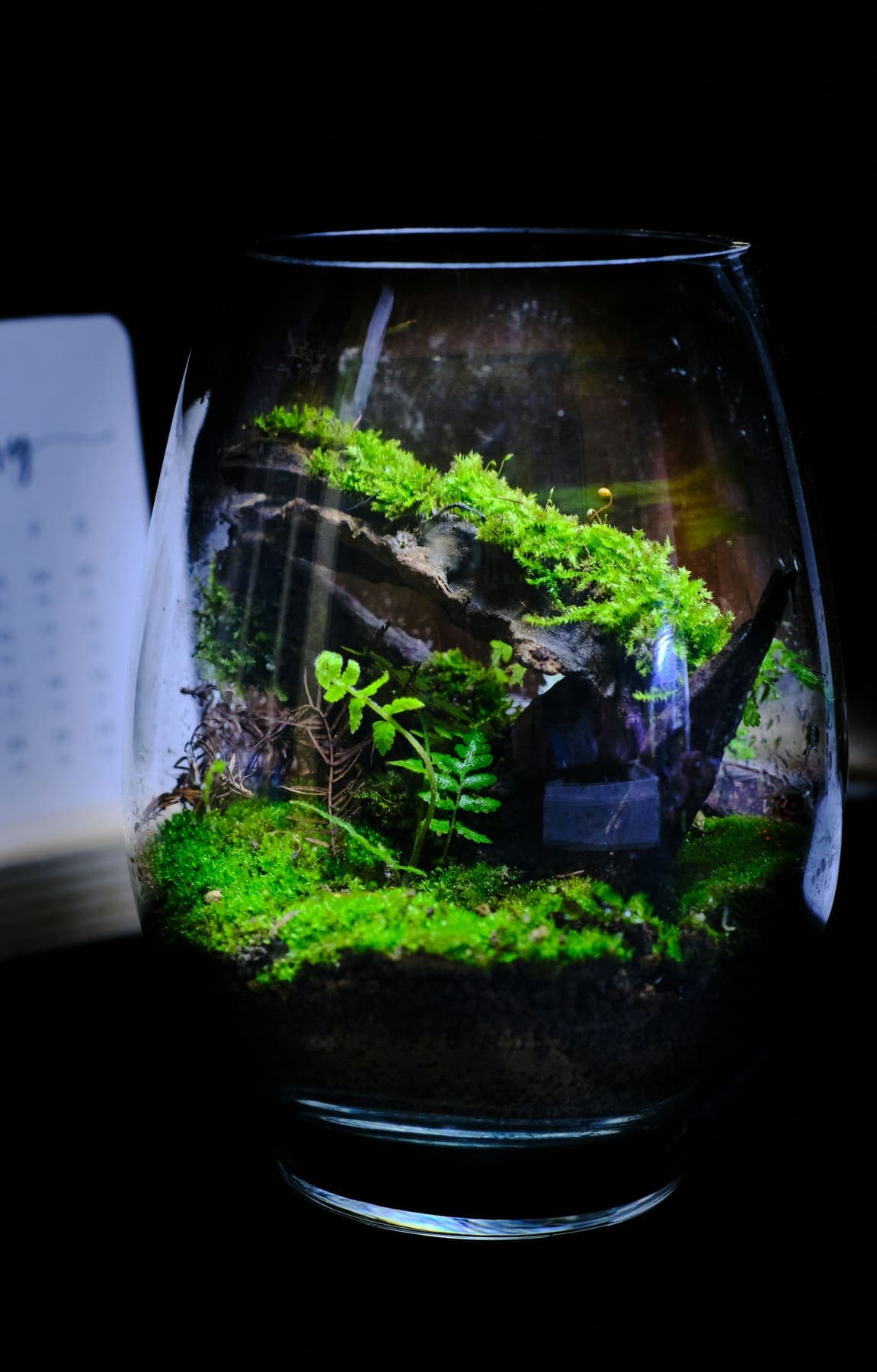
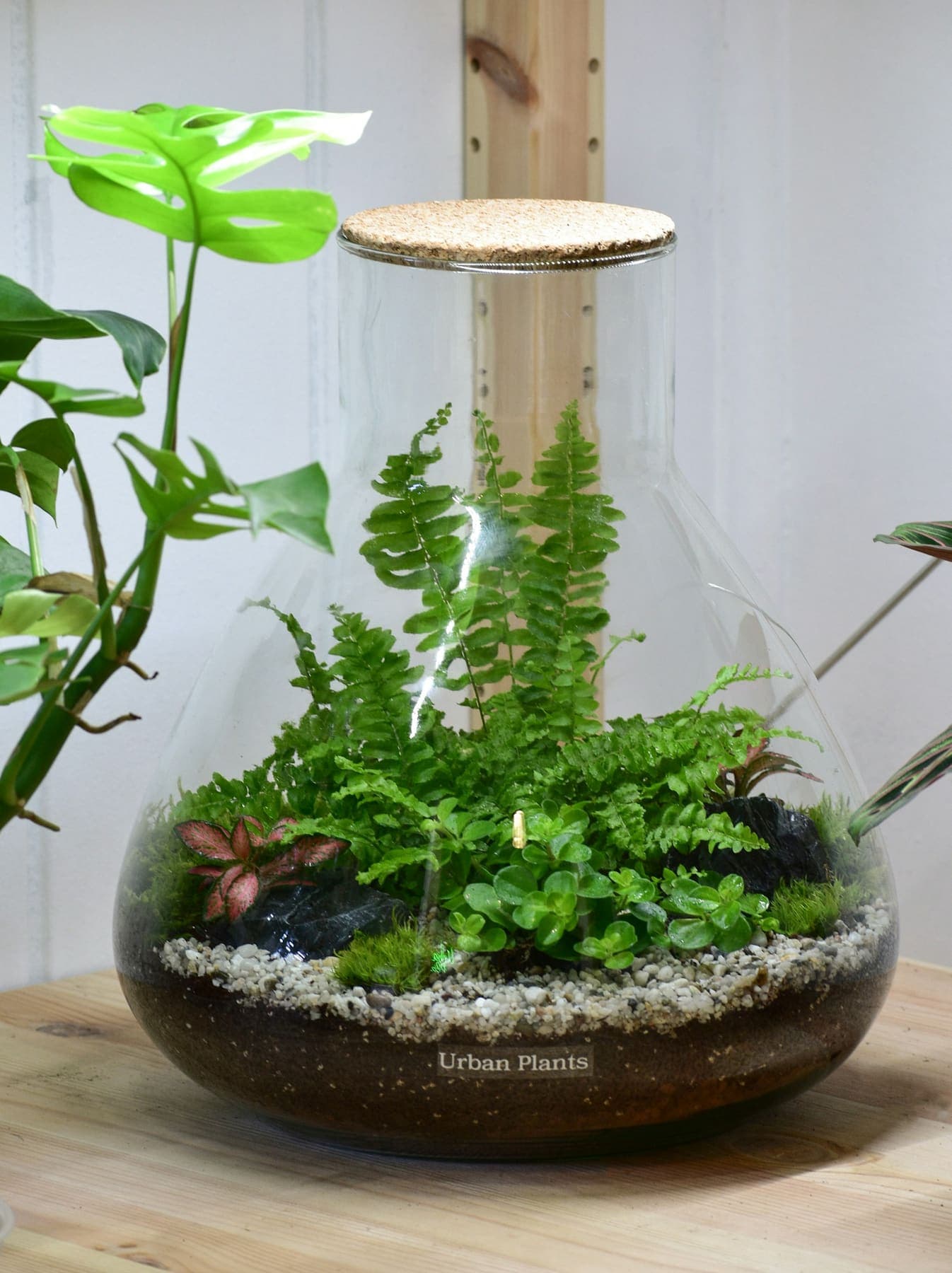
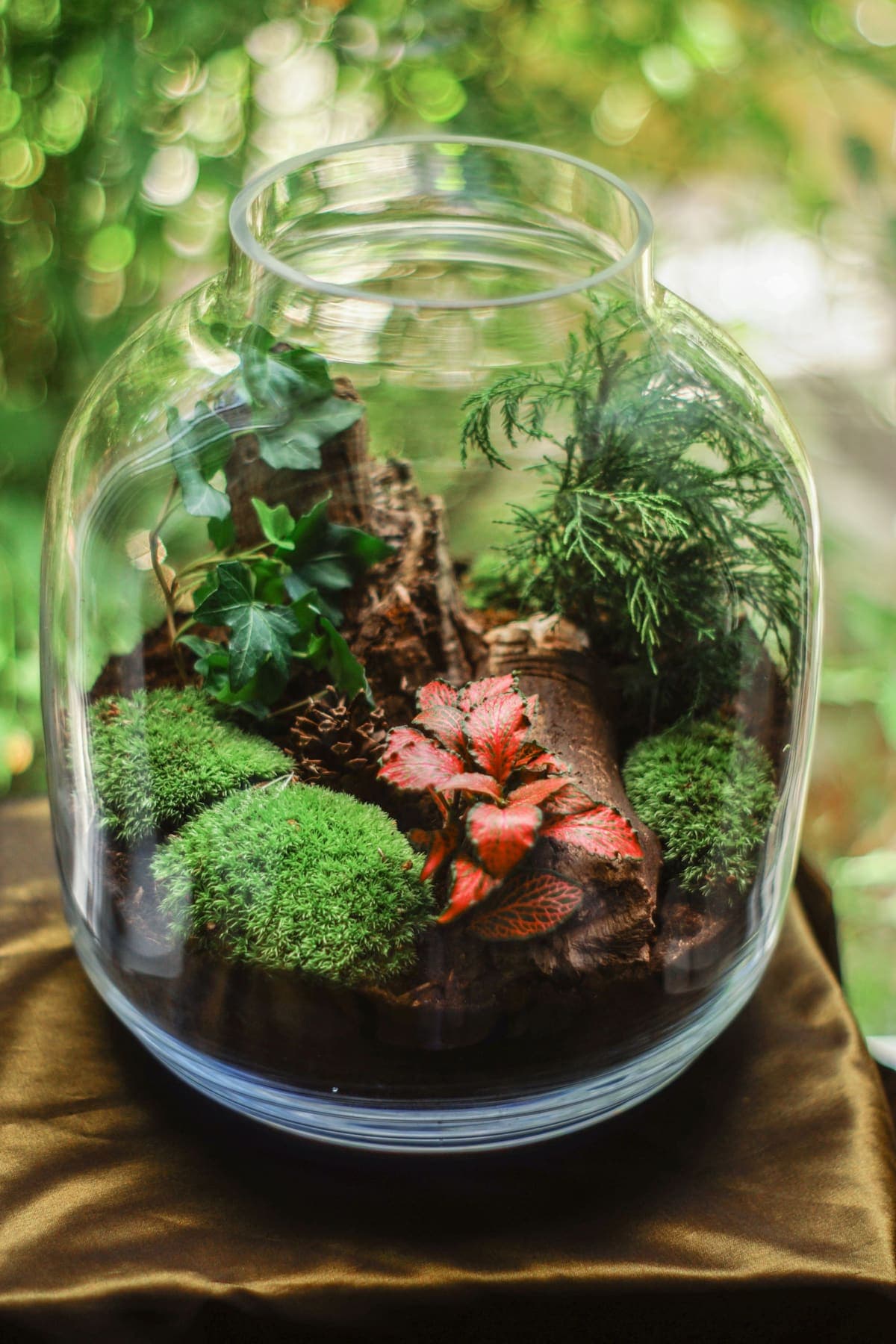
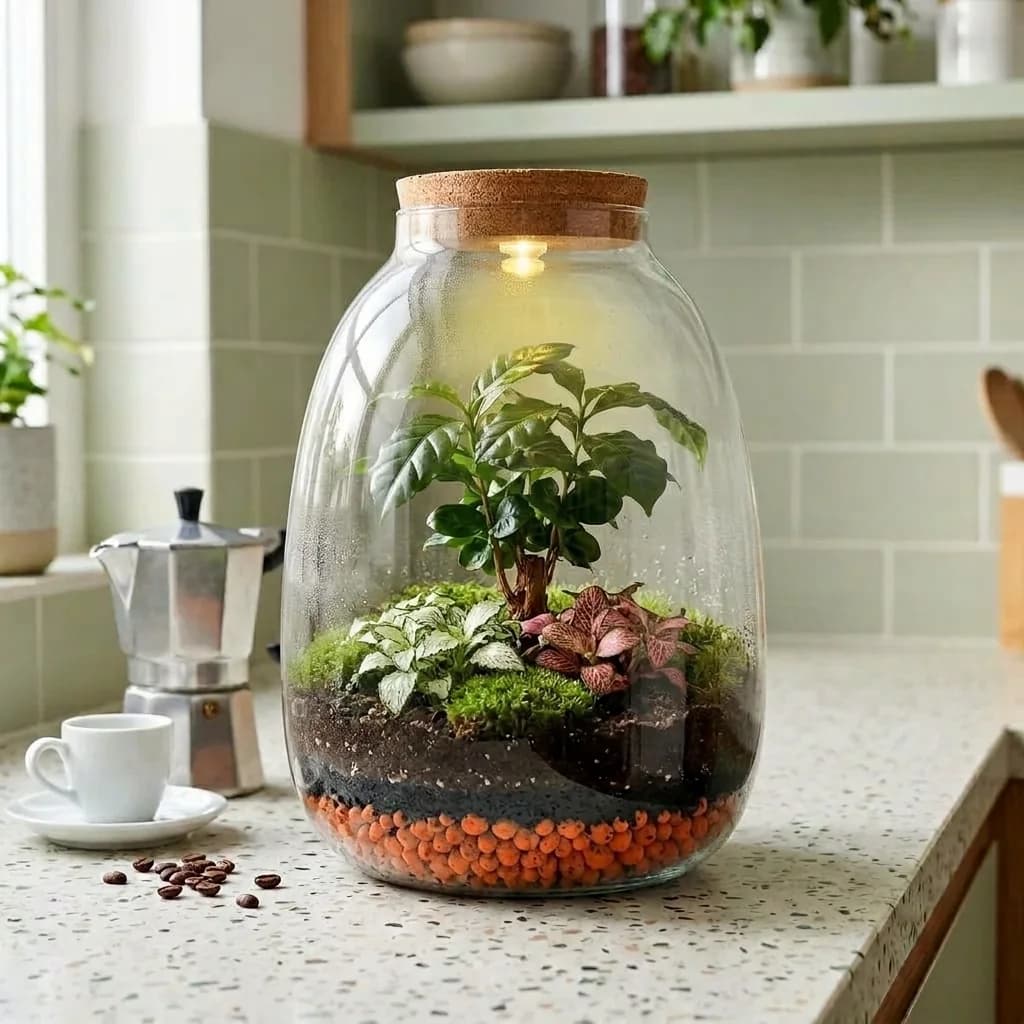
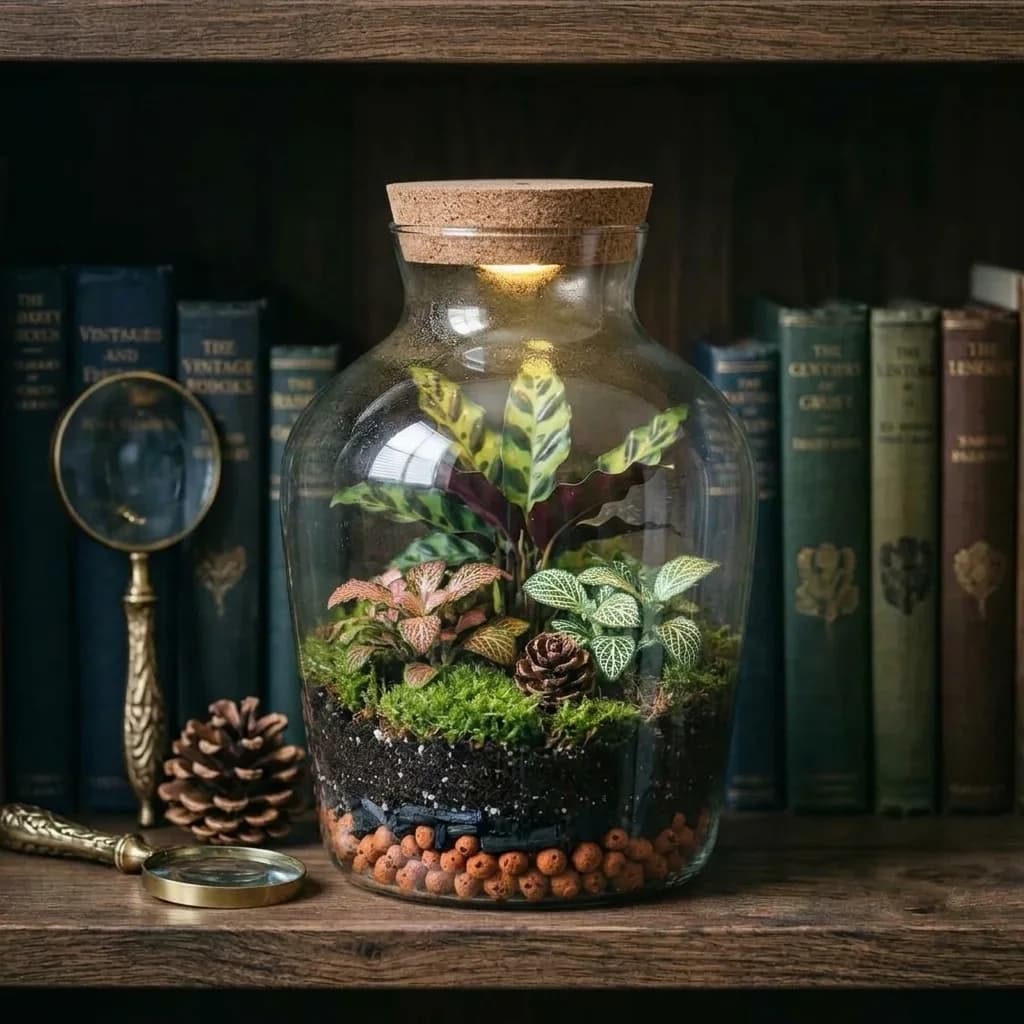
For a closed terrarium, start with three tropical woodland plants, varying the heights:
- a structural plant to give the vertical: a small fern, a selaginella;
- one or two filler plants for colour: fittonia, peperomia;
- moss on the ground, which ties it all together and makes the landscape.
Fittonia is particularly recommended for a beginner because it gives warning: its leaves droop when it is thirsty and lift again after watering. It is a living gauge in an environment you are still learning to read. Our selection by type is in Which plants for a terrarium.
Decision 4: the spot
Settle it before buying the container, not after. A closed terrarium wants bright but indirect light. On a south-facing windowsill the temperature under glass climbs very fast and the plants cook in one afternoon. Two metres from that same window, all is well.
A lit room with an east- or north-facing window will do. Check the furniture can take the weight as well: a built 10-litre jar weighs several kilos.
The build, in brief
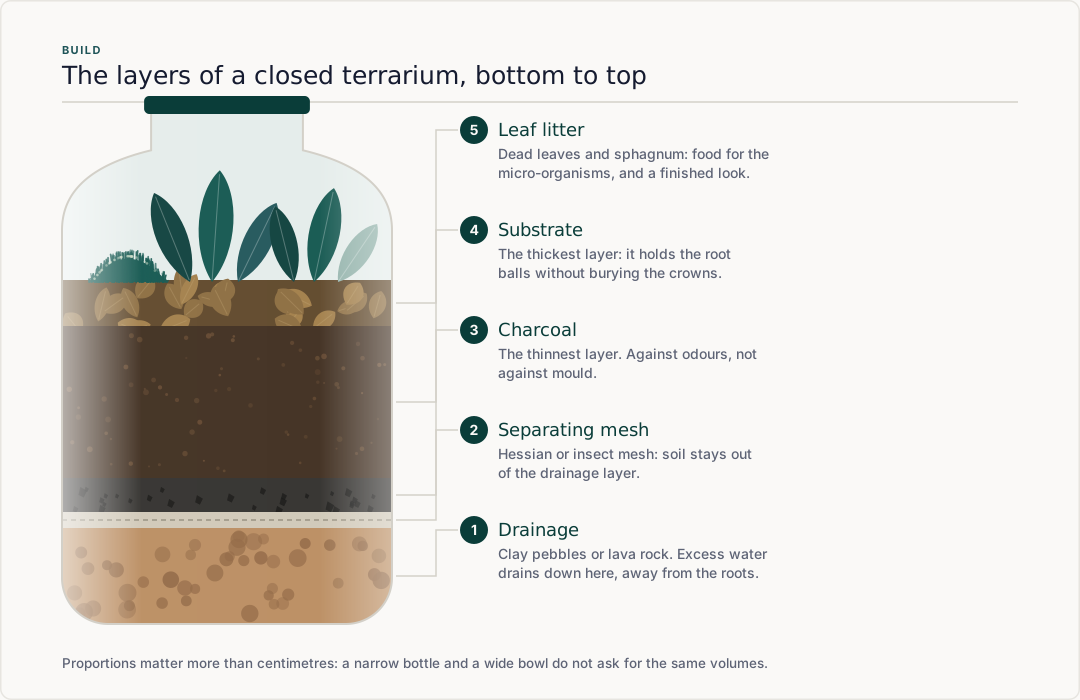
The detailed walkthrough is in How to create a closed terrarium. In order: drainage at the bottom, charcoal, substrate, relief, plants, moss, cleaning the glass, misting, closing. The depth of each layer is in The layers of a terrarium.
If you would rather have nothing to choose, a kit brings together the container, the layers and the tools in the right proportions.
The real budget
For a closed terrarium 20 to 25 cm across, allow roughly:
| Item | Range |
|---|---|
| Glass container | 20 to 40 € |
| Plants (3 of them) | 10 to 20 € |
| Moss | 6 to 12 € |
| Substrate and drainage | 8 to 15 € |
| Tools (optional at first) | 15 to 25 € |
Tools are not essential for a wide-mouthed jar: a long-handled spoon and the fine scissors you already own will do. The item-by-item breakdown is in What a terrarium costs.
The four mistakes that doom a first terrarium
Overwatering. By far the leading cause of failure. A terrarium has no drainage hole: every drop poured in stays there. Too little, which a few sprays put right, is better than too much, which takes days of airing. See Terrarium too wet.
Putting it in the sun. Glass concentrates heat. Bright, yes; full sun, never.
Mixing incompatible plants. A composition only holds if all its plants want the same water and the same light.
Keeping the potting compost. The compost in shop-bought pots holds far too much water for a closed environment, and it is often what sets off the first mould. Rinse the root ball in tepid water before planting.
The first few weeks
This is the period for watching and barely intervening. Look at the glass in the morning: a light mist that clears during the day is the good sign. Drops running down permanently mean there is too much water — open it for a few hours, then close it again. The full reading is in Condensation in a terrarium.
After a month the terrarium has found its rhythm. From then on, care comes down to three gestures two or three times a year: prune whatever touches the glass, remove dead leaves, clean the inside of the glass. That is the subject of Closed terrarium care.
Sources
Frequently asked questions
Which terrarium should you choose as a beginner?
A closed tropical terrarium, in a wide-mouthed jar of 5 to 10 litres. It forgives missed watering, builds by hand without long tools, and reopens easily so you can put things right.
How much does a first terrarium cost?
Between 40 and 80 € for a complete build 20 to 25 cm across: the container accounts for about half the budget, plants and moss a third, substrate and drainage the rest. The detail is in our price guide.
How long does it take to build a terrarium?
One to two hours for a first build, taking your time. It is not a heavy job: most of the outcome rests on the decisions taken beforehand, not on how fast you work.
Does a terrarium suit a dark flat?
It needs light, but not direct sun. A lit room with a north- or east-facing window is enough. In a genuinely dark room, a small grow light on for six to eight hours a day replaces the window.