

Ficus pumila in a terrarium: the complete guide
The creeping fig covers the ground, climbs wood and glass, and grows fast. Light, substrate, pruning and training so it does not swallow the composition.
In this guide
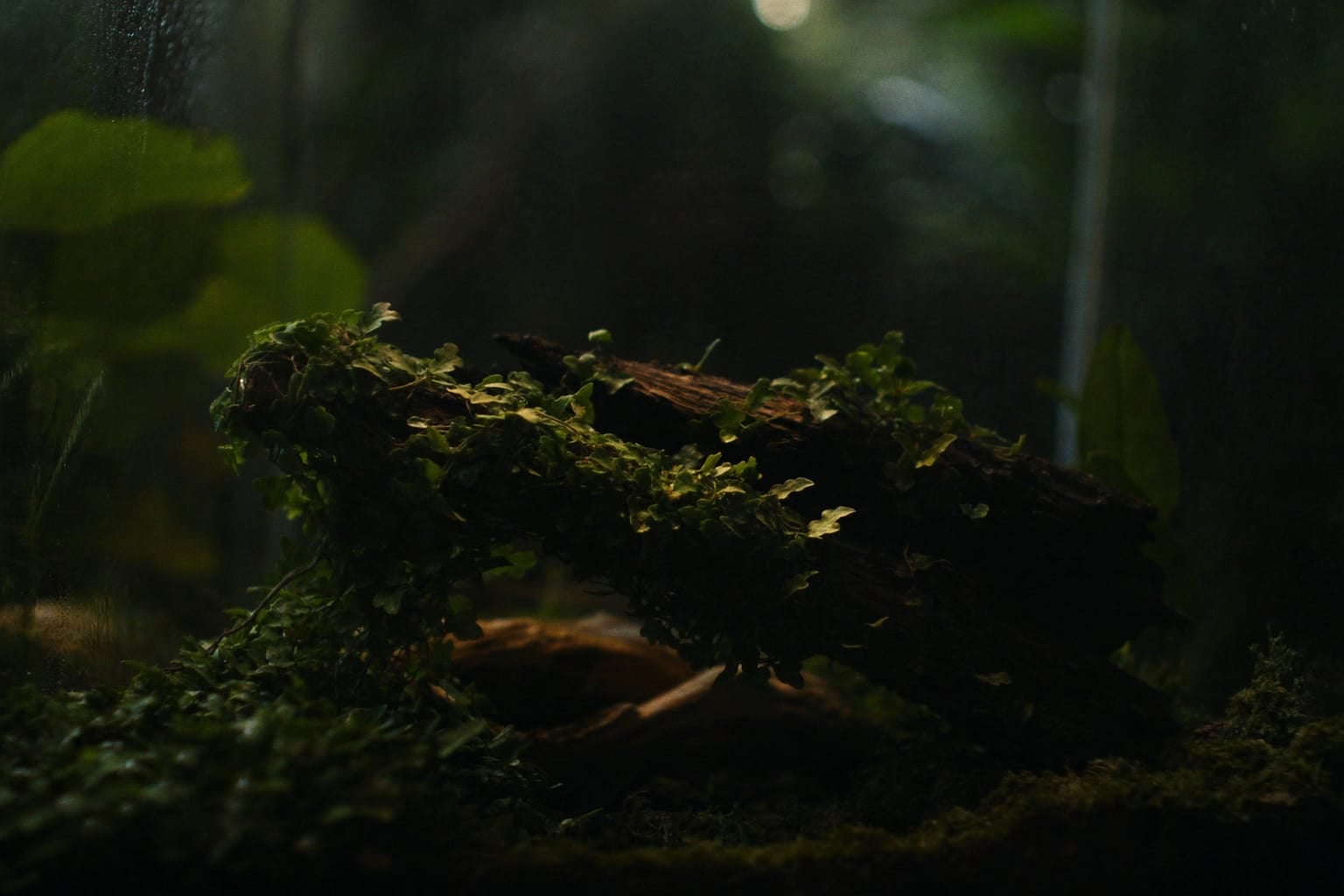
Ficus pumila, the creeping fig, is the ground-cover plant of the closed terrarium: it carpets the floor, climbs over wood and grips the glass, with small heart-shaped leaves two to three centimetres across. It is tough and easy, with only one real constraint: it grows fast, and without regular pruning it will cover the rest of the composition within a few months.
At a glance
| Botanical name | Ficus pumila |
| Other names | Creeping fig, climbing fig |
| Origin | East Asia |
| Size under glass | Creeping and climbing, unlimited length if left unpruned |
| Growth | Fast |
| Closed terrarium | Yes, its ideal place |
| Open terrarium | Not advised |
| Light | Bright indirect to partial shade |
| Humidity | High, but tolerates swings better than fittonia |
| Temperature | 16 to 26 °C |
| Difficulty | Easy |
What it brings to a composition
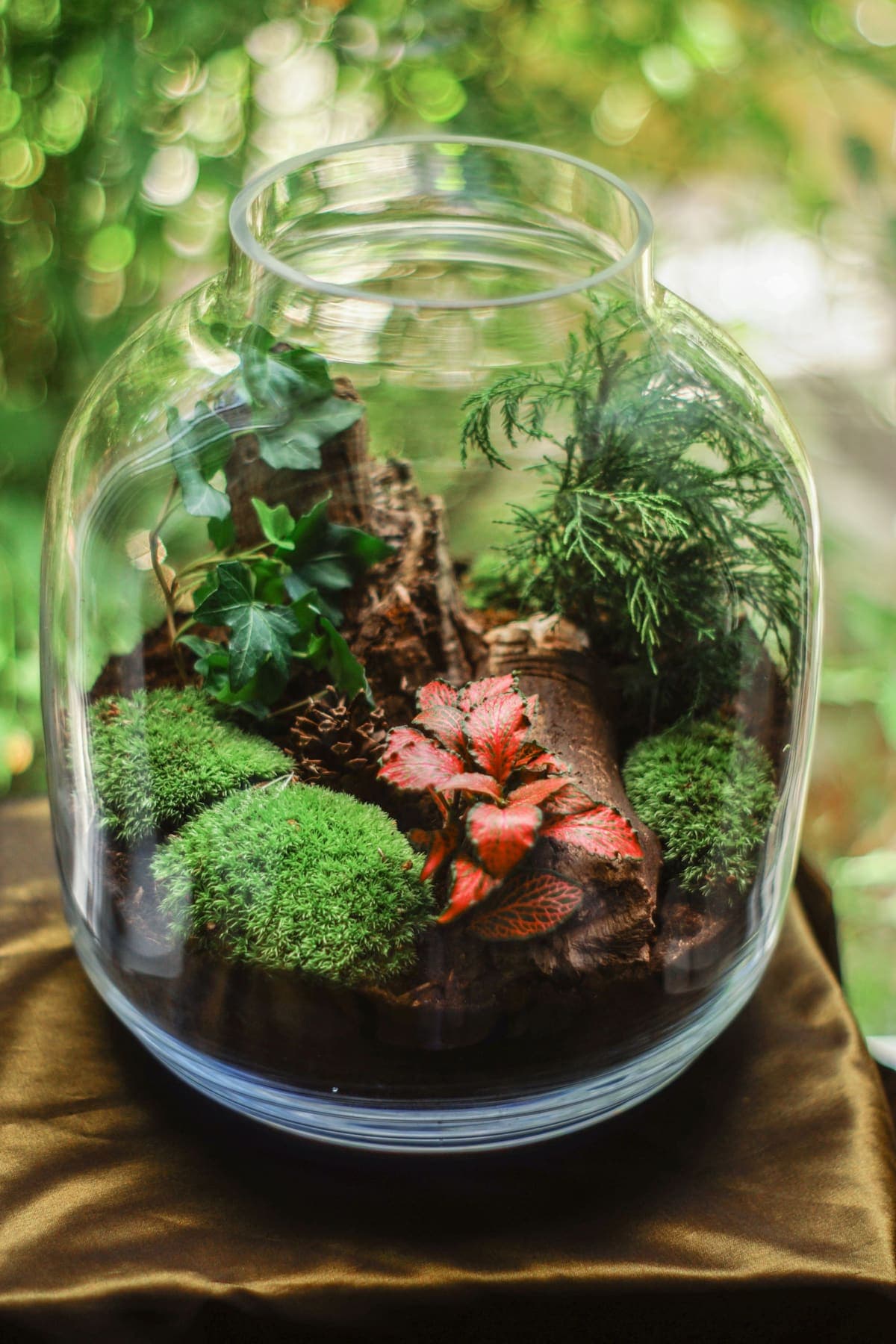
A terrarium composition needs three registers: height, volume, and cover. Creeping fig plays that last part. It ties the elements together, dresses a root or a stone, and hides the edges of root balls that give away a recent build.
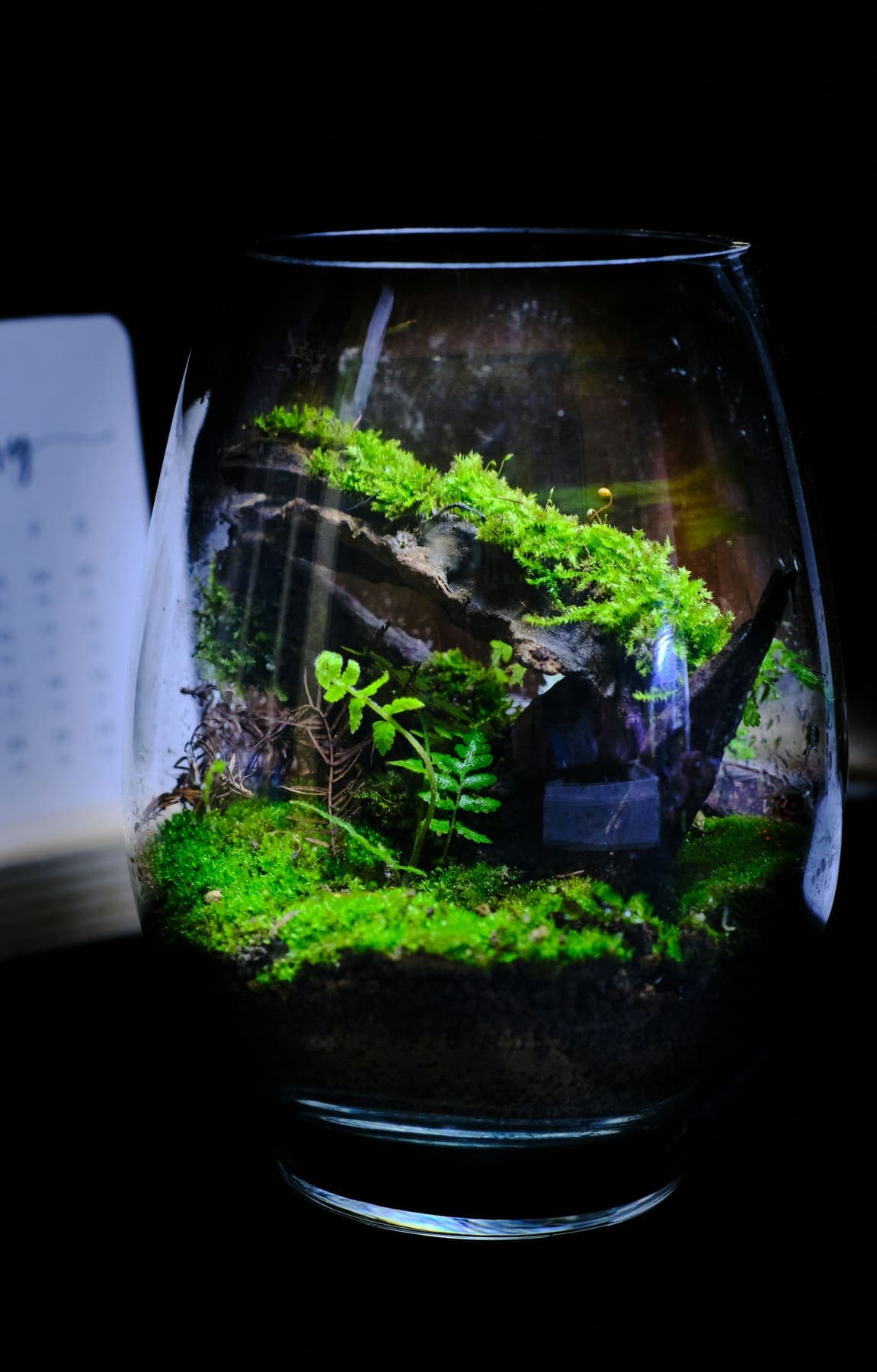
Its holdfasts let it climb without support. Left to itself on a piece of wood, it turns it into a green column within a few months — one of the most striking effects you can get in a small volume.
It is also more forgiving than most of its neighbours: it takes a drop in humidity or a lapse that would have flattened a fittonia. For a beginner, that is a safety margin.
Light
Bright but indirect, like all woodland-floor plants. It accepts a weaker position than average — a bright corner of a room is enough — but in too little light the stems stretch and the foliage thins out.
Never direct sun: under glass, the leaves scorch in a single afternoon. See Terrarium too warm.
Substrate and planting
An airy tropical terrarium substrate based on coir and fine bark. Rinse the root ball in lukewarm water before planting, to wash off the nursery compost, which holds far too much moisture in a closed environment.
Plant it at the edge or at the foot of a piece of hardscape, not in the middle: it will find its own way towards the light and the glass. To train it up a root, simply rest a stem against the wood and it will attach itself.
Watering
Nothing in particular: in a balanced closed terrarium it helps itself. You only step in when the mist stops forming on the glass for any length of time — see Watering a terrarium.
It copes better with a slight shortage than with an excess. Soft, translucent leaves over a soaked substrate signal a terrarium that is too humid, not thirst.
Pruning, the real subject
This is the plant's only constraint, and it is a genuine one. Left alone, creeping fig will:
- cover slower plants, which then waste away beneath it;
- press its leaves against the glass, where they rot in the stagnant damp;
- end up taking over the whole volume.
Pinch out the tips roughly every two months, with fine scissors. The plant branches and becomes denser instead of running. While you are there, peel off the stems stuck to the glass and remove any browned leaves.
The prunings root on their own: lay a stem a few centimetres long on the damp substrate and it will take within two to three weeks. It is the simplest way to thicken a composition without buying anything.
Common problems
Dry, brittle leaves at the tips of the stems. The air is too dry, or the terrarium no longer closes properly — see Terrarium too dry.
Soft brown leaves against the glass. Prolonged contact with the damp pane. Peel them off, remove the affected leaves, and cut the stem back.
Leaves yellowing one by one from the base. Usually too much water — see Yellow leaves in a terrarium.
What to pair it with
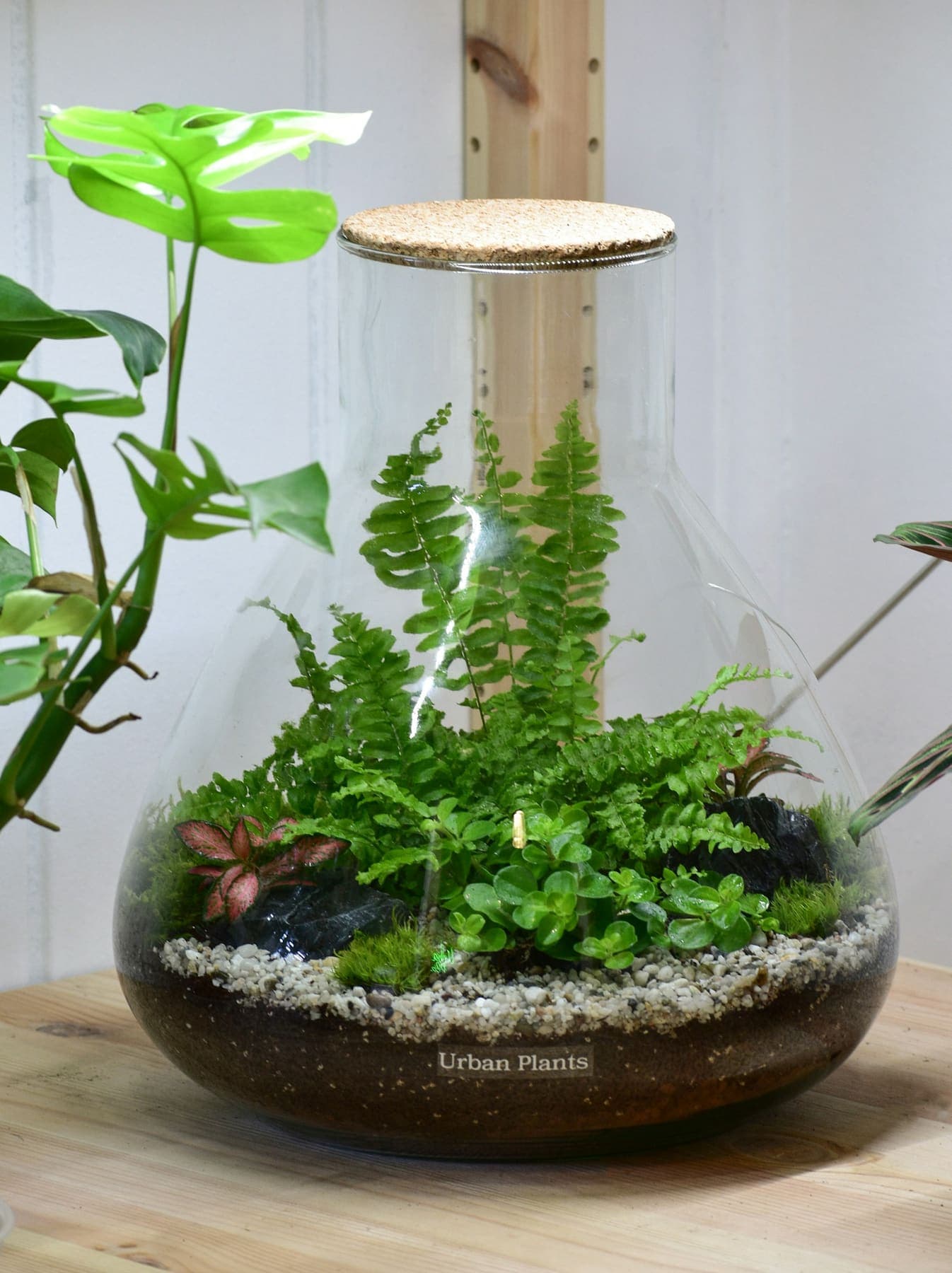
Anything that asks for the same conditions: fittonia for colour, selaginella for texture, peperomia for volume, a small fern for height, and moss on the ground.
One word of caution: its vigour makes it a poor neighbour for very slow plants, which it ends up smothering. Give it one side of the composition rather than planting it in the middle.
The tropical plants shelf brings together our compatible species, and Which plants for a terrarium gives the selection by type.
Sources
Frequently asked questions
Does ficus pumila climb glass?
Yes, it grips glass as readily as wood, using tiny holdfasts. It looks good, but leaves pressed against the pane end up rotting in the stagnant damp: peel them off regularly.
How often should it be pruned?
Roughly every two months under glass. It grows fast and will smother its neighbours if you let it. Pinch out the tips: it branches and becomes denser instead of running.
Is it suitable for an open terrarium?
Not really. It copes with moderate humidity better than a fittonia, but in the open air of a heated room its leaves dry out. Its place is the closed terrarium.
Can it be taken from cuttings?
Yes, very easily. A stem a few centimetres long laid on damp substrate roots within two to three weeks in the humidity of a closed terrarium.