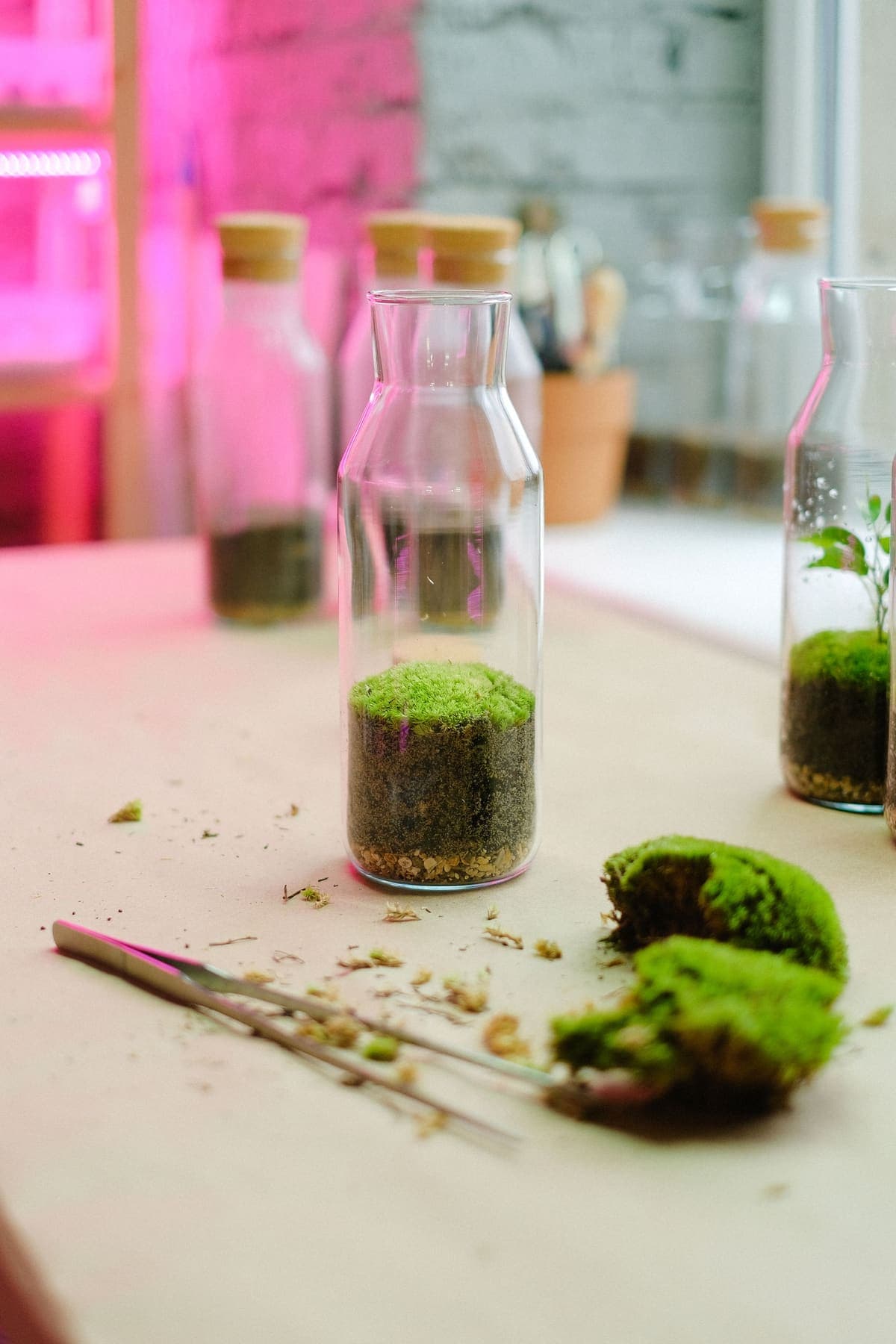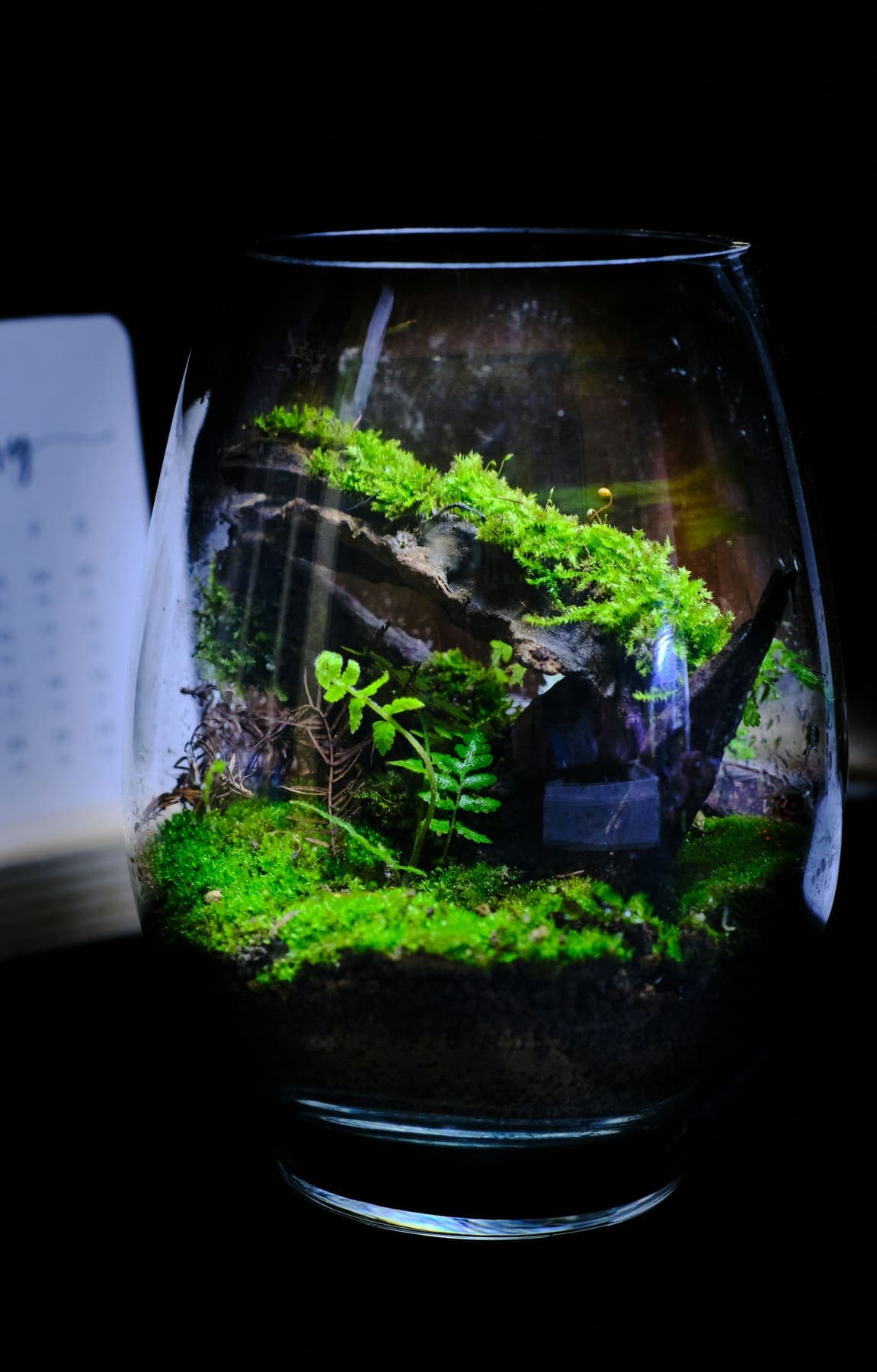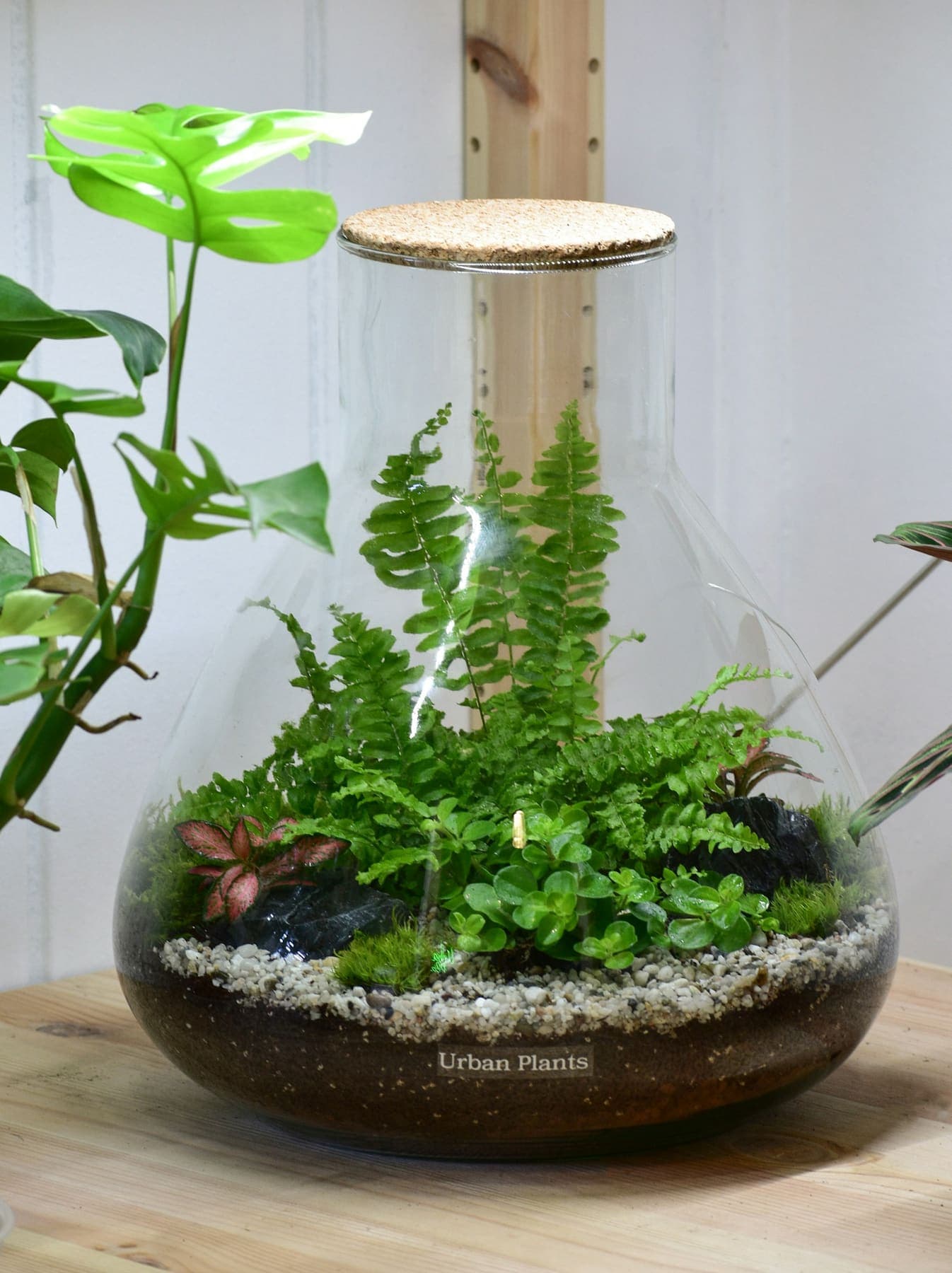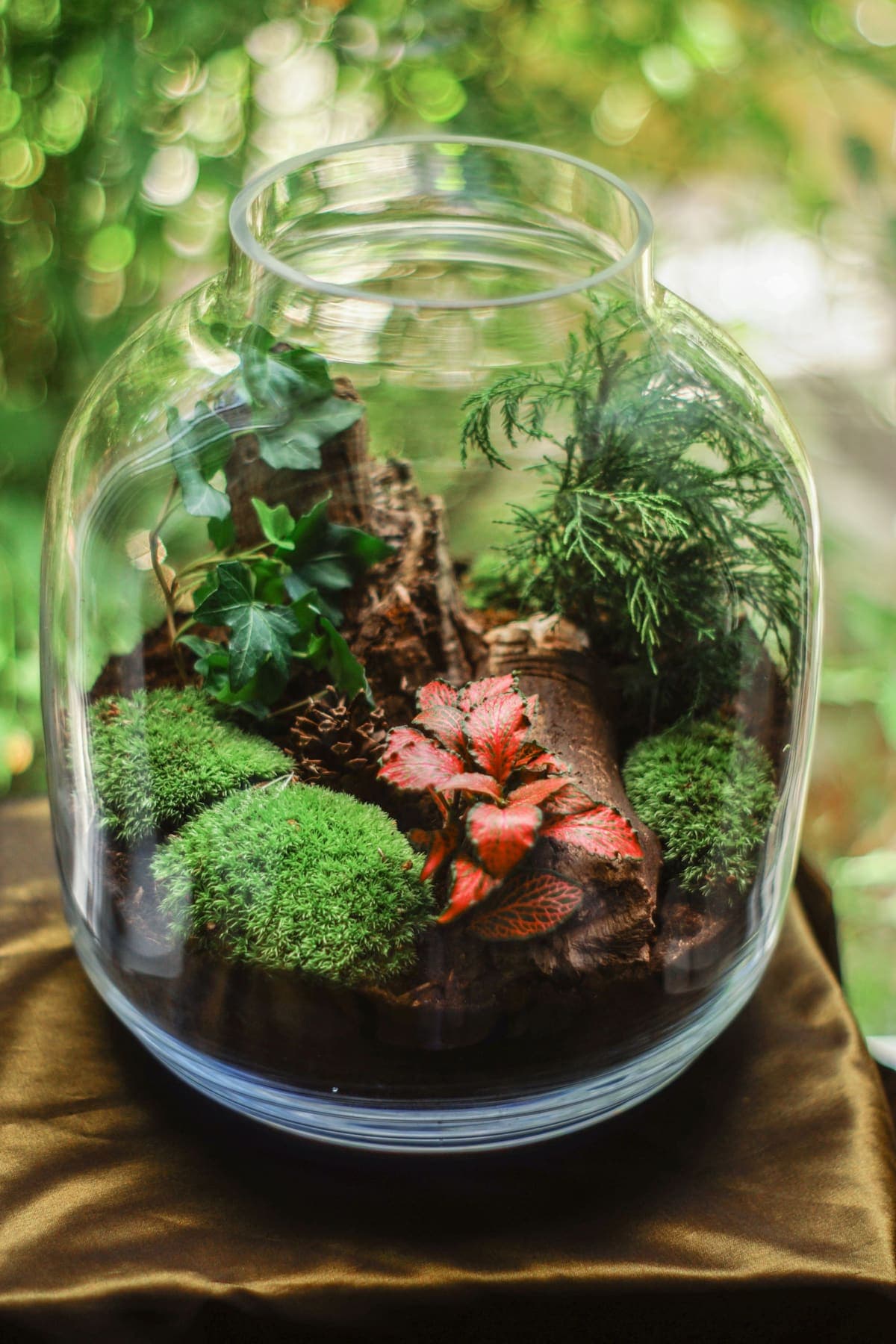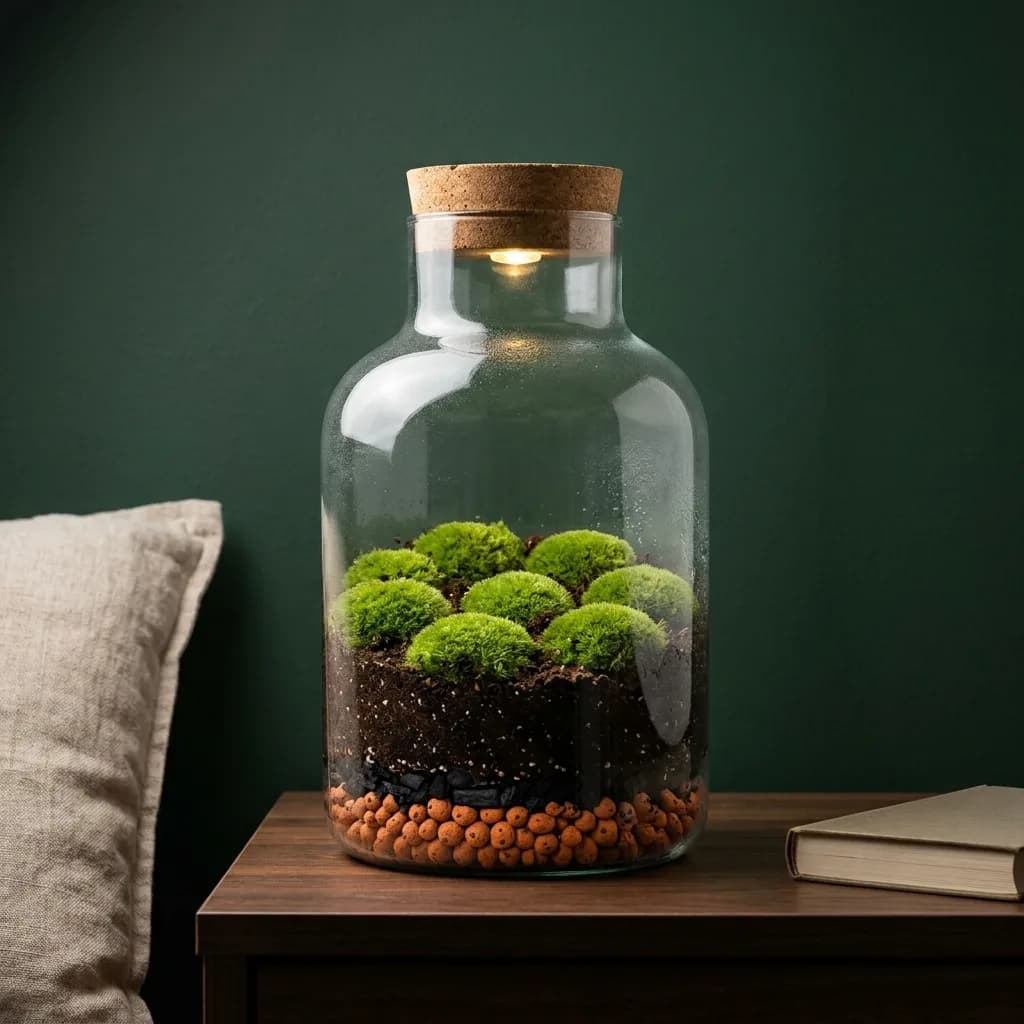
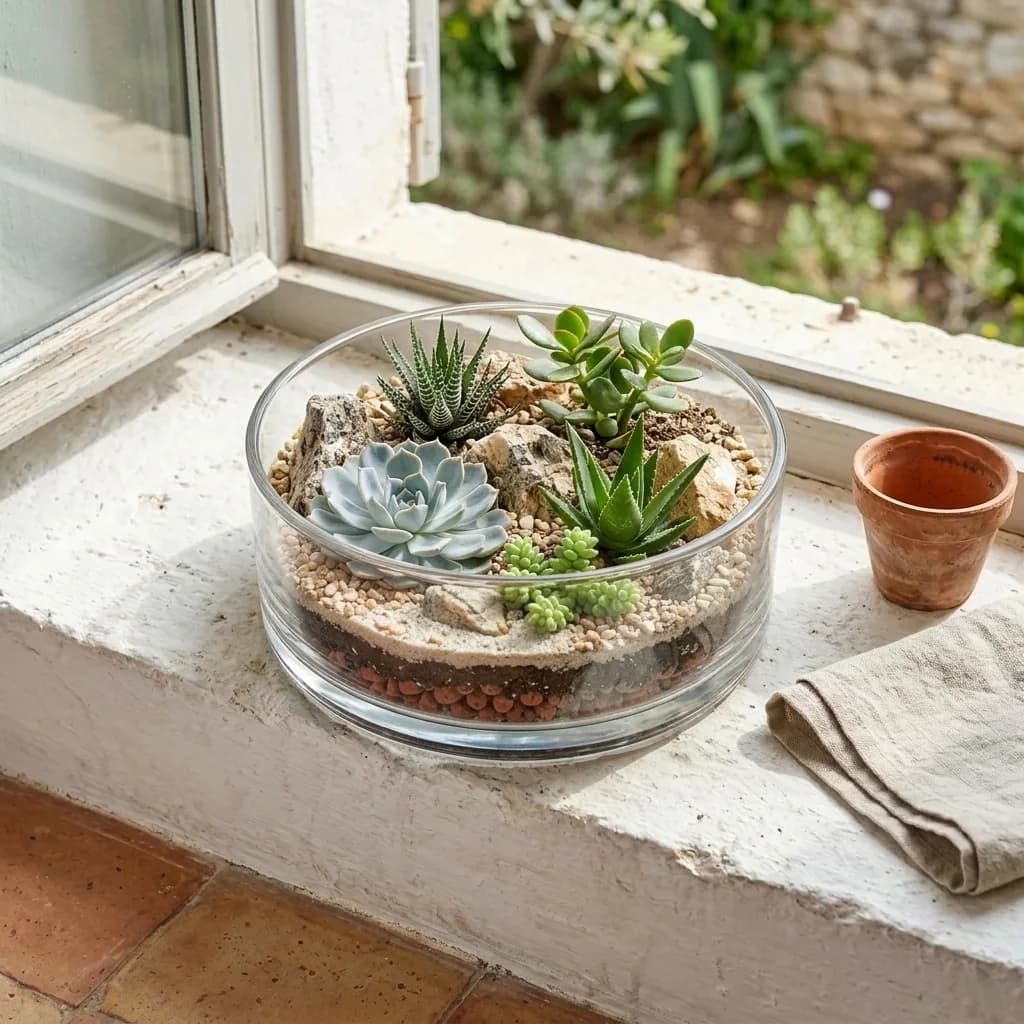
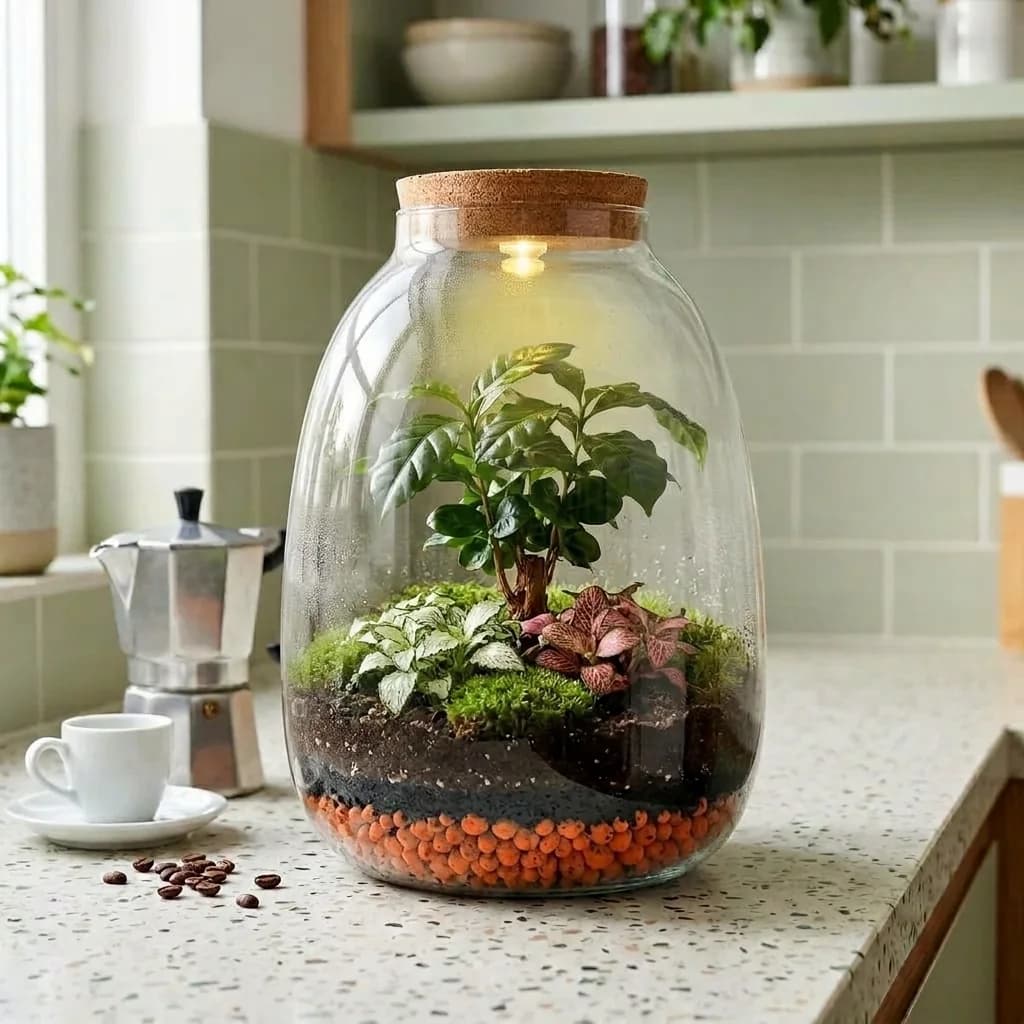
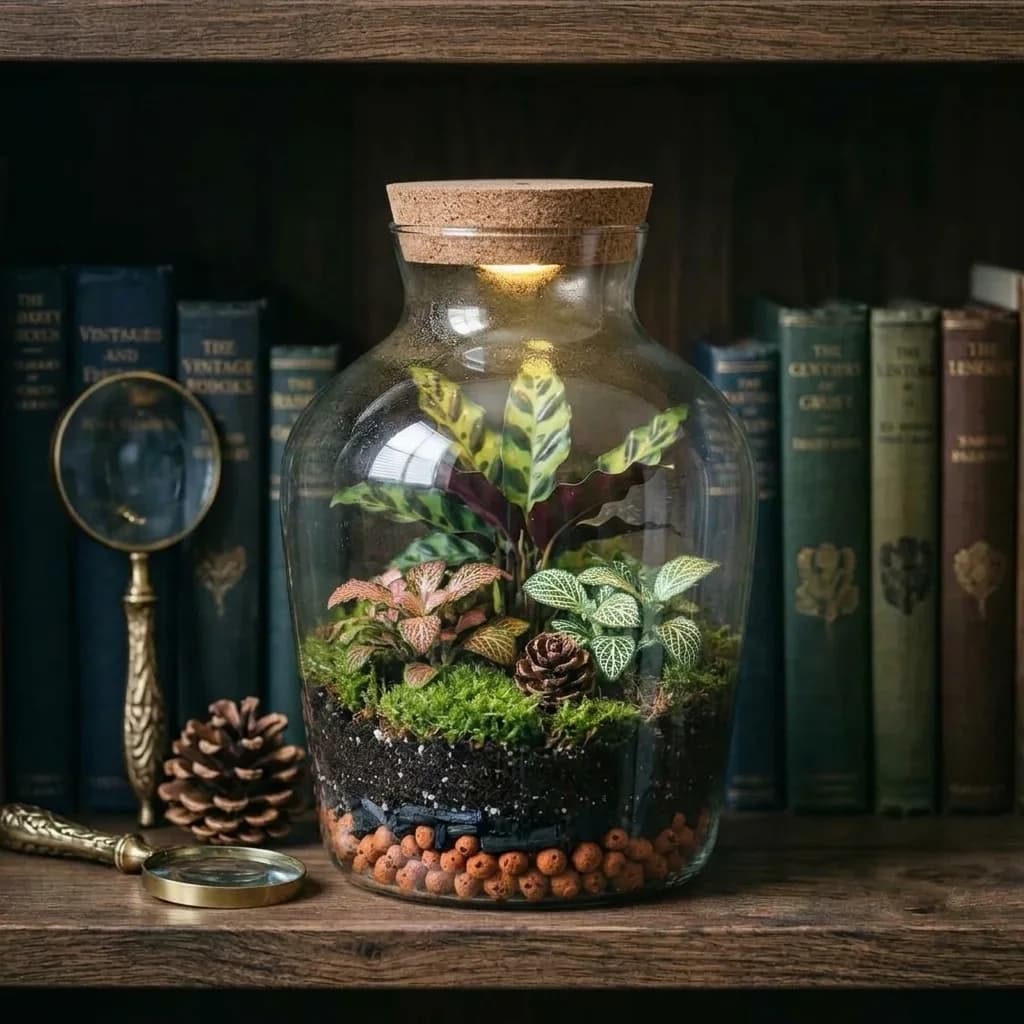


Live or preserved moss: which should you choose for a terrarium?
Avoid buying the wrong thing: live, dried and preserved moss and decorative lichen have different needs and different places in a terrarium.
In this guide
"Natural", "real moss" and "maintenance-free" can appear on very different products. What matters is their biological state, and then the use they are intended for. This comparison helps you read a listing before buying; to pick a live species, read the guide to terrarium mosses.
Four terms not to confuse
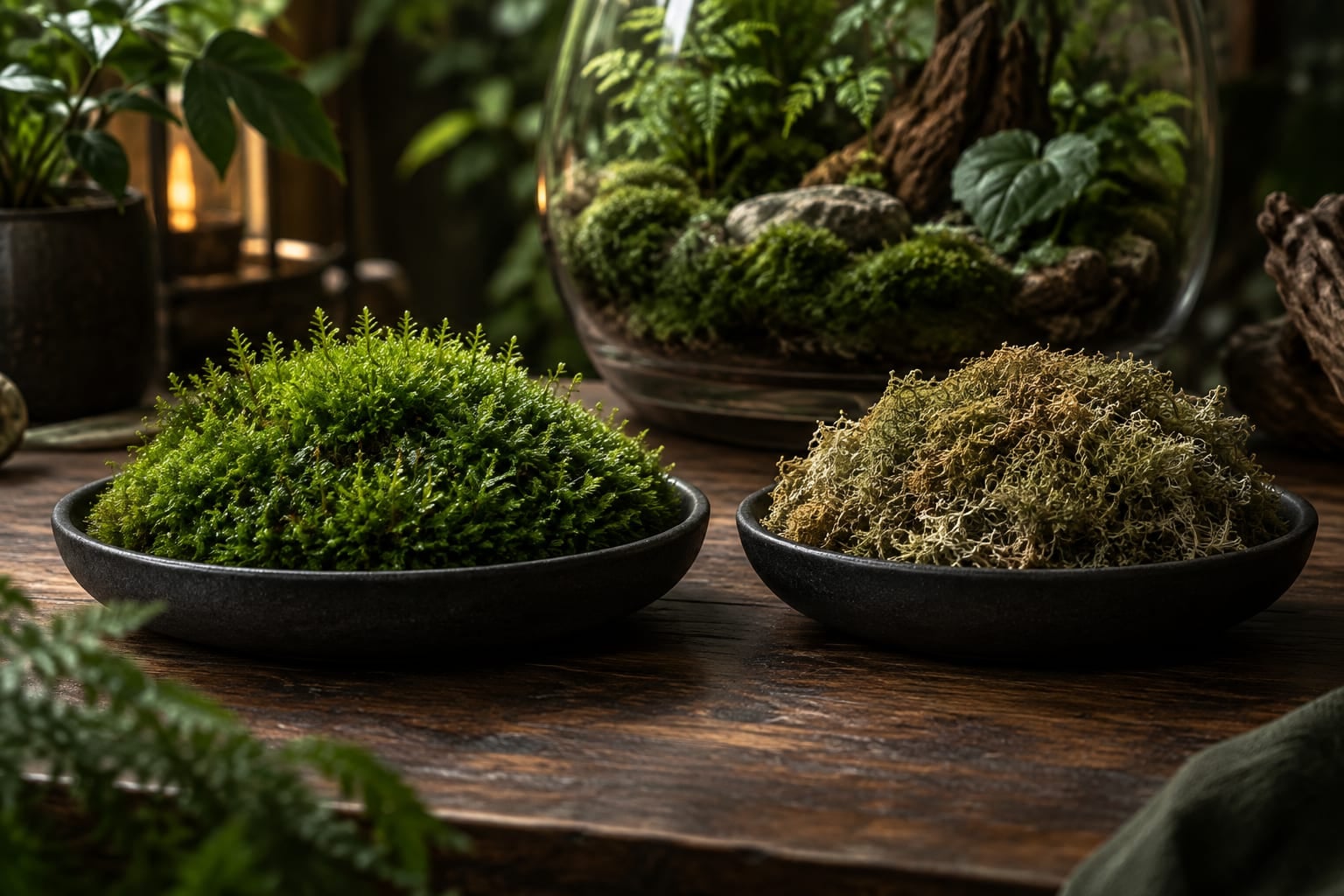
Live moss
It can grow given suitable light, humidity and temperature. It needs the right support and regular observation. Not every live moss tolerates the warmth of a tropical terrarium, even when they are sold looking much alike.
Dried moss
Drying describes a state, not a promise of recovery. Some mosses tolerate desiccation; a dry product sold for decoration may nonetheless be dead, dyed or treated. Without a statement from the supplier, do not assume that a soak will give it back the ability to grow.
Preserved moss
Preservation aims to keep the look and the suppleness of a plant for decorative use. The processes vary from maker to maker. The result is not grown like live moss and has no need of fertiliser. Follow the product instructions, particularly about water and ambient humidity.
Decorative lichen
The "reindeer lichen" often used in plant wall art is not a moss in the botanical sense. It too can be sold preserved and coloured. A trade name that evokes a forest is not enough to make it compatible with a humid jar.
Compare according to your project
| Criterion | Suitable live moss | Preserved product |
|---|---|---|
| Growth | Possible in a suitable environment | No growth expected |
| Water | Match it to the species and the support | Do not water it like a plant |
| Light | Needed for growth | The maker's storage instructions |
| Humid terrarium | Possible with a coherent choice of species | Generally unsuited to this use |
| Dry decoration | Risk of drying out, depending on the species | The usual use, if the instructions allow |
Decide first between a living composition and a decoration kept dry. Mixing the two imposes incompatible needs if the decorative part has to stay clear of watering.
The questions to ask before buying
- Is the product explicitly sold as live, and not merely "natural"?
- What is its botanical name, or what identification is available?
- Has it been preserved, dyed or treated?
- What temperature, light and humidity conditions are recommended?
- Where does it come from: cultivation, or documented collection?
- Is it advised for a closed terrarium, or only for dry decoration?
If the answers stay vague, ask the seller for details before you order. A very even colour is only a possible clue; a photograph cannot certify that a moss is viable.
Installing live moss
Choose a species that works with your plants and your environment. The listings for cushion moss and sheet moss are worth comparing on what they say, not just on their texture.
The guide to laying moss in a terrarium covers placement and contact with the support. Moisten it as needed, without turning the soil into a saturated sponge. Do not glue a living cushion to any old surface with a decorative adhesive.
Freshly laid moss can change appearance before it picks up. Watch the new tips and the environment. The guide to brown moss helps you sort through the possible causes; adding water every time a patch browns can make waterlogging worse.
What if you have already bought preserved moss?
Keep it for a decorative project in line with its instructions. Do not try to "wake it up" by soaking or feeding it: preservation is not a simple rest period for the plant. A coloured product can also react to damp; do not put it in the plants' growing medium without explicit compatibility.
If it is already in the jar, lift it out gently. Inspect the medium around it and replace the affected part if the product has left residues. There is no need to empty a healthy terrarium automatically; how far you go depends on what you actually see.
Building a coherent composition
For a small ecosystem, start from the miniature forest project and from plants suited to a terrarium. If you would rather have a purely decorative object with no horticultural care, choose materials for that use with your eyes open. Both projects are perfectly possible, but they are not maintained in the same way.
Sources and scope of this advice
- Verdissimo — information on preserved plants: the maker's own documentation, worth reading for the limits of its products.
- RHS — Terrariums and bottle gardens: growing conditions for living compositions.
Preservation instructions vary; no image replaces the supplier's description. Generated illustration, for editorial purposes, with no botanical identification value.
Frequently asked questions
Can preserved moss come back to life?
No: it is made for decoration, not for resuming growth. Do not confuse it with live moss that has simply dried out.
Is green moss necessarily alive?
No. Preserved or dyed products stay green. Check the description and the treatment with the seller.
Can you mix live and preserved moss?
Avoid that mixture in a humid terrarium: what the first needs to grow does not usually match the conditions the second is meant to be kept in.