

Tropical terrarium for beginners: easy plants, light and mistakes to avoid
Fittonia, spikemoss and a small fern: three easy tropical plants for a first terrarium, along with the light, humidity and mistakes that lead to failure.
In this guide
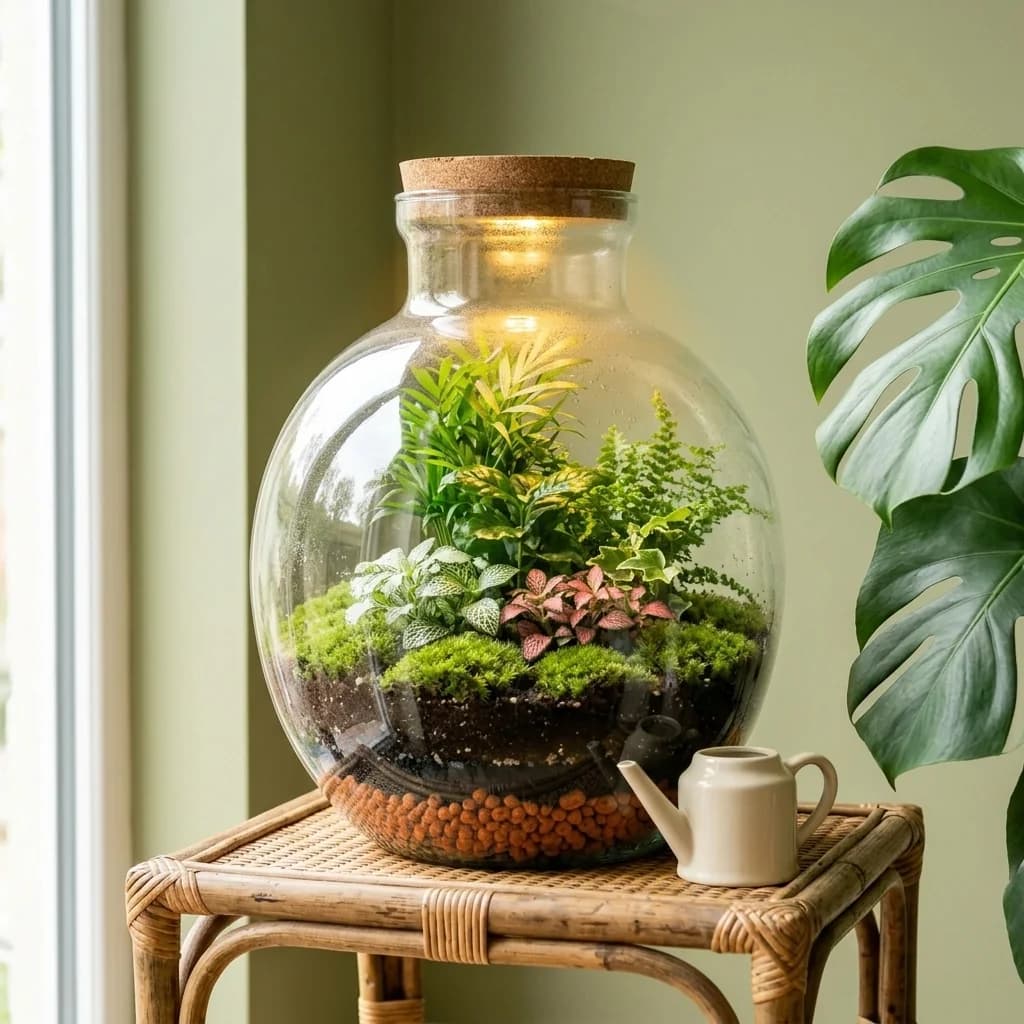
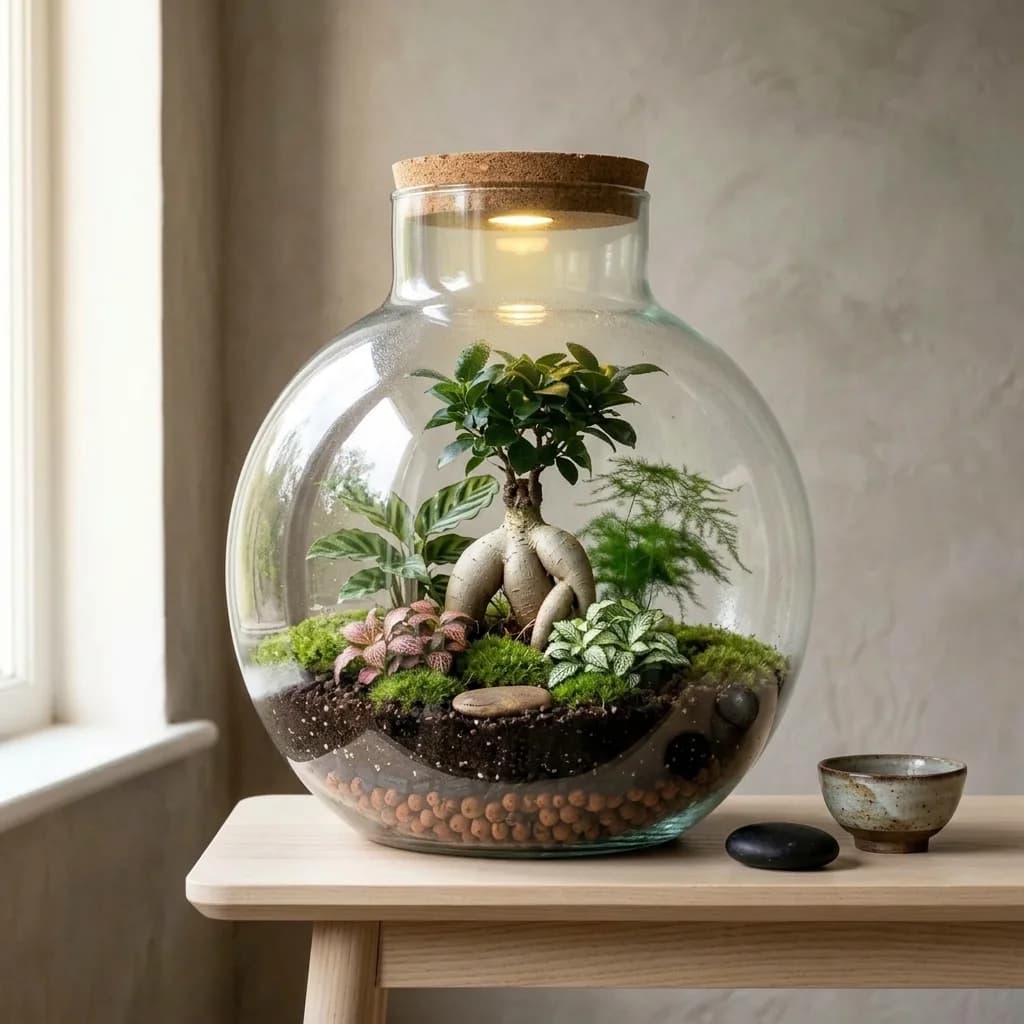
For a first tropical terrarium, choose three plants that love humidity and forgive mistakes: fittonia, spikemoss and a small bird's nest fern. Set them up in a closed container, on an airy substrate, in a bright room without direct sun. Most failures come down to three causes: too much water, too much sun, or plants with mismatched needs. Here's how to avoid them.
What is a tropical terrarium?
It's a terrarium that recreates the feel of a humid woodland floor: plenty of humidity in the air, filtered light, soil that stays constantly cool. The Royal Horticultural Society (RHS), the UK's leading horticultural society, describes the closed terrarium as a glass container where humidity stays high and water is continuously recycled. It suits small, slow-growing tropical plants that love humid air.
It's the opposite of a desert terrarium, which is open and designed for succulents. The two don't mix: if you're still unsure, our comparison closed or open terrarium will help you choose.
Closed or open, for a beginner?
Closed is simpler. Tropical plants suffer from the dry air of our homes, especially in winter with the heating on. In a closed container, humidity stays stable without you having to mist every day. An open tropical terrarium works too, but it demands much more regular attention.
Which tropical plants should you choose as a beginner?
Fittonia, the most communicative
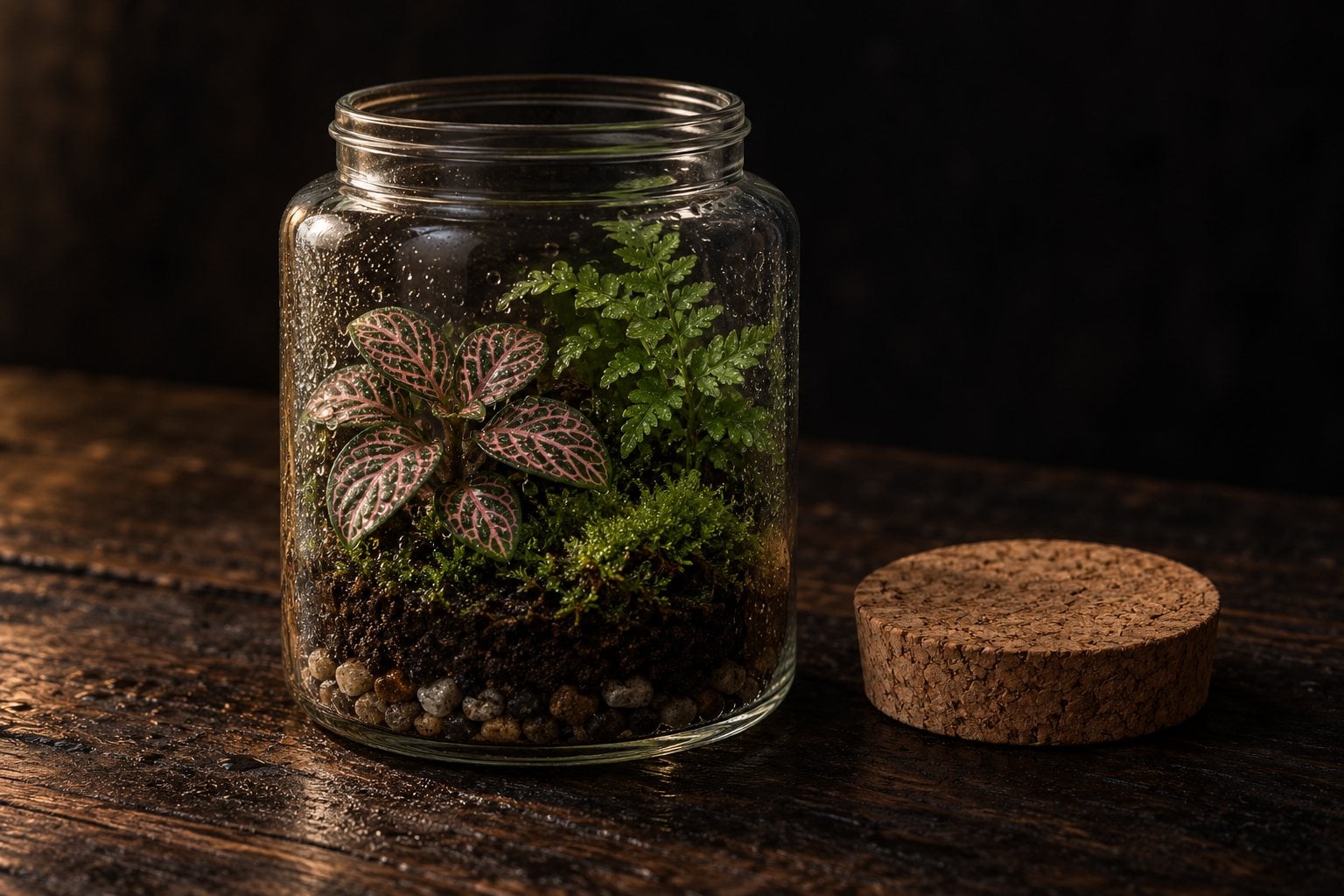
Fittonia is often the best first plant. Its leaves, veined in white, pink or red, add colour, and it clearly signals when something's wrong.
- Light: bright to medium, without direct sun, which scorches its leaves. It also grows well under artificial light.
- Humidity: medium to high. In dry air, its leaves curl up and drop.
- Water: when it runs short, it wilts dramatically all at once, then perks back up after watering. Conversely, too much water rots its roots.
- Size: the species can reach about twenty centimetres tall and spreads much wider still. For a terrarium, choose dwarf forms.
Good to know: according to North Carolina State University's extension service (NC State), fittonia isn't toxic to cats or dogs.
Spikemoss, the green carpet
Spikemoss (Selaginella kraussiana) forms a low, light carpet, ideal for the foreground. The golden 'Aurea' variety brightens up darker compositions.
- Light: shade to partial shade. Direct sun scorches its foliage.
- Humidity: high. In dry air, it browns and dries out.
- Water: a cool but well-drained soil; excess water rots the roots.
- Growth: it barely exceeds five to ten centimetres in height, but spreads fast. Plan to trim it so it doesn't smother its neighbours.
The bird's nest fern, the touch of height
Asplenium nidus forms a rosette of glossy fronds. The 'Crispy Wave' variety has striking wavy fronds.
- Light: bright or lightly shaded, such as near a north-facing window. Too much direct sun turns the fronds yellow.
- Water: it can't cope with drying out. The soil must stay cool.
- Substrate: rich, moist and porous, like a fern compost.
- Temperature: NC State gives an ideal of around 15 to 21 °C, an ordinary room temperature.
- Size: in the wild, it's a large plant. Bought young, it suits a terrarium for a while, then will need to move to a pot once it touches the glass.
And the mosses
Cultivated mosses complete the trio. They cover the ground, hold in humidity and give that true woodland-floor look. Our guide to terrarium mosses presents the easy species. To widen your choice, see also which plants for a terrarium.
How do you combine the plants?
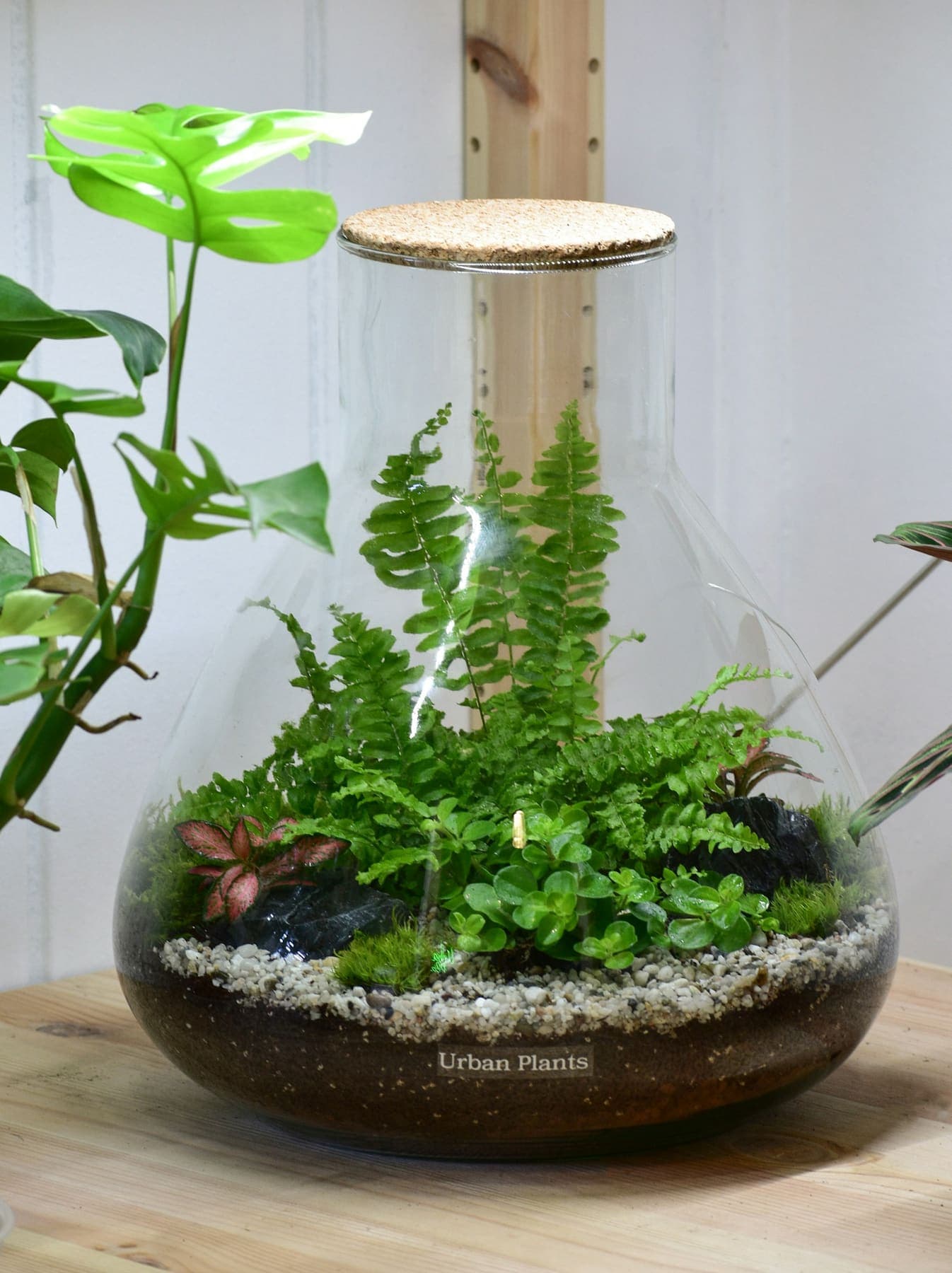
The most important piece of advice is simple: bring together plants with the same light and water needs. This is what Penn State University recommends. The fittonia, spikemoss and fern trio works because all three love humidity, indirect light and cool soil.
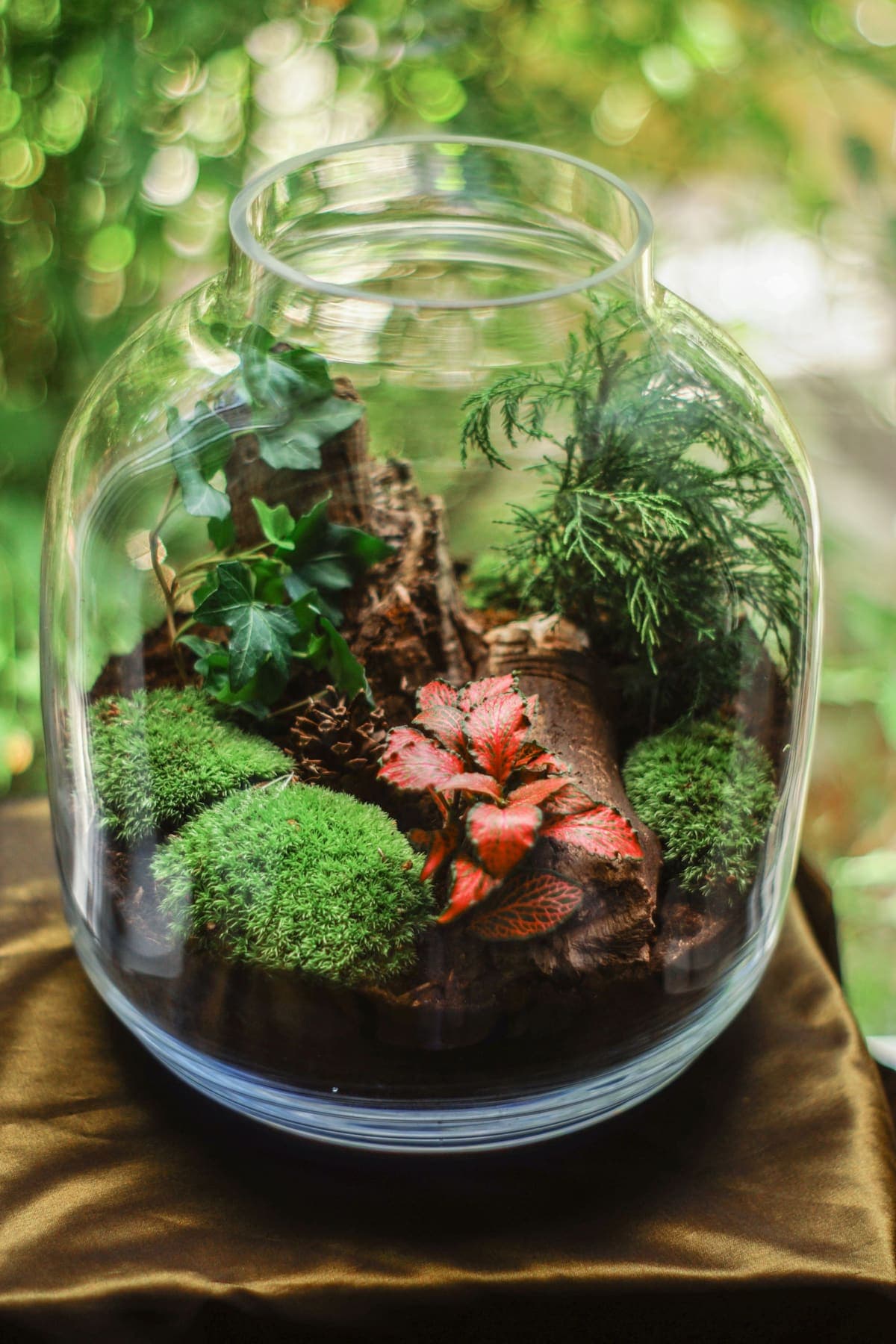
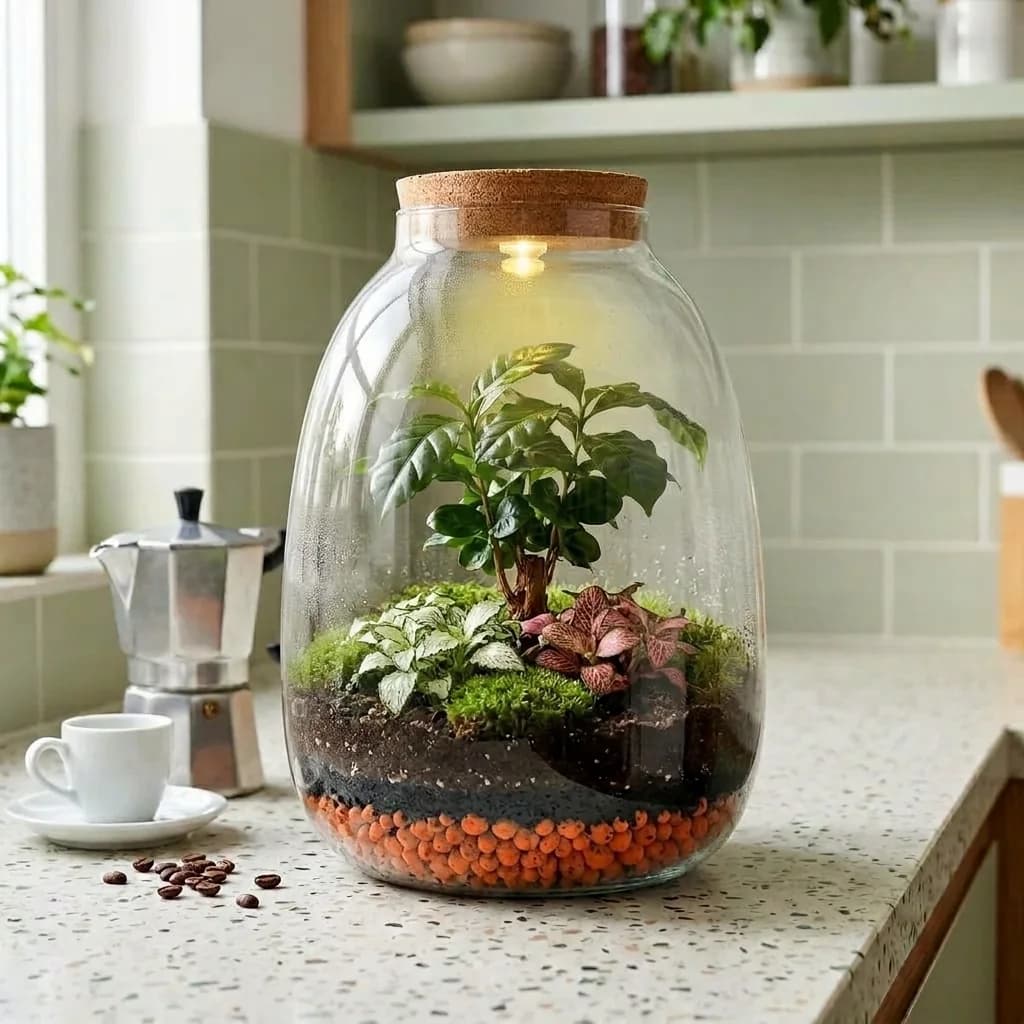
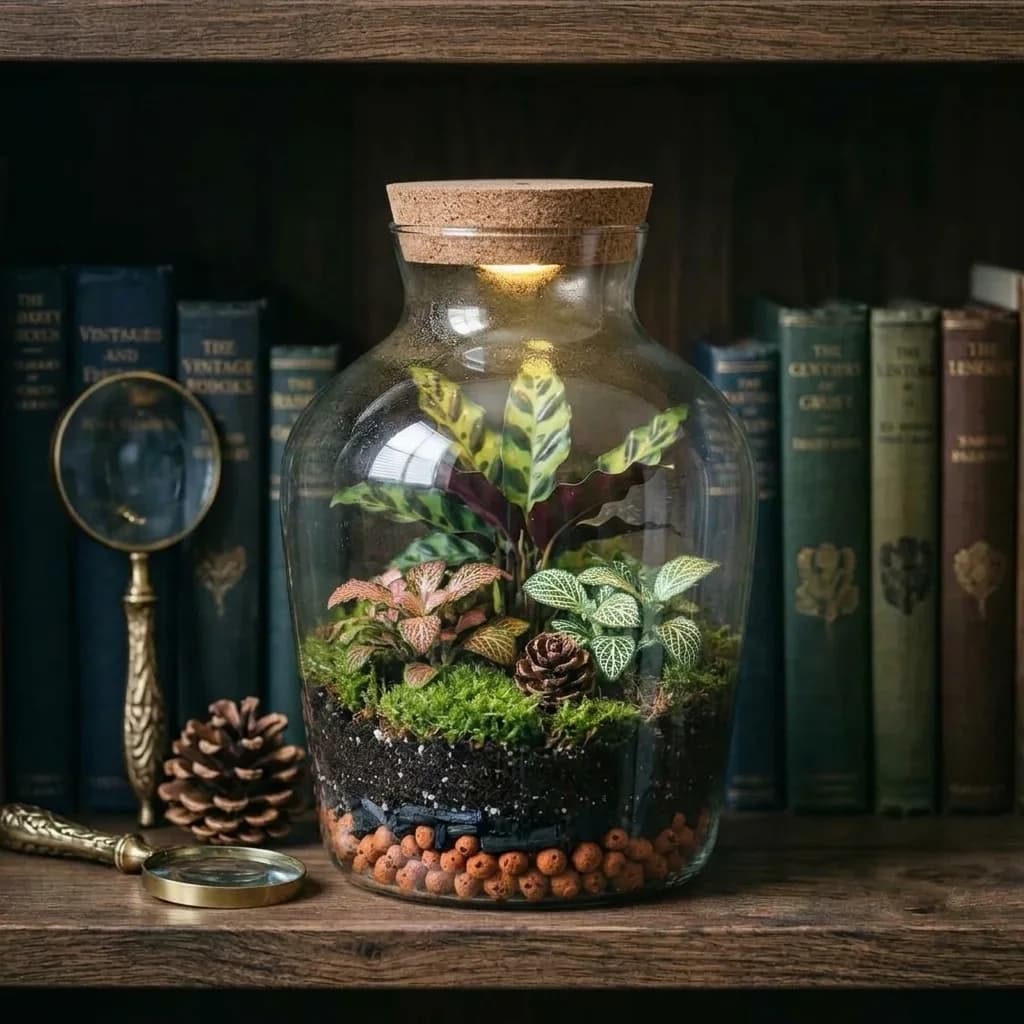
An easy composition builds up in three layers:
- At the back or off-centre, the fern, the tallest plant.
- In the middle, one or two fittonias, for colour.
- At the front, the spikemoss and mosses, for the carpet.
Leave space between the plants. They'll grow, and an overcrowded terrarium demands far more trimming.
What light does a tropical terrarium need?
These plants live in the shade of trees, but they still need light to grow. The RHS recommends at least six hours of bright, indirect light a day, ideally near a north- or east-facing window, and never in direct summer sun. Penn State University puts it even more bluntly: in the sun, a closed terrarium "cooks".
If your room is dark, a grow lamp works very well. Place it away from the glass so as not to heat it up.
Two signs tell you if the light is right:
- Long, pale, leaning stems: light is lacking.
- Scorched, yellowed or discoloured leaves: there's too much sun.
What humidity, and how do you maintain it?
In a closed terrarium, humidity almost regulates itself. Watch the condensation: a light haze on the glass shows the water level is right. If water is streaming constantly, remove the lid for a day or two. If the glass stays dry and the plants wilt, mist a little.
In an open terrarium, mist regularly, and keep an eye on the fittonia's leaves: if they curl up, the air is too dry.
Use low-lime water, rainwater or demineralised water: it leaves fewer white marks on the glass. Our guide watering a terrarium sets out the quantities in detail.
Which substrate?
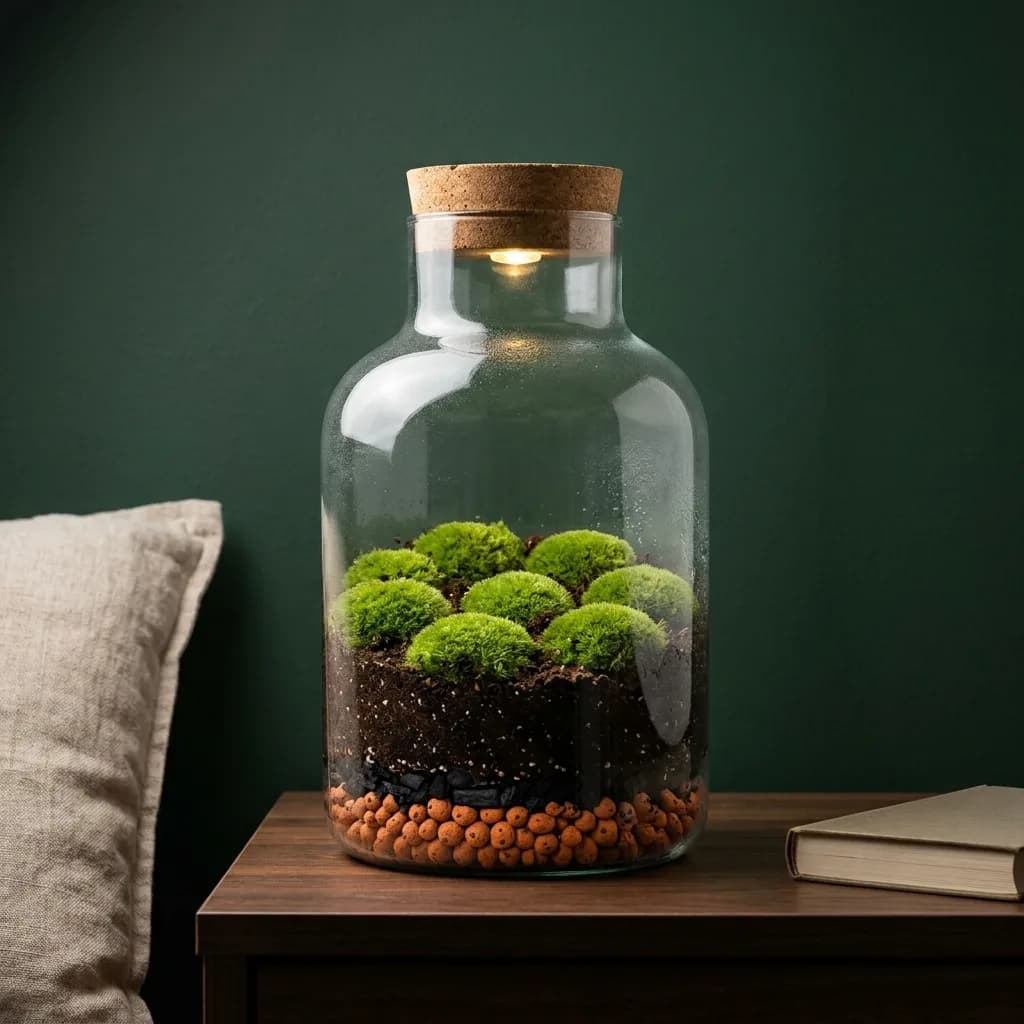
All three plants ask for the same thing: soil that stays cool without ever becoming waterlogged. You therefore need an airy, porous substrate, laid on a draining layer that collects excess water. Our tutorial how to create a closed terrarium explains the build layer by layer, and our guide to terrarium substrate compares the different mixes.
Beginner mistakes
- Overwatering with good intentions. This is the most common mistake. In fittonia as in spikemoss, excess water rots the roots.
- Misreading a wilting fittonia. Most of the time, it's thirsty and will perk back up after a light watering. But check the substrate first: if it's already wet, the problem lies with the roots, not a lack of water.
- Placing the terrarium in the sun. The glass heats up, and the leaves burn.
- Mixing tropical plants with succulents. Succulents and cacti can't cope with the humidity of a closed terrarium.
- Planting too close together. Spikemoss, in particular, quickly takes over the space.
- Losing focus early on. According to Penn State University, disease mostly takes hold in the first few weeks. Remove a damaged leaf or a patch of white fuzz straight away. If in doubt, read our guide on mould in a closed terrarium.
- Leaving dead leaves in place. The RHS recommends removing them promptly, to prevent rot and mould.
The kit
All three plants in this guide come in small, ready-to-plant sizes.
Find all the suitable plants and substrates in our tropical terrarium section.
Sources
Frequently asked questions
What's the easiest plant for a tropical terrarium?
Fittonia is often the simplest. It loves humidity, tolerates medium light, and clearly shows when it needs water: it wilts, then perks back up after a light watering.
Does a tropical terrarium have to be closed?
Not necessarily, but it's easier. Closed, it holds onto the humidity these plants need. Open, you need to mist often, since dry indoor air makes the leaves wilt.
Is fittonia toxic to cats?
According to North Carolina State University's extension service, fittonia isn't toxic to cats or dogs. A closed terrarium keeps it out of reach either way.
Can you light a tropical terrarium with a lamp?
Yes. Fittonia grows well under artificial light, and a grow lamp makes up for a dark room. Keep it away from the glass so as not to heat up the terrarium.