70s-style living room: sofa, lamp, colours and the one touch that is enough
A low sofa, a round lamp, two warm colours and plants: what makes a 70s-style living room today, piece by piece, and where to start without buying everything again.
In this guide
A 70s-style living room comes down to five things: a low sofa, a round lamp, two warm colours, natural materials and green plants. You do not need all five. Two are enough, in a room that stays light and calm.
This guide goes through the living room piece by piece. For the basics of the style, first read our guide to 70s decor.
The sofa: low, round, in modules
The 70s sofa sits close to the floor. It has no tall legs, and its corners are rounded. Often it is made of modules that you join together and move around.
Two models set this image. The Togo, designed by Michel Ducaroy for Ligne Roset, dates from 1973: it is an all-foam, pleated sofa with no hard frame. The Camaleonda, designed by Mario Bellini for B&B Italia, dates from 1970: it is a modular sofa that you hook and unhook.
You do not need these pieces. Keep the idea:
- a low seat, close to the floor;
- round shapes, with no sharp corners;
- a fabric with texture: corduroy, bouclé wool.
If you keep your current sofa, change only the cushions. Two corduroy cushions in terracotta or mustard already do the job.
The lamp: round, with a warm light
The lamp is the fastest way to change a living room. Three shapes come from this era.
- The mushroom lamp. A base and a dome shade, made of a single material. The Panthella, designed by Verner Panton in 1971 for Louis Poulsen, is the best-known example.
- The globe lamp. A ball of opal glass, standing on a base or hanging.
- The rattan or wicker pendant. It casts shadows on the walls.
Choose a warm-light bulb. Place the lamp low: on a side table or a sideboard, not on the ceiling. In living rooms of that era, several small lamps replaced the ceiling light.
The furniture: low and rounded
- The coffee table is round or oval. It is made of dark wood, smoked glass or moulded plastic.
- The sideboard is long and low, in wood, with sliding doors.
- The armchair is made of rattan, or it has a rounded shell.
A simple rule: no piece of furniture goes higher than the eye level of a seated person. This is what gives these living rooms their relaxed feel.
The colours: a light base and two warm colours
The colours of the era are burnt orange, brown, mustard yellow and greens. Today, people use softer versions. The paint maker Tikkurila puts it this way: terracotta replaces bright orange, and the greens are more muted.
For a living room, spread the colours like this:
- Walls and floor stay light: off-white, beige, wood.
- A first warm colour goes on a large textile: the rug, the curtains or the sofa.
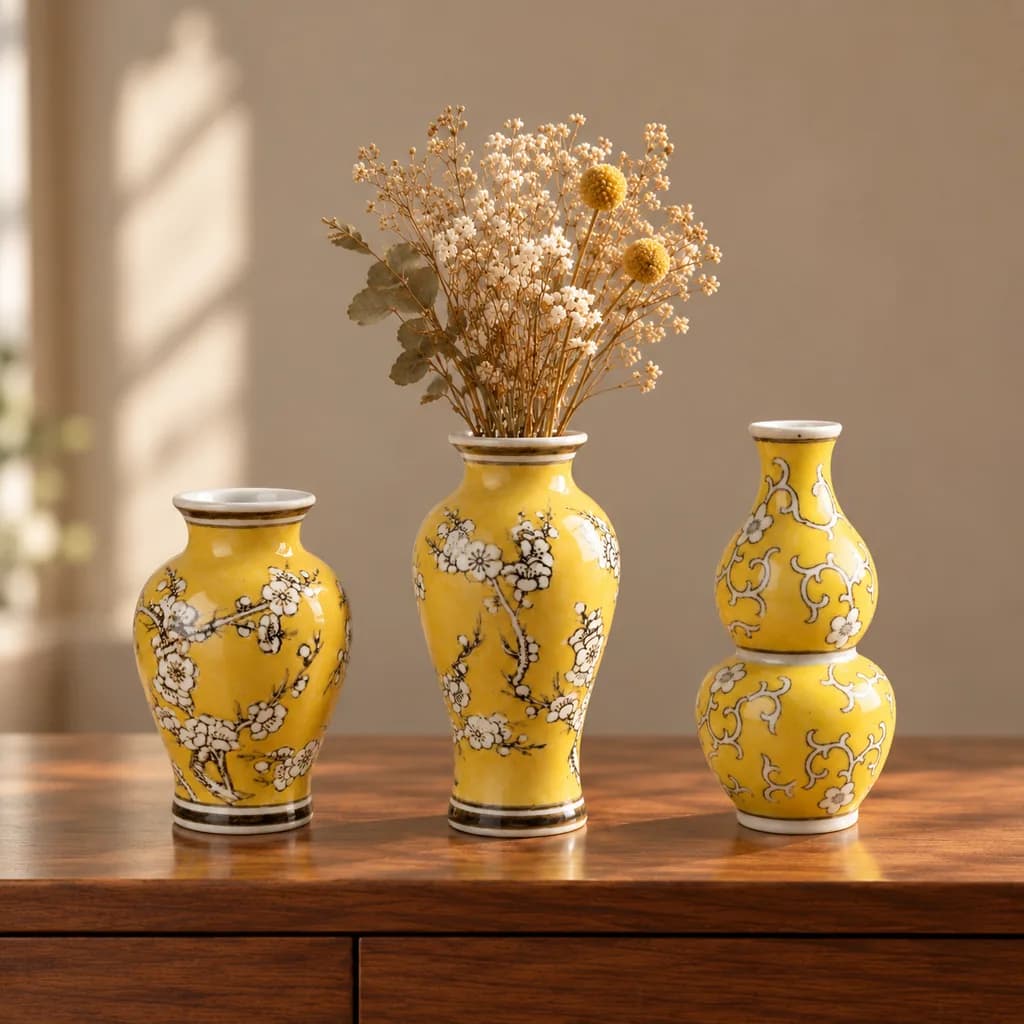
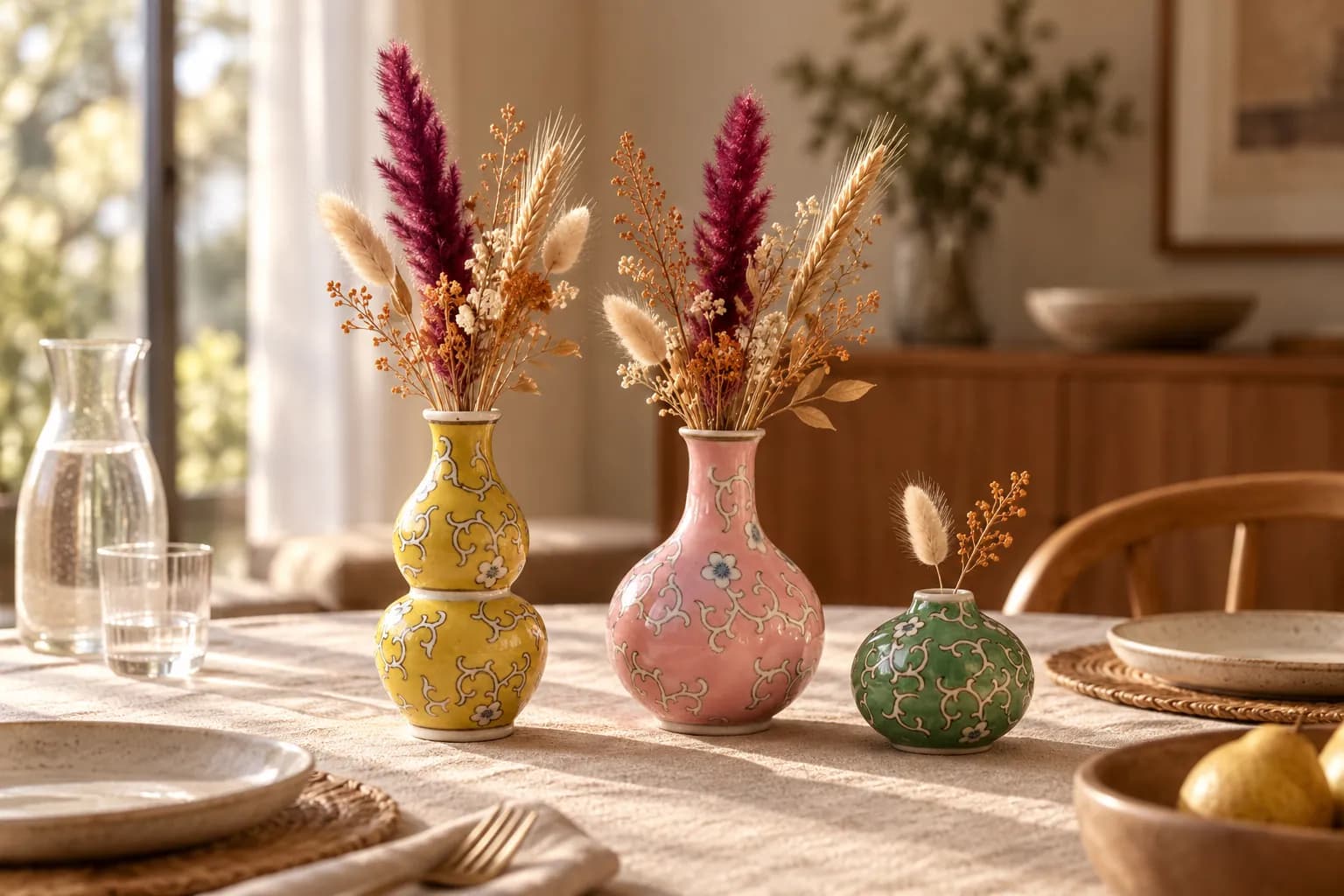
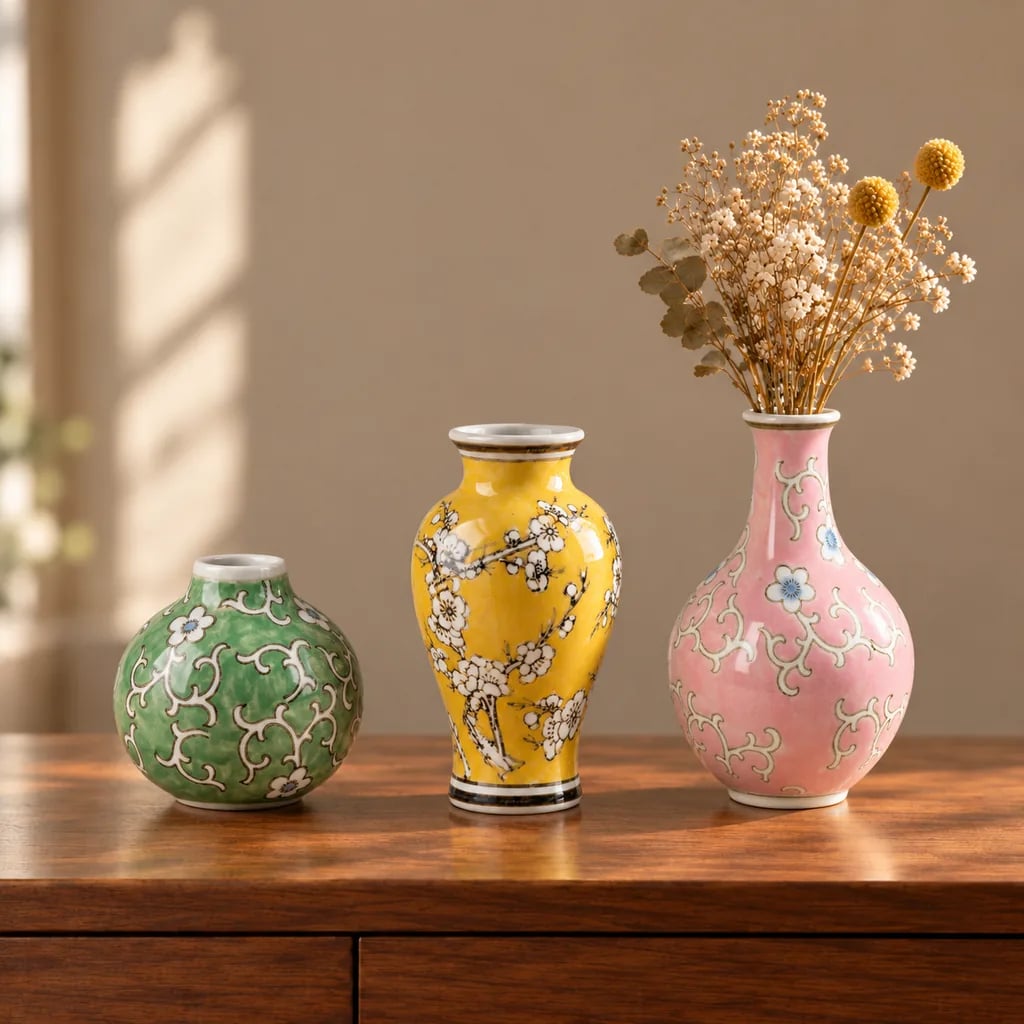
- A second colour comes back on three small objects: a cushion, a vase, a frame.
Stop at two warm colours. A third gives you a film set.
Materials and plants
Rattan, wicker, wood and macramé calm the colours. A long-pile rug warms the floor.
Green plants count as much as the furniture. Living rooms of the 70s had many, and big ones: monstera, ficus, ferns. A large plant in a corner, near the sofa, changes the room.
If the corner is dark, or if you are often away, an artificial plant does this job. Our artificial monstera is 120 cm tall and is mounted on a support pole. It stands on the floor, with no water and no light.
- Madame 70's, design face vase and its 3 succulentsVase 24 to 30 cm tall, succulents 8 to 12 cmFrom €81.90Choose

The one touch that is enough
You do not want to change your sofa or your lamp? Place a single strong object, in a spot you see when you walk into the room.
Three places work in a living room:
- the sideboard, at one third of its length, not in the middle;
- the coffee table, on a stack of two books;
- a shelf at eye level, with half of its objects removed.
Our Madame 70's face vases are made for this spot. They are busts of a woman, 24 to 30 cm tall, with sunglasses, headbands and bold colours. They are new pieces. They have the spirit of that era, they do not come from it.
The set brings together one vase and three live succulents, which sit in the top of the head. You get the round shape, the colour and the green plant in a single object.
Use one face vase per piece of furniture. Two face vases side by side get in each other's way. Plant care is explained in our guide to planting succulents in a face vase.
The three mistakes to avoid
- Changing everything at once. Sofa, rug, lamp, wallpaper: the living room becomes a set. Change one thing, live with it for a month, then decide on the next.
- Painting the walls orange. Put the warm colour on what you can take away: a cushion, a vase, a rug.
- Filling every surface. Strong objects need empty space around them.
In summary
- Keep the room light and calm.
- Add two things out of five: low sofa, round lamp, warm colours, natural materials, plants.
- Limit yourself to two warm colours.
- If you change only one thing, put a strong object on the sideboard.
To choose the size of the vase for each piece of furniture, read which design vase to choose. All the models are on the design vases page.
Sources
- In the spotlight: be inspired by the colours and shapes of the 1970s, Tikkurila
- 70er-Design, imm cologne trade fair magazine
- Michel Ducaroy, Ligne Roset
- Camaleonda, the history, B&B Italia
- Verner Panton, Louis Poulsen
- Technical data sheets from the maker of the vases and the artificial plant (dimensions, materials)
Frequently asked questions
Which colours for a 70s living room?
A light base, then two warm colours at most: terracotta, brown, mustard yellow or muted green. Put the colours on textiles and objects. Keep the walls light.
Which sofa for a 70s living room?
A low sofa with round shapes, often in modules that you can move around. Corduroy and bouclé wool are the fabrics closest to this look.
Which lamp gives a 70s look?
A mushroom lamp, an opal glass globe lamp, or a rattan pendant. The shape is round and the light is warm. One lamp of this kind is enough in a living room.
Do I need to buy furniture from the 1970s?
No. New pieces with round shapes and warm colours give the same look. The vases we sell are new: they recall that era, they do not come from it.