Bookcase decor: how to dress your shelves without crowding them
One third books, one third objects, one third empty space: the method for decorating a bookcase or a living room shelf, with the right vase heights, a plant and a small terrarium.
In this guide
To decorate a bookcase, divide each shelf into three: one third books, one third objects, one third empty space. This is the decorators' rule of thirds. It also works for a living room shelf with no books: then replace the books with boxes or baskets.
Here is the method, in the order you do it.
Step 1: take everything out
You cannot decorate a full bookcase. Empty it, and put everything on the floor.
Sort into three piles: the books, the objects you love, and the rest. The rest does not go back. This is the step that changes the result the most.
Step 2: put the books back, in two directions
The books go back first. Do not line them all up upright.
- Upright, on part of the shelf, held in at one side.
- Lying flat, in a pile of three to five, on another shelf. A pile of flat books works as a base for an object.
Alternate from one shelf to the next: books on the left at the top, on the right below. The eye then moves down in a zigzag, and the bookcase looks composed.
Step 3: leave the empty spaces
The empty third is the hardest to keep. Yet it is what shows off the objects.
A guide: on each shelf, you should see the back of the unit over a width of at least two hands. If one shelf is full of books, leave the next shelf almost empty.
Step 4: place the objects in threes
Objects go in groups of three, at three heights. Florists follow the same rule for bouquets: an odd number of items gives a balanced result.
A group that works on a shelf:
- a tall object: a vase, a standing frame;
- a medium object: a second vase, a candle;
- a low or flat object: a small dish, a small wide vase, a pile of two books.
Keep the three objects close. They should almost touch. Three objects set far apart do not make a group.
Vases: height first
On a shelf, height matters more than colour. A vase 10 to 20 cm tall suits a standard shelf. Measure the space between two shelves before you choose, and keep a hand's width of empty space above.
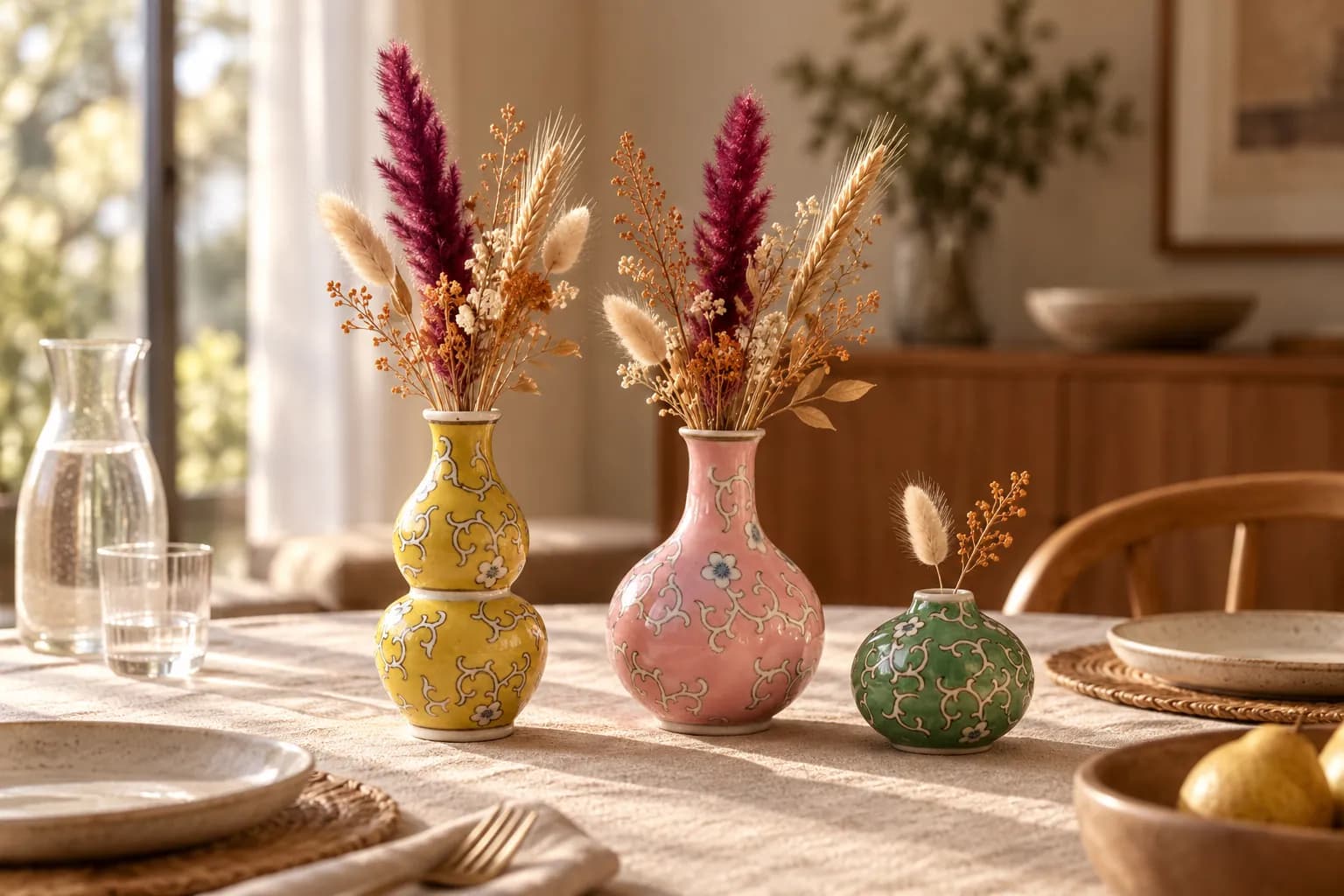
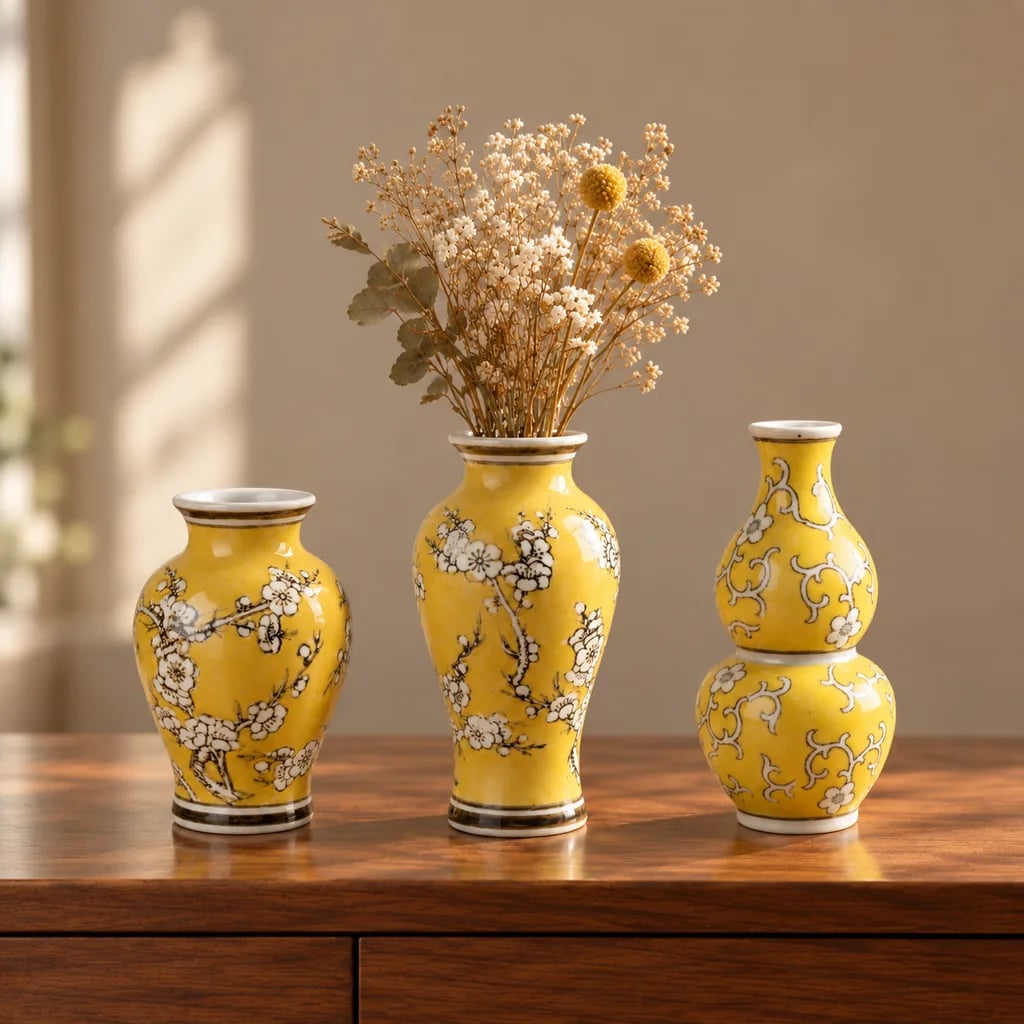
Our Mingus trio brings together three porcelain vases: a pink one of 17.5 cm, a yellow one of 15 cm and a green one of 10.5 cm. The three heights already step down. Place them together on one shelf, or split them over three shelves to bring the colour back.
These vases are made for a dry display: dried flowers, branches, artificial flowers. Do not put water in them. Fill only one vase out of three. The rules are detailed in our guide to arranging a duo or trio of vases.
A plant: check the light
A bookcase is often on the wall opposite the window. A living plant gets too little light there: it stretches, then turns pale.
Two cases:
- The shelf is near a window. A small living plant is fine. Put its pot in a saucer or in a cache-pot: water must never touch the books.
- The shelf is far from the window. Choose an artificial plant. It needs no water and no light.
Our artificial mini pilea is 15 cm tall. It comes as a stem, with no pot: you slip it into a small vase. A single stem stays discreet. Take two or three to fill a vase.
A small terrarium: the shelf that lives
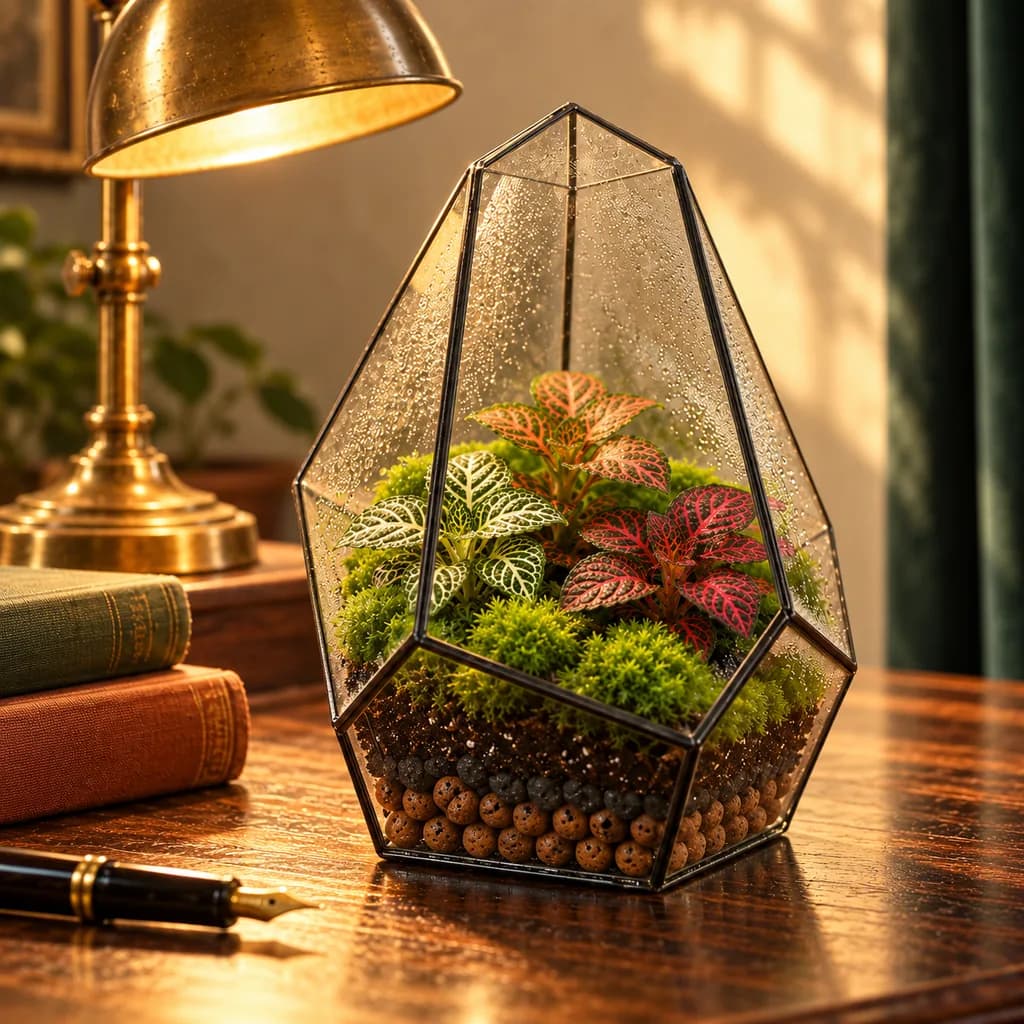
A closed terrarium is the only living object that a bookcase accepts. It recycles its water: there is no saucer and no watering can near the books. It needs a bright room, but no direct sun.
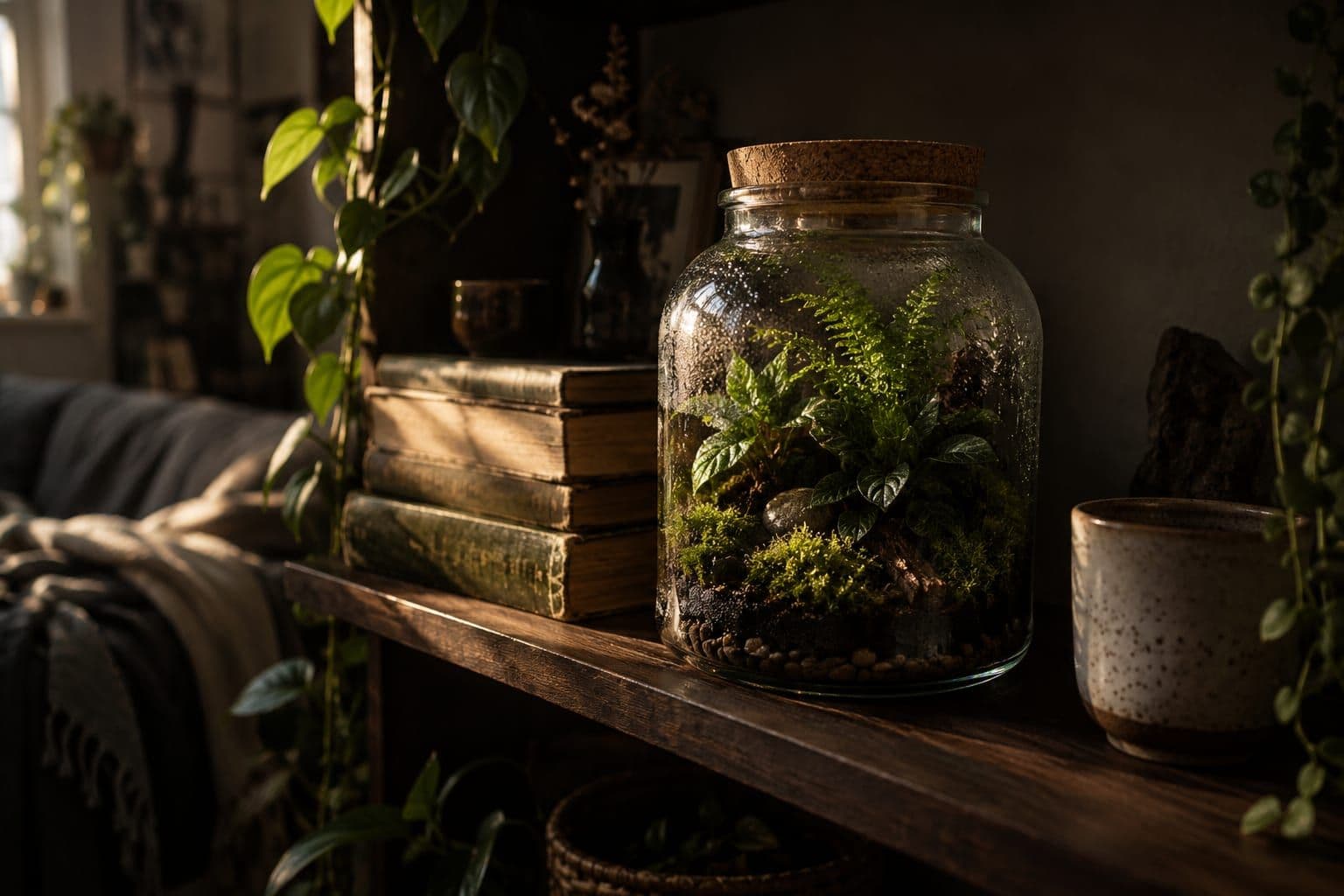
Our size M cork-stopper kit is a recycled glass bottle 19 cm in diameter and 20 cm tall. It holds two living plants: a fern and a fittonia. These plants want light shade, with no direct sun. A dim room suits them. A room with no window does not.
Measure your shelf: you need more than 20 cm of free height. Care is short: watering once or twice a year, and the bottle opened for a few hours once a month.
Place it on its own on its shelf, or with a pile of two books. To choose the size, read our guide to the terrarium in a flat.
Common mistakes
- One object per shelf, in the middle. The bookcase looks like a shop window. Group the objects, and shift the groups to one side.
- Objects all the same size. Nothing stands out. You need one tall, one medium, one small.
- Too many colours. Choose two colours for the objects, and bring them back on several shelves.
- Heavy objects at the top. Heavy books and large objects go at the bottom. The top stays light.
In summary
- Empty everything, and sort.
- Put the books back, upright and flat.
- Keep one third empty.
- Group the objects in threes, at three heights.
- Add something living only where there is light.
For the size of the vases for each piece of furniture, read which design vase to choose. All the models are on the design vases page.
Sources
- The Bloom Room: Floral Design Basics, West Virginia University Extension
- Creating a Closed Terrarium, Penn State Extension
- Technical data sheets from the maker of the vases, the artificial plant and the bottle (dimensions, materials, intended use)
Frequently asked questions
How do I decorate a bookcase without overloading it?
Keep one third books, one third objects and one third empty space on each shelf. Empty the bookcase first, then put the books back, and add the objects last.
What vase height for a shelf?
A vase 10 to 20 cm tall for a standard shelf. Measure the free space between two shelves, and leave at least a hand's width of empty space above the vase or the bouquet.
Can I put a plant in a bookcase?
Yes, if the shelf gets light. A bookcase is often far from the window. In that case, choose an artificial plant. A closed terrarium copes with a dim room, but not a room with no window.
Should I arrange books by colour?
It is not necessary. Instead, alternate upright books with piles of books lying flat. This change of direction is enough to give rhythm, and you can still find your books.