Ficus ginseng care: light, watering and pruning
Light, watering, warmth, pruning, repotting and leaf drop: the simple steps to keep a ficus ginseng bonsai healthy, in a pot or in a kit under glass.
In this guide
A ficus ginseng needs bright light, without direct sun, and a slightly moist substrate that dries on the surface between waterings. It likes warmth and humid air. If it lacks light, it drops its leaves. Light pruning keeps its compact bonsai shape.
Profile
| Botanical name | Ficus microcarpa 'Ginseng' |
| Origin of the species | Tropical and subtropical Asia |
| Distinctive feature | Broad, visible roots, dense and glossy leaves |
| Light | Bright, without direct sun |
| Watering | Substrate slightly moist, surface dry between waterings |
| Air | It likes humid air |
| Difficulty | Moderate |
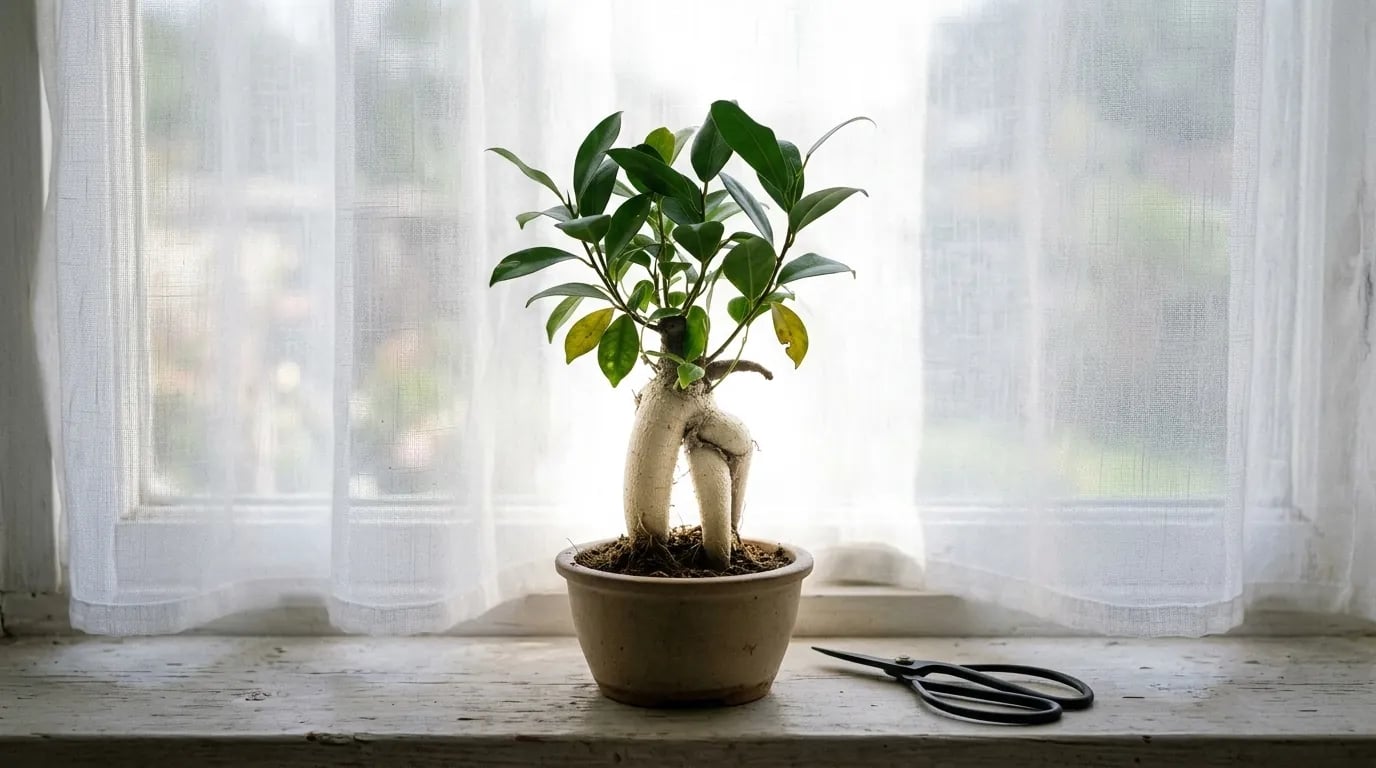
The name "ginseng" comes from the shape of its roots. They are thick and swollen at the base of the trunk, and they stay visible above the substrate. NC State Extension describes this cultivar as a form used in bonsai, with dense, glossy, dark green leaves.
Our ficus ginseng is our smallest format: a young plant in a 6 cm pot, about 15 cm tall. The supplier does not give a mature height.
Light: bright, without direct sun
Place the ficus near a bright window, out of direct sunlight. Light is this plant's first need. In a dark corner, it drops its leaves.
Turn the pot a quarter turn from time to time. The plant then grows evenly, instead of leaning towards the window. If you move the ficus, do it only once: each change of spot can make a few leaves fall.
Watering: moist, never soaked
Keep the substrate slightly moist, without soaking it. Let the surface dry between waterings. Touch the soil with your finger before each watering: if the surface is dry, water; if it is still moist, wait.
The 6 cm pot holds little soil. So it dries faster than a large pot, especially in summer and near a heater. Check it more often at these times.
Too much water is the main risk. NC State Extension warns that too much water makes the roots rot. Always empty the water left in the saucer or the cover pot after watering. A moisture meter pushed into the pot also helps you decide: see our guide to the moisture meter. Our guide Watering indoor plants covers the ways to check.
Warmth and air humidity
The ficus ginseng is a tropical plant. NC State Extension describes it as suited to places where the temperature stays above 20 °C all year. Keep it in a heated room, away from cold drafts and open windows in winter.
It likes humid air. Avoid placing it right above a radiator: the air there is hot and very dry.
Prune to keep the shape
Light pruning keeps the compact bonsai shape. Cut back young shoots that are too long, just above a leaf. Also remove damaged or yellowed leaves.
Wear gloves to prune. The RHS says this ficus can cause a skin allergy. Wipe the sap off the tools after cutting.
Our bonsai scissors are 19 cm long. They are for trimming the foliage and young shoots, in a pot or in a terrarium. This size L model suits bonsais that are already well filled out. The supplier does not specify the material of the blades.
Repot and care for the roots
Repot when the roots fill the pot or come out of the bottom. For bonsais, the RHS recommends repotting in spring, before growth starts again.
Take out the root ball carefully. Untangle the roots that circle the pot, without tearing them. Replant in a pot that is only slightly larger, with a free-draining substrate. Keep the large roots visible above the substrate: they give the ficus ginseng its whole look.
Our root hook is 20.5 cm long. It is for untangling and loosening the root ball when you repot, to help the plant settle in again. The supplier does not specify its material.
Why it drops its leaves
Lack of light. This is the most common cause. Move the plant closer to a bright window, without direct sun.
Transport or a change of spot. After delivery or a move, a few leaves often fall. Give it more light, without direct sun. New leaves grow back within a few weeks.
Too much water. If the substrate stays wet for a long time, the roots suffer. Let the surface dry before the next watering.
Insects. The RHS lists red spider mite, thrips, mealybugs and scale insects on this ficus when grown under cover. Look under the leaves and along the stems. Isolate the plant if you see spots, fine webs or white clusters.
In a pot or under glass
Our ficus ginseng sold on its own is meant to stay in a pot. It does not go in a closed terrarium. Its small size does let it sit beside a large open terrarium, though.
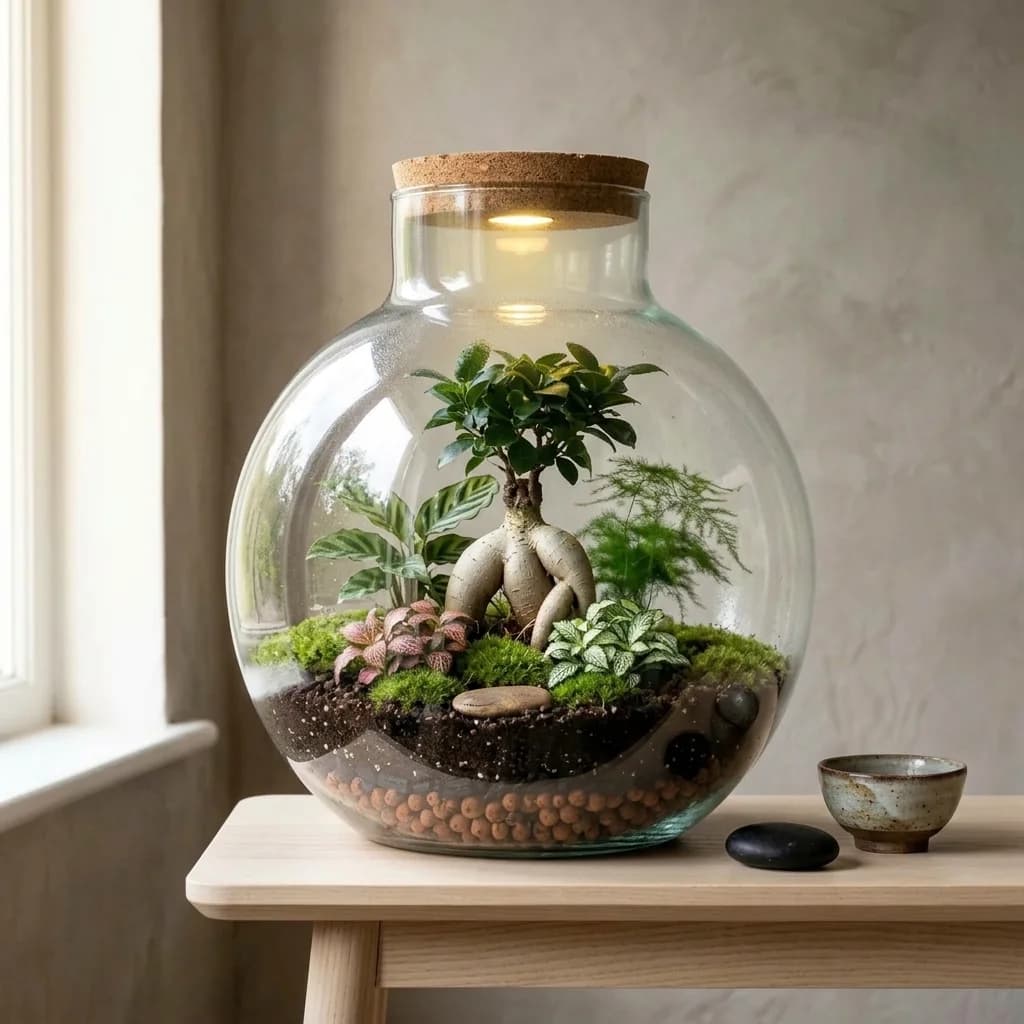
Our Zen Bonsai kit is a different arrangement. It is our largest kit: a recycled glass bottle 30 cm in diameter and 31 cm tall, about 11 liters. Its cork lid has an LED, and the batteries are not included. A ficus ginseng bonsai grows in the center, with a calathea, an asparagus and two fittonias at its feet. As a closed terrarium, it is watered once or twice a year. One light pruning a year on the ficus and the asparagus keeps the landscape clear.
If you already have a container 20 to 30 cm in diameter, our set of three plants brings together a ficus ginseng bonsai, a white fittonia, a red fittonia and all the substrate layers. The container is not included. The limits of a bonsai under glass are explained in our guide Bonsai in a terrarium.
In short
- Bright light without direct sun: without light, the ficus ginseng drops its leaves.
- Substrate slightly moist, surface dry between waterings, never standing water.
- A warm room, away from cold drafts and the hot air of a radiator.
- Light pruning of young shoots, with gloves.
- Repotting in spring when the roots fill the pot.
Sources
- Ficus microcarpa, NC State Extension Plant Toolbox
- Ficus microcarpa, Royal Horticultural Society
- Bonsai, Royal Horticultural Society
- Manufacturer data sheets (dimensions of the plant and the tools, contents of the kit and the plant set)
Frequently asked questions
Why is my ficus ginseng dropping its leaves?
The most common cause is lack of light. Transport and a change of spot can also make a few leaves fall. Overwatering is another possible cause. Place it in bright light, without direct sun, and let the surface of the substrate dry between waterings.
How often should I water a ficus ginseng?
There is no fixed schedule. Keep the substrate slightly moist, without soaking it, and let the surface dry between waterings. Touch the soil before each watering: the soil sets the rhythm.
Can I put a ficus ginseng in a closed terrarium?
Our ficus ginseng sold on its own, in a 6 cm pot, is meant to stay in a pot. Our Zen Bonsai kit is a different arrangement: a ficus ginseng bonsai planted in a large 11-liter bottle, with other plants. The questions a bonsai under glass raises are explained in our guide Bonsai in a terrarium.
When should I repot a ficus ginseng?
When the roots fill the pot. For bonsais, the RHS recommends repotting in spring, before growth starts again. A root hook helps untangle the root ball without tearing it.