

Mint in hydroponics: vigorous, and how to keep it in check
Mint roots in water within days and fills a whole tank within weeks. Cutting or seed, pruning, keeping it separate: how to grow it without smothering its neighbours.
In this guide
Mint is the easiest herb to start hydroponically: a stem put in a glass of water roots within one to three weeks, and the plant then produces without a break in a heated room. The difficulty is never in growing it, but in stopping it taking over: its roots cross into neighbouring pots and its stems flop as soon as you stop pinching them. Here is how to start it, and how to hold it in check.
A perennial, a spreader, and a plant that loves water
Mint, the genus Mentha, is a herbaceous perennial: it lives for several years, comes back from the base and does not need resowing each season. In the garden, the Royal Horticultural Society recommends growing it in a pot precisely because many mints are vigorous, spreading plants that colonise a whole bed in a season or two.
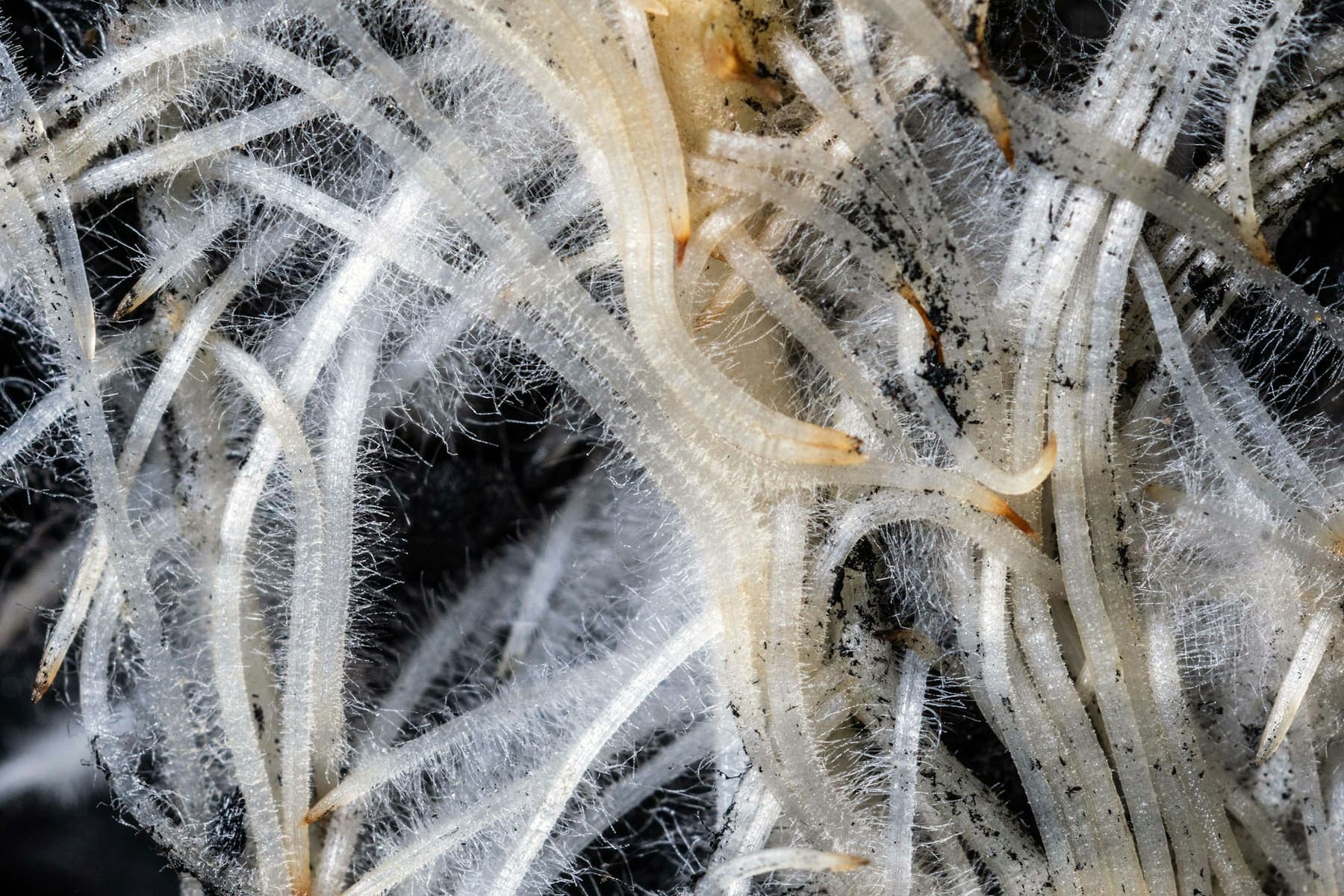
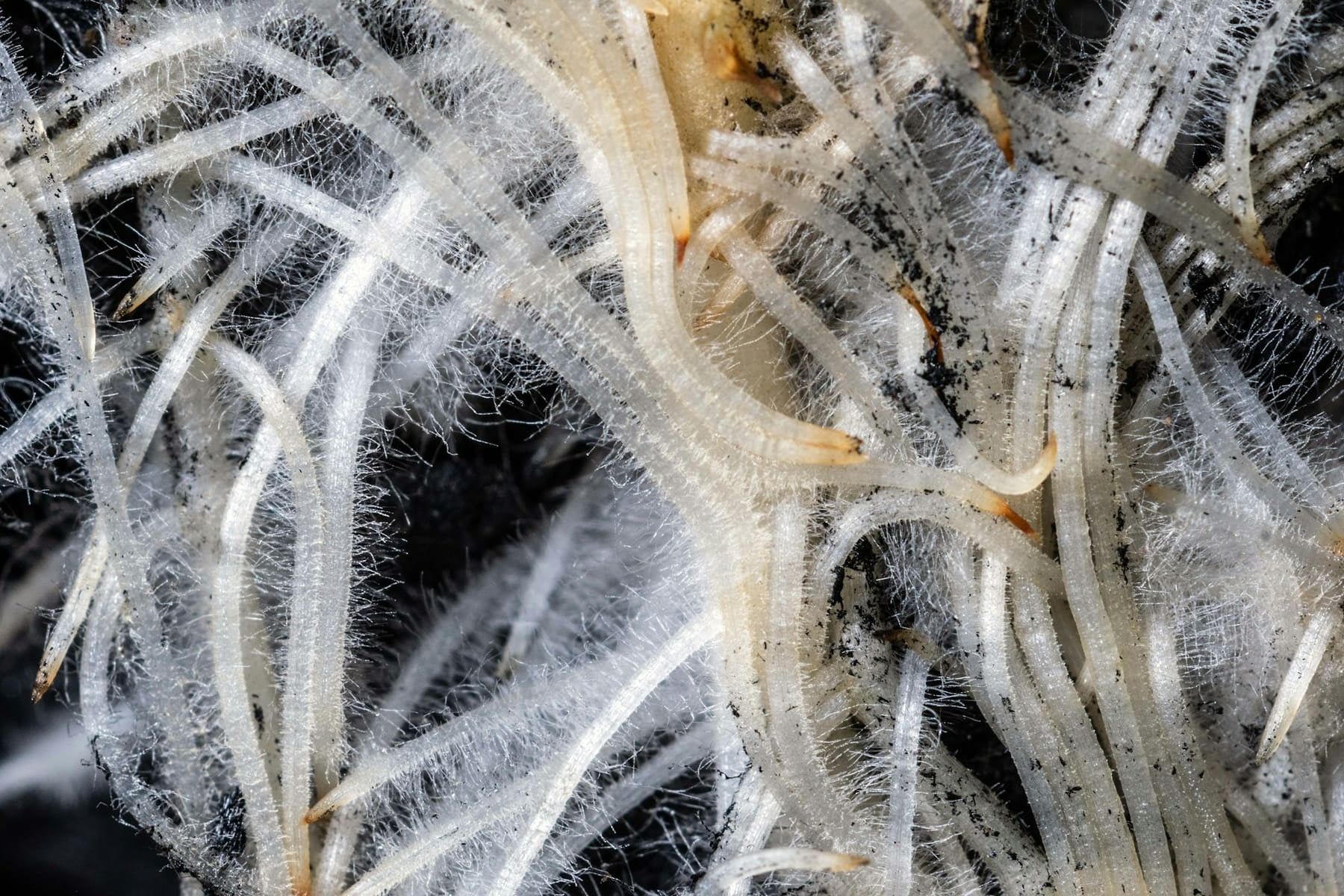
That temperament does not disappear in a hydroponic tank, it simply changes ground. Instead of running through soil, mint builds a considerable volume of roots in the reservoir, and those roots slip under the lids to surface in the neighbouring net pots.
That is also what makes it so straightforward. It copes with permanent moisture, it roots from a cut stem with no hormone or special care, and it tolerates weaker light than basil. An ordinary room, fourteen to sixteen hours of light a day and a correctly measured nutrient solution are enough.
It is not cold-sensitive like basil. Where basil blackens at around 10 °C, mint is hardy and is not troubled by a cool room. That is worth bearing in mind when putting a tank together: see which plants to grow hydroponically for the combinations that actually work.
Which mint to choose
There are about twenty-five species of mint and a great many cultivated varieties, not all of them for the kitchen. The two reference mints are spearmint and peppermint; the rest are chosen on scent.
| Mint | Botanical name | Scent | Common use |
|---|---|---|---|
| Spearmint | Mentha spicata | Mild, classic | The most versatile if you grow only one |
| Peppermint | Mentha × piperita | Strong, mentholated | Infusions, puddings |
| Moroccan mint | Mentha spicata 'Moroccan' | Sweet, clean | Mint tea |
| Apple mint | Mentha suaveolens | Fruity, light | Cold drinks, fruit salads |
| Chocolate mint | Mentha × piperita 'Chocolate' | After-dinner mint | Puddings |
Two cautions. First, pennyroyal, Mentha pulegium, is not for eating: it appears in the Horticultural Trades Association's guide to potentially harmful plants, cited by the Royal Horticultural Society. Second, several plants called "mint" are nothing of the kind, such as catmint or Korean mint; growing them has nothing in common with this.
Cutting or seed: two very different starts
The cutting is the normal route. Mint is easily propagated by cuttings or by division, which is why plants are cheap to buy. Above all, a cutting gives a plant identical to its parent: same scent, same vigour. Mints raised from seed, by contrast, do not come true, because many are hybrids or cross readily with one another.
- Take a stem of eight to ten centimetres from a healthy plant, just below a node, with clean scissors.
- Strip the lower leaves to clear two or three centimetres of bare stem, and pinch out the tip if it carries flower buds.
- Stand the stem in a glass of clean water, in the light but out of direct sun, changing the water every two days.
- Wait one to three weeks: white roots appear at the submerged nodes.
- Set the cutting into a moistened starter plug, then into its net pot, once the roots are two to three centimetres long.
Seed remains possible. The Royal Horticultural Society advises sowing indoors in spring, scattering the seed on the surface of damp seed compost without covering it, at around 20 °C under a clear lid; emergence usually takes one to three weeks. In hydroponics the same principle applies in a coir plug: a few seeds laid on the surface, barely pressed in.
Keeping mint in check in a shared tank
This is the real subject, and it is dealt with when the system is set up rather than repaired afterwards.
Give it the end of the tank. A position at one end limits the number of neighbours its roots can reach. Avoid putting it next to a slow plant such as parsley, which would be overtaken before it has formed its clump.
Check the roots every time the solution is renewed. Every two to three weeks, when the reservoir is emptied, lift out the mint's net pot and shorten the roots that stray well beyond it with clean secateurs. The plant takes this without difficulty, and the pump stays clear.
Keep an eye on the pump strainer. A tangle of roots drawn against the filter makes the flow collapse, and the whole tank then runs short of oxygen. Cleaning the filter at every change of solution is enough to prevent that.
Or give it a system of its own. A small worktop garden, given over to mint alone, settles the question for good and saves you having to arbitrate between two plants with opposite rhythms.
Pruning, harvesting, keeping the flowers off
Harvest the tips, never the lower leaves. Cutting the tip of a stem just above a pair of leaves makes two new shoots break from that point. The plant becomes bushy and stays low. Taking the large lower leaves instead stretches the plant out on a single bare stem.
Keep the plant under about forty centimetres. That is the height beyond which a herb becomes awkward in a worktop garden, lamp included. Regular pruning is enough to hold it there.
Pinch out flower buds as soon as they appear. In the garden, mint flowers are valuable for pollinators and deserve to be left. Indoors under a lamp they serve nobody, and the plant stops producing tender young leaves in order to make seed.
Mint does not rest under a lamp. In the garden its stems die back in autumn and the crown comes away again in spring. Indoors, in a heated room and under a steady fourteen to sixteen hours of light a day, it carries on producing all year with no dormant period. A plant brought in from the balcony in autumn may, on the other hand, lose part of its foliage for a few weeks before starting again: that is a normal response to the change of conditions, not a failure to establish. Leave it where it is, without raising the feed to push it along, and wait for the new shoots at the base.
Cut it right back from time to time. A plant that is going bare is cut short, to a few centimetres above the net pot. It comes back with new stems within a few weeks.
When things go wrong
The stems stretch and the leaves grow further apart. Too little light, or pruning too seldom. Move the lamp closer or lengthen the lighting period, and start pinching out the tips again. The guide choosing a grow light gives the starting distances.
The roots turn brown and the plant wilts although the reservoir is full. The roots are short of oxygen: healthy roots are white or cream, brown and slimy roots mean suffocation. Check the pump, clean the reservoir and renew the solution.
The leaves yellow evenly. Check the pH, which should stay between 5.5 and 6.5: outside that range iron in particular becomes less available, even in a correctly measured solution. The full procedure is in indoor hydroponics without the jargon.
A white powder appears on the leaves. This is usually powdery mildew, encouraged by stagnant air. Space the plants out, air the room and do not wet the foliage in the evening, as with basil in hydroponics.
Systems and consumables are gathered together in the hydroponics section.
Sources
Frequently asked questions
Can you take cuttings from supermarket mint for a hydroponic tank?
Yes, and it is the quickest way to get hold of it. Take a healthy stem of eight to ten centimetres, strip the lower leaves and stand it in a glass of clean water in the light: roots usually appear within one to three weeks. Rinse it carefully before setting it in a starter plug, because plants sold in pots sometimes arrive with aphids or fungus gnats. Change the water in the glass every two days while it roots.
Does mint grow back after cutting in hydroponics?
Yes, and that is what makes it worth growing: it is a perennial, which comes back from the base and from every point where it is cut. Cut the tips of the stems rather than the lower leaves, just above a pair of leaves. Two new shoots then break from that point, and the plant grows more compact instead of stretching. Harvest often, even when you have no need of mint: an unpruned mint flops and goes bare.
Does mint need a system of its own?
It is not compulsory, but it makes life much simpler. In a shared tank its roots cross into the neighbouring net pots within weeks and end up crowding slower plants such as parsley. A small hydroponic garden given over to mint, or at the very least a position at the end of the tank with a root check at every change of solution, avoids the problem. Separation is more useful still when several varieties of mint are grown together.
Are all mints edible?
No, and it is worth checking before buying seed or a plant. The Royal Horticultural Society notes that pennyroyal, Mentha pulegium, appears among the potentially harmful plants if eaten in the Horticultural Trades Association's guide. Other ornamental mints exist which taste unpleasant without being dangerous. Buy from a reputable supplier, with the species name correctly stated.