Terrariums and cats: which plants are safe, and where to put it
A curious cat and a jar of plants can live together. Terrarium plants that are non-toxic according to the ASPCA, the ones to avoid, and how to protect both the glass and the animal.
In this guide
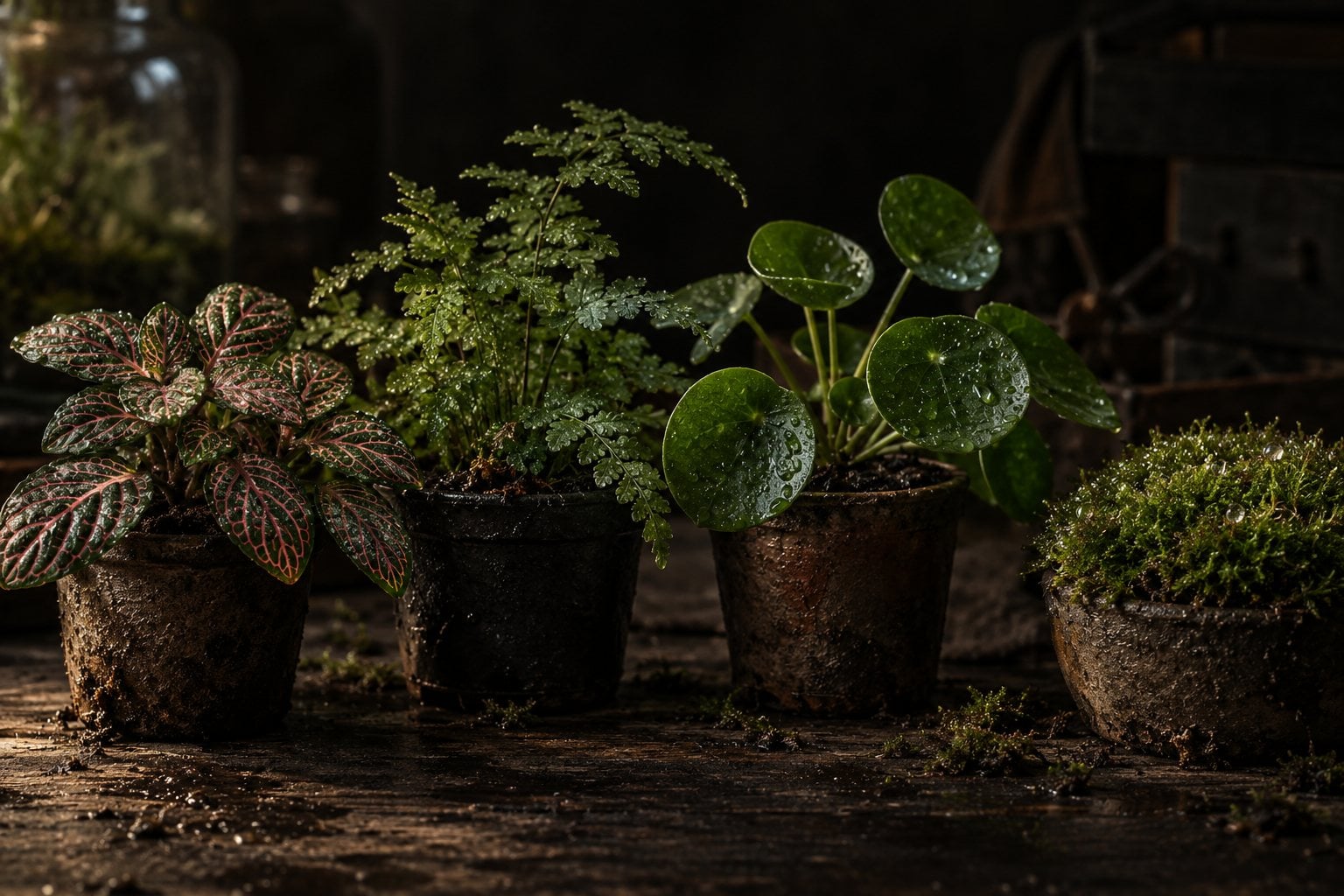
A terrarium and a cat get along on two conditions: choose non-toxic plants, and a closed jar placed where it cannot fall. Fittonia, calathea, peperomia, Pilea cadierei, hypoestes and Boston fern are listed as non-toxic to cats by the ASPCA, the American association that keeps the reference database. Ficus, aloe, jade and asparagus fern should be kept away from it.
Terrarium plants at a glance
The data below comes from the ASPCA "Toxic and Non-Toxic Plants" list. A non-toxic plant can still make a cat vomit if it eats a lot of it: "non-toxic" does not mean "edible".
| Plant | For the cat | Where you find it |
|---|---|---|
| Fittonia | Non-toxic | Closed tropical terrarium |
| Calathea | Non-toxic | Tropical terrarium, large jar |
| Peperomia | Non-toxic | Open or closed terrarium |
| Pilea cadierei | Non-toxic | Tropical terrarium |
| Hypoestes | Non-toxic | Tropical terrarium |
| Boston fern (Nephrolepis) | Non-toxic | Large closed terrarium |
| Haworthia | Non-toxic | Open succulent terrarium |
| Ficus (including ficus ginseng) | Toxic | Bonsai terrarium |
| Aloe | Toxic | Succulent terrarium |
| Jade (Crassula ovata) | Toxic | Succulent terrarium |
| Asparagus fern | Toxic | Open terrarium, hanging planters |
For a plant that is not in this table, look up its Latin name in the ASPCA database before buying it.
Moss, the simplest choice
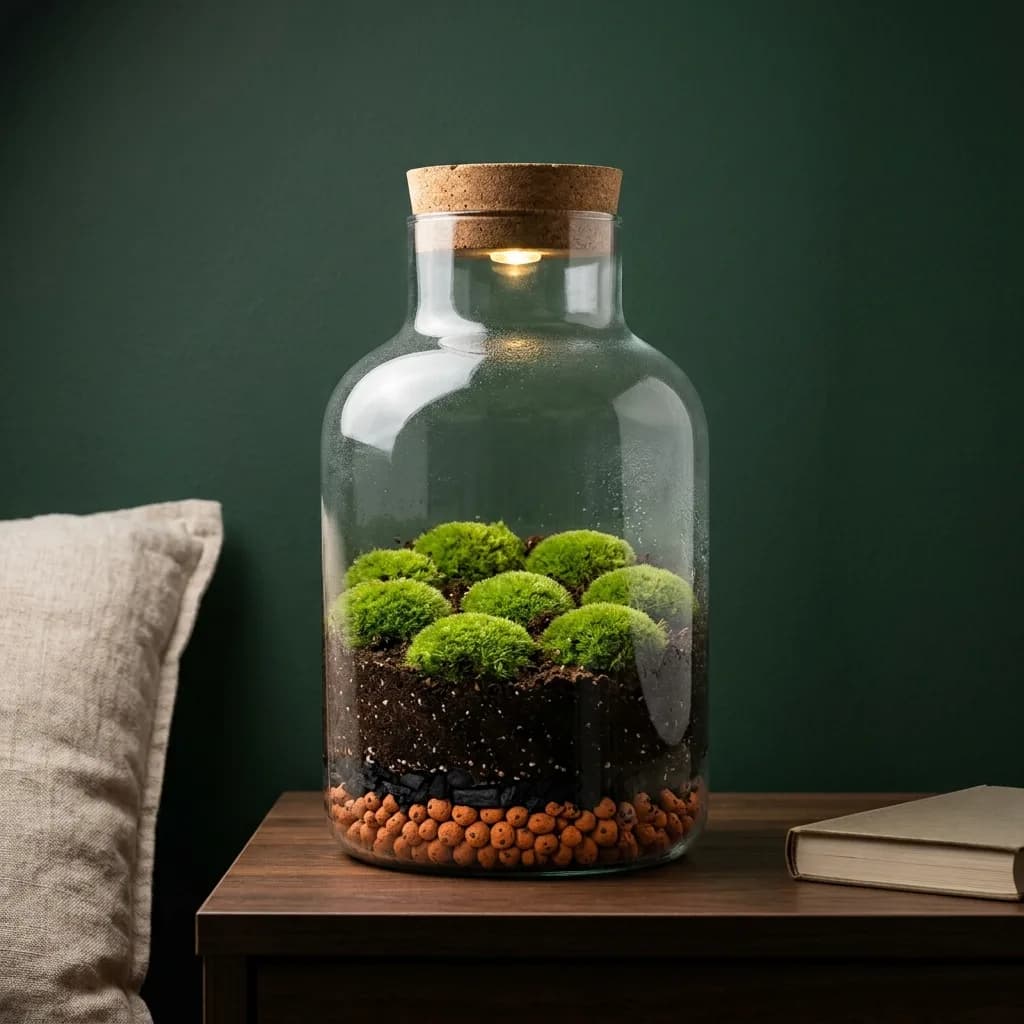
An all-moss terrarium avoids the question of leaves. Live mosses do not appear among the toxic plants on veterinary lists, and they hardly tempt cats that chew long leaves. Our Mousse & lumière kit contains only moss, in a bottle closed with an LED cork.
If you want colour, fittonia is the safest and brightest terrarium plant: its white, pink or red veins stand out under the glass.
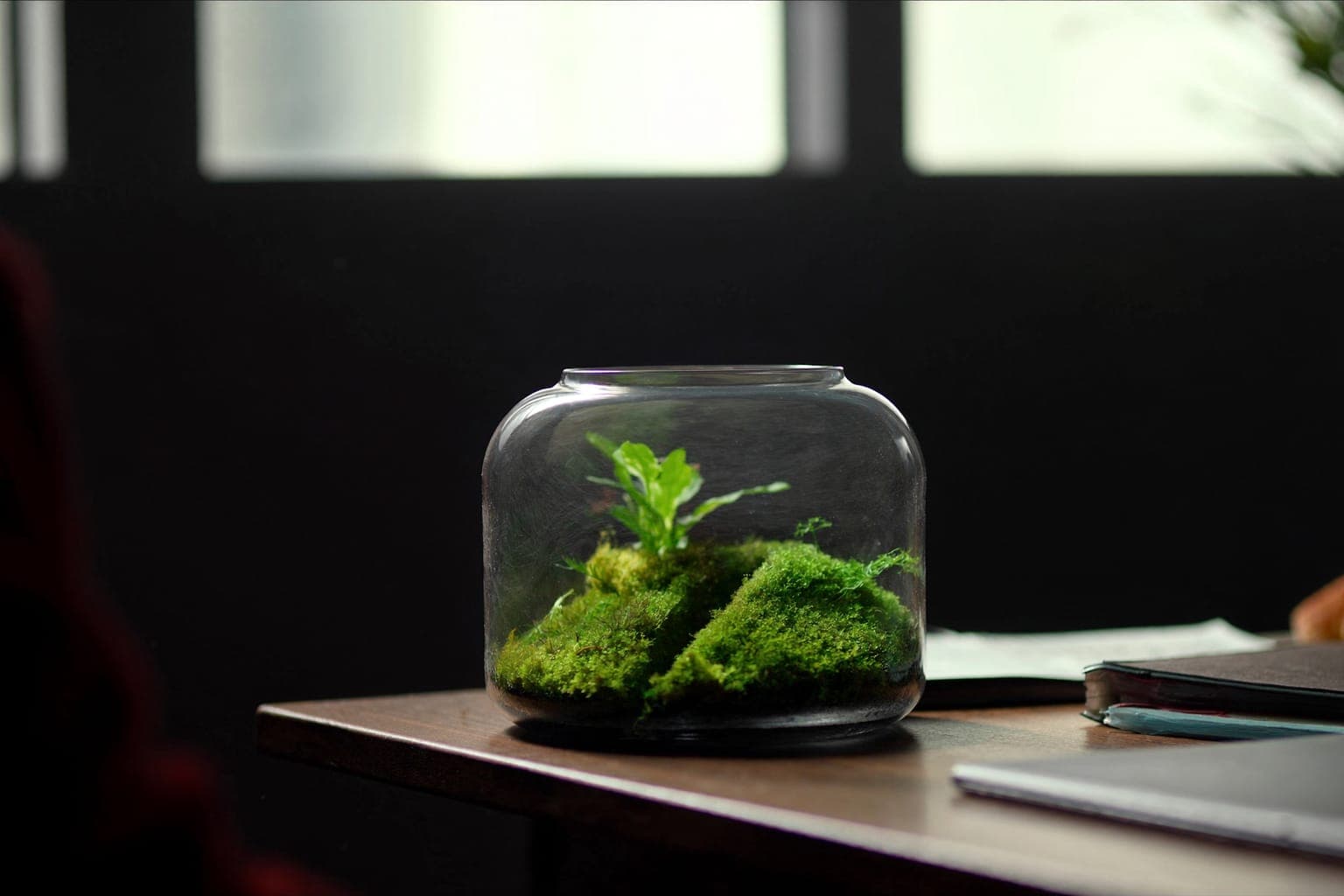
Closed rather than open
With a cat, a closed terrarium has three advantages:
- it keeps the plants out of reach of tongue and claws;
- it holds in what could be swallowed by mistake: clay balls, activated charcoal, figurines, small pebbles;
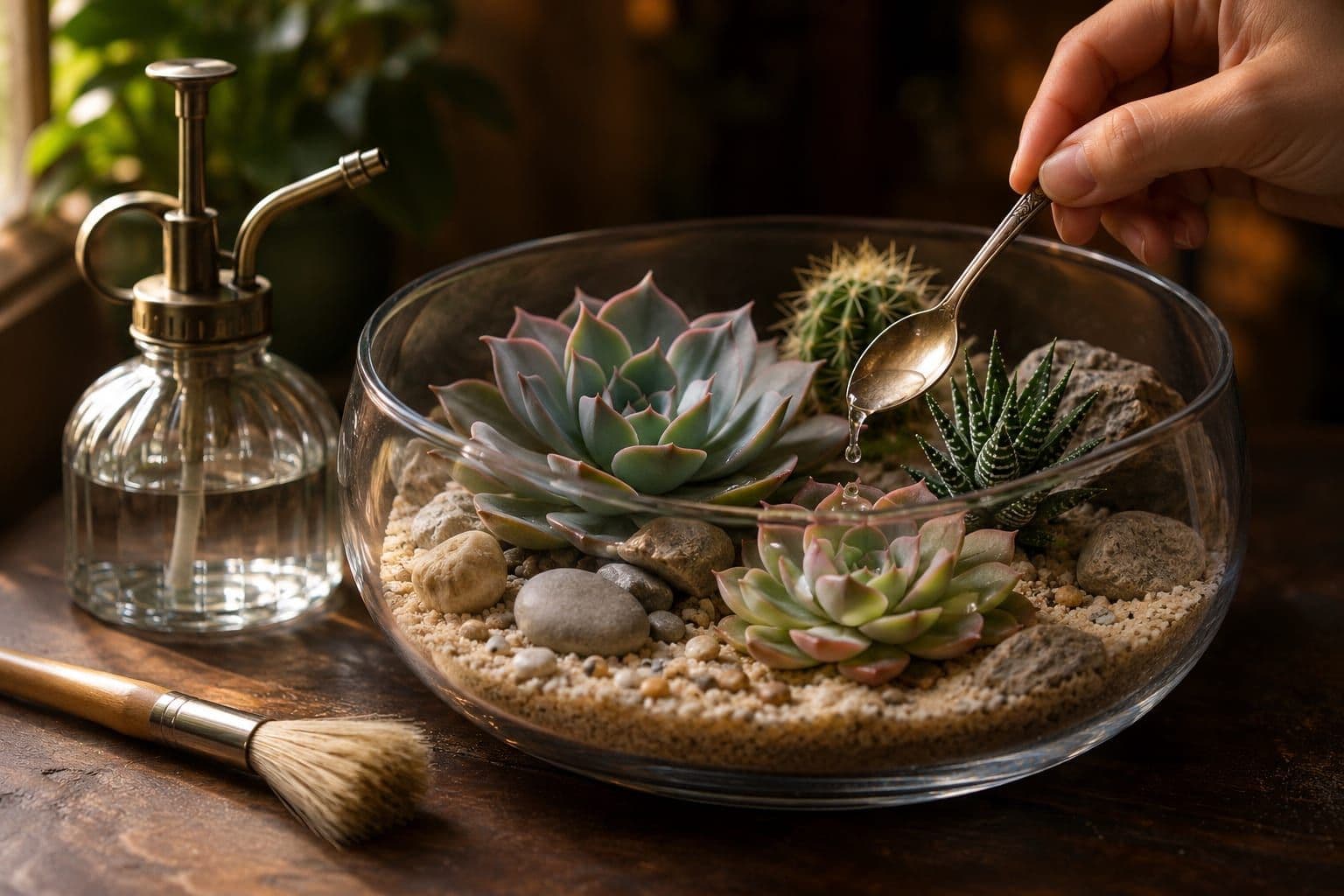
- it does not become a scratching tray: an open terrarium of sand and succulents looks too much like a litter box.
Our comparison closed or open terrarium covers the other differences.
Where to put it
- On a heavy, stable piece of furniture, not on a narrow shelf the cat jumps across.
- Away from the edge, by at least a hand's width.
- Not on the windowsill: it is cats' favourite lookout, and direct sun overheats the glass.
- On a non-slip mat, or a wooden tray that widens the base.
A wide-based bottle, like our Little Joe bottle with LED cork, tips over less easily than a tall, narrow vase.
During maintenance
When you open the jar, do it out of the cat's sight. Pick up cut leaves, bits of moss and trimmings. Store charcoal and clay balls in a closed cupboard. Wash your hands before stroking it if you have handled a plant listed as toxic.
If your cat ate a plant
Note the name of the plant, or take a photo of it, and call your vet. Do not make it vomit yourself. Signs to watch for are drooling, vomiting, lethargy or difficulty swallowing.
In short
- Fittonia, calathea, peperomia, pilea, hypoestes and Boston fern: non-toxic according to the ASPCA.
- Ficus, aloe, jade and asparagus fern: avoid them with a cat.
- A closed jar, on stable furniture, away from the edge and the window.
- Nothing used for planting left within its reach.
Sources
- ASPCA Animal Poison Control Center, "Toxic and Non-Toxic Plants" list (cats).
Frequently asked questions
Are terrarium plants toxic to cats?
Not all of them. Fittonia, calathea, peperomia, Pilea cadierei, hypoestes and Boston fern are among the plants listed as non-toxic to cats in the ASPCA database. Ficus, aloe, jade and asparagus fern, on the other hand, are listed as toxic.
Is terrarium moss dangerous for a cat?
Live mosses do not appear among the toxic plants on veterinary lists. The risk comes rather from what surrounds it: clay balls, charcoal, figurines and small pebbles a cat could swallow. A closed jar solves the problem.
What should I do if my cat ate a plant?
Note the name of the plant and call your vet or an animal poison control centre. Do not wait for symptoms if the plant is listed as toxic.