

Storing seeds: shelf life, containers, germination test
Dry, cool and in the dark, most vegetable and herb seeds keep for two to five years. How long each species lasts, what to store them in, and how to check an old packet with ten seeds.
In this guide
A seed is alive: it breathes slowly, and anything that speeds that breathing up shortens its life. Three conditions are therefore enough to keep it for a long time: dry, cold and in the dark, in a closed container. Kept that way, most vegetable and herb seeds remain usable for two to five years depending on the species, and a germination test on ten seeds is enough to settle the matter before sowing an old batch.
Damp and heat are the two enemies
A dry seed lives in slow motion. As soon as the surrounding air takes on moisture, the seed resumes an activity that uses up its reserves, and it becomes vulnerable to mould. Heat has the same effect, by speeding up its internal reactions. The two add up: a tin sitting above a radiator or next to a sunny window is the worst place in the house.
Three rules follow from this.
- Dry before storing. Seeds collected in the garden should be left to dry for a few days, spread out flat on kitchen paper, before going into a tin. An opened packet is only resealed once the seeds have not picked up moisture from the room.
- Clean. Fragments of pods and capsules and empty husks hold water and harbour moulds that then spread to the seeds. Remove them before storing.
- Avoid swings in temperature. A steady, cool spot is better than one that is sometimes very cold and sometimes mild, because every swing creates condensation inside the container.
How long does a seed stay viable?
Shelf life depends above all on the species, and the differences are considerable: a chive seed lasts a season or two, a tomato seed several years. The figures below apply to seeds kept dry, cool and in the dark. In a kitchen drawer at room temperature, it is wise to halve them.
| Seeds | Indicative shelf life | What shortens it |
|---|---|---|
| Chives, onion, leek, dill, parsnip | 1 to 2 years | A sharp drop from the second year, even when well stored |
| Parsley, coriander, carrot, chervil | 2 to 3 years | Fine, light seeds, sensitive to damp |
| Basil, sweet pepper, chilli, thyme, oregano | 2 to 4 years | Heat in storage |
| Sage, pea, bean, lentil | 3 to 4 years | Knocks and crushing of the batch |
| Lettuce, spinach, rocket, mustard | 3 to 5 years | Direct light on the container |
| Radish, cabbage, broccoli, turnip | 4 to 5 years | Not very sensitive, they keep well |
| Tomato, aubergine, cucumber, squash | 4 to 6 years | Very good longevity if the batch stays dry |
These ranges are indications, not guarantees: the condition of the seed when it went into store counts as much as the time elapsed. A badly dried batch loses its germinating power within a year, while a faultlessly stored one sometimes goes well beyond the top of the range. The germination rates quoted on a new packet, in the order of 75 to 85 % depending on the species, fall away gradually afterwards.
The right container, the right place
The method recommended by the Royal Horticultural Society fits into one sentence: dry seeds in labelled paper packets or envelopes, themselves kept in an airtight tin with a desiccant.
Each element has its part to play. Paper lets the seed breathe and stops a trace of residual moisture being trapped against it. The airtight tin keeps the room's moisture out. The desiccant, silica gel or the calcium chloride sold for damp traps, captures what little water is left. The label, finally, saves you from sorting by guesswork: the name, the variety and the year of harvest or purchase go down at the moment of storing, never afterwards.
As for the location, a cool cupboard will do, but the bottom of the fridge is better: keeping seeds at room temperature noticeably shortens their life compared with cold storage. The freezer extends things further still, provided the seeds are perfectly dry and are not put through repeated freezing and thawing. A tin taken out of the cold should be left to come back to room temperature before it is opened, otherwise condensation settles straight onto the seeds.
The original packets are worth keeping: they carry the sowing season, the depth, the time to emergence and the year of the batch. A box that gathers this information together, and a notebook for recording dates and results, saves you rediscovering everything each spring.
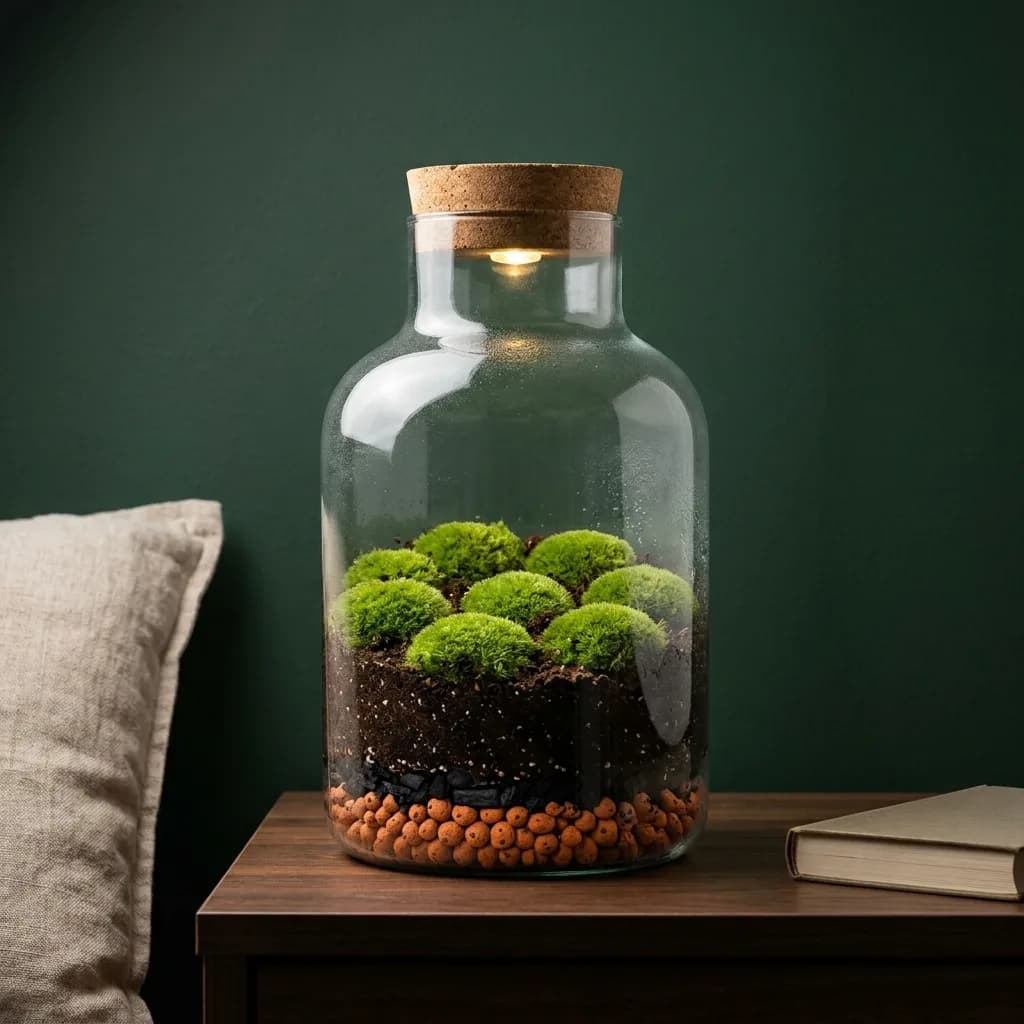
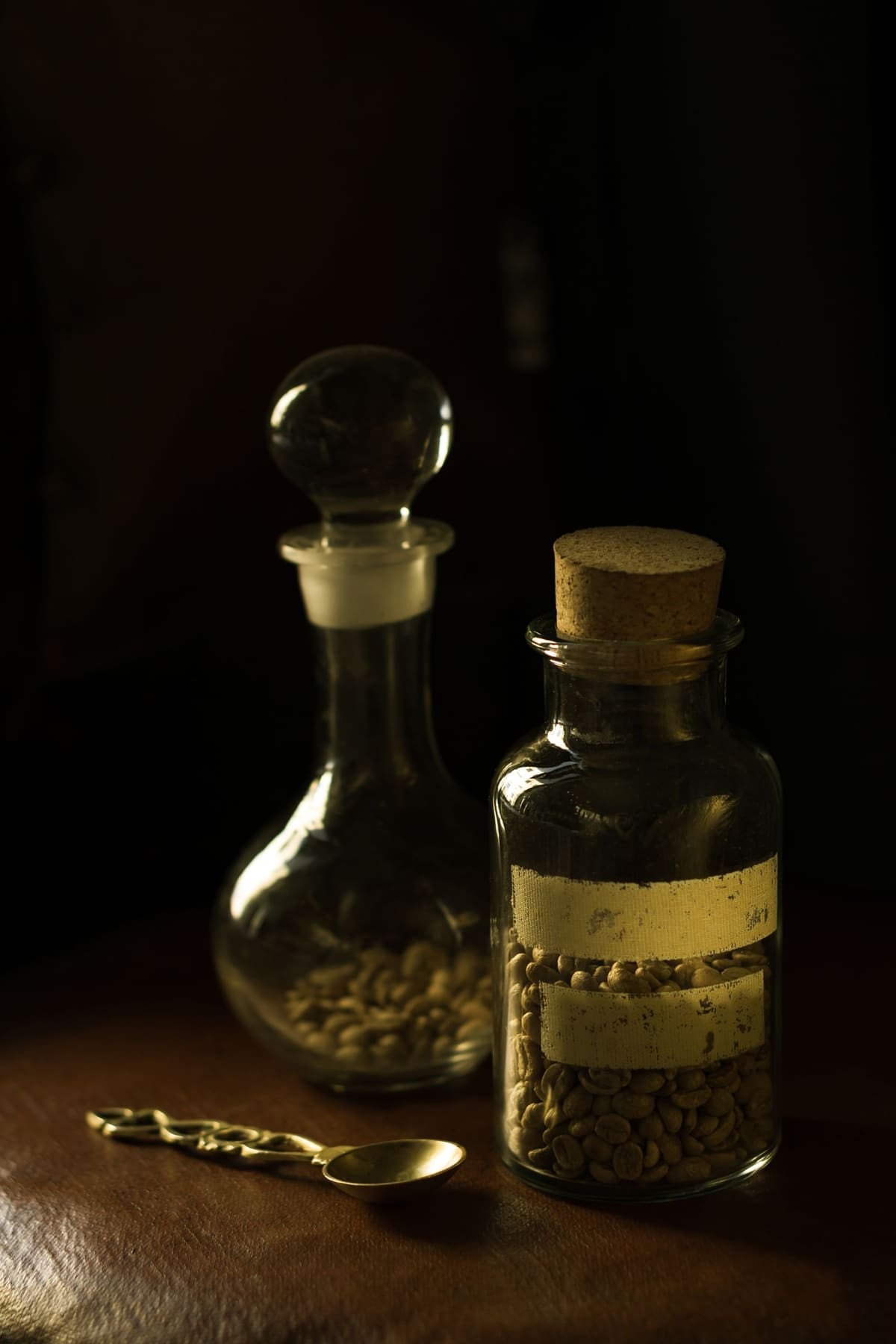
For seeds bought loose or collected in quantity, a glass jar does the job very well: it does not take on smells and can be cleaned thoroughly. Because it lets light through, it belongs in a closed cupboard and not on an open shelf. Watch the stopper, though: a cork lid closes without being airtight, which suits a stock used up within the year, but not a reserve meant to last several seasons. For that, a rubber seal and a sachet of silica gel are essential.
Testing an old packet with ten seeds
This test costs ten seeds and ten minutes, and saves you losing a whole tray of compost and three weeks.
- Take ten seeds at random from the packet, without picking out the finest ones.
- Dampen a sheet of kitchen paper, wring it out so that it is moist without dripping, and lay the seeds on it, well spaced.
- Fold the paper over, slide it into a closed box or a plastic bag, and put it in a room at a moderate temperature, between 18 and 22 °C.
- Check every two days that the paper is still damp, and dampen it again if needed.
- Wait for the time to emergence of the species, plus a few days' margin: five to ten days for basil, two to three weeks for parsley, whose seeds benefit from an overnight soak before the test.
- Count the seeds that have germinated. Each one that comes up is worth 10 % germination.
The reading is straightforward. From eight seeds out of ten, the batch can be sown as normal. Between five and seven, it remains usable if you sow more thickly and thin out afterwards. Below four, it is better to start from a new packet for the crops that matter, and keep the old batch for microgreens, where the sowing density is high in any case: our beginner's guide to microgreens covers that crop in detail.
The seeds that germinate during the test need not be thrown away: they can be pricked out carefully into a pot of seed compost, provided you handle them by the seed coat and never by the radicle, that very fragile first root.
Organising the store from one season to the next
A seed box is worth sorting once a year, ideally in winter, before the sowing season. Sorting means taking out the batches whose longevity range has been exceeded, testing them rather than binning them, and writing the rate obtained on each packet. The list of what is missing is drawn up at the same moment, before the spring rush.
Batches from the same year go together, and the short-lived species such as chives, dill or parsnip go at the front: those are the ones to use first. Our indoor sowing calendar gives the month of use for each species, which helps in deciding what to buy again. As for the compost that will receive those seeds, it cannot be improvised either: the difference between seed compost and multi-purpose compost is explained in our compost comparison.
Sources
Frequently asked questions
Can you sow out-of-date seeds?
The date printed on a packet is a sell-by date, not a date of death. A properly stored seed often stays viable for several years beyond it, simply with a lower emergence rate. The only way to know is to germinate ten or so seeds on damp paper before committing a tray and a bag of compost to the whole batch. If half come up, the packet can still be used by sowing more thickly.
Should seeds be kept in the freezer?
The freezer suits long storage, on two strict conditions. The seeds must be perfectly dry, otherwise the water they contain damages them as it freezes, and they must not be put through repeated freezing and thawing. For everyday home use, the bottom of the fridge is simpler and already very effective. In both cases the container must be airtight to keep condensation out.
Why do my seeds go mouldy in their box?
Seeds stored while still damp, or shut in with fragments of pods and capsules, develop moulds. Those plant remains hold water and harbour fungi that then spread to the seeds. Leave the seeds to dry flat for a few days before storing them, and take out everything that is not the seed itself. A sachet of silica gel in the box absorbs the moisture that is left.
Do all seeds keep dry?
No, and this is an important exception. So-called recalcitrant seeds, those of oak, walnut or magnolia for example, die if they are allowed to dry out. They keep for a few months in a bag of damp vermiculite, sand or a coir and sand mix, placed in the fridge at around 5 °C. Shop-bought vegetable and herb seeds, on the other hand, keep well dry.