

Coriander and dill indoors: the two that bolt
Taproot, fast bolting, slow germination: why these two herbs disappoint in a pot, and how to sow, light and harvest them so they last all year.
In this guide
Coriander and dill are the two herbs that disappoint most often indoors, and for the same reason: they build a taproot, they take badly to being transplanted, and they run to flower as soon as they are too warm, too dry or too short of light. The answer comes down to three things: sow straight into the final pot, keep them somewhere bright but cool, and start a small fresh sowing every two to three weeks rather than hoping one pot will last a season.
A taproot, and everything else follows from it
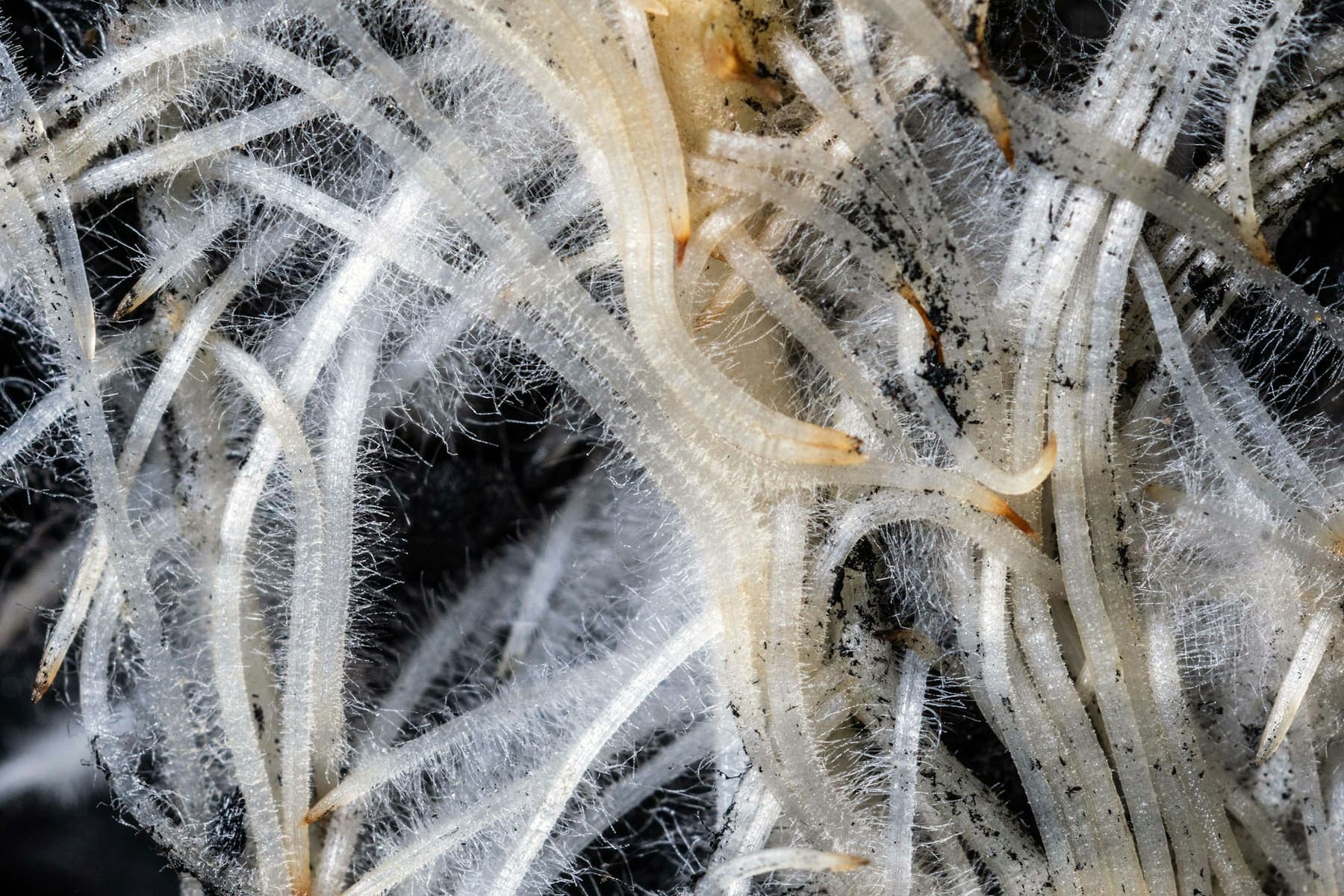
These two plants belong to the same family as the carrot. They grow downwards first, with a single deep root. Disturb that root and it snaps or kinks, and the plant reacts as it would to an attack: it flowers.
The Royal Horticultural Society is explicit about dill: it tolerates being started in module trays, but it dislikes having its roots disturbed when transplanted, and direct sowing remains the better method. If you start it in a small pot, the young plant should move to its final pot about four weeks after sowing, before the taproot has formed.
For coriander the consequence is the same: sow where the plant will stay. That also explains why supermarket trays of seedlings pricked out one by one so often fail.
Coriander and dill: the numbers side by side
| Coriander | Dill | |
|---|---|---|
| Germination indoors | Two to three weeks | One to two weeks |
| Germination temperature | Warm, bright spot | Not below 15 °C |
| Covering the seed | A fine layer of compost | About 1 cm |
| Thinning | One plant every 5 cm | One plant every 20 cm or so |
| Height in a pot | Around thirty centimetres before bolting, more afterwards | Often 60 to 90 cm, up to 1.5 m in the ground |
| First leaf harvest | When plants reach 10 to 15 cm | About six weeks after a spring sowing |
| What triggers flowering | Heat, drought, disturbed root | Heat, drought, disturbed root |
Both are sown in small successive batches. For coriander the RHS advises staggered sowings right through spring and summer, and for dill a fresh sowing every few weeks: it is the only way to have leaves without a break, since every plant flowers in the end.
Sowing straight into the final pot
Choose the container before the seed. For dill, the RHS gives a pot at least 30 cm wide and deep for several plants of a compact variety. Coriander needs less width but the same depth: the root goes down.
- Drill it, drain it, fill it. A pot with no hole kills both species. Fill with a fine compost, to just below the rim.
- Sow thinly. Coriander seed is large enough to be placed one by one, about 5 cm apart. Dill seed is sown as a pinch, then thinned.
- Cover lightly. A fine layer for coriander, about 1 cm for dill.
- Water with a fine rose, so the seed is not moved about.
- Wait. One to two weeks for dill, two to three weeks for coriander sown indoors. Slow germination is not a failure.
- Thin as soon as the seedlings can be handled, cutting the extras off at the base rather than pulling them out: the neighbours are left undisturbed.
A seed compost, fine and deliberately low in nutrients, suits germination. Since the plants are going to stay in that pot, mix it half and half with a richer potting compost.
Light, heat and watering
Bright, yes; warm, no
This is the distinction most windowsills fail to make. The RHS notes that coriander does poorly as a windowsill plant: it goes pale in low light and runs to seed if it gets too hot or too dry. So it wants plenty of light without much heat, which describes the back of a worktop in summer rather badly, and a bright, cool room rather well.
For dill the same source is clear: plants are better looking and bushier where light levels are high. A late-winter sowing behind glass gives soft, drawn-out stems.
In practice, in winter or in a dim room, a grow light changes the outcome. Allow twelve hours a day for foliage plants, fourteen to sixteen hours for herbs, on a timer; distance and duration are covered in our guide to grow lights indoors.
Watering: steady, never waterlogged
Coriander hates waterlogged conditions. Keep the compost just moist, water in the morning or the evening rather than in the middle of the afternoon, and empty the saucers.
A shortage of water, on the other hand, triggers flowering. One pot allowed to dry right out is sometimes enough to send up the flower stem. In a pot both species dry faster than in the ground, especially in warm weather: the RHS advises checking pots daily when it is hot.
The working rule therefore fits in one sentence: a permanently moist substrate, never sodden, and no complete drying out.
Harvesting without exhausting the plant
Coriander is picked leaf by leaf. Start when the plants reach 10 to 15 cm, take only a few leaves from each one, then let them recover for a fortnight before coming back. A single heavy harvest stops the plant.
Dill is cut from the top, always leaving at least a third of the plant in place. Picking regularly encourages the plant to produce, keeps it bushy and delays flowering. Dill leaves wilt quickly, even in the fridge: cut it when you are ready to cook.
Both plants also give edible flowers and seed. If you let one plant flower at the end of its run, you get coriander seed to cook with and, in the case of dill, umbels to flavour preserves.
Delaying bolting
- Remove flower stems as soon as they appear. This is the decisive one: the energy goes back into the leaves. For coriander, the RHS makes it the key to a long harvest.
- Move the pot somewhere cooler in the heat of the day, out of the midday sun in summer.
- Never let it get thirsty. Steady watering delays flowering; a jolt brings it forward.
- Choose the right varieties. There are corianders selected for long leaf harvests, slower to flower. On the dill side, compact varieties such as “Domino” suit a pot better.
- Sow a fresh batch every two to three weeks. Less a trick than a routine: the next pot takes over when the last one flowers.
A shop-bought pot can sometimes be saved: those trays hold a lot of crowded seedlings, which go leggy or flower quickly, but which can survive if you split them up and repot them straight away.
What about microgreens?
If you want the flavour without waiting for the flowers, coriander can also be grown as microgreens, cut with scissors at the first true leaf stage. The times quoted vary a lot: the Utah State University guide gives twenty-one to twenty-eight days for coriander, while the RHS talks of a fortnight or so for seedlings cut younger. Either way it is one of the slowest microgreens, best left to people who have already succeeded with a tray of radish. The full method is in our guide to getting microgreens right first time.
To fit your sowings to the season, our indoor sowing calendar sets out what to sow each month. Seed is in the seeds section.
Sources
Frequently asked questions
Can a supermarket pot of coriander be saved?
Sometimes, as long as you act quickly. Those pots hold a lot of crowded seedlings grown for an immediate harvest: they go leggy, pick up foliage diseases easily or flower fast. Gently split the rootball into three or four groups, repot them at once into a deep container, then stand them in full light in a room that is not too warm.
Why does my coriander smell so strong in the kitchen?
It is normal, and the RHS mentions it: coriander can give off an unpleasant smell in a confined space, particularly where the foliage is dense and the air still. Air the room, space the pots out and avoid wedging the plant between a wall and a cupboard. The smell points to neither disease nor overwatering.
Do coriander and dill grow hydroponically?
Yes, both can be grown without soil, dill being the quicker of the two to germinate. Their weakness is the same either way: they flower early, and a net pot holding a bolted plant produces no more leaves. Plan on replacing the plugs regularly rather than keeping the same plants all season.
Can coriander and dill be sown in the same pot?
Better not. Dill wants twenty centimetres or so between plants and often tops 60 cm in height: it ends up shading the coriander, which is sown four times as close and stays much lower. Two separate pots side by side give better harvests and let you resow one without touching the other.