

Rockwool, clay pebbles or coir: which soilless medium?
Water retention, aeration, pH, working life and end of life: what really separates rockwool, expanded clay pebbles and coir, and which to choose for your system.
In this guide
For an indoor hydroponic garden, coir is the simplest medium: it holds water well, does not shift the pH of the solution and can be composted after use. Expanded clay pebbles suit systems where the level rises and falls better, because they drain fast and can be reused for years. Rockwool stays very consistent and very dependable, but it needs preparing before use and ends up in the bin. Here is how to choose without getting it wrong.
What a soilless medium is asked to do
A growing medium is not a fertiliser. In a soilless culture all the food comes from the nutrient solution; the medium itself fills three mechanical roles.
- Hold the plant upright, on its own or inside a net pot.
- Retain a little water between two feeds, so the roots do not dry out.
- Let air move through, because roots need oxygen at all times. This is the point most often forgotten, and the one that does the most damage.
A good medium is also inert: it releases no nutrients and does not move the pH of the solution, which is held between 5.5 and 6.5. The part these media play in the system as a whole is described in our guide how hydroponics works.
All three candidates answer those three roles, but not in the same proportions. That is where the whole choice lies.
The comparison at a glance
| Rockwool | Clay pebbles | Coir | |
|---|---|---|---|
| Water retention | High | Low | High |
| Aeration | Good if not saturated | Very good | Good |
| Effect on pH | Alkaline when new, needs conditioning | Neutral once rinsed | Neutral, if the fibre is rinsed |
| Reusable | Not in practice | Yes, after washing | No, one crop |
| End of life | Non-compostable waste | Washed and reused | Compostable |
| Handling | Irritant fibres, gloves advised | Dust when rinsing, heavy medium | No particular precautions |
| Typical use | Batches of seedlings and cuttings | Net pots, ebb and flow systems | Seedlings, cuttings, small systems |
None of these media is better in absolute terms: what sets them apart is the retention-to-aeration balance, and what becomes of them after the harvest.
Rockwool
It is a material made from molten rock spun into fibres, sold as starter cubes, growing slabs or loose flock. Its reputation comes from its consistency: from one cube to the next the structure is identical, so the behaviour of water is identical too. In commercial production that consistency is worth a great deal.
Its merits at home are real. It holds a lot of water while keeping air spaces, which forgives irregular watering. Roots run through it easily, and a cube slots as it is into a net pot or into a larger slab at potting-on time.
Its constraints are just as real.
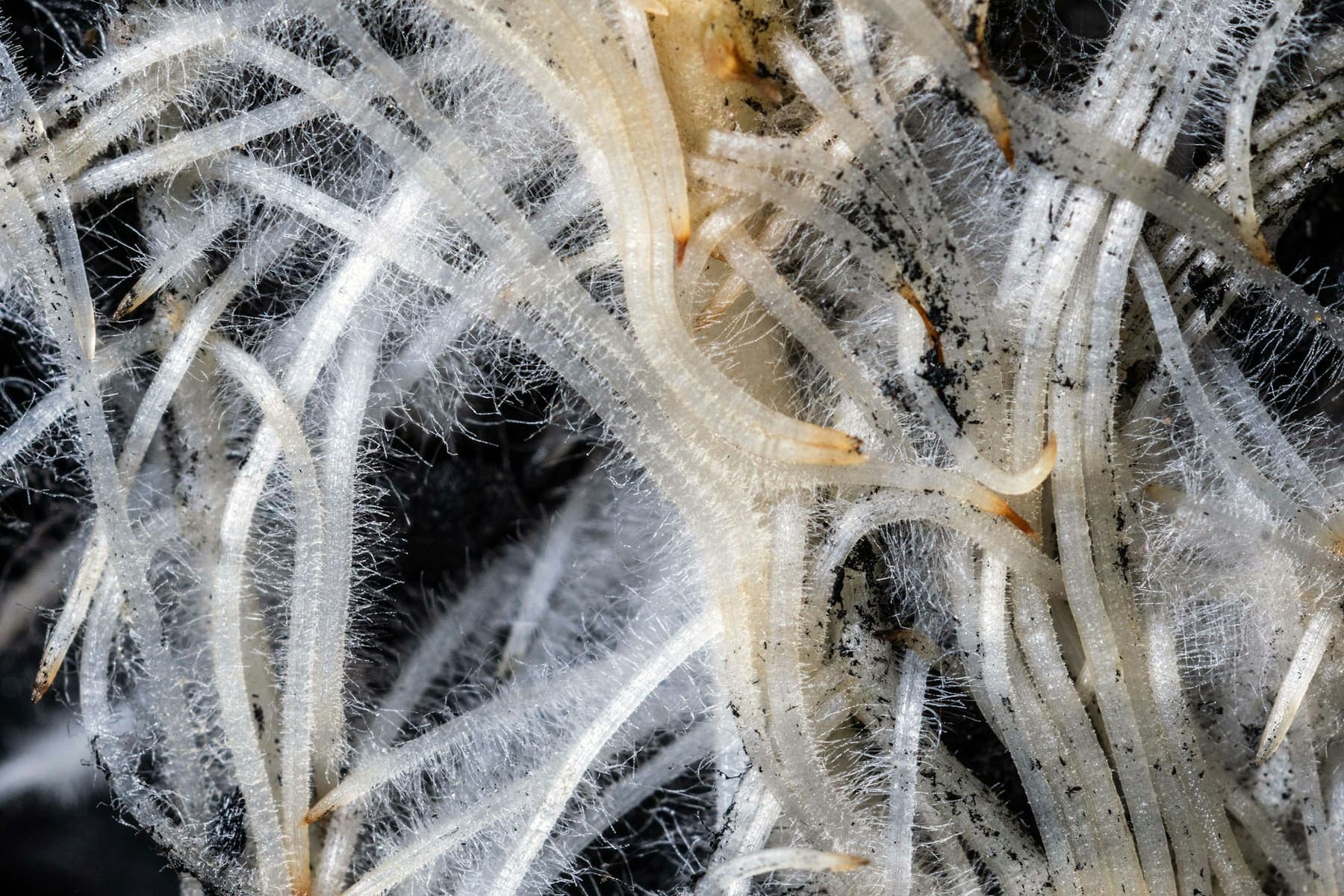
- It is alkaline when new. It has to be conditioned before use, by soaking it in water whose pH has been lowered as the manufacturer directs. Skip that step and the pH of the solution is thrown off within days.
- It saturates easily. A waterlogged cube drives out the air and suffocates the roots. Drain it after soaking, without squeezing it like a sponge, which would crush its structure.
- Its fibres are irritant to skin, eyes and airways when cut. Gloves and damp working are essential, and it should not be handled dry.
- It does not compost and does not reuse properly from one crop to the next. Every harvest produces waste.
It is a sound technical medium, above all for batches of seedlings and cuttings. For occasional home growing, the preparation it needs and the waste it leaves weigh heavily against simpler alternatives.
Expanded clay pebbles
These are granules of clay fired at high temperature, hollow and porous, roughly 8 to 16 mm depending on the grade. They hold almost no water, but let air circulate remarkably well, and that is exactly what is asked of them.
Their home ground is the net pot of a system where the solution rises and falls, or trickles down: ebb and flow, drip, vertical towers. Between two passes of solution, air fills the gaps straight away and the roots breathe. In a raft system, where the level does not move, they mainly serve to hold the collar of the plant above the water.
Three practical points:
- Rinse them before first use. New pebbles give off a red dust that clouds the solution and clogs pump filters. A run under clean water in a colander is enough, until the water comes out clear.
- Do not sow directly into them. A seed sitting between pebbles dries out within hours. Sow in a plug or a cube, then wedge that plug among the pebbles once the roots are through.
- Wash them after the harvest in hot water, scrubbing, and let them dry before storing. They will then serve for several years. That is their main economic and environmental advantage.
Their weight once wet is not negligible on a shelf or a tower, and they shift about when a net pot is handled. Those are comfort drawbacks, not growing ones.
Coir
Made from the husk of coconuts, it comes as starter plugs, compressed bricks to rehydrate, or coarser chips. It combines good water retention with decent aeration, which makes it the most versatile of the three for home use.
Two things to watch, both settled at the point of purchase.
- Salt. Raw husk contains salts that plants dislike. Quality coir is washed at the factory; the packaging says so. If in doubt, rinse thoroughly before use.
- Saturation. As with rockwool, a sodden plug drives out the air. Swell it in warm water, then let it drain before sowing.
In exchange, it needs no pH conditioning, is handled bare-handed, composts along with the roots at the end of the crop, and a plug slots straight into a net pot with no potting-on and no compost to rinse away. For a seedling headed for a small system, it is the most direct answer.
Whatever the medium, the nutrients come from the solution alone. An inert medium gives the plant nothing: the dose and the pH of the solution do all the work.
Choosing by system
- Raft or deep water culture: a coir plug is enough to hold the young plant, wedged if needed by a few clay pebbles. The roots then hang in the solution and need no further support.
- Drip: clay pebbles for aeration, or rockwool if you want stronger retention between two feeds. The choice depends mainly on how often the pump runs.
- Ebb and flow: clay pebbles are in their element, since draining between two floods is what draws the air in.
- Nutrient film technique: the medium is limited to the starter plug, coir or rockwool. The rest of the roots live in the film of solution.
- Wick system: go for a medium that holds water, coir or rockwool, since nothing circulates actively.
- Seedlings and cuttings, whatever the system: coir plugs for simplicity, rockwool cubes if you raise a lot of them and want perfect consistency.
What about perlite, vermiculite and lava rock?
They exist too, and are often mixed with the above. Perlite is very open and very light, but floats and shifts about; it is better mixed in than used on its own. Vermiculite holds a great deal of water and serves to correct a mix that drains too freely. Lava rock, a volcanic stone, behaves much like clay pebbles, heavier and more angular.
The reasoning is the same in every case: the more water a medium holds, the less air it contains, and the other way round. You tune the mix to the system, not the system to the mix.
Common mistakes
- Sowing straight into a free-draining medium. Clay pebbles and lava rock dry out too fast for a seed.
- Skipping the conditioning of rockwool. The pH of the solution then climbs with no obvious explanation.
- Squeezing a plug or a cube to drain it. The structure collapses and does not spring back.
- Reusing an organic medium from one crop to the next. Used coir and rockwool keep dead roots in them; replace them.
- Believing that the medium feeds the plant. Without soil, everything comes from the solution. If you are still torn between soilless growing and growing in pots, our comparison hydroponics or soil sets out the terms of the choice, and indoor hydroponics without the jargon describes the full routine.
Plugs, nutrients and systems are gathered in the hydroponics section.
Sources
Frequently asked questions
Does rockwool need preparing before sowing?
Yes. New rockwool is alkaline and would push the pH of the solution up. Soak it before use in water whose pH has been lowered as the manufacturer directs, then let it drain without squeezing it. Wear gloves: the fibres irritate skin and airways, above all when dry.
Are clay pebbles reusable?
Yes, and that is their main advantage. After the harvest, pull out the roots, wash the pebbles in hot water while scrubbing them, then let them dry before storing. They will serve for several years that way. Remember to rinse them before the very first use as well: new pebbles give off a dust that clogs pump filters.
Can you sow directly into clay pebbles?
It is not advisable: the pebbles hold almost no water and a seed lying between them dries out within hours. Sow instead in a coir plug or a rockwool cube, then wedge that plug among the pebbles once the roots start to come through.
Does coir change the pH of the nutrient solution?
Properly rinsed coir is neutral and does not move the pH, which is held between 5.5 and 6.5. The thing to check is the salt content: raw husk contains salts, and quality fibre is washed at the factory. The packaging states it; if in doubt, rinse thoroughly before use.