Geometric terrarium: which shape to choose, and where to put it
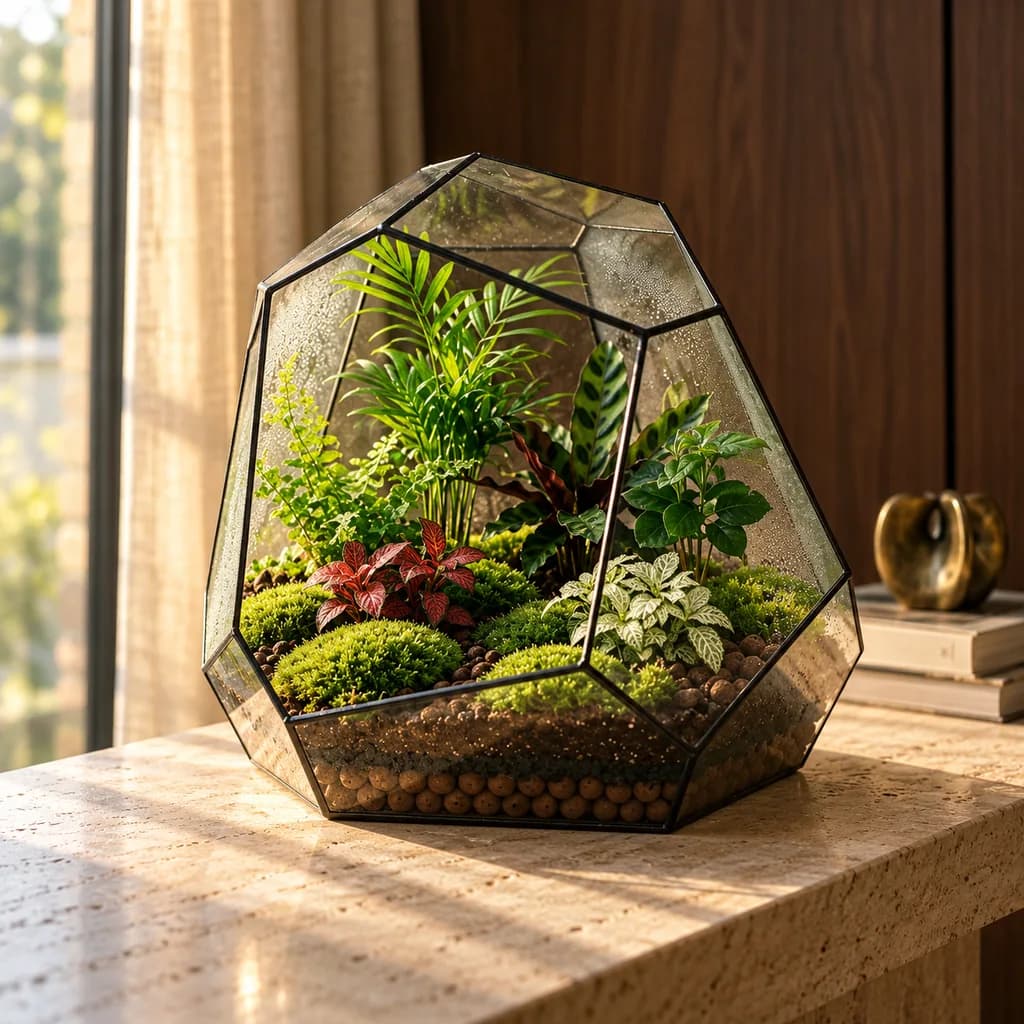
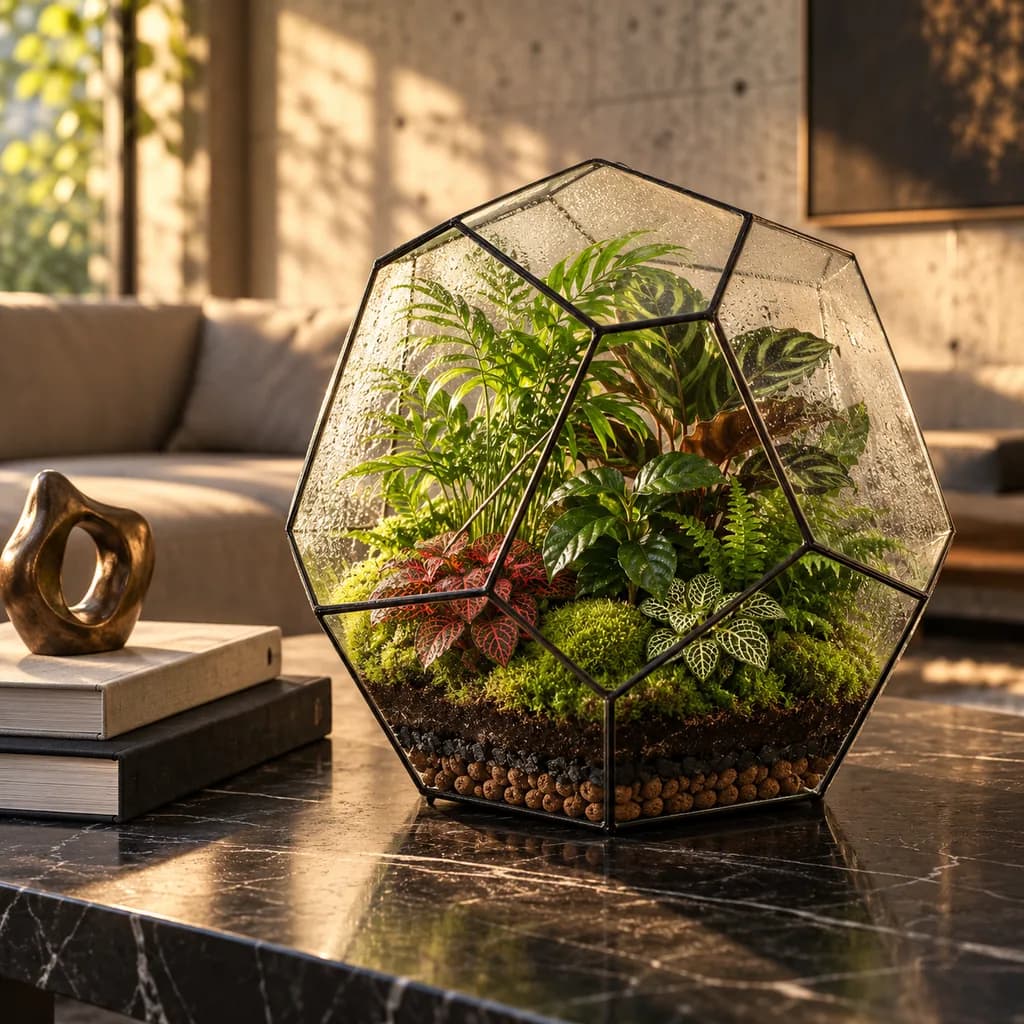
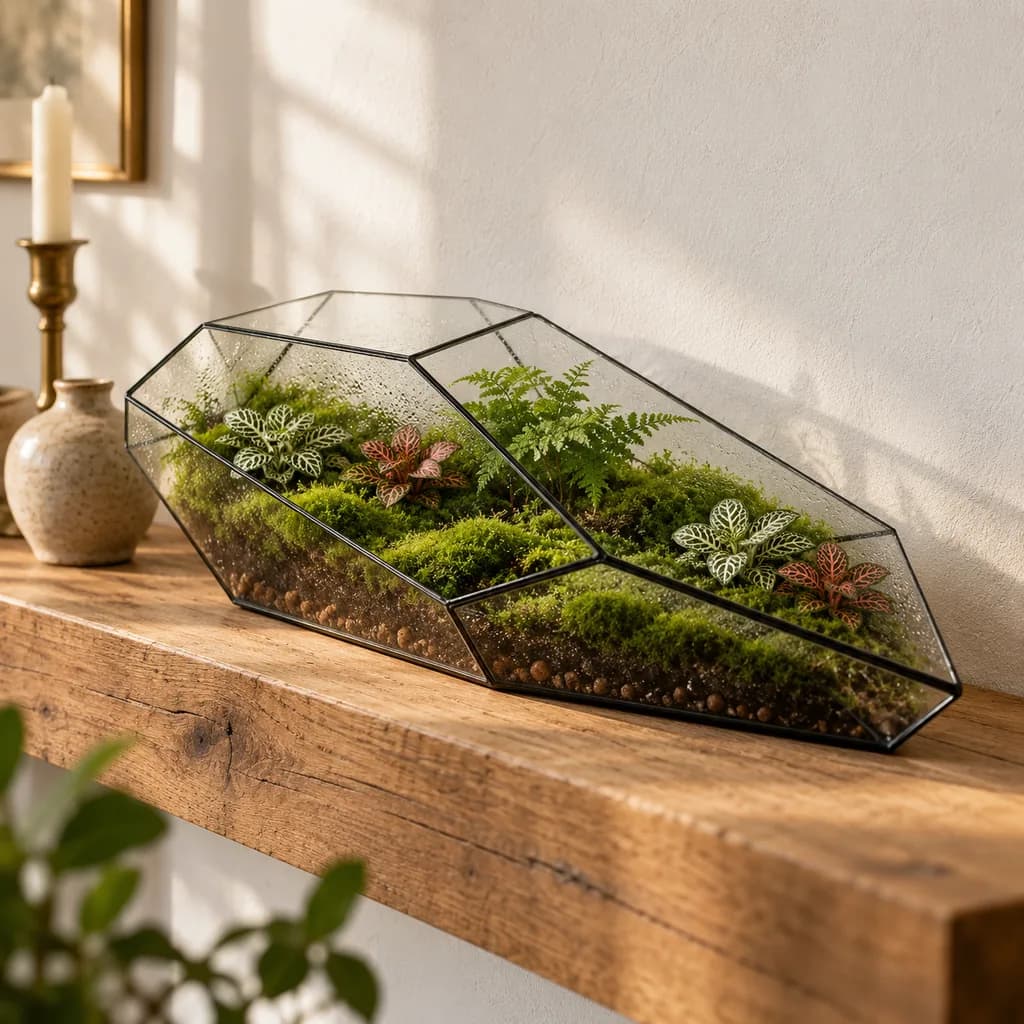
A geometric terrarium is made of flat glass panels, assembled into facets. Cube, column or long landscape: the shape decides the space in the room and the plants. The seven shapes, with their sizes.
In this guide
A geometric terrarium is a terrarium made of flat glass panels, assembled into facets. It replaces the roundness of the jar with sharp edges. In a room, it reads as an architectural object: a small glass building with a garden inside.
To choose one, look at three things in this order: the shape, the space, then the plants.
Two families of geometric terrariums
- Glass and metal. The panels are held by a brass or tin frame. These models are often open on one side. They take succulents or air plants.
- Glass and silicone. The panels are joined with silicone, like those of an aquarium. The base is watertight. The volume can be closed.
Our terrariums in the Prisme collection belong to the second family: faceted glass and silicone, handmade in Europe. A removable glass panel with a knob serves as a door. These are closed terrariums. Our guide to the closed or open terrarium explains what this changes.
The shape decides the space
Measure the furniture before you choose. Also keep room to remove the glass panel.
| Kit | Size (L × W × H) | Silhouette | Its best spot |
|---|---|---|---|
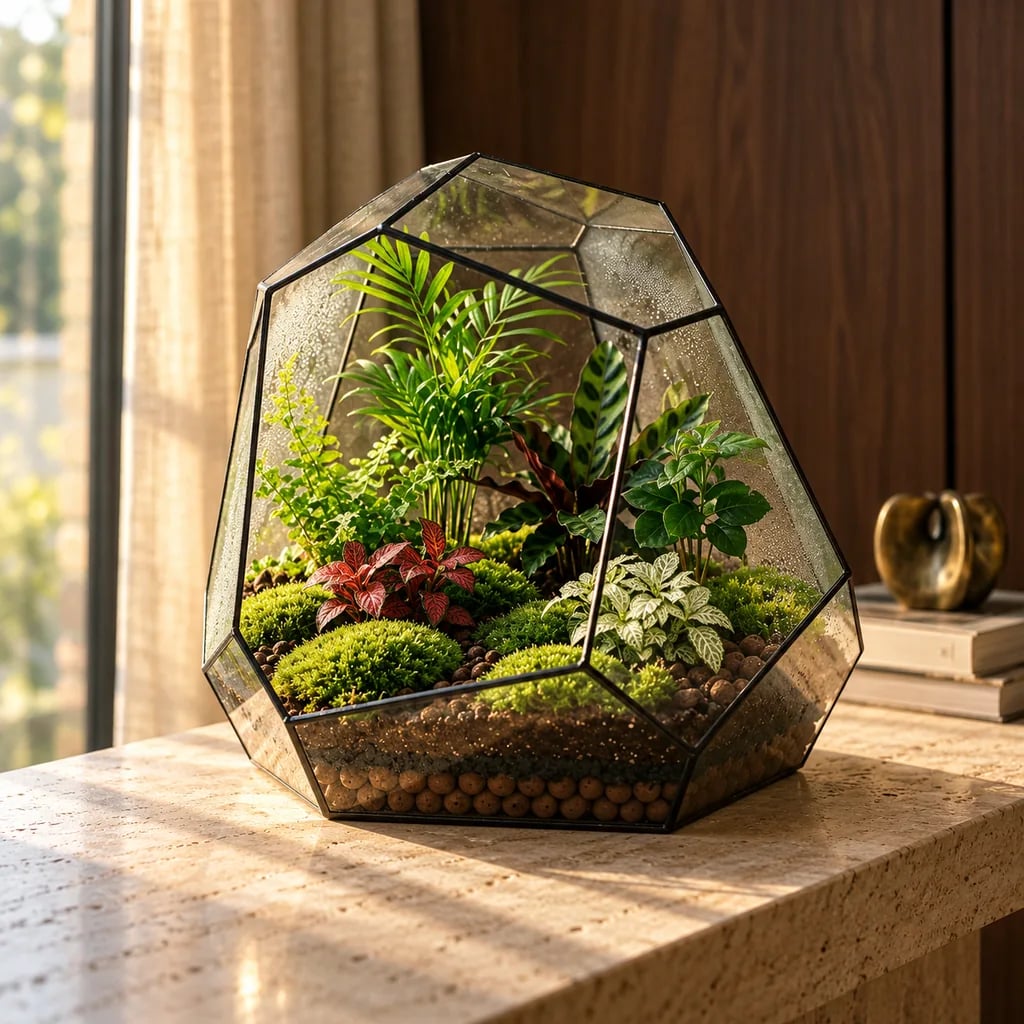
| Prisme Canopy | 31 × 29 × 29 cm | Almost cubic | Sideboard, coffee table: it is seen from every side |
| Prisme Jungle | 28 × 26 × 24 cm | Compact | Chest of drawers, deep console |
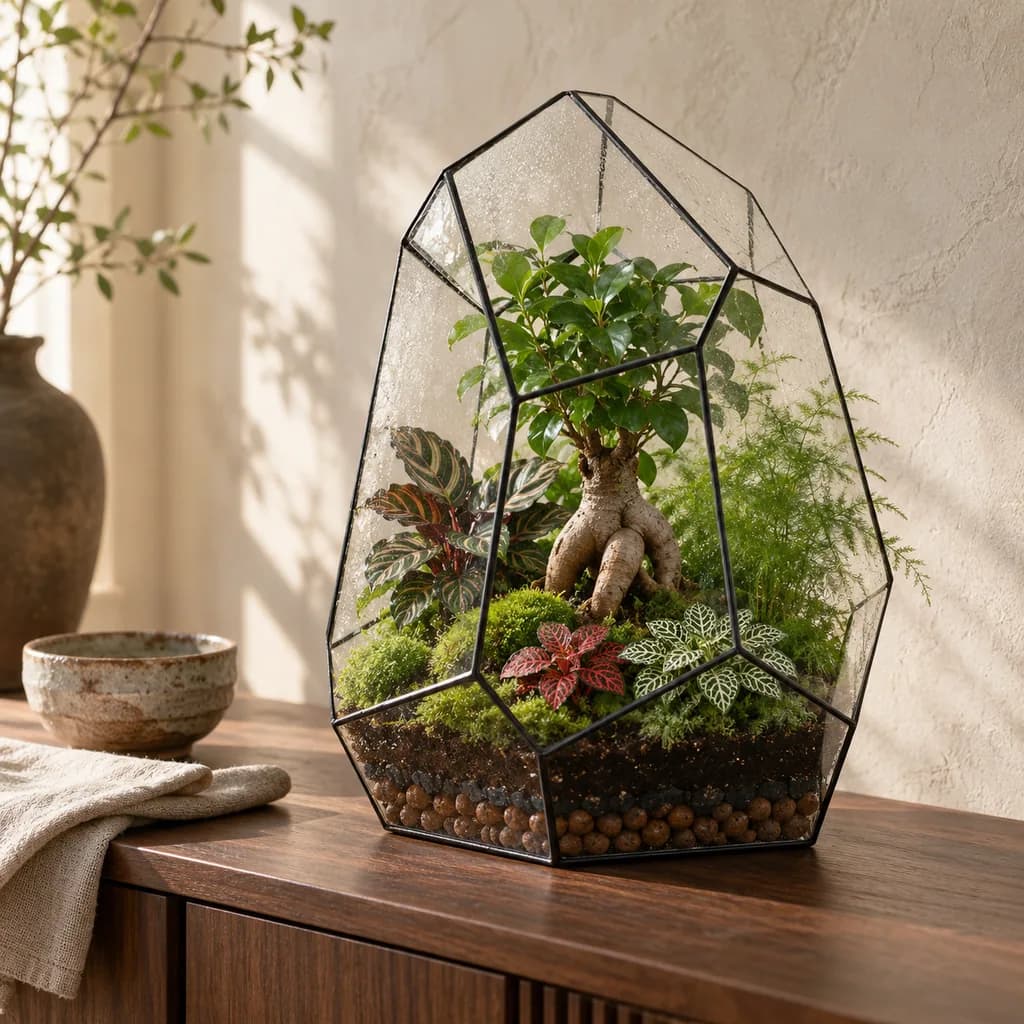
| Prisme Bonsai | 27 × 27 × 36 cm | Tall | Console, low cabinet |
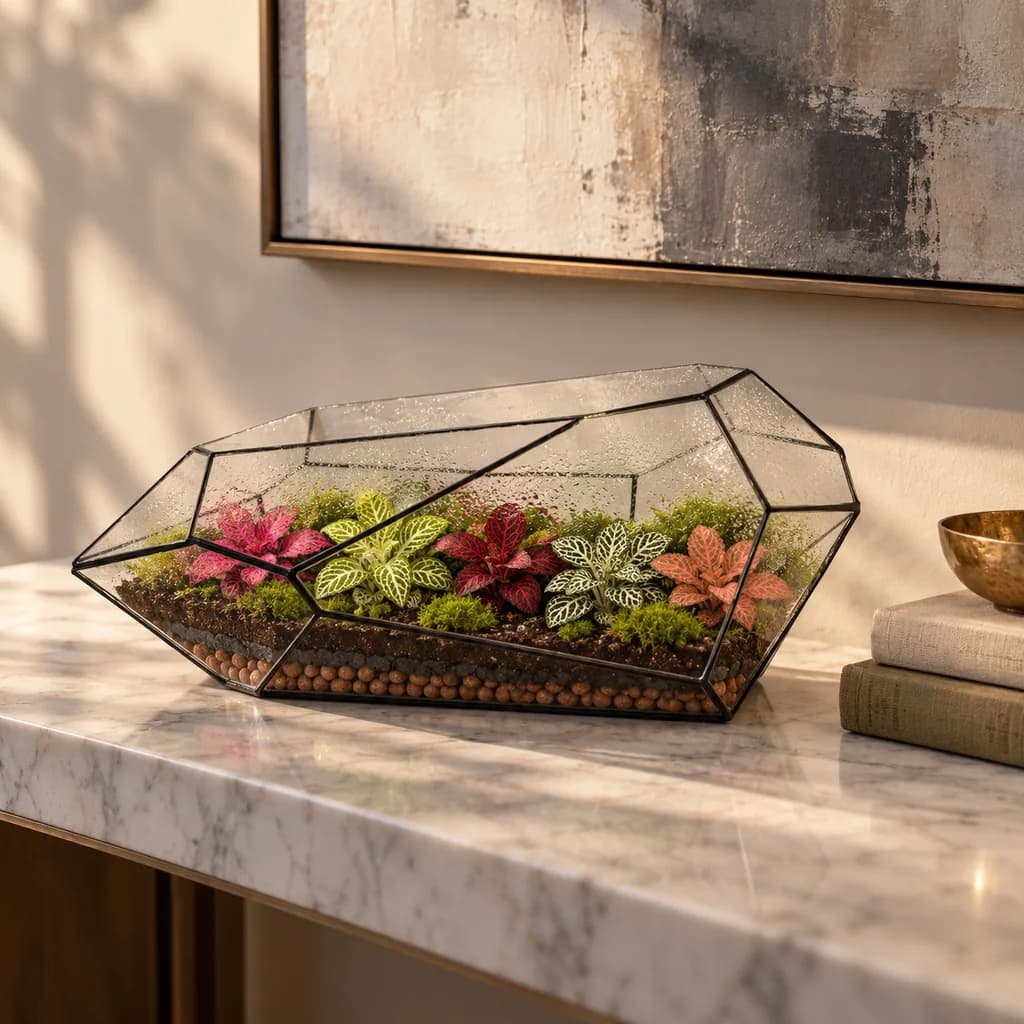
| Prisme Clearing | 41.5 × 21 × 23.5 cm | Long | Hall console, 21 cm of depth is enough |
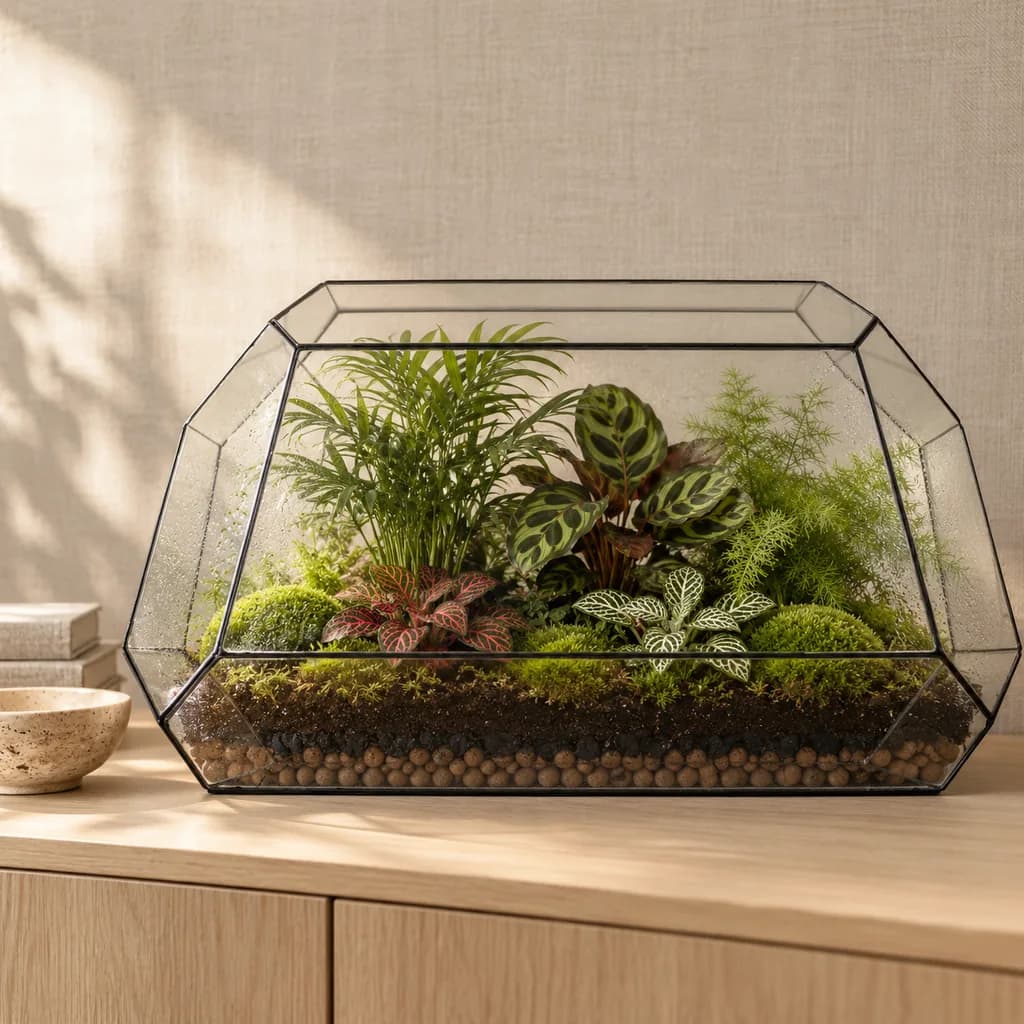
| Prisme Valley | 50 × 25 × 17.5 cm | Long and low | Table centrepiece, sideboard |
| Prisme Mosaic | 47 × 21 × 17.5 cm | Long and low | Table centrepiece, deep shelf |
| Prisme Emerald | 16 × 15 × 19.5 cm | Small | Desk, bedside table |
Three simple rules:
- An almost cubic volume goes where people walk around it: a coffee table, an island, a sideboard in the middle of a wall.
- A long volume follows the line of a piece of furniture. It suits a console or the centre of a table. Our guide to the terrarium as a table centrepiece covers this case.
- A tall volume needs empty space above it. Do not slide it into a shelf.
The shape also decides the plants
A plant must fit under the glass, with room to grow.
- Low glass, 17.5 cm: fittonias, which measure about 10 cm, and living moss. You get a carpet of colour.
- Medium glass, 23 to 29 cm: a mini palm or a coffee plant for height, a calathea or a fern in the centre, fittonias at ground level.
- Tall glass, 36 cm: a ginseng ficus bonsai. It needs at least 25 cm under the glass.
Our guide to plants for a geometric terrarium goes further.
Light and facets
The facets make the beauty of the object: each panel catches the light at a different angle. Place the terrarium near a window, in bright light. Avoid direct sun: behind closed glass, it heats the air and burns the leaves.
In the evening, a lamp placed next to the terrarium is enough to show it off. Our guide to terrarium lighting gives the benchmarks.
A small size to start with
Do you like the shape, but lack space? The smallest model measures 16 × 15 × 19.5 cm. It holds three fittonias and living moss. It fits on a desk.
In short
- Choose the family: closed for tropical plants, open for succulents.
- Measure the furniture: it gives the shape.
- Look at the height of the glass: it gives the plants.
- Place it in bright light, without direct sun.
To learn what makes a piece high-end, read our guide to the luxury terrarium.
Sources
- Creating a Closed Terrarium, Penn State Extension
- How to Design a Closed-System Terrarium, Mississippi State University Extension
- Manufacturer data sheets for the terrariums (dimensions, materials, manufacture, lead time)
Frequently asked questions
What is a geometric terrarium?
It is a terrarium made of flat glass panels, assembled into facets, in place of a round jar. Its shape has sharp edges: a cube, a prism, a column or a long, low volume.
Is a geometric terrarium open or closed?
Both exist. Many models with a metal frame are open and take succulents. Our geometric terrariums close with a removable glass panel: they take tropical plants.
Where should I put a geometric terrarium?
On a stable piece of furniture, near a window, without direct sun. A long, low model suits a table or a sideboard. A tall model suits a console. A small model suits a desk.
How do you open a closed geometric terrarium?
Through a removable glass panel with a knob. You take it off to plant, water or prune. Put back in place, it closes the terrarium.