

Algae in a hydroponic reservoir: where it comes from, how to stop it
A green veil on the walls, a slippery film on the roots: algae in a hydroponic garden live on light. Where it gets in, how to clean the reservoir and how to keep the problem from coming back.
In this guide
Green algae in a hydroponic reservoir need three things to grow: water, minerals and light. The first two are the very principle of soil-free growing; the third is the only one you can act on. Making the reservoir opaque, plugging the unused planting holes and cleaning the tank every time the solution is renewed is enough, in the great majority of cases, to make the problem disappear.
How do you recognise algae?
The first sign is a pale green veil on the walls of the reservoir, usually at the height where the light strikes. Next comes a slippery film on the roots, the net pots and the pump hose, sometimes turning brownish as it ages. In a system exposed to the sun, the water itself can turn green and cloudy.
Not every green mark is algae. White or beige deposits that grate under a fingernail are limescale or precipitated mineral salts. Brown, stringy slime in water that smells stale points instead to a bacterial bloom caused by a lack of oxygen: that is a pump and aeration problem, not a light problem.
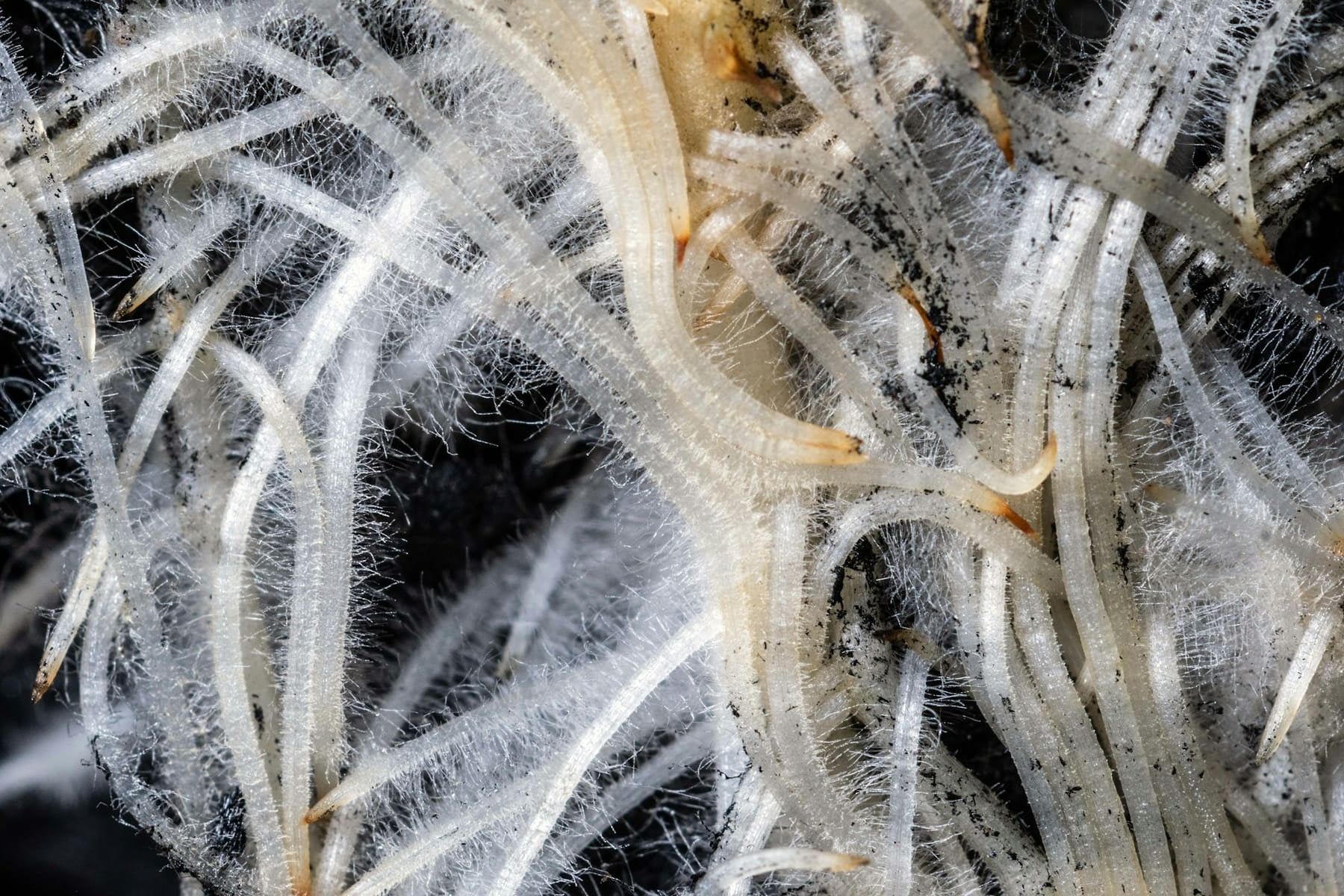
The pale fuzz around the roots is not algae either. Healthy roots carry fine, evenly spaced root hairs, matt white, which water flattens against the root. Brown, soft roots, on the other hand, are short of air.
Why they appear even in a clean system
Algal spores travel in the air, arrive with tap water, on a seed packet or on your hands. You cannot keep them out, and there is no point in trying. What really triggers the colonisation is the meeting between those spores and an environment that suits them.
| What feeds them | Can you act on it? | What to do |
|---|---|---|
| Light reaching the water | Yes, completely | Opaque reservoir, planting holes plugged, tank away from the window |
| Dissolved minerals | No: that is the nutrient solution | Keep to the dose, never overdose |
| Warm, still water | In part | Room at a moderate temperature, pump running, solution renewed |
| Organic remains | Yes | Remove dead roots, fallen leaves, seeds that never germinated |
Light is therefore the only clear lever. A translucent reservoir sitting under a lamp that runs 14 to 16 hours a day offers algae exactly the conditions of a greenhouse.
Where does the light get in?
It is worth walking round the system with the lamp on, looking at the reservoir the way algae would.
- The translucent walls. Milky white or light grey tanks let through far more light than you would imagine. A properly opaque tank, or a dark sleeve wrapped around it, changes everything.
- The unused planting holes. Every empty net pot is an open window onto the solution. The original plugs, a piece of foam or a disc of black plastic close them off.
- The filling hole and the level slot. They are often left open after the water has been topped up.
- Clear tubing. Algae settle readily in a transparent tube, then spread through the whole circuit.
- Direct sunlight. A reservoir standing in front of a patio door heats up and lights up, even with the lamp off. A few dozen centimetres further back, or a curtain, is often enough.
In a raft system, where the roots sit permanently in the tank, keeping the reservoir dark is part of how the method works: the subject is covered in detail in how hydroponics works.
Cleaning a reservoir that has already turned green
Clean at the moment the solution is renewed, so that you do not empty the tank twice. Allow half an hour.
- Unplug the pump and the lamp, then lift out the net pots and set them on a clean tray, roots shielded from direct light.
- Empty the reservoir completely, into the sink. The used solution is out of balance: it is not worth keeping for the next crop.
- Scrub the walls with a soft brush or a non-abrasive sponge and hot water. The film of algae comes off mechanically; no product is needed.
- Treat white deposits with diluted white vinegar, left to work for a few minutes, then rinse thoroughly.
- Take the pump apart and rinse it, the strainer and the hose in particular. An old toothbrush does the job.
- Rinse the roots under clean, lukewarm water, running them between your fingers to lift the film. Cut away brown, soft roots with clean scissors, never the pale ones.
- Refill with clean water, measure out the nutrient solution, check the pH, then put the plants back and plug everything in again.
A heavily colonised reservoir may keep a greenish tinge in the micro-scratches of the plastic. That is cosmetic: as long as the film does not come back, the crop does not suffer.
Do not use bleach or aquarium algicide. Bleach leaves residues that are hard to rinse out of a closed circuit which you then fill with plants destined for the kitchen; algicides are formulated for a living body of water, not for a growing system. Scrubbing and rinsing are more effective and carry no risk.
What algae actually do to the crop
In a small indoor garden, a light green veil does not kill plants. But it is never harmless.
- It consumes oxygen, above all at night, when algae respire instead of photosynthesising. Yet the roots need that oxygen at all times.
- It clogs the pump and the filter, which reduces circulation and therefore oxygenation. A pump that is struggling is often a pump that is blocked.
- It takes a share of the minerals from the solution: the plant no longer receives exactly the dose intended.
- It attracts fungus gnats and encourages smells as it breaks down.
In other words, algae are first of all a symptom. A reservoir that turns green again and again is telling you that it is taking too much light, or that the solution has been left in place too long.
The routine that keeps them away
The everyday maintenance of a hydroponic garden settles the problem by itself, provided you keep it up. The markers below are those of our guide indoor hydroponics without the jargon.
- Every week: top the level up with clean water, check the pump, remove fallen leaves and seeds that never germinated, make sure the empty planting holes are properly plugged.
- Every 2 to 3 weeks for a small system: empty, scrub, rinse, then mix a fresh solution. This is also the moment to check the pH, which should stay between 5.5 and 6.5.
- Every time you change the plants: wash net pots and supports in hot soapy water before sowing again.
- If direct sun is a problem: move the system back or hang a net curtain. A bright room does not call for a tank on the windowsill, since the grow light does the work.
On a vertical tower, add a check of the distributor at the top of the column: that is where the film of algae causes trouble first, by diverting the trickle of water. Cleaning the pump filter at every change of solution is part of the everyday maintenance of this type of system.
Is it worth changing the system?
Rarely. A clear reservoir can be rescued with a dark sleeve, a piece of card covered in black tape or simply a thick cloth laid around it, as long as it does not block the ventilation of the pump. Replacing the tank is mainly justified when it cannot be taken apart and becomes impossible to scrub properly.
If the algae come back within a few days despite an opaque tank, look elsewhere: an overdosed nutrient solution, a very warm room, or water left in place three weeks longer than planned. To grow in good conditions from the outset, our guide growing basil hydroponically sets out the full rhythm, from sowing to harvest, and the hydroponics section brings together systems and nutrients.
Sources
Frequently asked questions
Is algae in a hydroponic reservoir dangerous for the plants?
A light veil does not kill plants, but it is not harmless. Algae consume oxygen at night, take a share of the minerals from the solution and clog the pump, which reduces the oxygen reaching the roots. As they break down they also encourage fungus gnats and smells. It is better to deal with them as soon as the first green marks appear.
Can you put hydrogen peroxide or bleach in a reservoir to kill algae?
It is not advisable in a home system whose harvest you eat. Chlorine products leave residues that are hard to rinse out of a closed circuit, and aquarium algicides are not intended for a food crop. Scrubbing with a soft brush, diluted white vinegar on limescale and a thorough rinse settle the problem with no risk.
Why does the water in my hydroponic garden turn green when it is indoors?
Because light is reaching the water, even without direct sun. The grow light, running 14 to 16 hours a day, shines on translucent walls, on planting holes left empty and on transparent tubing. A properly opaque reservoir, plugs in the unused holes and a tank moved back from the window are usually enough.
Should you throw the plants away once the reservoir has turned green?
No, in almost every case. Lift out the net pots, rinse the roots under clean lukewarm water to lift the film, cut away only the brown, soft roots, then put the plants back in a cleaned reservoir with a fresh solution. They carry on growing normally, provided the pump and the aeration are working.