Water propagation: the step-by-step method, from cutting to potting up
Where to cut the stem, how many leaves to keep, how often to change the water, how long to wait for roots and when to move the cutting into soil.
In this guide
To propagate a cutting in water, cut a healthy stem just below a node, remove the lower leaves, then stand the stem in a container of water. The leaves stay out of the water, and the container stays in bright light, without direct sun. Change the water every few days. Roots often appear in three to four weeks. Then the cutting moves into a pot of potting soil.
Which plants root in water
Many houseplants grow roots in water. The University of Illinois points this out, without giving a closed list. A few examples cited by reliable sources:
- Pothos (Epipremnum): Clemson University says its stem cuttings root easily, in water as well as in potting soil.
- Pilea (Pilea peperomioides): the Royal Horticultural Society (RHS) shows it rooting in water.
- The small plantlets of the spider plant: the RHS recommends setting them on a saucer of water so they grow their roots.
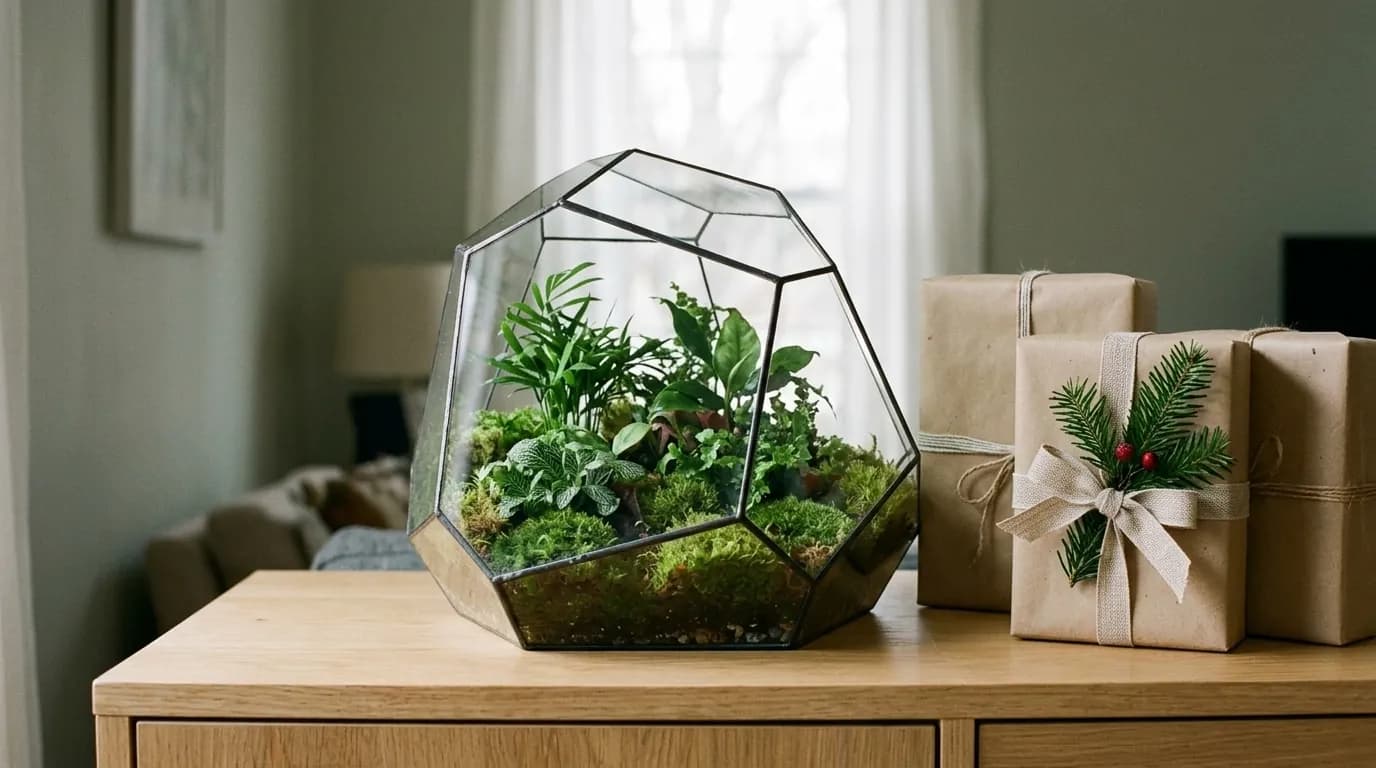
A simple rule: the cutting must have at least one node. The node is the point on the stem where a leaf grows. This is where the roots form. For terrarium plants, such as fittonia, our guide to cuttings for terrariums gives a method suited to each plant.
What you need
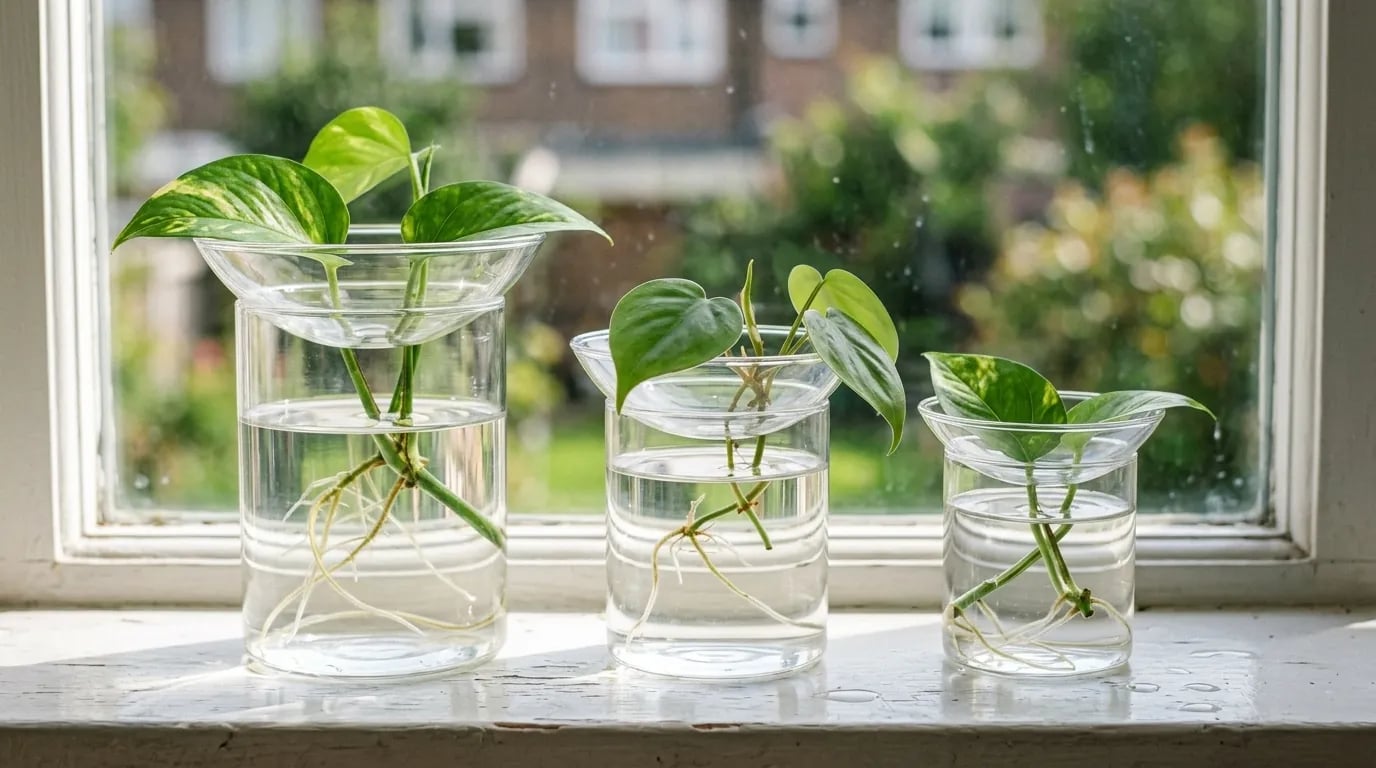
You need clean, sharp scissors, water, and a container. A narrow container holds the stem upright. A clear container lets you see the roots.
Our propagation vases come with a disc. According to the supplier, this disc keeps the seed or bulb dry: only the roots touch the water. The supplier also lists them for rooting a cutting. It does not describe the shape of the disc, or the material of the vase. When it arrives, look at how the stem sits.
There are three sizes:
- Small: Ø 9 cm, 8 cm tall, for a small cutting or a seed.
- Medium: Ø 9 cm, 11.5 cm tall, for stems with a few leaves.
- Large: Ø 12 cm, 10.8 cm tall, for a larger seed or bulb.
For several cuttings, a rack or a test tube holder keeps each stem in its own tube. The supplier does not say if the test tubes are included, or what the holder is made of. Check this before you count on it.
Take the cutting
- Choose a healthy stem, without flowers, with several leaves. Avoid a stem that is soft, spotted or covered in small pests.
- Measure 8 to 10 cm from the tip of the stem. This is the length the RHS recommends for a houseplant cutting.
- Cut just below a node, with one clean cut, without crushing the stem.
- Remove the lower leaves. The RHS recommends keeping two or three at the top. The University of Illinois also recommends removing flowers and buds.
- Put the cutting in water straight away, so that the cut does not dry out.
A cutting with too many leaves loses water before it has roots. Fewer leaves are better.
Put the cutting in water
Fill the container with water at room temperature. Put the base of the stem in the water, with at least one node under water. The RHS recommends a water level just below the leaves. No leaf should be in the water: it would rot.
Place the container in bright light, without direct sun. The RHS and the University of Illinois both give this advice. A north-facing windowsill, or a table near an east-facing window, often works. Direct sun heats the water and burns the young leaves.
Do not crowd too many stems in the same container. Each base must stay in the water, without touching the others.
Change the water
The University of Illinois recommends replacing the water every 3 to 5 days. Change it sooner if it turns cloudy or smells bad.
Each time:
- Take the cutting out gently, without pulling on the roots.
- Rinse the container in clean water.
- Add fresh water, to the same level.
If the base of the stem turns black and soft, the cutting is rotting. Cut off the damaged part, above it, with clean scissors. Put the stem back in a clean container. If the whole stem is soft, throw it away.
How long to wait
The RHS allows three to four weeks to see roots. The University of Illinois explains that the time varies: a few days for some plants, several weeks for others. The season matters too.
The good signs:
- small white roots at the node;
- roots that branch out;
- a new leaf at the top of the stem.
A leaf that stays green does not prove the cutting has roots. Look at the roots, not just the leaves.
Move the cutting into soil
The RHS recommends potting up when the cutting has roots and starts to grow. Do not wait for a long ball of roots. Roots formed in water must adapt to potting soil. Long, thin roots are more easily damaged when you pot them up.
- Take a small pot with a drainage hole. The RHS suggests a pot 8 to 10 cm wide, filled with peat-free multi-purpose compost.
- Make a hole in the potting soil with a finger or a pencil.
- Set the cutting in the hole, without bending the roots.
- Firm the potting soil gently around the stem.
- Water lightly, then let it drain.
For the first few days, keep the young plant in the same soft light. Water when the surface of the potting soil starts to dry. The plant may wilt a little while it adapts. If you want a decorative pot afterwards, our guide to the decorative cover pot explains how to keep the pot with a hole inside it.
Mistakes to avoid
- A cut without a node: the stem will not grow roots.
- Leaves in the water: they rot and cloud the water.
- Direct sun: it burns the leaves and heats the water.
- Forgotten water: it turns cloudy, and the base rots.
- Potting up too late: long roots cope poorly with the move to soil.
Once the young plant is settled, our guide watering indoor plants helps you find the right watering rhythm.
In short
- Cut a healthy 8 to 10 cm stem, just below a node.
- Remove the lower leaves, and keep two or three at the top.
- Put the base in water, the leaves dry, in bright light without direct sun.
- Change the water every 3 to 5 days, and rinse the container.
- Pot up into a small pot with a drainage hole as soon as the roots have formed and the cutting is growing again.
Sources
- How to take cuttings from houseplants, Royal Horticultural Society
- Grow your houseplant collection through propagation, University of Illinois Extension
- How to grow pothos indoors, Clemson Cooperative Extension
- Supplier data sheets (dimensions of the propagation vases, disc, dimensions of the racks and holders)
Frequently asked questions
How long does it take for a cutting to grow roots in water?
The Royal Horticultural Society allows three to four weeks for a houseplant cutting, in bright light without direct sun. Some plants are faster, others slower. The season and the warmth of the room also change the time.
How often should I change the water for a cutting?
The University of Illinois recommends replacing the water every 3 to 5 days. Also change it as soon as it turns cloudy or smells bad. Rinse the container each time.
Should the leaves go in the water?
No. Only the base of the stem goes in the water, with at least one node. Remove the lower leaves before you put it in water. A leaf that sits in water rots and clouds the water.
Can I leave a cutting in water forever?
We advise against it for a plant you want to keep for a long time. Roots formed in water must then adapt to potting soil. The longer they are, the harder the move. Pot up as soon as the roots have formed and the cutting is growing again.