Asparagus as a houseplant: light, watering and care
Where to place an asparagus, how to water it, why it sheds its needles, how to prune and repot it, and which precautions to take with pets.
In this guide
Asparagus is an easy houseplant, as long as you spare it two things: direct sun and too much water. Place it in partial shade, near a window but out of the sun's rays. Water it moderately, when the surface of the potting soil has dried a little. This guide explains each step, from watering to pruning.
What we call "asparagus"
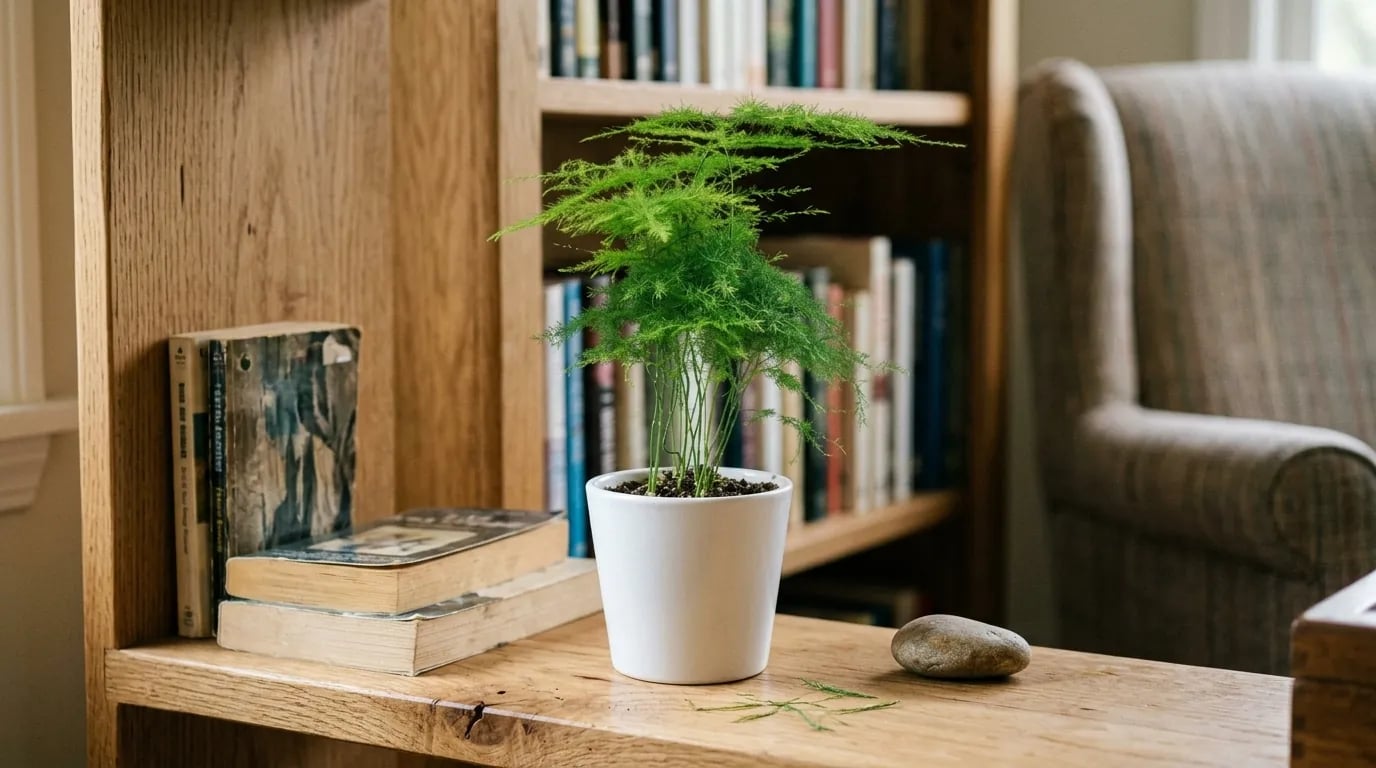
The name "asparagus" refers to a genus of plants in the asparagus family. It is also sold as "ornamental asparagus". These plants have stems covered with small, very fine green needles. The foliage looks like light lace.
It is often called "asparagus fern". North Carolina State University Extension places it in the asparagus family, not among the ferns. It is a perennial.
Two species are common indoors:
- Asparagus setaceus (also sold as Asparagus plumosus): flat, very fine, feathery foliage. Its stems can climb with age.
- Asparagus densiflorus, Sprengeri Group: a plant often grown in a hanging basket or in a pot on a surface.
Our ornamental asparagus is sold under the genus name only, Asparagus. The product page does not give the species. The advice in this guide applies to both common species. It is simple, and it suits the plant you receive.
Light: partial shade, never direct sun
Place the asparagus in partial shade. A bright room is fine, one or two meters from a window, or behind a net curtain. The Royal Horticultural Society (RHS) recommends bright but filtered light, sheltered from hot sun.
Direct sun is the main danger. Behind a window, it yellows and dries out the needles. North Carolina State University notes that the plant tolerates a lot of shade. But in deep shade, the green turns paler and the plant grows less.
A few reference points:
- A north-facing window: the plant can stay near the glass.
- An east- or west-facing window: move it back a little, or add a net curtain.
- A south-facing window: keep it at a distance, out of the area the sun reaches.
Watering: moderate, less in winter
Water when the surface of the potting soil has dried a little. Do not let the root ball dry out completely. Do not water while the soil is still moist either.
- From spring to autumn, the plant is growing. It drinks more.
- In winter, the RHS and North Carolina State University recommend watering sparingly. The plant grows slowly.
- After watering, empty the saucer or the cover pot. The roots must never stand in water.
Before each watering, push a finger into the potting soil. Our guide watering indoor plants explains this method and the signs of too much water.
Falling needles
Asparagus always sheds a few needles. This is normal, especially after a change of spot or after delivery. North Carolina State University notes that this shedding can make a mess on the floor indoors.
If the shedding becomes heavy, look for the cause in this order:
- The potting soil is soaked. Water less often. Too much water makes the roots rot.
- The root ball is completely dry. Water thoroughly, then let it drain.
- The sun is hitting the plant. The needles turn yellow. Move the plant back.
- Small pests are present. North Carolina State University lists mites, aphids and mealybugs. Look under the stems with a magnifying glass.
Pruning
Asparagus is easy to prune.
- To keep a compact shape, pinch out the tips of the stems with your fingers.
- To remove a yellow or dry stem, cut it at the base, level with the potting soil.
- To renew a sparse plant, North Carolina State University says you can cut all the stems level with the potting soil. New shoots grow from the roots.
Use clean scissors, and wear gloves: the sap can irritate the skin.
Repotting
Repot in spring, when the roots fill the pot or come out through the holes in the bottom.
Choose a pot that is only slightly larger. The RHS recommends a pot 2.5 to 5 cm wider than the old one, and not much deeper. A pot that is too large holds too much moist potting soil, and the roots may rot. The pot must have holes. If you like a decorative pot without a hole, keep the plant in its nursery pot and slip it inside: our guide to the decorative cover pot explains the method.
If the stems of your plant climb, the RHS recommends giving them a support.
Asparagus in a terrarium
The supplier lists our ornamental asparagus as suitable for terrariums. Its light foliage adds volume above low plants. It is part of two of our terrarium plant sets, with fittonias.
An open terrarium is the safest choice to start with: air circulates better around the fine needles. In a closed container, watch the condensation and trim the stems as soon as they touch the glass. To choose its neighbors, read our guide which plant for a terrarium, and the one on fittonia in a terrarium.
The set of three plants is designed for containers 20 to 30 cm in diameter, according to the supplier. The set of five plants adds a mini palm and a Calathea lancifolia. The supplier does not specify a container for this set. In both cases, the container is not included.
Pets and children: a precaution
The ASPCA, the American animal welfare society, lists the common indoor asparagus as toxic to cats and dogs. Its berries can cause vomiting, abdominal pain or diarrhea. Repeated contact with the skin can cause irritation.
The RHS also says that the plant can irritate the skin, and that its fruits are harmful if swallowed. So we treat all our ornamental asparagus with the same caution:
- Place the plant out of reach of pets and children.
- Pick up fallen needles and berries.
- Wear gloves for pruning and repotting.
If a pet swallows any of it, call your vet or an animal poison control center.
In short
- Place the asparagus in partial shade, without direct sun.
- Water when the surface of the potting soil has dried a little, and less in winter.
- Always empty the water left in the saucer.
- Cut yellow stems level with the potting soil, or the whole plant if it becomes sparse.
- Repot in spring, into a pot that is only slightly larger and has holes.
- Keep the plant out of reach of pets and children.
Sources
- Asparagus densiflorus (Sprengeri Group), NC State Extension Gardener Plant Toolbox
- Asparagus setaceus, Royal Horticultural Society
- Overpotting, Royal Horticultural Society
- Asparagus Fern, ASPCA Animal Poison Control
- Supplier data sheets (pot size, height, location, watering, compatible containers)
Frequently asked questions
Is asparagus a fern?
No. It is often called "asparagus fern", but it is a plant in the asparagus family. Its fine foliage looks like a fern's. Its needs are different: it copes better with potting soil that dries a little on the surface.
Why is my asparagus losing its small needles?
A little shedding is normal, especially after a change of spot. If the shedding is heavy, check the potting soil first: too much water is the most common cause. Direct sun can also turn the foliage yellow.
Is asparagus toxic to cats and dogs?
The ASPCA lists the common indoor asparagus as toxic to cats and dogs. The berries can cause digestive problems, and the sap can irritate the skin. Place the plant out of reach of pets and children.
Can I put asparagus in a terrarium?
The supplier of our plant lists it as suitable for terrariums. An open terrarium, with more air, is still the safest choice to start with. Trim the stems as soon as they touch the glass.