

How to create a garden that supports biodiversity: the steps that matter
Mow less, plant local species, keep dead wood, provide water, ban pesticides: the guide to welcoming birds, insects and hedgehogs, from balcony to large garden.
In this guide
To create a garden that supports biodiversity, offer local wildlife food and shelter, and stop what harms it. In practice: mow less and leave areas of long grass, plant local species, keep dead wood and leaf piles, install a water point, and ban pesticides. Nest boxes and shelters come next, as a complement. None of these steps needs a large plot: a corner of lawn, a hedge or a balcony is enough to get started.
Where to start?
Start by observing, and by doing less. Choose part of the lawn and stop mowing it for a season: you may see plants flower that the mower was keeping down. The association Arthropologia sums it up well: the most effective step is also the easiest one, letting things be.
Then take quick stock:
- What's flowering, and when? A garden with no flowers in early spring or autumn leaves insects with nothing to eat.
- Where can animals shelter? Hedge, tree, woodpile, long grass.
- Is there water available all year round?
- Do your fences let small wildlife through?
Each "no" points to your next job.
Which plants should you put in?
Local plants are the foundation. They've evolved alongside the insects, birds and small mammals of your region, which find food and shelter there. Favour a mixed native hedge made up of several local species, such as hawthorn, hazel or blackthorn, over a hedge of a single exotic species. The LPO specifically advises against cherry laurel, considered invasive.
Aim for several layers of vegetation:
- trees and shrubs: a mixed native hedge, fruit trees, elder, which offer flowers, fruit and nesting sites;
- flowers that succeed one another from late winter to autumn: our guide to which plants attract pollinators suggests species by season;
- a meadow or long grass, which shelters insects and seeds: to start from worked soil, see when and how to sow a wildflower meadow.
To find genuinely local plants and seeds, look for the Végétal local mark, run by the French biodiversity agency (Office français de la biodiversité): it guarantees the wild, regional origin of the plants.
Finally, avoid invasive exotic species. Some are banned from sale, planting and possession in France. The same rule applies to water: never empty an aquarium or pond into the wild, as aquatic plants such as water primrose or Brazilian watermilfoil are among the regulated species.
How should you manage the lawn and long grass?
Mowing less often is the most rewarding step. Keep paths and one mown corner for walking and sitting, and let the rest grow. Repeated mower passes crush insects and small animals; long grass, by contrast, serves as a refuge for a host of species.
Where the grass stays long, a single cut at the end of the season is often enough, raking up the cuttings so as not to enrich the soil. Keep a strip uncut over winter: insects spend the cold season in dry stems, and birds still find seeds there. Before running a strimmer through long grass or the base of a hedge, check no hedgehog is sleeping there.
A neat border around the wild areas is enough to show that this letting-grow is deliberate, and it often reassures neighbours.
Do you need a water point?
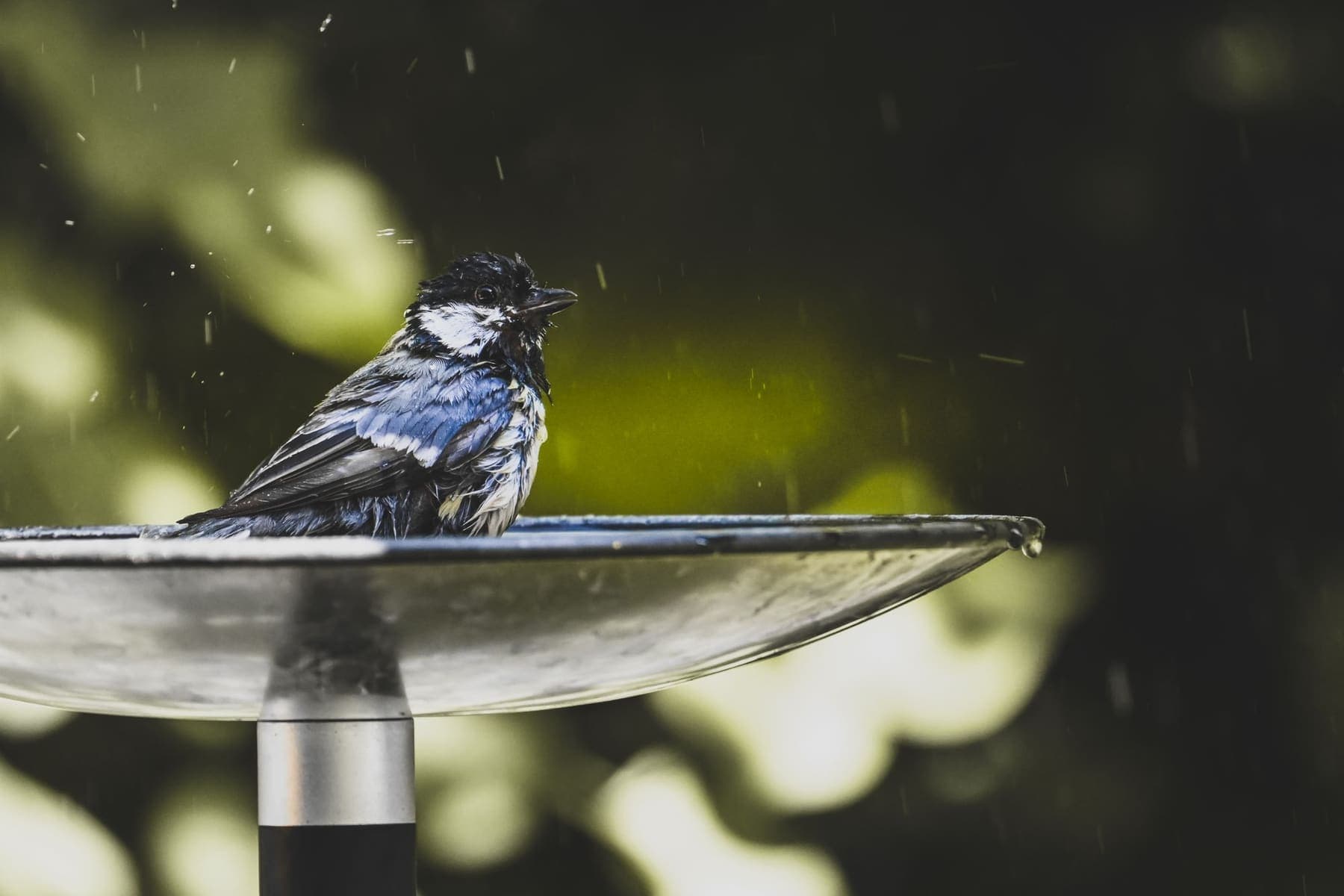
Yes: it's one of the richest features you can add. Birds, insects and small mammals need to drink year-round, and birds need to bathe.
- On a small plot or a balcony: a shallow dish or bird bath, set out in the open so birds can see cats coming. Change the water and clean it often, to prevent disease spreading.
- In a garden: a small natural pond, without fish, with at least one gently sloping bank, welcomes dragonflies and amphibians. This slope also lets a hedgehog that's fallen in climb back out.
Offering natural shelters
Before buying a shelter, keep what the garden produces for free:
- dead wood: a stump, a fallen branch, a pile of logs. A dead tree can be left standing if it poses no danger: it feeds many insects and offers cavities for birds;
- piles of stones, branches and leaves, where small mammals, reptiles and insects shelter;
- bare, sunny ground, essential for wild bees that nest in the soil, which is the majority of them;
- dry stems left standing over winter;
- ivy on a wall or an old tree: cover for birds, and a late source of flowers for insects.
Think about the night too: turn off unnecessary outdoor lighting. Artificial light disturbs nocturnal insects and the animals that feed on them.
The three guests to welcome as a priority
Birds
Hedges, trees and insects are their first resource: most fledglings are fed on insects. A nest box completes the habitat where natural cavities are lacking. Choose your model with our guide to which nest box to choose, maintain it outside the nesting season with how to clean a nest box, and follow our advice on attracting blue tits and feeding birds in winter without harming them. The guide to which nest box to choose brings these steps together, and the Birds section covers the equipment.
Pollinators
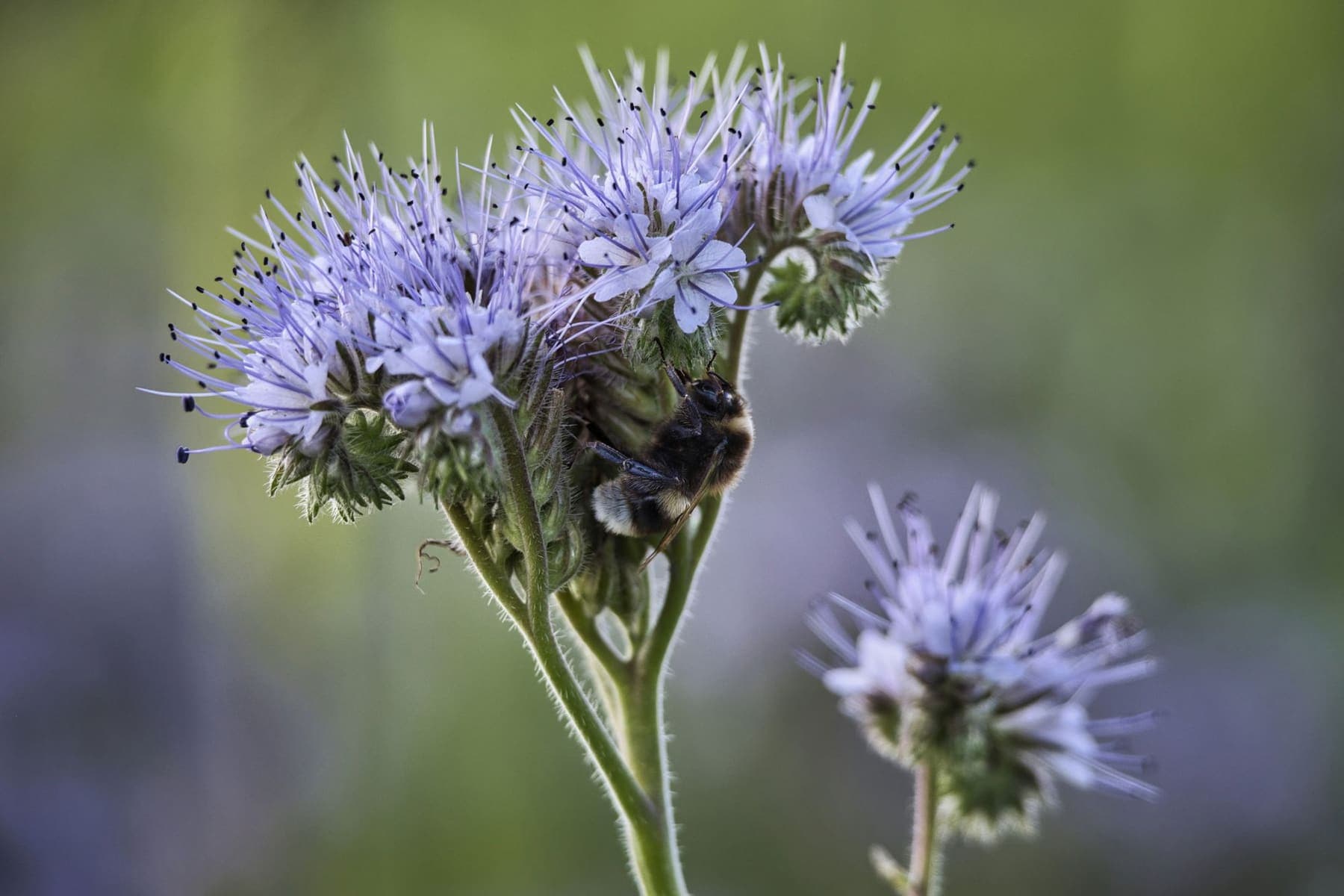
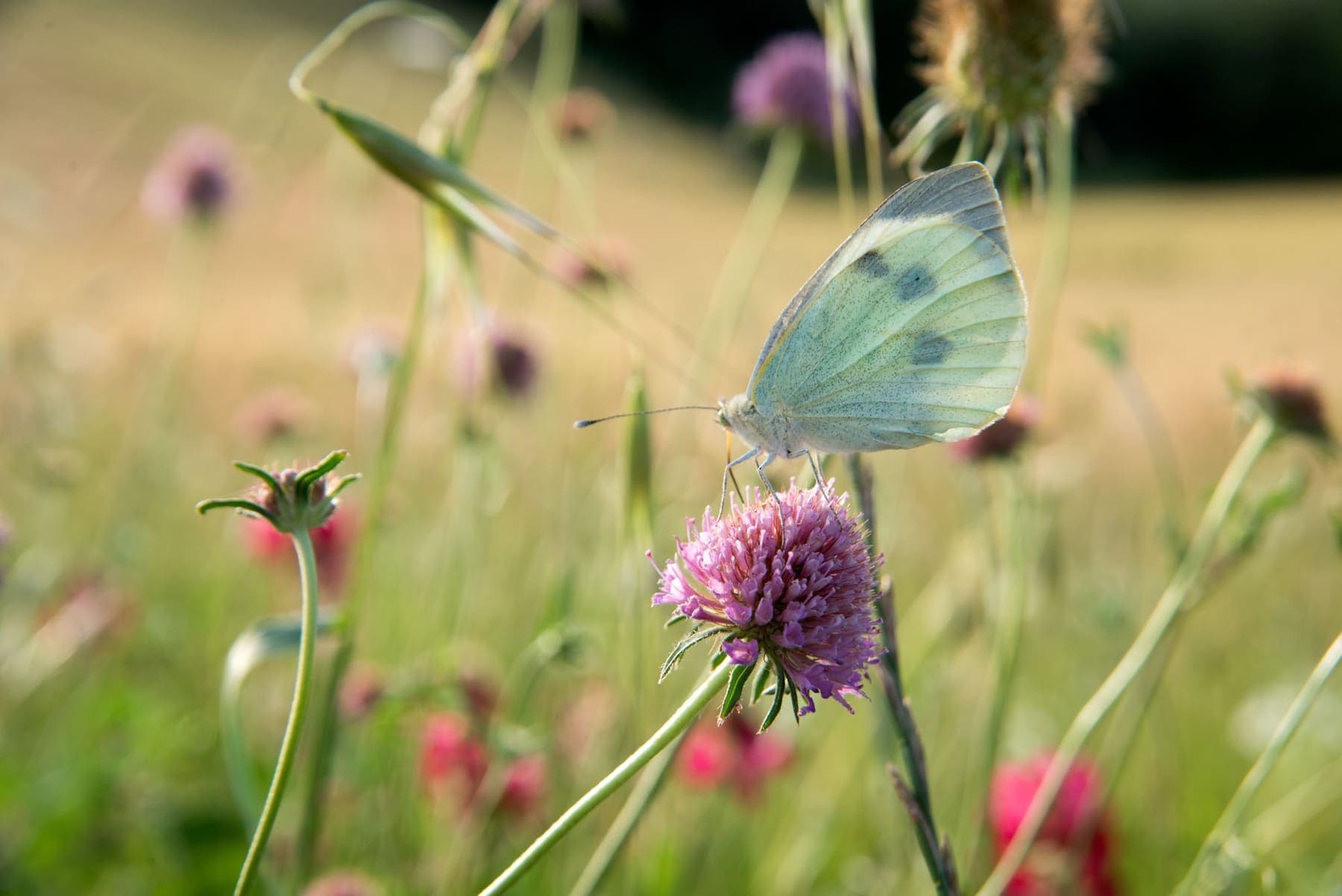
Local flowers spread across the season, bare ground, dry stems and no pesticides: that's the essential. A shelter with tunnels then helps bees that nest in cavities. Read how to attract solitary bees and how to install an insect hotel properly. The A garden for pollinators project walks through these steps, and the Pollinators and Insects sections present the shelters.
The hedgehog
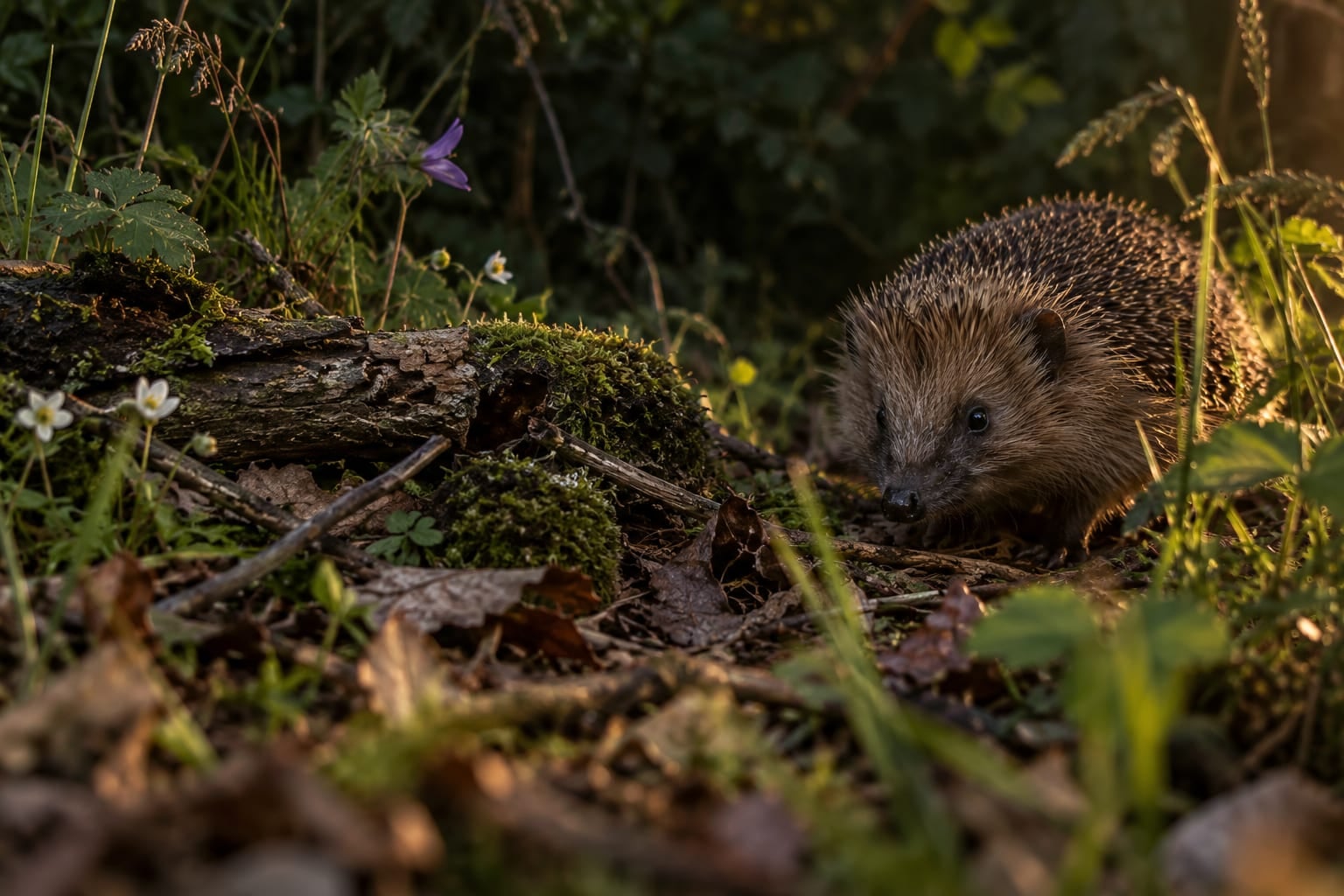
The European hedgehog is a protected species in France. It moves around a great deal at night and needs to be able to pass from one garden to another: a small gap at the base of the fence is enough. Offer it a pile of leaves or a quiet shelter, fresh water, and never milk, which it digests poorly. Our guides welcoming hedgehogs without disturbing them and recognising signs of their presence cover these steps, the Welcoming a hedgehog project brings them together, and the Hedgehogs section offers shelters and gaps.
Why ban pesticides?
They act well beyond their target: an insecticide doesn't distinguish between pests and pollinators, and a herbicide removes the flowers insects depend on. Since 1 January 2019, amateur gardeners in France can no longer buy, use or store chemical pesticides, slug pellets included. Only biocontrol products, low-risk products and those usable in organic farming remain permitted.
A living garden regulates itself to some extent: blue tits eat caterpillars, ladybirds eat aphids, hedgehogs and ground beetles eat slugs. Accept a little damage while this balance settles in.
And on a balcony?
Even without a garden, you can act:
- a few pots of simple flowers and herbs left to flower;
- a shallow water dish, cleaned often;
- a small shelter for solitary bees, facing the morning sun and sheltered from rain;
- a nest box, if the balcony is quiet and out of reach of cats.
The gear
Once the free steps are in place, a few pieces of equipment round out the welcome: a shelter for bees that nest in tunnels, a house for the hedgehog, a bath for the birds.
How do you know it's working?
Record what you observe, season after season: bird species, butterflies, bees, signs of hedgehogs. Citizen science programmes, such as the Garden Birdwatch or Spipoll for pollinating insects, guide you through these records and pass your observations on to researchers. To find out who's about at night, a camera trap helps a great deal: see our tips on setting up a garden camera trap and the Observation section. Finally, the LPO Refuges programme lets you formally commit to simple actions in favour of biodiversity.
Sources
- Dans les jardins et espaces verts — Office français de la biodiversité
- Je favorise les gîtes naturels et aménage mon jardin pour accueillir la faune sauvage — LPO
- Je plante et préserve des variétés locales d'arbres et d'arbustes — LPO
- Les pesticides chimiques interdits au 1er janvier 2019 pour les jardiniers amateurs — Eaufrance
- Réglementation — Centre de ressources Espèces exotiques envahissantes
Frequently asked questions
How much space do you need for a garden that supports biodiversity?
There's no minimum size. A flowering balcony, a water dish and a small shelter already help insects and birds. The bigger the plot, the more habitats you can vary: hedge, meadow, pond.
Does a biodiversity-friendly garden have to be a wilderness?
No. You can keep mown paths, tended flowerbeds and a vegetable patch, and set aside a few wilder areas. It's the variety of habitats that counts, not giving up all maintenance.
When should you plant a mixed native hedge?
The LPO recommends planting in November and December, outside frost periods. Choose species suited to your soil, and water generously right after planting.
Are nest boxes and insect hotels enough on their own?
No. Without flowers, insects, water and natural shelter around them, they often stay empty. They're useful additions, once the habitat is already in place.