



Cleaning a nest box: when, how, and what not to do
The right time to clean a blue tit nest box, the boiling-water method, what to make of white vinegar and bleach, and the small repairs to make before winter.
In this guide
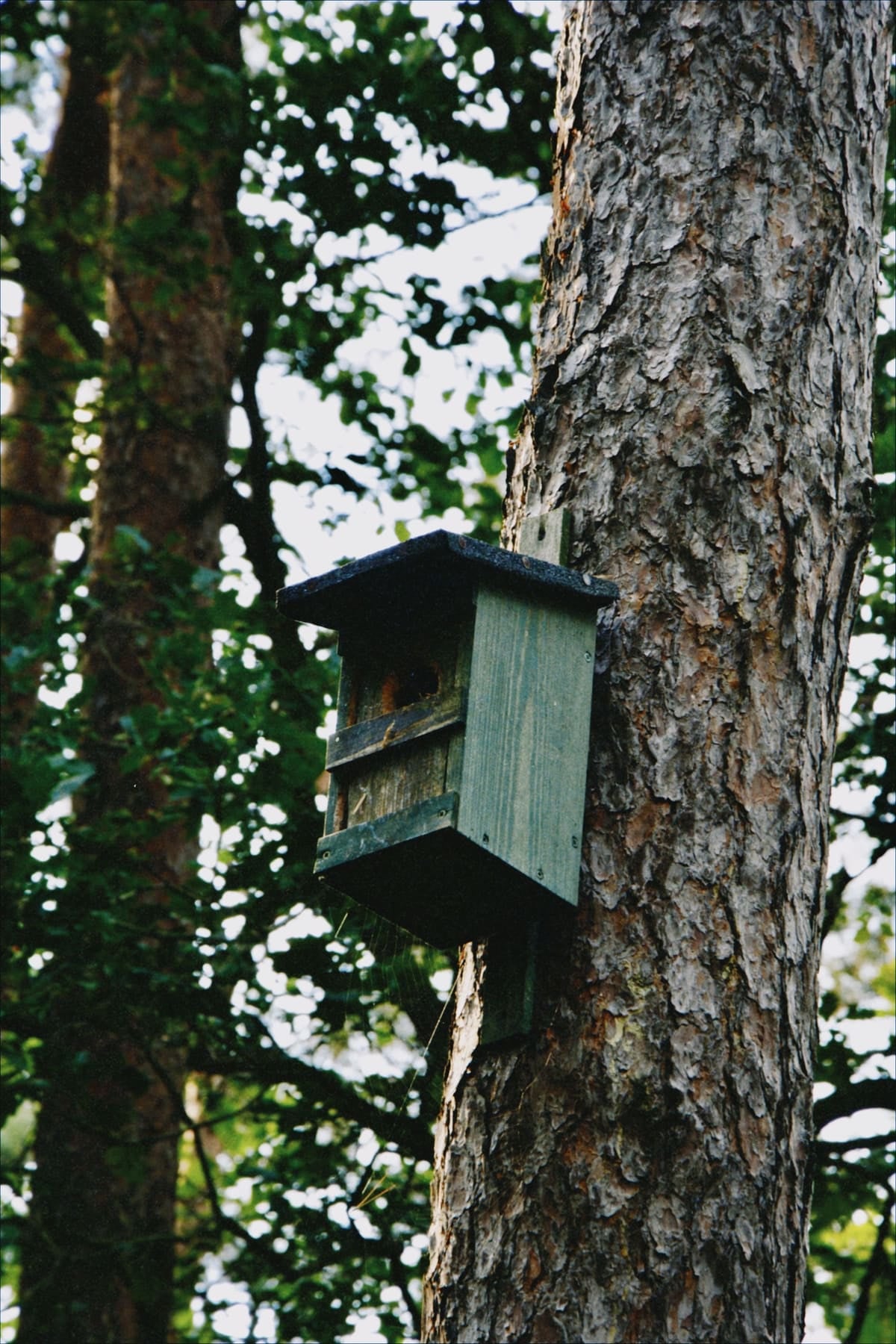
Clean your nest box once a year, after the breeding season: the LPO [French bird protection charity] advises late September or October, once the last broods have fledged and before birds start looking for winter shelter. Empty the old nest wearing gloves, brush the inside, scald it or wash it with hot water, then let the wood dry. No chemical products are needed, and a nest box should never be opened during nesting.
Why clean a nest box every year
Birds build a fresh nest each season and don't reuse the old one. Over the years, materials pile up: moss, twigs, feathers, droppings. The new nest then ends up higher and higher, close to the entrance hole, making the chicks easier for a predator to reach.
There's also a health issue at stake. An old nest can harbour parasites and sustain diseases that could threaten the next brood. Annual cleaning resets the nest box.
It's also a chance to check the nest box's condition: split wood, a leaking roof, a loosening fixing. Better to find out in autumn than in spring, when it's too late to act.
When to clean a blue tit nest box
The right time: late September to early November
Cleaning is done after the breeding season. The LPO's fact sheet on nest boxes for songbirds places the ideal window in September–October; LPO Auvergne-Rhône-Alpes considers October the perfect month, since even the latest broods have fledged, while adults looking for winter shelter or scouting out a future site haven't yet moved in. The Espace naturel Lille Métropole extends the window to the first half of November, as long as the nights aren't too cold.
At this time of year, the risk of disturbing another occupant is also lower: bats, dormice, edible dormice, wasps or hornets sometimes move into nest boxes.
Too early: not before late summer
Don't clean in high summer. Some species have a second brood or still occupy the box until September. A nest that looks abandoned may simply be quiet between feeds.
Never during nesting
From early spring to late summer, don't open the nest box, not even "just to have a look". Disturbance can push the parents to abandon their brood. It's also a legal matter: the Order of 29 October 2009 bans the intentional destruction or removal of the eggs and nests of protected birds, as well as their intentional disturbance, particularly during the breeding season. To keep track of the nest box's life, watch from a distance with binoculars.
And in winter?
If you missed the autumn window, cleaning is still possible before pairs return in spring, but check first that the box is empty. Some birds, such as the wren, sometimes sleep in them during the cold season.
The method, step by step
Check the nest box is empty
Approach quietly and listen. In the birds' absence, a nest box can shelter other animals: a rodent, a bat or a wasp nest. If that's the case, close it up again and come back later. Anyone allergic to stings should be especially cautious.
Kit yourself out
Wear gloves. A mask is useful if you're asthmatic or have sensitive airways: an old nest contains dust, droppings and parasites. Work outdoors.
Empty it completely
Open the roof or the front panel. Stir the materials first with a stick rather than plunging your hand in, then remove everything: old nest, moss, feathers, unhatched eggs, shells. Put this waste on the compost heap or in a sealed bag, well away from the nest box.
Brush
Scrub all the inner walls and the floor with a wire brush or a stiff-bristled one. Pay particular attention to the corners and around the small ventilation holes in the floor, which must stay clear.
Scald or wash with hot water
Pour boiling water over the walls: it's the simplest method and leaves no residue. LPO Auvergne-Rhône-Alpes also suggests a mix of hot water, bicarbonate of soda and lemon juice. Rinse thoroughly afterwards with clean water.
Dry
Leave the nest box open, in the air, for about 24 hours before closing it up. Damp wood shut away encourages mould.
Optional: protect the outside
A coat of linseed oil on the outside helps the wood withstand the weather better. The inside, on the other hand, should stay untreated: birds grip the roughness of the wood to climb out.
White vinegar, bleach, cleaning products: what you need to know
White vinegar
This is the most common question. The Espace naturel Lille Métropole lists distilled vinegar diluted in water among the possible cleaning solutions. The LPO, for its part, mainly recommends boiling water, or the bicarbonate-and-lemon mix. Diluted vinegar is therefore an acceptable alternative, but not a necessary one: very hot water and brushing do most of the work. If you use it, rinse well and let it dry completely.
Bleach
Opinions differ. Some organisations allow it diluted, others advise against it. The LPO doesn't mention it among its methods, and boiling water is enough in the vast majority of cases. If you do resort to it, for example after rodents have occupied the box, dilute it, rinse thoroughly and leave it to dry for a long time. And never mix bleach with another product, vinegar included: the mixture releases toxic gases.
To avoid altogether
- Paint, varnish and wood treatment products, especially on the inside: the LPO considers them repellent, or even toxic, to birds.
- Insecticides and pest-control products: brushing and boiling water are enough, and residues stay in contact with the chicks.
- Perfumes, air fresheners and household detergents: unnecessary and potentially harmful.
Repairing and repositioning the nest box
Use the cleaning session to check the nest box over:
- Seal any cracks that let rain in, and check that the roof properly covers the front panel.
- Check the fixing. The LPO recommends a fixing bar screwed to the nest box, a piece of wood slipped between the trunk and the wire so as not to injure the tree, and preferably a sheathed electrical wire.
- Remove the perch if there is one: it mainly helps predators.
- Check the orientation. The entrance hole should face away from the prevailing wind, ideally towards the east-south-east, and the nest box should tilt slightly forward.
- Move it if it's never been occupied after two or three years: the location probably isn't suitable.
If the wood is rotten or the base has come away, it's wiser to replace it. Choosing a new model, the hole diameter for each species, and the mounting height are covered in detail in our guide Which nest box should I choose?.
Equipment
A nest box replaced in autumn has time to be spotted by birds before spring. For small tits, a narrow-hole model is suitable; for a family project, a kit to assemble lets you learn how a nest box is built at the same time.
Nest boxes, bird feeders and accessories are gathered in the Birds section. To bring in blue tits in spring, also read how to attract blue tits to your garden, and for the cold season, feeding birds in winter.
Sources
- Nichoirs pour passereaux — LPO
- Travaux d'automne : nettoyez les nichoirs et mangeoires — LPO Auvergne-Rhône-Alpes
- C'est le moment de préparer vos nichoirs pour les oiseaux de votre jardin — LPO
- Octobre-novembre : le moment idéal pour nettoyer les nichoirs — Espace naturel Lille Métropole
- Arrêté du 29 octobre 2009 fixant la liste des oiseaux protégés, article 3 — Légifrance
Frequently asked questions
Should you remove the old nest from a nest box?
Yes, once the breeding season is over. Birds don't reuse the old nest, and it can harbour parasites. Remove it wearing gloves, in autumn.
Can a nest box be cleaned in spring?
No, not during nesting: disturbance can cause the brood to be abandoned, and intentionally disturbing protected birds during the breeding season is against the law. In spring, watch from a distance.
What should you do if wasps have occupied a nest box in autumn?
Close it up again without pressing the matter and come back later, once the nest has been abandoned. If you're allergic to stings, don't go near it.
Should an empty nest box still be cleaned?
A quick check is enough: make sure no animal is sleeping in it, brush away the dust and check the fixing. If it stays empty for two or three years running, move it to a different spot.