





Trail cameras in the garden: placement, settings and rules to follow
Where to position a trail camera depending on the animal, which settings to choose for sensitivity, trigger delay, burst mode and video, and how to watch garden wildlife without filming your neighbours or the street.
In this guide
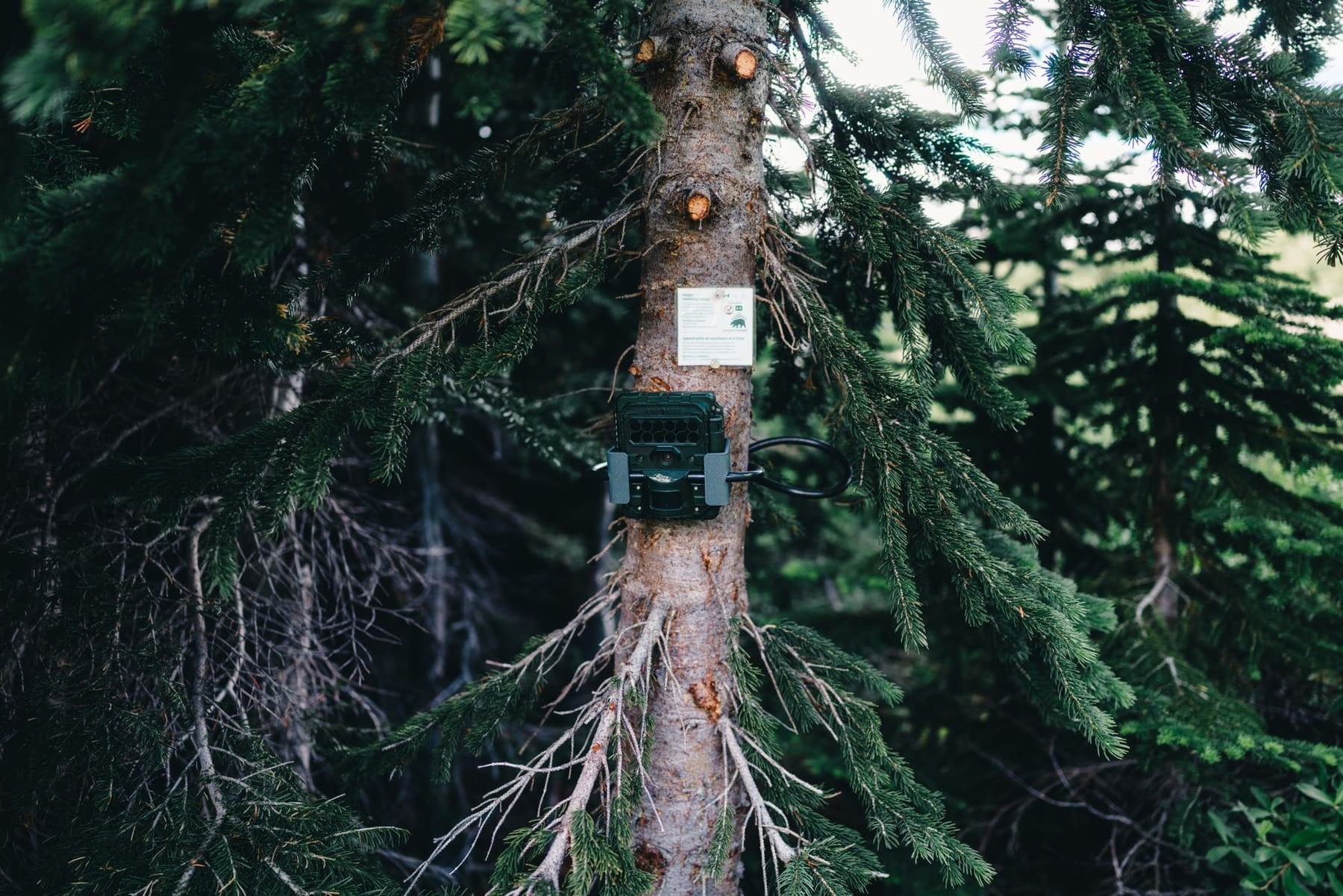
To set up a trail camera in the garden properly, start with placement: at the height of the animal you're targeting, facing a route it uses, with its back to the sun and no branches or grass moving within the frame. Then set the sensitivity according to the animal's size, a short delay between two triggers, and photo-and-video mode, and do a test shot before leaving it. Finally, only point the camera at your own land: the CNIL [France's data protection authority] points out that a private individual can't film a public road.
How a trail camera works
A trail camera is a standalone, battery-powered camera that triggers itself. Its passive infrared sensor reacts to a warm body moving in front of it. By day, it takes colour images; at night, it lights the scene with infrared LEDs and records black-and-white images.
Because it doesn't emit a visible flash, it lets you observe nocturnal wildlife without disturbing it. It's the ideal tool for confirming a hedgehog's visit, discreetly keeping an eye on a water source, or discovering who visits the bottom of the garden at night.
Where to place it, depending on the animal
The general rule: think like the animal. It follows regular routes, moves along obstacles and returns to the same resources.
- Hedgehogs and small mammals: camera low, at their height, aimed at a passage at the base of a fence, along a hedge, or towards a water bowl. If you're still looking for signs of their presence, our guide Is a hedgehog living in my garden? helps you spot the right spots.
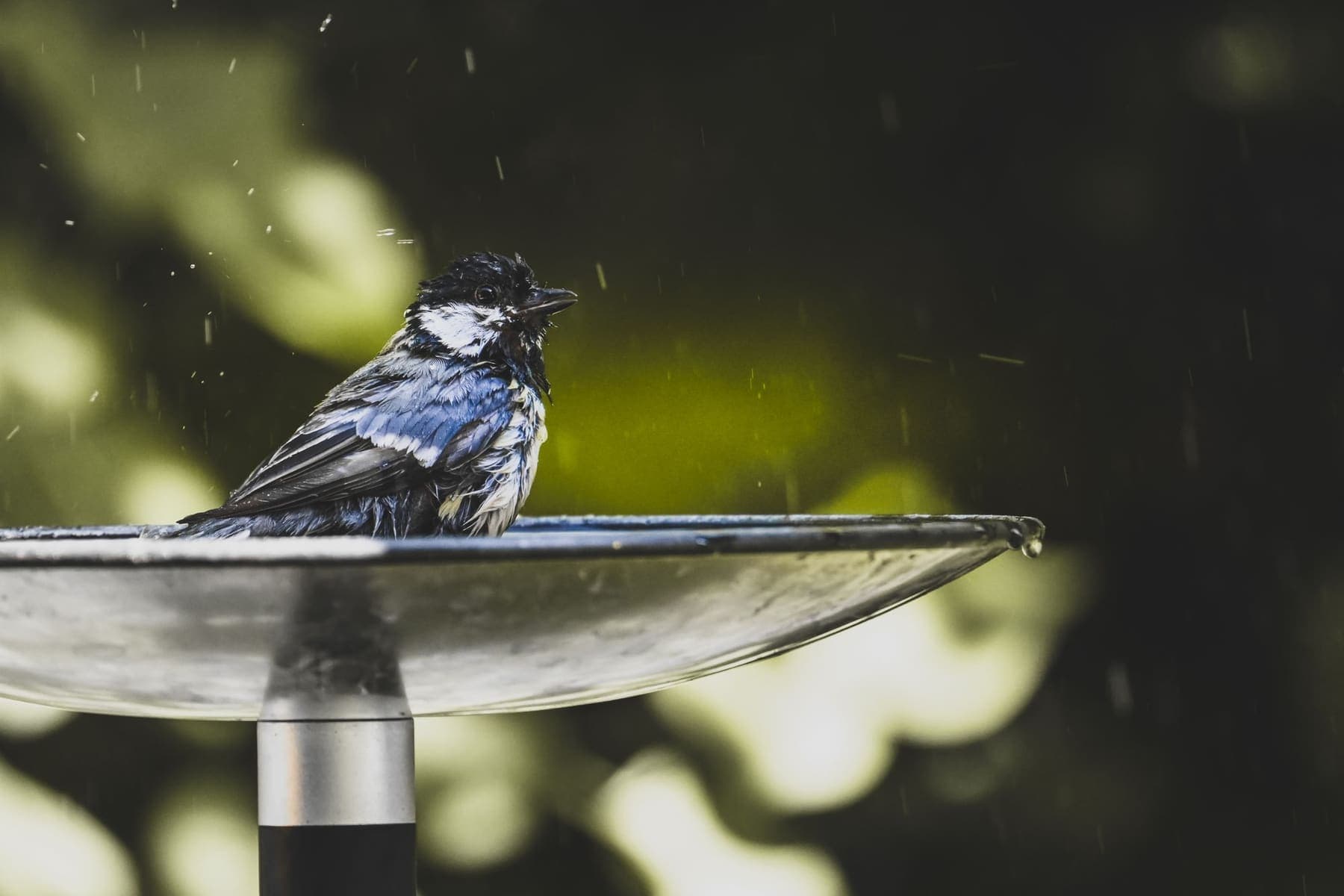
- Birds: aim at a specific spot where they perch, such as a bird bath or a feeder. A tight shot on an unavoidable passage point gives much better results than a wide view of the lawn. For the feeding calendar, see feeding birds in winter.
- Nest box: filming the entrance of a nest box is tempting, but set up and adjust the camera outside the nesting season, from a distance, and don't come back to handle it while birds are nesting. Intentionally disturbing protected birds during the breeding season is against the law. To position the nest box itself properly, read which nest box to choose.
Placement mistakes that ruin your shots
- Facing the rising or setting sun: backlighting, blown-out images and false triggers. The manufacturer of our model advises protecting the camera from direct sunlight.
- Grass or branches in the frame: the wind stirs them, the sun warms them, and the memory card fills up with empty shots. Clear just the field of view, without stripping the habitat bare.
- Too far from the route: a small animal further away triggers poorly and stays tiny in the image. Move the camera closer rather than turning up the sensitivity.
- A mount that moves: a strap loosely fixed to a flexible shrub makes the frame shake. Prefer a trunk, a sturdy stake or a tripod.
Sensitivity, delay, burst, video: which settings to choose
Capture mode
Most trail cameras offer three modes: photo, video, or photo and video. To find out who's passing by, combined mode is the most informative: a sharp photo to identify the species, a short video to observe behaviour.
Sensor sensitivity
- High for small animals, hedgehogs, or nighttime passages.
- Low if the camera triggers for no reason, in hot or windy weather, or if it faces a sunny area.
If you're getting a lot of empty shots, fix the placement first, then lower the sensitivity.
The delay between two triggers
This setting sets the waiting time before the camera can trigger again. Short for an animal that passes quickly and doesn't return; longer in front of a busy feeder or bath, otherwise the card and batteries run out within days.
Burst mode
A burst of a few images per trigger increases the chances of getting at least one sharp photo of a moving animal. Beyond that, you'll fill the card with near-identical images.
Video length
Short videos are usually enough and save battery. Lengthen them to observe a specific behaviour, such as a hedgehog feeding or a bird bathing.
Timer and time-lapse
The timer limits operation to certain time windows: handy for only watching a hedgehog's route at night, or ignoring the hours when you're in the garden yourself. Time-lapse takes a shot at regular intervals, without detection: useful for tracking a flowering plant or the general use of a spot.
Visible or invisible infrared
Infrared LEDs don't all have the same wavelength. On some models, you can spot a faint red glow when it triggers. 940 nm LEDs, described as "black", are advertised by manufacturers as invisible. For wildlife, this is the most discreet option; it also limits the camera being spotted by a passer-by.
Equipment
Our model, the DÖRR SnapShot Mini Black 30MP 4K, brings these settings together in a compact housing. According to the manufacturer's specifications:
- photos up to 30 MP, interpolated from a 4 MP sensor, and video up to 4K;
- trigger speed of 0.2 seconds, detection range of around 20 m;
- 48 infrared LEDs at 940 nm, claimed range of around 15 m, adjustable across three levels;
- burst of 1 to 10 images, videos of 5 to 60 seconds, adjustable delay from 0 seconds to 60 minutes, low or high sensitivity;
- time-lapse and timer with four time slots per day;
- powered by 8 AA batteries, memory card up to 256 GB, IP66 housing, claimed operating range of around -25 to +60 °C.
Find all our observation equipment in the Observation section.
Filming without filming the neighbours: the rules to follow
The CNIL has no rule specific to wildlife trail cameras. However, its rules for cameras installed by private individuals set out the sensible framework to follow as soon as the device might capture people.
- Only film your own property. According to the CNIL, a private individual may only film the inside of their own property: house, garden, private access path.
- Never the public road, even for a seemingly legitimate reason. A trail camera set up at the edge of a plot must not point at the street or the pavement.
- Not neighbours' land or windows. The CNIL points out the obligation to respect the privacy of neighbours, visitors and passers-by.
- Think of your family and guests too, whose right to their own image also applies. Let them know, and if someone works at your home, they must be informed a camera is present.
The CNIL cites Article 9 of the Civil Code on the right to privacy and Article 226-1 of the Criminal Code. In practice: aim at the ground and the back of the garden rather than the horizon, do a test shot to check the framing, delete any images showing a person, and never publish images where someone is recognisable. If in doubt about a particular situation, check with the CNIL.
Batteries, storage and maintenance
- Batteries: the manufacturer of our model recommends good-quality batteries, never mixing different types, and replacing them all at once, respecting polarity.
- The memory card: empty it regularly. A full card stops recording at the wrong moment.
- Testing before you leave: on our model, the settings position lets you trigger a test photo or video and check it straight away on the screen.
- Hygiene and discretion: don't leave food in front of the camera to "attract" animals, and never milk for a hedgehog. Clean the lens and the sensor window with a soft cloth, and check the mount after every gust of wind.
Sources
- Surveillance Camera SnapShot Mini Black 30MP 4K — DÖRR
- DÖRR SnapShot Mini Black 30MP 4K, notice d'utilisation — ManualsLib
- La vidéosurveillance, vidéoprotection chez soi — CNIL
- Mon voisin a installé une caméra qui filme mon domicile : quels sont mes recours ? — CNIL
- La vie sauvage secrète et nocturne de mon Refuge LPO — LPO
Frequently asked questions
At what height should you mount a trail camera for a hedgehog?
Low, at the animal's height, angled slightly towards the ground of a route it uses. Take a test photo to check the frame properly covers the ground where it will pass.
Why does my trail camera take empty photos?
Most often it's grass or branches stirred by the wind, or an area heated by the sun. Clear the frame, avoid direct sun exposure, then lower the sensitivity if the problem continues.
Does the infrared flash disturb animals?
An infrared trail camera doesn't emit a visible flash, and 940 nm LEDs are advertised as invisible. It's the most discreet option for observing nocturnal wildlife.
Can you leave a trail camera outside in the rain?
Yes, if it's designed for outdoor use: our model has an IP66 housing. Check that the cover is properly closed and protect it from direct sunlight.