

How to attract solitary bees to the garden
Most solitary bees nest in the ground: how to offer them a patch of bare earth, dry stems, local flowers and, as a bonus, a well-placed shelter.
In this guide
To attract solitary bees, offer them three things within a few steps of each other: somewhere to nest, local flowers from spring through to autumn, and a pesticide-free garden. The most useful gesture is often the simplest: most of these bees dig their nests in the ground, and a sunny patch of bare earth helps them more than a beautiful wooden shelter. The shelter is still useful, but only for some species.
Who are solitary bees?
There are close to 1,000 bee species in mainland France. Only one is kept for its honey: the honeybee. All the others are wild bees, and the vast majority of them live solitary lives.
In these species, there's no queen and no workers. Each female builds her own nest, stocks it with pollen and nectar, lays one egg per cell, then seals the entrance. She doesn't make honey and doesn't defend a colony: she very rarely stings. The young develop in the nest and emerge the following season.
You come across them without realising it: mason bees, which seal their tunnels with earth; leafcutter bees, which cut small pieces of leaf to line their cells; mining bees, which leave small mounds of earth in lawns in spring; or the ivy bee, which only collects pollen from flowering ivy, in autumn.
Where do solitary bees nest?
This is the point most advice overlooks. According to the association Arthropologia, more than 70% of wild bees dig their tunnels in the ground. The rest nest in dead wood, in hollow or pithy stems, in empty snail shells, or build small cells of earth.
To welcome them, think about several types of habitat.
A sunny patch of bare earth
Choose a well-exposed, little-used area, and leave the earth bare: the edge of a path, the foot of a wall, a bank, a small mound of earth or sand. Don't dig it, don't mulch it, and avoid walking on it during the warm season.
This patch may look neglected. Yet it's the most effective feature for most species, and it costs nothing.
Dry stems left standing
Don't cut everything down at the end of the season. Some bees nest in hollow stems, others dig into the soft pith of bramble or elder stems. Leave a few dry stems standing through winter, somewhere they won't get in the way: larvae may be developing inside.
Dead wood
An old stump, a dead branch left on the ground or a woodpile welcomes the species that nest in wood, along with many other insects. Leave them in place rather than clearing everything away.
A little damp earth
Mason bees seal their cells with wet earth. An area where the ground stays damp, near a water feature for instance, gives them this material within easy reach.
What flowers should you plant to feed them?
Many solitary bees forage within a small radius of their nest. Flowers should therefore be nearby, varied, and follow on from each other across the whole season, since each species flies at its own time: some as early as late winter, others in midsummer, others again in autumn.
Favour wild, local plants. They've evolved alongside the insects in your region, and some bees only collect pollen from a small group of plants. Avoid highly bred double flowers, whose pollen and nectar are hard to access.
A few simple pointers:
- in late winter and spring: willows, fruit trees, dandelions left flowering in the lawn;
- in summer: viper's bugloss, sages, clovers, knapweeds, marjoram, thyme;
- in autumn: ivy, left to flower on a wall or an old tree.
Our guide which plants attract pollinators covers species by season, for the garden as well as the balcony. For a larger area, sowing a wildflower meadow offers plenty of flowers for very little upkeep.
Why ban pesticides, even in the vegetable patch?
Since 1 January 2019, amateur gardeners in France can no longer buy, use or store chemical pesticides: herbicides, fungicides, insecticides or slug pellets. Only biocontrol products, low-risk products and those approved for organic farming remain allowed.
For bees, go further: avoid any insecticide, even an approved one, on flowering plants and near nesting areas. Hand-weeding also protects the patches of bare earth they need. And accept a few "weeds" in flower: dandelions, clovers and bird's-foot trefoil feed many species.
Should you install a shelter for solitary bees?
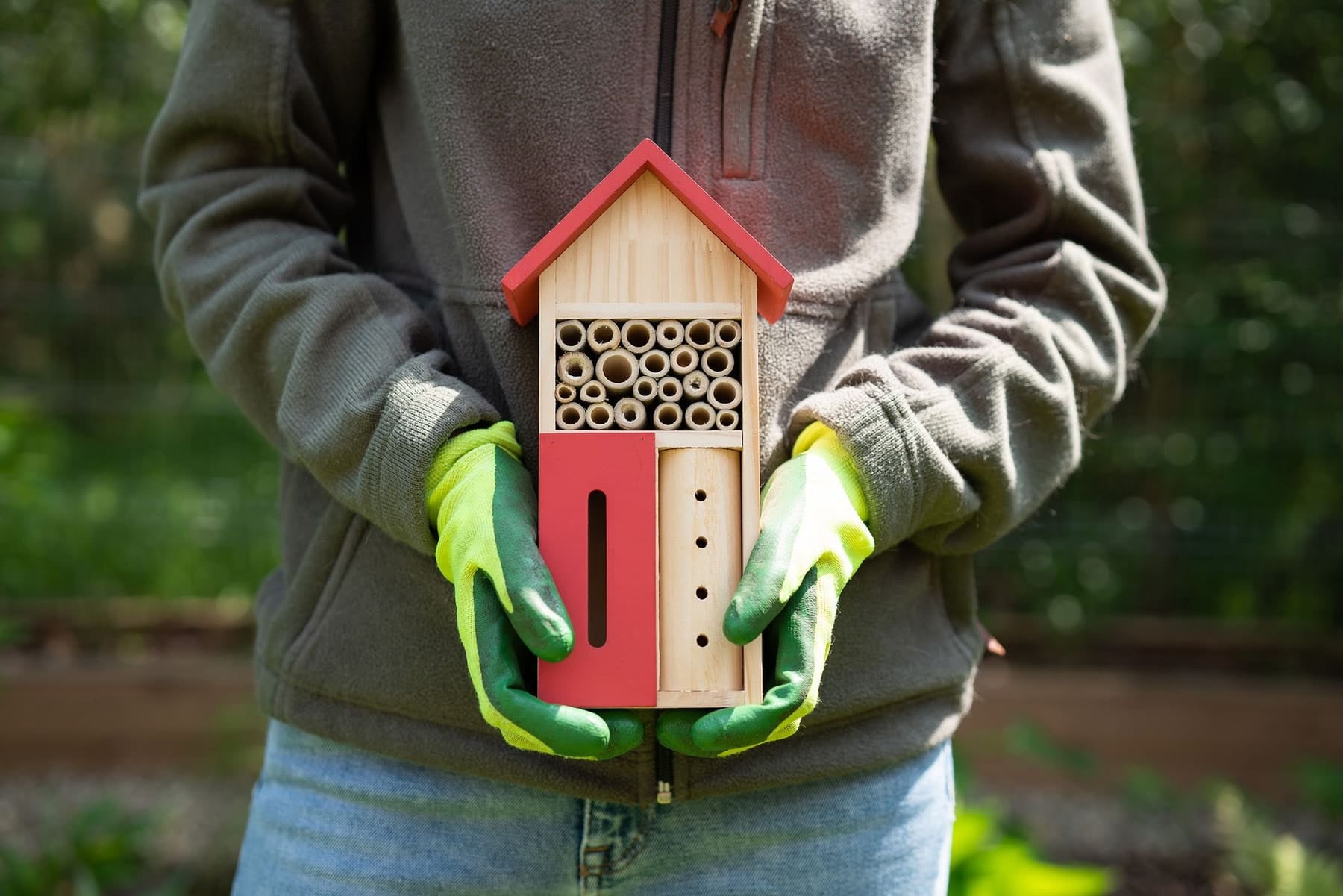
Yes, if you see it for what it is: a bonus. A tunnel shelter only welcomes species that nest in cavities, such as mason bees and leafcutter bees. Arthropologia describes it mainly as a very good educational tool: you can watch the females coming and going, sealing their cells, then the young emerging the following year.
For it to be occupied, it needs to be well placed: facing the morning sun, sheltered from rain, fixed without swaying, with flowers nearby. Hole diameters, tunnel depth, mounting height and mistakes to avoid are covered in detail in our guide choosing and installing an insect hotel.
What about bumblebees?
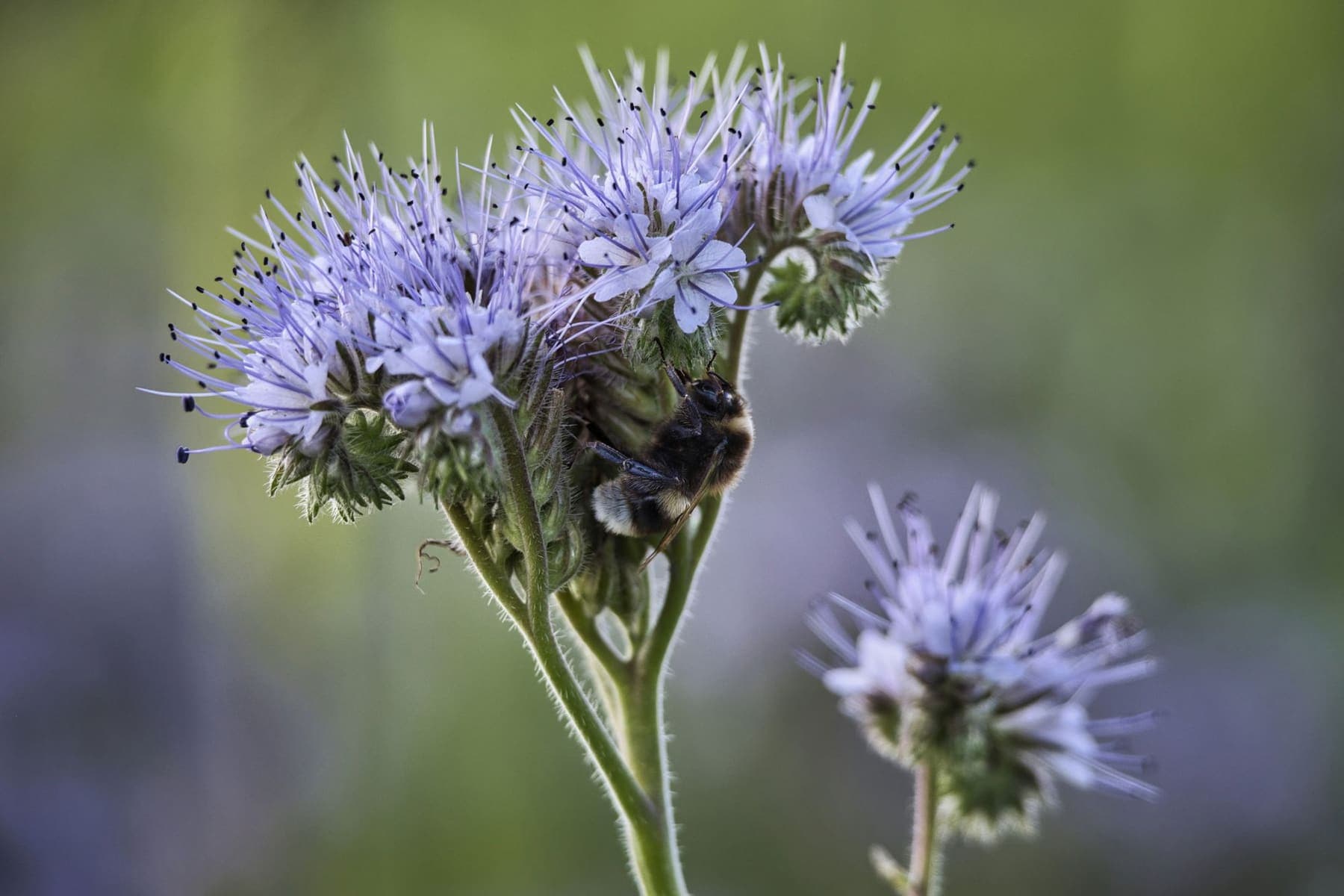
Bumblebees aren't solitary: they live in colonies that last only one season. In spring, a queen emerges alone from hibernation and looks for a nesting site. In the buff-tailed bumblebee, this nest is often underground, in an old rodent burrow, or under a woodpile, on a sunny grassy bank. In autumn, the colony dies out: only the young fertilised queens survive the winter.
Queens fly early in the year, and early-season flowers matter a lot to them, such as dandelions. To help them, keep patches of unmown grass in the sun, a woodpile, and flowers from late winter onwards. A bumblebee shelter can complement these gestures, without any guarantee of occupation: install it somewhere quiet, in a dry spot the mower doesn't reach, and don't move it once it's in place.
Equipment
Two shelters to complement an already welcoming garden: one for bees that nest in tunnels, the other for bumblebees.
Find these shelters in the Pollinators section.
And on a balcony?
A sunny balcony can also welcome solitary bees, especially mason bees. Fix a small tunnel shelter against a wall protected from rain, facing the morning sun, and put a few pots of flowers next to it: thyme, marjoram, savory, chives left to flower. Without flowers nearby, even the best shelter stays empty.
Does a beehive help wild bees?
No. The honeybee is a farmed animal, and a high density of hives competes with wild pollinators for flowers. Arthropologia states that beyond 4 to 6 hives per km², the foraging activity of wild species is disrupted. If your goal is biodiversity, invest instead in flowers, bare earth and dead wood.
For more, our guide how to create a garden that supports biodiversity brings together all these gestures, from birds to hedgehogs.
Sources
- Les abeilles sauvages et domestiques — Arthropologia
- Aménager pour les pollinisateurs sauvages (et domestiques) — Arthropologia
- Pollinisateurs : aller au-delà des fleurs — Pollinisateurs.com, Arthropologia et OFB
- Bourdon terrestre — LPO
- Les pesticides chimiques interdits au 1er janvier 2019 pour les jardiniers amateurs — Eaufrance
Frequently asked questions
Do solitary bees sting?
Very rarely. They have no colony or honey stores to defend. You can observe a shelter or a patch of bare earth up close, simply by avoiding standing in front of the entrances.
When should you install a shelter for solitary bees?
At the end of winter, before the first spring flights. Occupants sometimes arrive as early as the first season, sometimes not until the year after.
Do solitary bees make honey?
No. Each female stores pollen and nectar in her cells to feed her larva, but doesn't produce honey. The honey we harvest comes from the honeybee.
Why does my bee shelter stay empty?
Most often, there aren't enough flowers nearby, or the shelter is in the shade or exposed to rain. Also remember that most wild bees nest in the ground: they can live in your garden without ever using the shelter.
Small mounds of earth in the lawn in spring: what should you do?
These are often nests of bees that dig into the ground, such as mining bees. Leave them: avoid mowing short or walking on the area for a few weeks, while they're flying.