

Hedgehogs in the garden: how to welcome them without disturbing them
13 × 13 cm gaps, a quiet shelter, water but never milk, hazards to remove and the right reflexes when faced with an injured animal: welcoming the hedgehog, a protected species, while respecting its wild life.
In this guide
To welcome a hedgehog, there's no need to tame it: it's enough to offer a permeable garden, a quiet shelter, water and ground free of hazards. Create gaps of about 13 × 13 cm at the base of fences, leave a wild corner with dead leaves and branches, put out a shallow dish of water, never milk, and remove the main hazards: slug pellets, robotic mowers, netting, ponds with no way out. Here's how, while respecting a wild and protected animal.
Getting to know the European hedgehog better
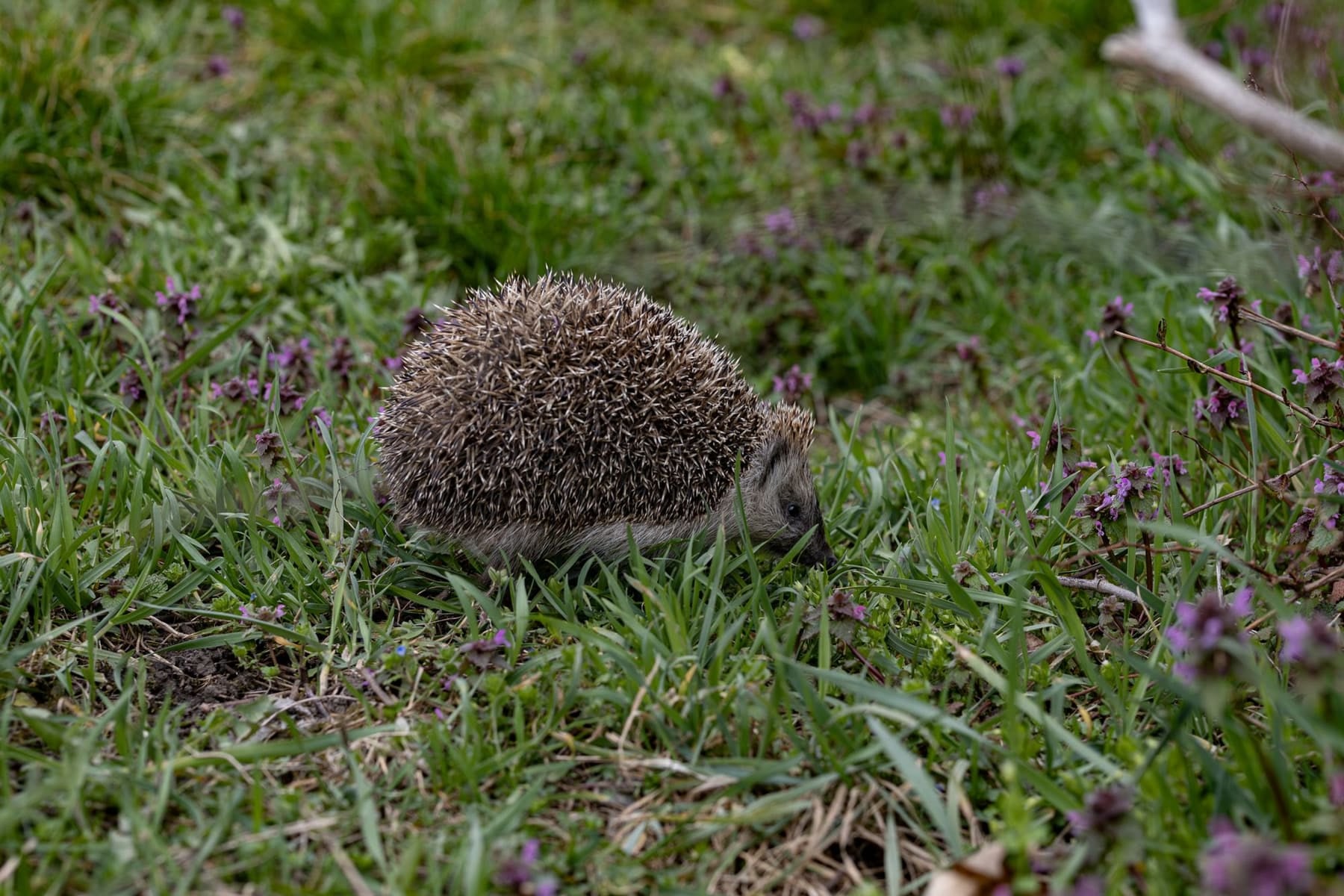
The European hedgehog (Erinaceus europaeus) is a small insectivorous mammal, mostly nocturnal. It covers a considerable distance each night in search of food and mates: around a mile, or 1.6 km, according to the British charity Hedgehog Street. It mainly eats insects, slugs, worms and other invertebrates. A single garden therefore isn't enough to feed it: it needs to move between plots.
It generally hibernates from late autumn to early spring, depending on temperatures, in a nest of leaves built under a hedge, a woodpile or a dense bush. Young hedgehogs are born mainly in summer; those from late litters need to gain enough weight before winter.
In France, the hedgehog is a protected species (order of 23 April 2007): it is forbidden to capture, kill or intentionally disturb it, or to transport or keep an animal taken from the wild. Its resting and breeding sites are also protected. Welcoming it means giving it good conditions, not keeping it.
Making the garden accessible
Solid walls, rigid fencing and tight-mesh wire cut off its routes. The most effective solution is also the simplest: create gaps of about 13 × 13 cm at ground level. According to Hedgehog Street, this size is enough for any hedgehog, yet stays too small for almost every pet. Talk to your neighbours: coordinated gaps between several gardens create a genuine corridor.
This iron hedgehog gap from Esschert Design fixes into a fence to frame and reinforce the opening. Fixings aren't included: choose them to suit your fence.
Providing shelter
A quiet corner of the garden left undisturbed is worth more than any installation: a hedge of local species, a pile of dead leaves, a woodpile or brushwood, a strip of long grass. To complement this, a wooden shelter can serve as a day den or a hibernation site.
Place it:
- in a calm, discreet spot, away from foot traffic and pets;
- under a hedge or near a woodpile;
- sheltered from prevailing wind, direct sun and rain;
- on dry, well-drained ground, lined with a little dry leaf litter or straw, never fabric.
Don't open it to check whether it's occupied, especially in winter: a hedgehog woken mid-hibernation draws on precious reserves. Only clean it out once it's empty, using warm water and no products.
This XL hedgehog house from Esschert Design is made of pine with a bitumen coating, a maze-style entrance that discourages predators, and a removable roof for cleaning.
Water and food: helping without harming
In dry weather, a shallow, stable water dish, changed daily, is the most useful help you can give. Choose a container a small animal can easily climb out of.
Above all, never give milk: hedgehogs digest it poorly, and it causes diarrhoea that can be fatal. Also avoid bread, meal leftovers and any salty or sugary food.
Should you add food? As a rule, no. The LPO points out that food offered is often unsuitable, for example kibble too high in salt and fat, and that gathering these solitary animals around a bowl helps spread disease and parasites. A garden rich in insects, worms and slugs remains the best help. If you think a youngster is too light heading into winter, ask a wildlife rescue centre for advice before feeding it.
Removing hazards from the garden
This is often where you can make the biggest difference:
- Robotic mowers, especially at night, seriously injure hedgehogs, which curl into a ball instead of fleeing. Avoid them or limit them to daytime, and check hedges, leaf piles and long grass before mowing, strimming or pruning.
- Slug pellets and pesticides in general poison hedgehogs, directly or through their prey, and reduce their food supply. To control slugs, rely on their natural predators instead: ground beetles, toads, birds and the hedgehog itself.
- Netting left on the ground or at low height for vegetable patches or sport, in which they get tangled. Raise it in the evening or choose rigid protection instead.
- Ponds and pools with steep sides: the hedgehog can't climb out and exhausts itself. Fit a rough plank, a piece of mesh or a few stones to form an exit.
- Bonfires of brushwood: a woodpile is an ideal shelter. Move it entirely just before burning it, or better, shred or compost the branches.
- Holes and rubbish: uncovered drains, pipes and pits, pots, cans or fruit netting they can get stuck in.
Observing without disturbing
Tracks are often the first sign of their presence: small, shiny black droppings, flecked with insect fragments, near flowerbeds or on the lawn. Our guide to signs of hedgehogs in the garden helps you recognise them. To watch one, keep your distance and avoid shining a light directly on the animal. A night-vision camera trap lets you follow its comings and goings without intervening; our camera trap settings will save you nights of empty footage.
Injured or struggling hedgehog: the right reflexes
Before stepping in, observe: a hedgehog crossing the garden doesn't need help. A genuinely distressed animal usually shows clear signs: a visible wound, severe thinness, unusual behaviour, for example lying still out in the open. In that case, contact a wildlife rescue centre without delay: they will tell you what to do. While waiting for their advice, handle the animal wearing thick gloves, keep it calm in a cardboard box, and give it neither milk nor food. Don't attempt to treat it yourself.
Shelters and gaps are featured in our Hedgehogs section. A flowering, pesticide-free garden, like the one described in our guide to insect hotels, also enriches its larder.
Sources
Frequently asked questions
Can I give a hedgehog milk?
No, never. Hedgehogs digest milk poorly, and it can cause serious diarrhoea. Offer only fresh water in a shallow dish.
Is the hedgehog a protected species in France?
Yes. It is forbidden to capture it, to intentionally disturb it, or to transport or keep an animal taken from the wild. You can, however, offer it a welcoming garden: gaps in fences, shelter, water and no pesticides.
What should I do if I find an injured hedgehog?
Contact a wildlife rescue centre. While waiting for their advice, handle the animal with gloves, keep it calm in a cardboard box and give it neither milk nor food.