


My nest box stays empty: the most common reasons
Hole diameter, when it went up, aspect, spacing between boxes, predators, disturbance: why a nest box is passed over, and the one time of year to put it right.
In this guide
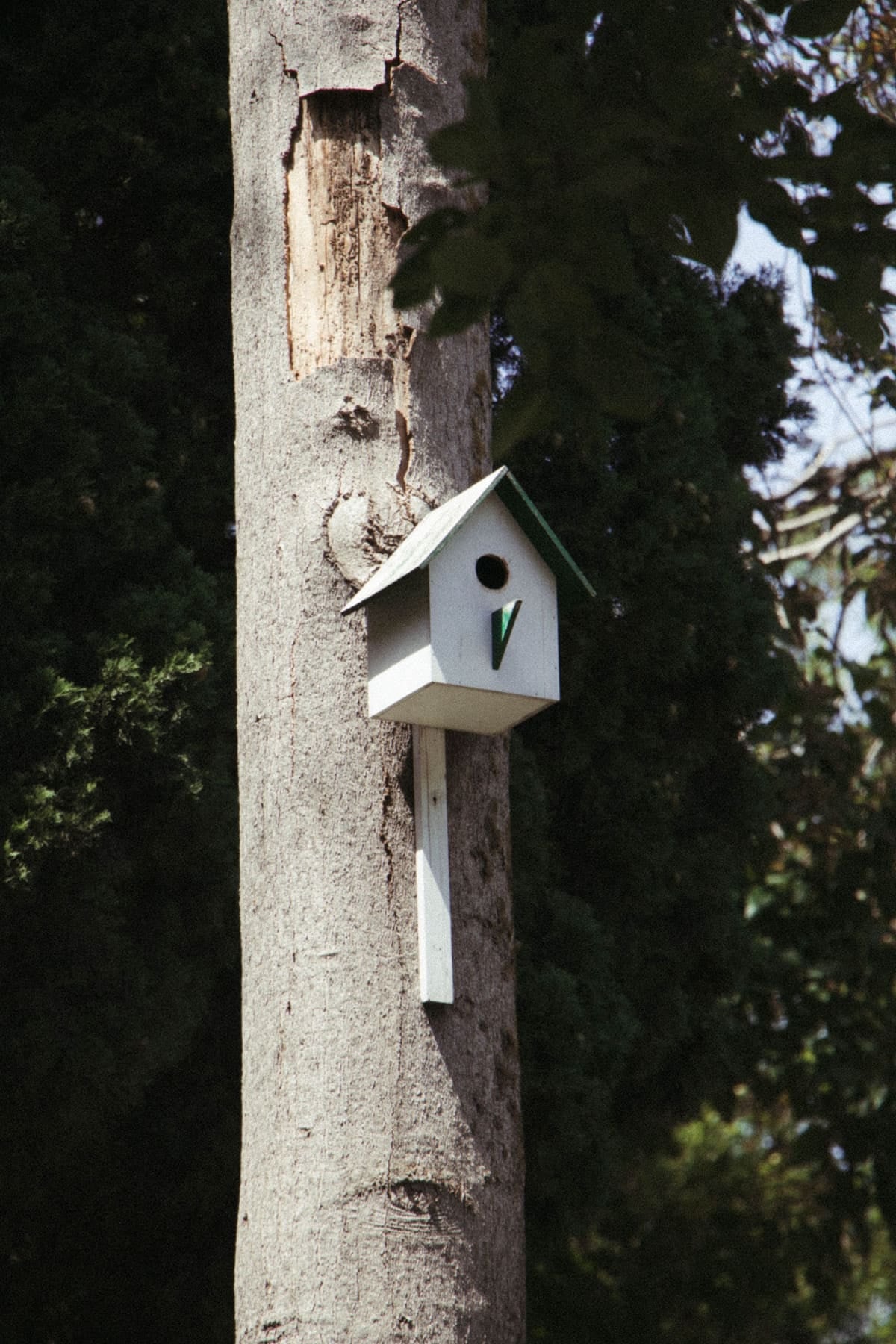
The first explanation for an empty nest box is nearly always time: a first season without an occupant is normal, and the judgement is made over two or three years. Then come, in order of frequency, putting the box up too late, a hole diameter that matches no local species, an unfavourable aspect or exposure, another identical box too close by, and the presence of cats or repeated disturbance. Every one of these causes can be put right, but in autumn only: a nest box is neither opened nor moved during the breeding season.
First, give it time
A nest box is not a magnet. Tits start prospecting cavities as early as February and remember the sites they have found from one year to the next. A box put up in March is almost always discovered too late for the current season; put up in October, it will have been inspected several times before spring.
The vacancy has to be real, too. In a neighbourhood where old trees and roofs already offer plenty of cavities, pairs have no reason to prefer a new box. On a recently built estate, the same box will be occupied in its first year.
Two or three seasons without an occupant is the sensible threshold before concluding that the site does not suit. Before that, watching beats moving: beak marks around the hole, droppings on the front, or coming and going in February all show that the box has at least been found.
It also happens that a nesting attempt begins and then stops. A layer of moss found in autumn in a box thought to be empty points to a nesting abandoned part way through, often because of disturbance, a predator or a cold spring. That is not a failure of the site, rather a sign that the box works and deserves to be left where it is.
The most common causes, and what to do about each
| Cause | What you see | Correction |
|---|---|---|
| Put up too late | Box installed in spring, no visits | Leave it in place: it will be prospected for the following season |
| Wrong hole size | No local species matches the diameter | 26 to 28 mm for the blue tit, 25 to 27 mm for the coal tit, 32 mm for the great tit |
| Poor aspect | Hole facing the prevailing wind or due west | Turn it towards the east or south-east, box tilted slightly forward |
| Extreme exposure | Full afternoon sun, or permanent damp shade | Look for something in between, avoid a moss-covered trunk |
| Not high enough | Box under 2 m, within one jump | At least 2 m; the LPO gives 2 to 5 m for the blue tit, 2 to 6 m for the great tit |
| Boxes too close together | Two identical models side by side | 15 to 20 m between two blue tit boxes, 40 to 50 m for the great tit |
| Perch under the hole | Hole fitted with a peg or a batten | Take it off: it mainly gives predators something to grip |
| Access for predators | Horizontal branch or wall top right beside it | Move the box, clear the surroundings |
| Disturbance | Constant traffic, repeated opening, building work | Choose a quiet corner and stop opening it outside the cleaning season |
| Garden poor in insects | Close-mown lawn, conifer hedge, pesticides | Hedge of native species, a rough corner, no insecticide |
Two mistakes are worth spelling out. Putting up more identical boxes does not bring more pairs: most songbirds defend a territory against their own kind, and two neighbouring boxes often both stay empty. It is better to vary the diameters and the models. Painting or varnishing the inside makes a box repellent, even toxic: the inner wood stays bare and rough-sawn, so the young can grip it on their way out.
Choosing the diameter, the material and the height for each species is covered in which nest box to choose.
A box in thick solid wood, with no perch, whose hole diameter is chosen for the target species, rules out half the causes in the table from the start.
Checking without disturbing
This is the most important point in this guide. A nest box is not opened to see whether it is occupied. From early spring to late summer, disturbance can push the parents into abandoning the brood, and the French order of 29 October 2009 prohibits the intentional disturbance of protected birds, in particular during the breeding season.
The signs of occupation are watched from a distance, through binoculars, from a window or from the far end of the garden:
- regular comings and goings by an adult, above all early in the morning;
- an adult going in with a full beak of moss, feathers or caterpillars;
- droppings or wear marks around the rim of the hole;
- begging calls audible a few metres away, two weeks after hatching.
A trail camera makes it possible to know whether the box has simply been found, without ever going near it. It is set up at a distance, aimed at the front, in autumn or winter, while prospecting is under way: that is when the information is useful and the risk of disturbance is nil. During nesting, the trips to change batteries or the memory card draw the attention of predators to the nest, and a camera placed too close to an occupied nest does more harm than good.
A garden camera should also be set so that it films your own ground only: the public road and neighbouring property must not appear in the frame.
The one time to put things right: autumn
Every correction in the table — reorienting, raising, moving, removing a perch — is done after the breeding season, between late September and the end of October, possibly into the first half of November while the nights stay mild. That is also the time for the annual clean, the method for which is described in cleaning a nest box.
Before opening it, check that nobody is at home: a box deserted by birds may shelter a dormouse, a bat or a wasp nest. If in doubt, close it again and come back later.
Use the visit to look at the whole problem: check the fixing, the watertightness of the roof, the state of the wood, and look at the box the way a cat would. A horizontal branch coming within thirty centimetres of the hole is enough to rule a site out.
Occupied, but not by birds
A box with no birds in it is not always a useless box. It may shelter:
- wasps or hornets, which build a nest in it over the summer; they are left to finish their cycle and it is cleaned out in winter, once the nest is deserted;
- bumblebees, which sometimes move into an old moss nest;
- a dormouse, sleeping there or storing food;
- bats, protected as well, which must not be evicted;
- a wren or a tit roosting there on cold winter nights, without nesting.
None of these occupants calls for urgent action. The autumn timetable settles the question in every case.
What happens outside the box
A nest box does not create a bird population: it offers housing to pairs that already find enough food to raise their young. A brood of tits eats several hundred caterpillars a day, and those caterpillars come from the trees and shrubs nearby.
A garden that encourages a box to be occupied therefore brings together a few simple conditions: a hedge of native species rather than a row of conifers, native flowers, a corner of dead leaves, some water, and above all no insecticide. Pesticides wipe out precisely the food a brood depends on. The subject is developed in how to attract tits to the garden, and the question of predators in protecting a nest box from predators.
Nest boxes, feeders and watching equipment are gathered in the Birds section.
Sources
Frequently asked questions
How long before moving a nest box that stays empty?
After two or three consecutive seasons with no occupant. Before that, an empty year is nothing unusual, above all if the box went up late. The move is made in autumn, after the breeding season, having first reconsidered the height, the aspect and the quiet of the new site.
Can you open a nest box to check whether it is occupied?
No, not during the breeding season. Disturbance can cause the brood to be abandoned, and intentional disturbance of protected birds is prohibited while they are breeding. Occupation is read from a distance, from the comings and goings of the adults and the marks around the hole. The box is opened in autumn only, for cleaning.
Should you put moss or feathers inside a nest box?
No. Birds bring their own material and choose what suits them. A box lined in advance is often passed over, and the added material can hold damp or harbour parasites. The box is left empty and clean, with a bare floor, after the autumn clean.
Does a nest box on a balcony stand any chance of being used?
Yes, if the balcony is quiet, has a few plants and stands near trees or hedges. The chances fall away sharply on a very busy balcony, one facing due west or one high up in a building. The rules stay the same: at least 2 m up, hole towards the east or south-east, out of reach of cats.