Can you take moss from the forest for a terrarium?
What French law says, what it does to the habitat, and the three concrete risks for your terrarium. Our position and the alternatives.
In this guide
No, we do not recommend it. For three separate reasons: it is regulated and often forbidden, it damages a habitat that is very slow to recover, and it brings into a closed terrarium moulds and pests that nothing there keeps in check. Cultivated moss costs a few euros, arrives clean, and settles in better.
What the legal framework says
The point many people miss: the forest belongs to someone. About three quarters of French forest is privately owned. The moss belongs to the owner of the land. Taking it without their consent is an offence, whatever the quantity.
In public forests — state and communal forests managed by the Office national des forêts — gathering natural products is regulated. Some forests tolerate a family-sized picking of mushrooms or berries, but that does not automatically extend to mosses, and it can be withdrawn by a local order.
In protected areas — nature reserves, the core zones of national parks, listed sites, biotope protection orders — taking plants is forbidden, mosses included. Some species also have protection of their own.
The legal texts. Article R163-4 of the French Forestry Code names mosses. Removing less than 2 cubic metres of “turf or mosses” without the owner's permission is a minor offence: the fine can reach 750 euros. Above 2 cubic metres, Article L163-10 applies the penalties for theft: up to three years in prison and a fine of 45,000 euros. The 5-litre tolerance in public forests (Article R163-5) only covers mushrooms, fruit and seeds. It does not cover moss. Finally, an order of 13 October 1989 lets each prefect ban or regulate the gathering of sphagnum mosses and of pincushion moss (Leucobryum glaucum), the cushion moss most sought after for terrariums.
In practice: ask the owner or the manager of the site. Without a clear answer, leave it alone.
What it does to the habitat
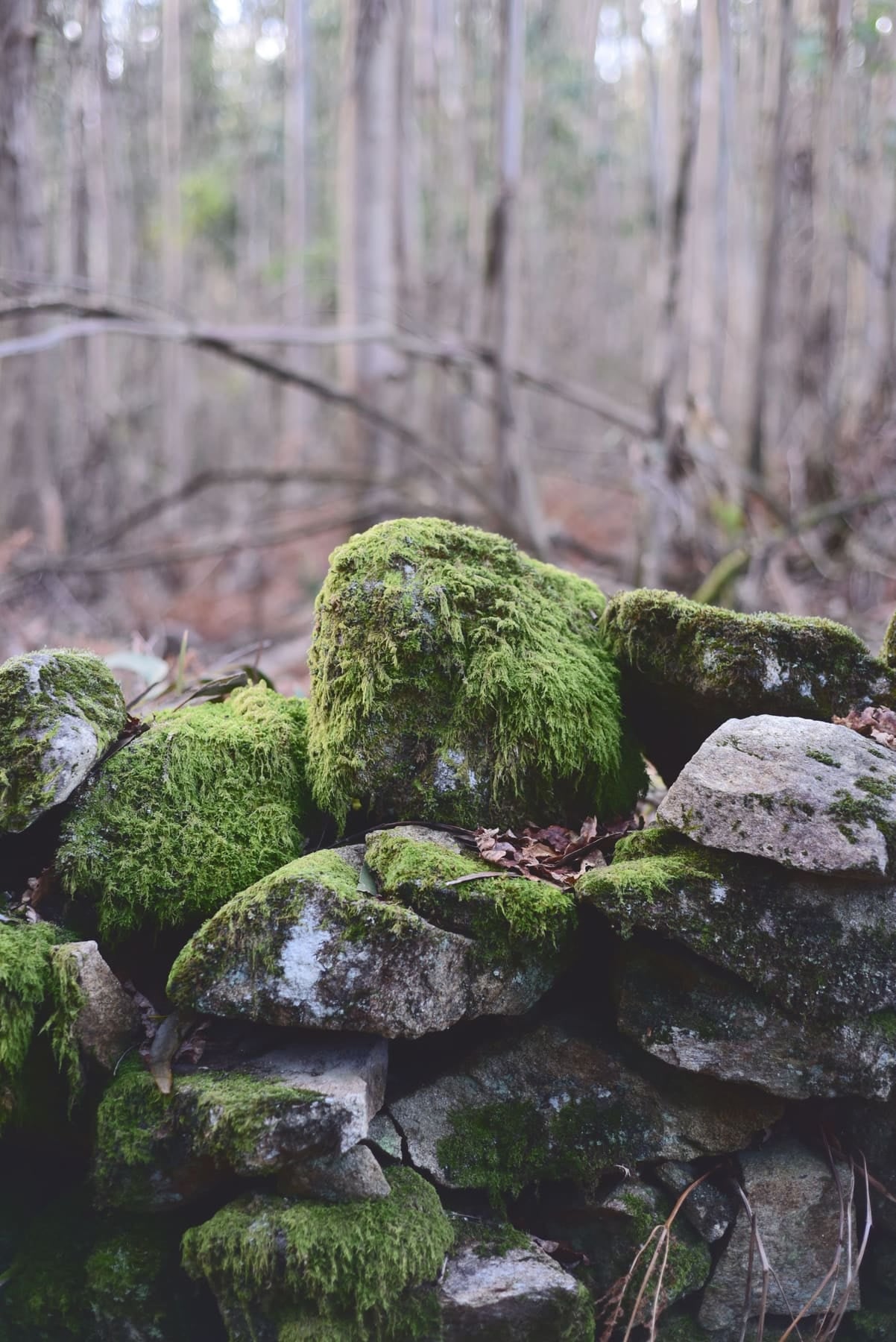
A moss carpet is not decoration: it is a habitat. It holds water, stabilises the soil, and shelters a whole microfauna — springtails, mites, small invertebrates that take part in breaking down the leaf litter.
It is also very slow. Where an annual plant grows back in one season, a moss cushion that has been torn away takes several years to recover, and sometimes never recovers if the ground beneath has been laid bare.
The problem is not one person's handful. It is that the accessible sites — path edges, the ground around car parks, the foot of trees near trails — are exactly the ones where everybody takes from.
The three risks for your terrarium
This is the most concrete argument, and the one that convinces people most often.
Moulds. Forest moss carries fungal spores, which is normal in an open, ventilated setting where nothing runs away with itself. In a closed terrarium, warm and saturated with humidity, those spores find ideal conditions. The white veil usually appears two to three weeks after the build — see Mould in a closed terrarium.
Pests. Larvae, mites, insect eggs, sometimes tiny slugs. With no predators and nothing to keep them in check, a population explodes in a closed volume. Terrarium fungus gnats often start this way.
Poor fit. Moss from a temperate woodland lives in a forest at 10 °C in winter, with clear seasons. Indoors at 21 °C all year round, many local species slowly fade without anyone understanding why.
If you do it anyway
On your own land, or with the owner's agreement:
- take little, spread over wide areas, never a whole cushion;
- leave the soil in place, lift the moss off without tearing up the earth;
- clean it properly: shake it out, pick off every scrap of debris, twig, soil and visible insect with tweezers;
- quarantine it for two to three weeks in a closed transparent box, away from the terrarium, and watch: moulds, larvae and decline all show up during that time;
- only then put it in.
This routine reduces the risks without cancelling them.
What we do
Our mosses are cultivated, never taken from the wild. That is a line we do not cross, and it is also why they arrive clean: no debris, no larvae, no excess spores, and species selected to live at indoor temperature.
Choosing species for the effect you want is covered in Moss for terrariums, and laying it in How to lay moss in a terrarium.
A closed terrarium lives for years with very little care, which is also why it makes a good gift. Our guide Giving a terrarium compares a kit, a ready-planted terrarium and a gift voucher.
Sources
Frequently asked questions
Is it forbidden to gather moss in the forest?
Yes, without the owner's consent. In France, Article R163-4 of the Forestry Code punishes the removal of mosses with a fine of up to 750 euros, in private and public forests alike. In protected areas it is banned in every case. With the owner's consent, outside protected areas and outside species regulated by the prefect, it is allowed.
A few handfuls, is that really a problem?
For a moss carpet, yes: it takes years to grow back, and it shelters a whole microfauna. The problem is not one isolated handful, it is the practice spread across every accessible site.
What does my terrarium risk with gathered moss?
Three things: mould spores that take hold in a closed environment, pests and larvae that nothing keeps in check, and a species that is not suited to the warmth of a home.
What about moss fallen from a tree after a storm?
The legal position still depends on the place, and so do the health risks for the terrarium. If you do it, do it on your own land.