

Welcoming bumblebees: what they need, and what kills them
A bumblebee colony lasts a single season. What it needs — flowers from the end of winter, corners left undisturbed, no insecticide — and the garden jobs that wipe it out.
In this guide
Welcoming bumblebees comes down to three things: flowers from the end of winter, when the queens leave hibernation, corners of the garden left undisturbed where a queen can found her colony, and ground free of insecticide. What makes them disappear is just as simple: close mowing that removes dandelions and clovers, sprays, and the flowering gap of late summer. A bumblebee nest box comes afterwards, as an extra, and its occupancy rate stays modest.
A social insect whose colony does not survive the winter
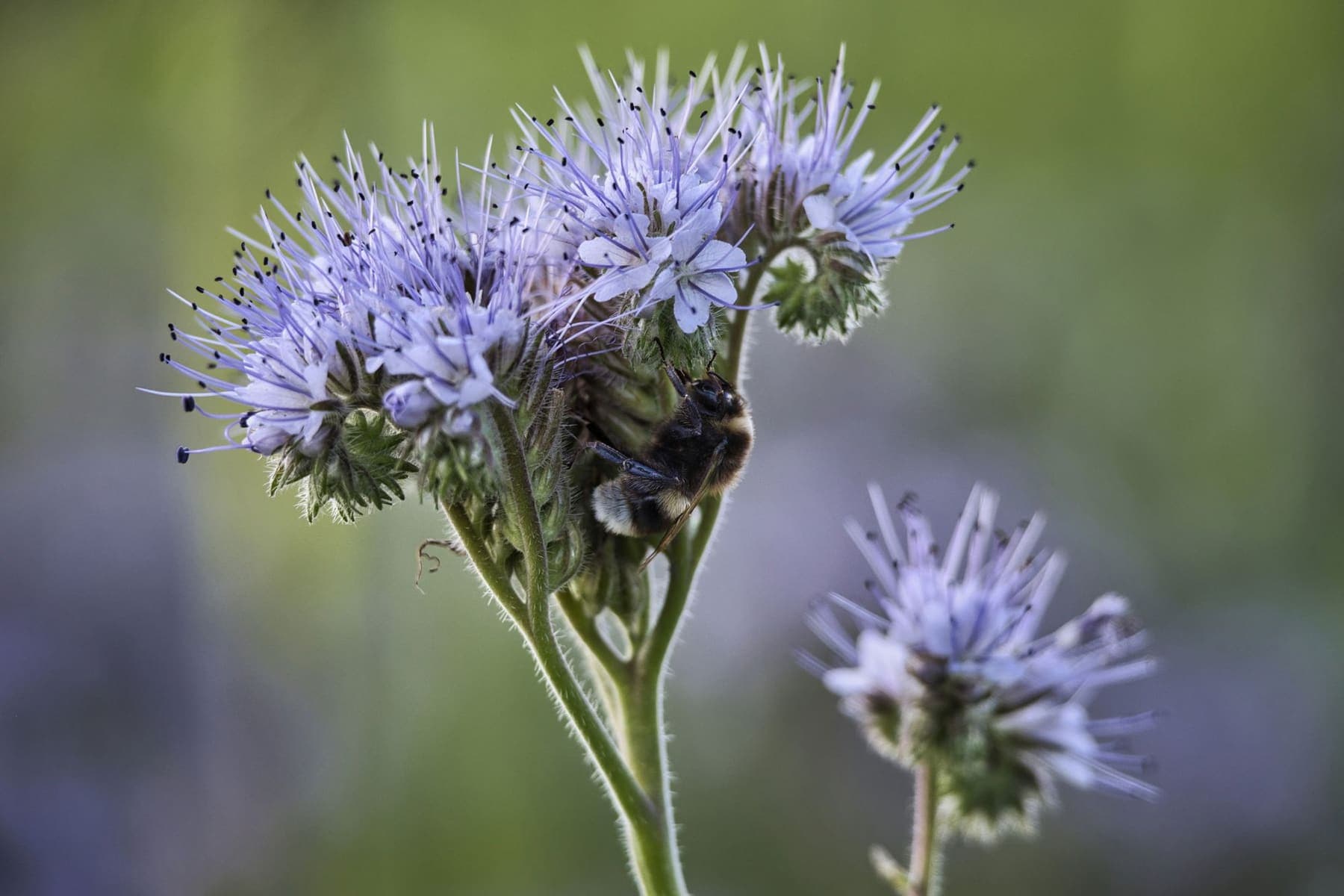
The bumblebee is a social wild bee. Metropolitan France has around forty species, from the very common buff-tailed bumblebee to the red-tailed bumblebee and the common carder bee. All of them live in annual colonies: unlike a honeybee hive, a bumblebee colony is born in spring and dies in autumn.
Only the young mated queens survive the winter, on their own, buried a few centimetres down in loose soil, a bank or a layer of leaf litter. The rest of the colony dies out at the end of the season. This biology explains two things: a bumblebee nest is never a lasting problem, and a patch of ground turned over in winter can destroy sleeping queens without anyone seeing it.
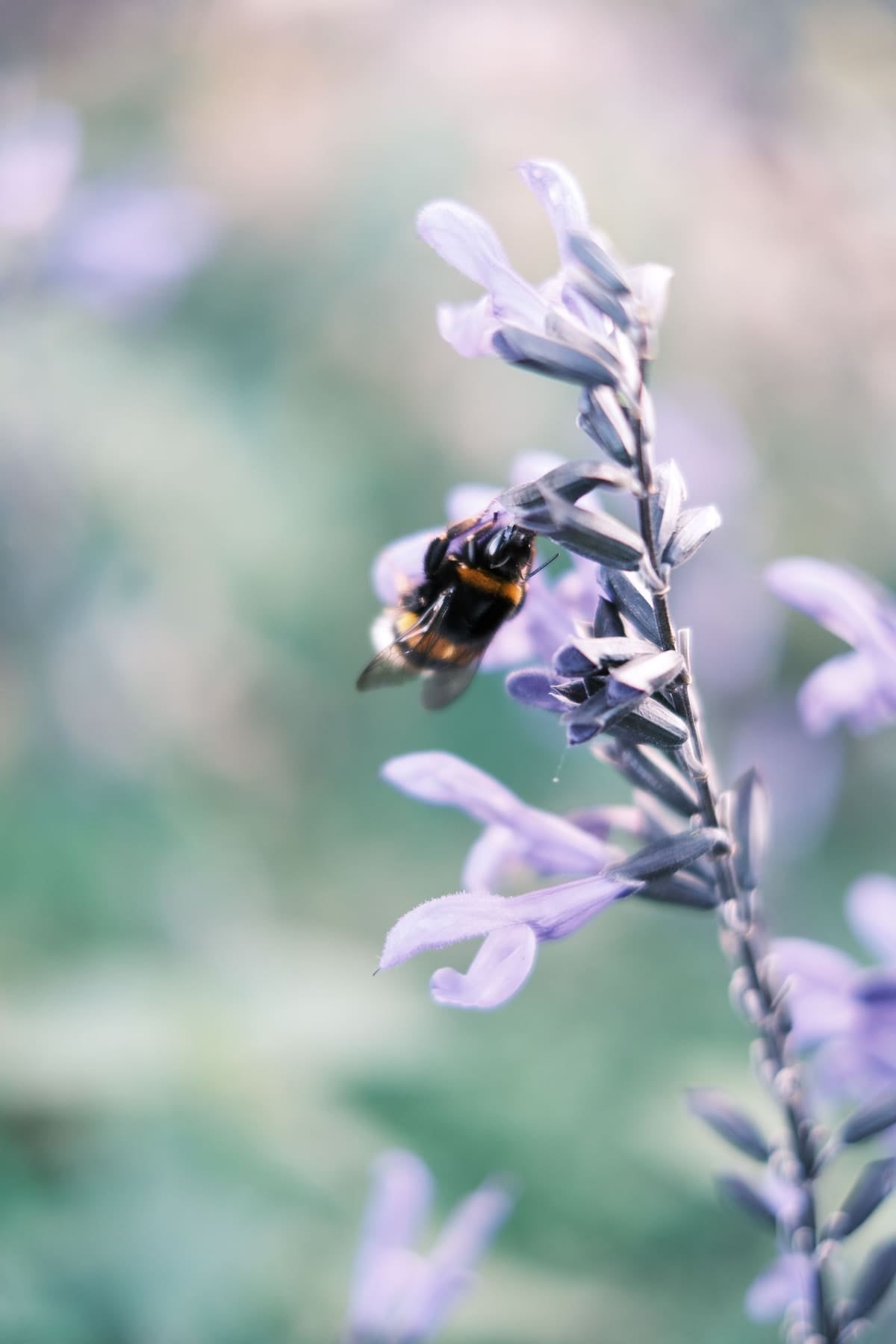
The bumblebee flies in cool weather and in low light, which few insects manage: it warms its flight muscles before taking off. So it is active early in the morning, at altitude, and under overcast skies. It also practises buzz pollination, which releases the pollen of flowers such as tomato, aubergine and blueberry. And it is very rarely aggressive: it stings only when crushed or held.
The timeline of a colony
| Period | What is happening | What helps in the garden |
|---|---|---|
| Late winter, March-April | The queens leave hibernation and look for nectar, then for a cavity | Willows, dandelions, lungworts, dead-nettles, heathers, crocuses |
| April-May | The queen founds the nest, lays and broods her first batch alone | Do not mow or clear the refuge areas |
| May-July | The first workers take over; the colony rises to a few dozen or a few hundred individuals | Clovers, bird's-foot trefoil, viper's bugloss, sages, comfrey, raspberry |
| August-September | The colony produces males and young queens | Marjoram, knapweeds, field scabious, mints, ivy at the end of the season |
| October-November | The young queens mate and then bury themselves; the colony dies out | Leave dead leaves, long grass and unturned soil |
The dates vary by about a month depending on the region and the species, and mild winters bring the queens out earlier.
Flowers at the two critical moments
A garden that flowers well in June can still hold no bumblebees. Two periods decide everything.
The end of winter. A queen leaving hibernation has used up her reserves and has to feed within hours. Male willows, dandelions left in flower in the lawn, lungworts, dead-nettles, winter heathers and the first fruit trees matter more at that moment than any summer border.
The end of summer. This is when the colony builds its future queens, the ones that will make the following season. Marjoram, knapweeds, field scabious, mints, savory, then ivy in flower from September to November, fill that gap.
Between the two, go for single flowers with visible stamens, and above all for legumes: clovers, bird's-foot trefoil, vetches, whose deep corolla suits the long tongue of bumblebees. Double-flowered garden varieties are best avoided, since their nectar is out of reach. The species in detail, season by season, are set out in the guide which plants for pollinators.
A word on quantity: a lone plant of viper's bugloss holds nobody. Bumblebees forage in patches, and grouping five or six plants of the same species works better than spreading a collection around. On a balcony, two or three large, well-filled troughs are worth more than ten small pots.
Over a large area, sowing does the work in place of a border. The full method is described in sowing a nectar-rich wildflower meadow.
What kills them
- Insecticides, including those sold for the ornamental garden and treatments applied to plants in flower. A queen poisoned in April means a whole colony that will never exist.
- Close, frequent mowing. Removing dandelions, clovers and ground ivy amounts to taking away the larder of the early season. Mowing high, leaving longer between cuts and letting part of the lawn flower changes a great deal.
- The big autumn and late-winter clear-up. Turning the soil over, raking up every leaf, cutting the edges back hard: these jobs destroy hibernating queens and the cavities they will settle in.
- The August flowering gap. Many gardens offer nothing at all between the end of the roses and the ivy. The colony then runs short of resources at the most expensive moment of its cycle.
- Destroying nests. A nest found under a garden shed or in a hedge will die out on its own at the end of summer. Going around it for a few weeks costs less than a treatment, and bumblebees defend their nest only at very close range.
- Mistaking them for a hornet or a wasp. A bumblebee is stocky, densely furry, and its flight is heavy and noisy; a wasp is slim, hairless and glossy. Most destruction of bumblebee nests comes from mistaken identity, when nothing needed doing at all.
- Wasp traps baited with sugar or beer, which drown bumblebees, wild bees and hoverflies without distinction. A trap set near a border in flower does far more damage than it prevents.
Giving them somewhere to nest
A queen looks for a dry, dark cavity already lined with fibrous material: an old vole burrow, a dense tussock of grass, the underside of a garden shed, a pile of wood or leaves, sometimes an empty bird box. That last point is worth knowing before the autumn chore: a bird box is cleaned after the breeding season, and a bumblebee nest still in use means waiting, as the guide cleaning a bird box points out.
The most effective arrangements cost nothing: a strip of long grass along a hedge, a south-facing bank left rough, a pile of brushwood in a quiet spot, an area of ground left unworked. The wild bees that nest in the soil benefit too, as the guide attracting solitary bees explains.
A purpose-made box reproduces these conditions: a chamber filled with dry fibres, a narrow tunnel that keeps intruders out, untreated timber. It goes on the ground or slightly sunk into it, in partial shade, somewhere dry and quiet, entrance facing east, at the end of winter, before the queens come out between March and April.
It is worth being honest about the result: the occupancy rate of bumblebee boxes is modest and often takes several seasons. The odds improve markedly with early flowers nearby and a pesticide-free garden. Once the box is occupied, the inspection hatch stays shut; cleaning and replacing the lining are done in late autumn, when the colony is over.
A bumblebee sitting still on the ground
At the end of the season, a bumblebee that has landed and moves slowly is usually at the end of its life: that is normal and there is nothing to be done. In spring, on the other hand, a queen brought down by cold weather can set off again once she has warmed up. In that case only, a few drops of sugar water placed on a flat surface beside the insect are enough — never honey, which can pass diseases to wild bees, and never water the insect might drown in. Better still is to move her gently, on a leaf, to a flower or to a sheltered, sunny spot.
Every box and seed mix for pollinators is gathered in the Pollinators section.
Sources
Frequently asked questions
Do bumblebees sting?
Very rarely. Only the females can, and they sting only if handled or crushed. A nest set away from where people walk can be left in place with no particular risk, simply by not standing in front of the entrance.
What should I do about a bumblebee nest in a garden shed?
Leave it alone. The colony is annual: it dies out by itself at the end of summer, and the young queens go elsewhere to hibernate. All it takes is going around the entrance for a few weeks, then removing the old nest once the season is over.
Why do bumblebees appear as early as March?
These are the mated queens from the previous year, leaving hibernation and looking for nectar and then a cavity in which to found their colony. They are larger than the workers seen later on, and often fly low over the ground while searching.
Is an insect hotel any use to bumblebees?
No, or very little. The hollow stems and drilled logs of an insect hotel are aimed at solitary bees, which nest in narrow tunnels. Bumblebees need a roomy, lined cavity, at or just above ground level: that is a different kind of shelter.