

Neocaridina or Caridina: which shrimp should you choose as a beginner?
Water, difficulty, crossbreeding, tankmates: what really sets Neocaridina apart from Caridina, and which one suits your first shrimp tank.
In this guide
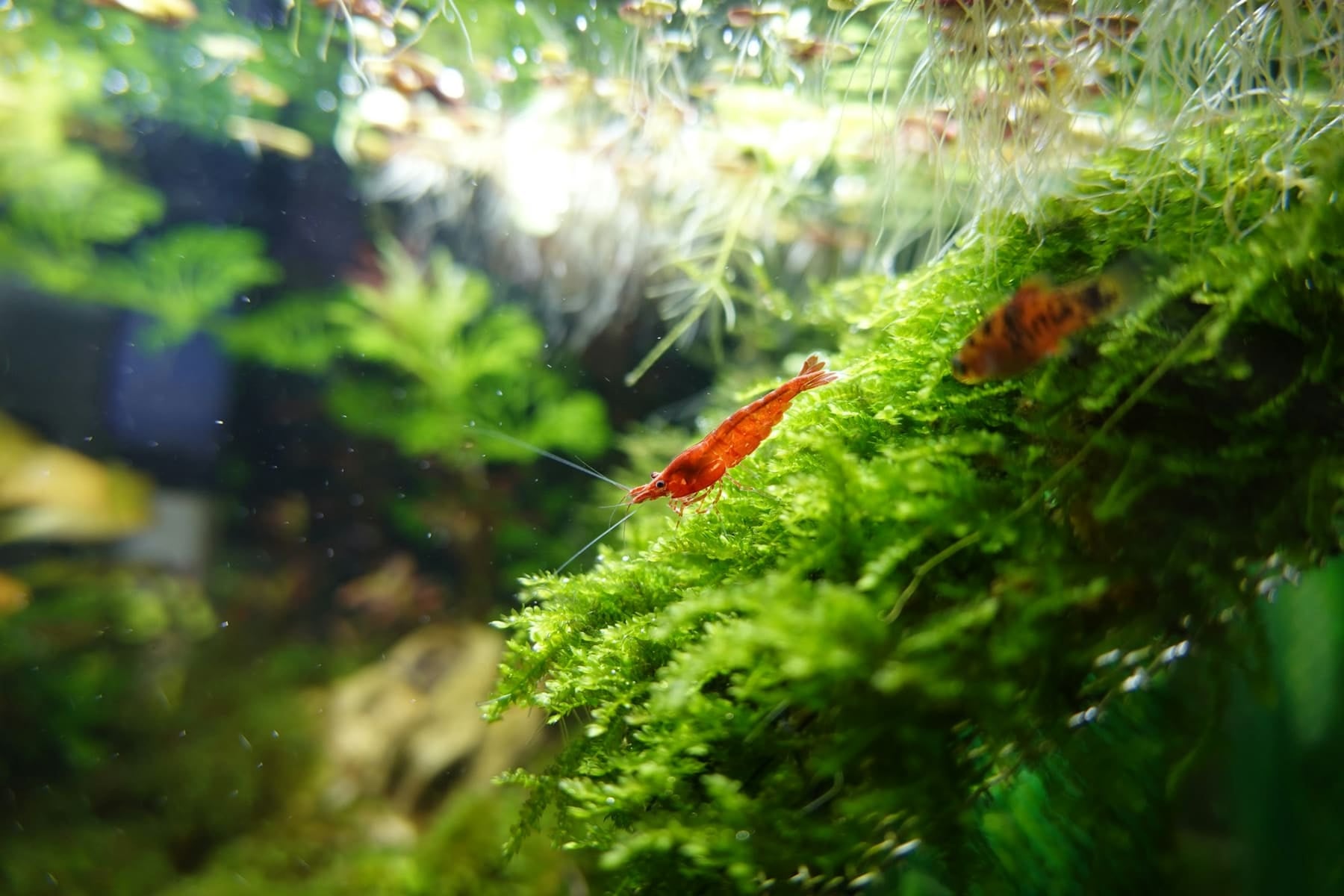
For a first shrimp tank, choose a Neocaridina, such as the Red Cherry: it lives across a wide range of conditions and usually accepts conditioned tap water. "Bee"-type Caridina, such as the Crystal Red, need soft, slightly acidic water, often prepared from RO water, with an active substrate. Be careful, though: "Caridina" refers to a large group of species with very different needs, which also includes the Amano. Here's how to compare them without getting it wrong.
What sets Neocaridina and Caridina apart?
These are two genera, that is, two related but distinct groups of species. The names you see in pet shops often mix up the genus name and the variety name, hence the confusion.
Neocaridina
In the aquarium hobby, almost all the Neocaridina sold belong to a single species, Neocaridina davidi. Its wild form is translucent or greenish-brown. Generations of selective breeding have produced the well-known colours: Red Cherry, Sakura, Yellow, Blue Dream, White Pearl, and so on. These are colour varieties of the same species, with the same needs.
Caridina
The genus Caridina is much larger. For a beginner, three groups of shrimp are worth distinguishing:
- "Bee" shrimp: Crystal Red, Red Bee, Tiger Bee or Shadow. These are usually the ones set against Neocaridina, and they're the most demanding when it comes to water;
- tiger shrimp, Caridina mariae, whose water needs are close to those of Neocaridina;
- the Amano shrimp, Caridina multidentata, larger, prized against thread algae, which doesn't breed in fresh water.
When people say "Caridina are difficult", they actually mean "bee" shrimp.
What water for each shrimp?
This is the real difference, and it decides everything else.
Water for Neocaridina
Neocaridina davidi tolerates a wide range of conditions. A study published in Scientific Reports describes it as comfortable between 21 and 27 °C, at a pH of 6 to 7.5. In many areas, conditioned tap water is suitable. If you're starting from RO water, the manufacturer Dennerle recommends remineralising it for these shrimp to a general hardness (GH) of 6 to 7, a carbonate hardness (KH) of around 1, and a neutral to slightly alkaline pH of 7.0 to 7.5.
Water for "bee" Caridina
Crystal Red and related shrimp like soft, lightly mineralised, slightly acidic water. To achieve this, remineralised RO water is generally combined with a specific salt and an active substrate. Dennerle notes, for example, that its shrimp substrate lowers pH towards 6.0–6.5 and carbonate hardness towards 0–2. In many areas, tap water is too hard for these shrimp without preparation.
Measure before you choose
GH and KH are measured with test strips or drop tests. You can also check your local water authority's quality report. If your water is hard and you don't want to install an RO unit, the question is settled: go for Neocaridina.
Which is easier to keep?
Neocaridina forgive more. A small variation in temperature or a slightly oversized water change usually passes without harm, provided the tank is cycled and free of copper.
"Bee" Caridina need a routine. Every water change uses water prepared in advance, at the right values. The active substrate loses its effect over time and must be replaced. pH, GH and KH measurements become a regular task. Nothing insurmountable, but it's a commitment you should take on with your eyes open.
In both cases, the starting rule is the same: no shrimp before the nitrogen cycle is finished.
And breeding?
Neocaridina breed easily in fresh water, and their young hatch already fully formed, with no larval stage. Our guide Breeding Red Cherry shrimp describes each step.
"Bee" Caridina also breed in an aquarium, but only if the water genuinely suits them: it's often the first sign that a tank is well balanced. The Amano, meanwhile, doesn't breed in fresh water, because its larvae need brackish water.
Can they crossbreed or live together?
Crossbreeding
Crossbreeding happens within the same group. Two Neocaridina colours will crossbreed: after a few generations, the offspring revert towards the wild colouring. Neocaridina and Caridina, on the other hand, belong to two distinct genera and don't crossbreed with each other.
Cohabitation
- Neocaridina and "bee" Caridina: not advisable. Not because of crossbreeding, but because their water requirements are too different. One of the two will inevitably live in conditions that don't suit it.
- Neocaridina and Amano: yes, in a volume large enough for the Amano. They share the same water and don't crossbreed.
- Neocaridina and tiger shrimp: possible in terms of water, but Caridina mariae varieties crossbreed with each other: keep just one type.
- Several Neocaridina colours: no, if you want to keep the colours pure.
Which shrimp for which beginner?
You're setting up your first aquarium
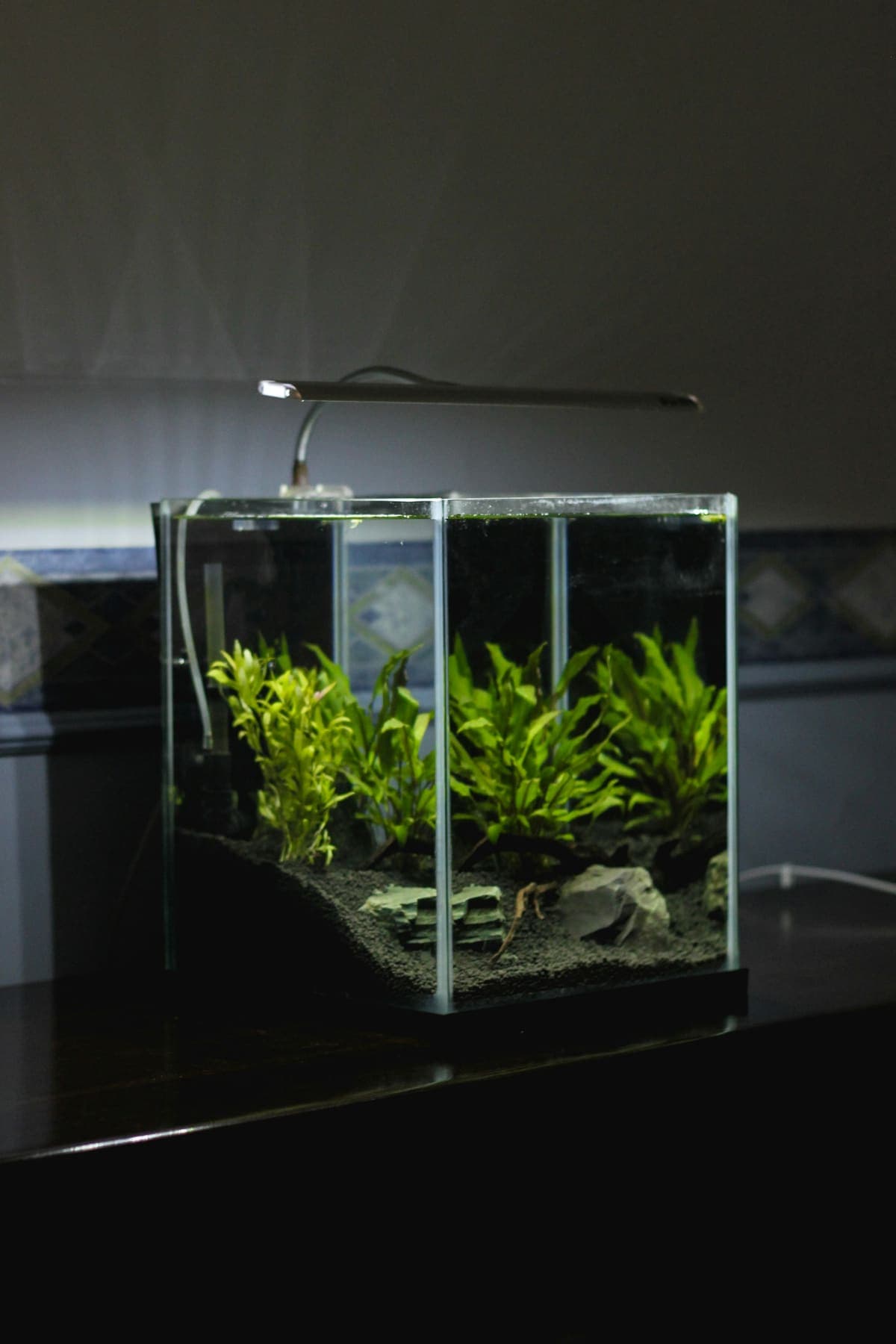
Choose Neocaridina of a single colour, in a planted, cycled tank of 20 to 30 litres. You'll learn to read shrimp behaviour with a tolerant species. Our comparison Which shrimp for a nano-aquarium? details the starting numbers.
You mainly want help against algae
The Amano is the most effective against thread algae, provided you have enough volume. It won't, however, fix excess light or overfeeding.
You've already mastered water testing
If you have a tank that's been running for months, you test your water regularly, and you're happy to prepare RO water, Crystal Reds are a great second step. Set them up in a dedicated tank, with an active substrate from the start. Our guide What aquarium for freshwater shrimp? helps with choosing the tank and filtration.
The comparison in brief
- Neocaridina (Red Cherry, Sakura, Blue Dream…): wide tolerance, conditioned tap water often suitable, easy breeding. The best choice to start with.
- "Bee" Caridina (Crystal Red, Red Bee, Tiger Bee…): soft, slightly acidic water to prepare, active substrate, regular testing. A second step.
- Caridina mariae (tiger shrimp): water close to that of Neocaridina, one variety per tank only.
- Amano: useful against thread algae, no breeding in fresh water, cohabits well with Neocaridina.
Equipment to get started
For a first tank, a batch of Neocaridina and something to test your water are enough. Dennerle's 6in1 test strips measure pH, KH, GH, nitrite, nitrate and chlorine.
The project A nano shrimp tank brings together the equipment and steps for keeping Neocaridina.
Find the animals and their food in the shrimp section.
Sources
Frequently asked questions
Is the Amano shrimp a Neocaridina or a Caridina?
It's a Caridina: its scientific name is Caridina multidentata. It nonetheless shares Neocaridina water without difficulty, unlike "bee"-type Caridina.
Can Crystal Reds be kept in tap water?
Rarely. In most areas, tap water is too hard and not acidic enough for them. Remineralised RO water and an active substrate are generally used. Measure your GH and KH before buying.
Is the Blue Dream a Neocaridina?
Yes. Blue Dream, Red Cherry, Sakura and Yellow are colour varieties of the same species, Neocaridina davidi. They have the same needs, but they crossbreed with each other.
Does an active substrate for Caridina suit Neocaridina?
It isn't essential: Neocaridina live very well on an inert substrate, such as fine sand or gravel. An active substrate remains possible, provided the pH stays within their comfort range. Measure it over the first few weeks.