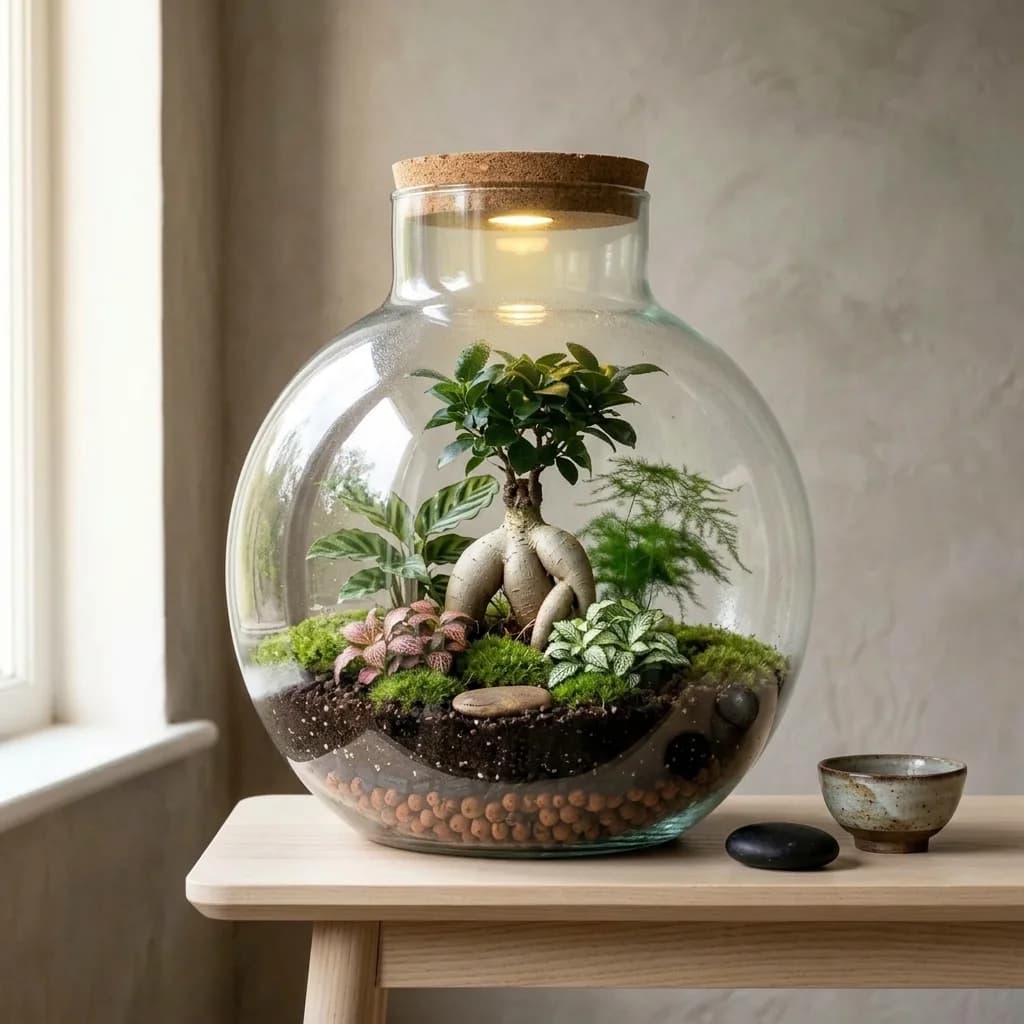


What aquarium for freshwater shrimp?
Volume, substrate, filtration, water parameters: a comparison of the options for setting up Neocaridina or Caridina shrimp in good conditions.
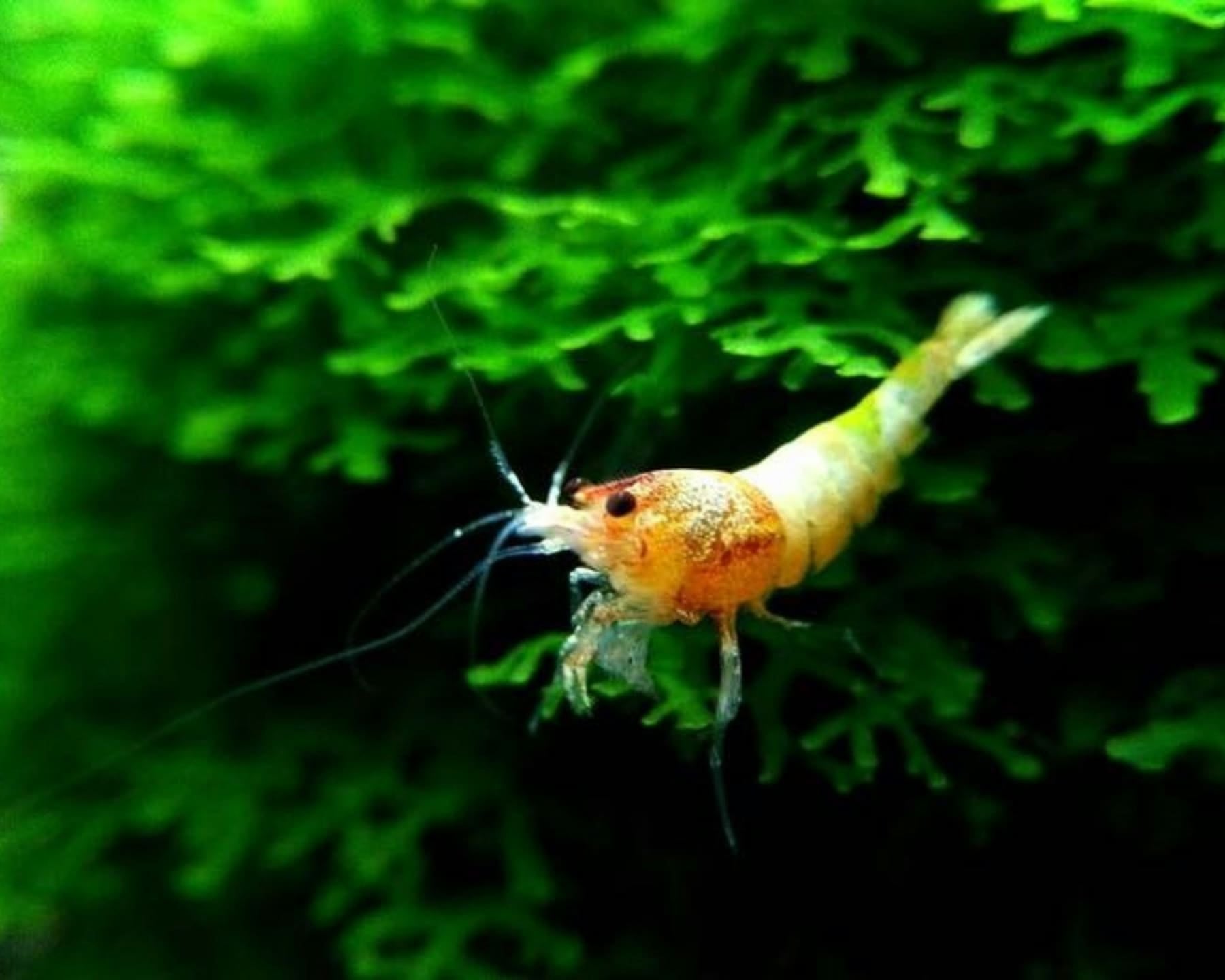
In this guide
For freshwater shrimp, an aquarium of 20 to 30 litres, well planted, fitted with gentle filtration and set up for at least four to six weeks, makes the best starting point. The exact choice then depends on the species: Neocaridina, such as the "Red Cherry", tolerate a wide range of water types, while "Crystal Red"-type Caridina need soft, acidic water, which requires much closer management. Here's how to compare the options.
Why volume matters so much
Shrimp are sensitive to sudden swings more than to any single value. And the larger the volume of water, the more slowly parameters change: a missed feeding, a hot day or a slightly-too-cold water change has less effect in 30 litres than in 10.
- Under 15 litres: possible for experienced hands, but the margin for error is small. Temperature closely follows the room's.
- 20 to 30 litres: the ideal format to start with. Stable enough, easy to maintain, it fits on a desk or a sturdy chest of drawers.
- 60 litres and above: very stable, suited to a large colony or cohabitation with small, peaceful fish.
Complete kit or bare tank: the comparison
The all-in-one kit
A kit brings together the tank, filter, lighting and often a lid. It's the simplest solution: the equipment is sized for the volume, and the lid limits both evaporation and escapes, since shrimp can climb up a protruding pipe or piece of moss. Dennerle's 20-litre Nano Cube Complete, for example, brings together the tank, a corner filter, an LED strip, a cover glass and a substrate.
Suited to: Beginners who want a coherent set-up without having to match every item themselves.
The bare tank to equip yourself
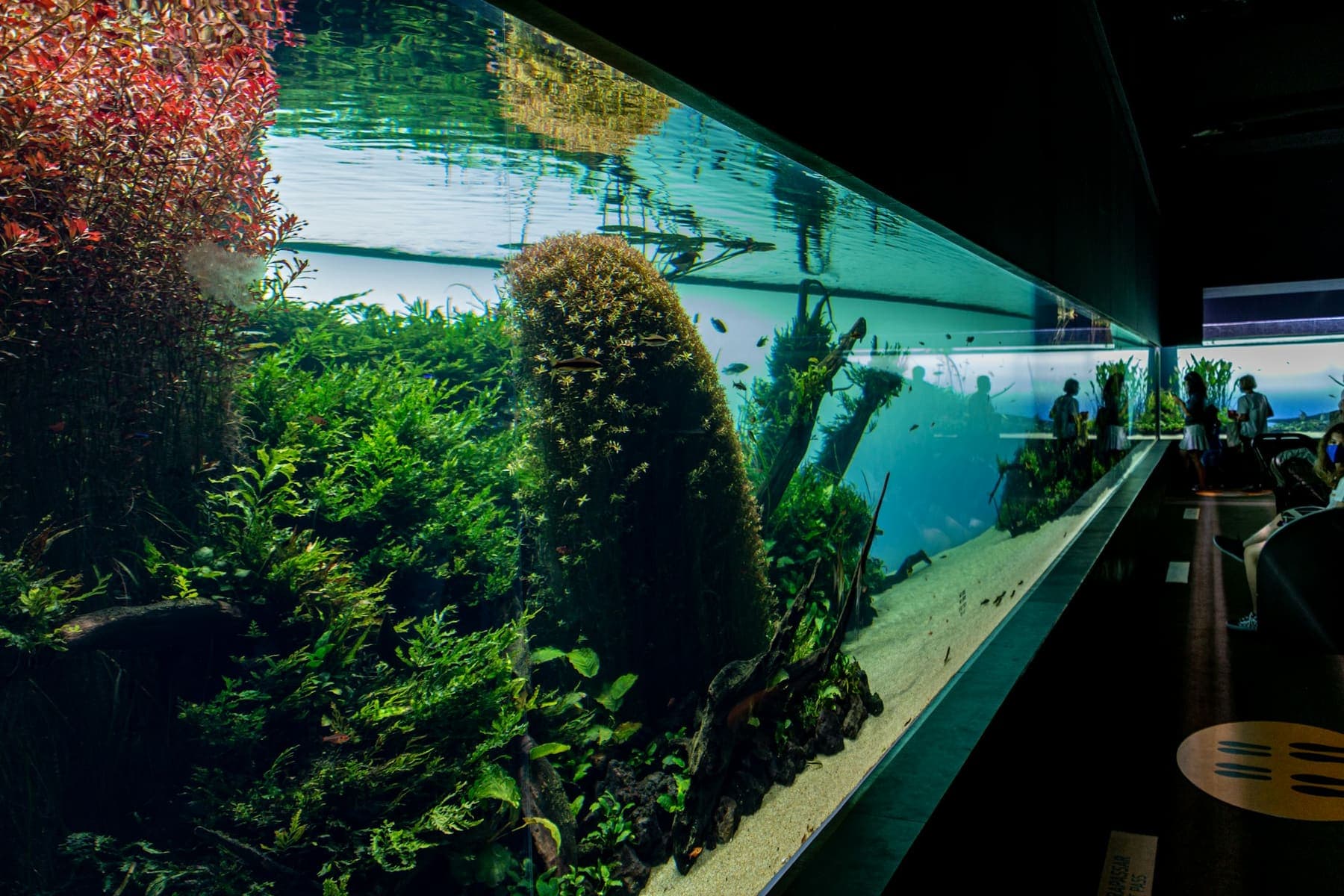
A standalone aquarium lets you choose every piece: filter, LED strip, décor. It takes a little more thought, but allows for a more refined look, for example an aquascape home to shrimp.
Suited to: Those who want a larger tank, adjustable lighting, or a carefully composed layout.
Filtration: gentle above all
Baby shrimp measure barely a few millimetres at birth. Filter suction that's too strong can pull them in. Whichever solution you choose:
- protect the filter intake with a fine sponge or a suitable guard;
- go for moderate flow, with no violent current;
- keep a biologically active filter: this is where the bacteria that break down waste live.
A sponge filter, driven by an air pump, remains a reference choice in dedicated shrimp tanks, as its surface also acts as a grazing ground for the young.
Substrate and parameters by species
Neocaridina: the simplest route
Neocaridina are comfortable between 21 and 27 °C, with a pH of 6 to 7.5 and a medium general hardness (GH). Inert gravel or a nutrient substrate both work; avoid active substrates designed for Caridina, which lower carbonate hardness. In many areas, conditioned tap water is enough, provided you know its hardness. The species is known to be very adaptable: the U.S. Fish and Wildlife Service reports captive breeding between 14 and 30 °C and pH 6 to 8.2. But tolerating isn't thriving, and it's stability that makes for lasting colonies. To choose your shrimp species according to your tank's volume, see our comparison, and our guide Neocaridina or Caridina to compare the two genera in detail.
Caridina: water you have to build
"Crystal Red" or "Taiwan Bee"-type Caridina prefer soft, lightly mineralised water, with a slightly acidic pH, around 6 to 6.8, near-zero carbonate hardness, and a rather cool temperature, around 20 to 24 °C. Remineralised RO water and an active substrate that stabilises the pH downward are generally used. SL-aqua's More Nature Black Soil, for example, is a substrate designed for Caridina: its organic acids lower the water's pH and KH.
One point that's often misunderstood: Amano shrimp are amphidromous. Adults live in fresh water, but the larvae develop in salt water — a Crustacean Research study successfully reared them at 17 to 34 ppt salinity. They don't therefore breed in a standard aquarium, which makes them excellent algae-eaters with no risk of overpopulation.
Plants and décor
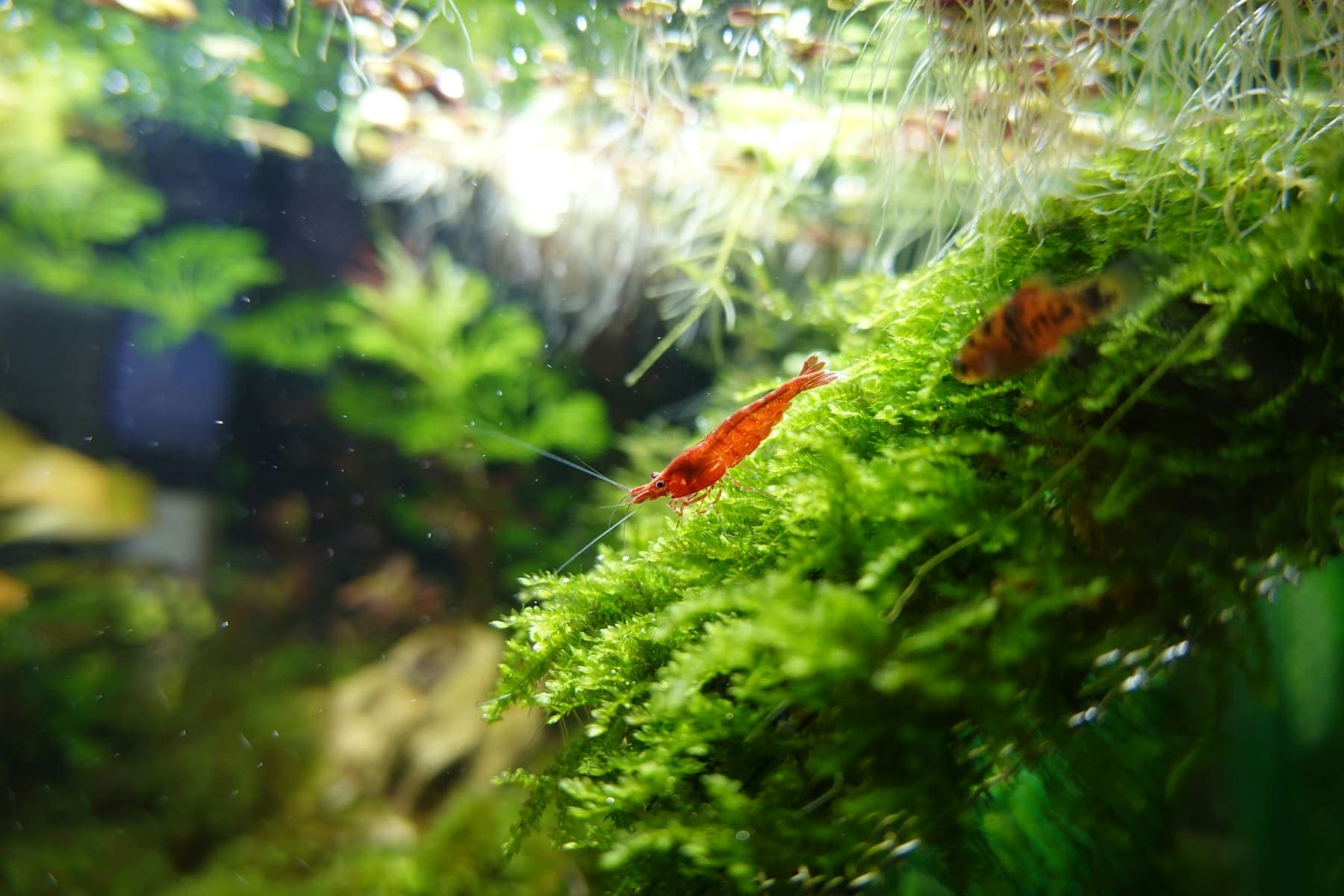
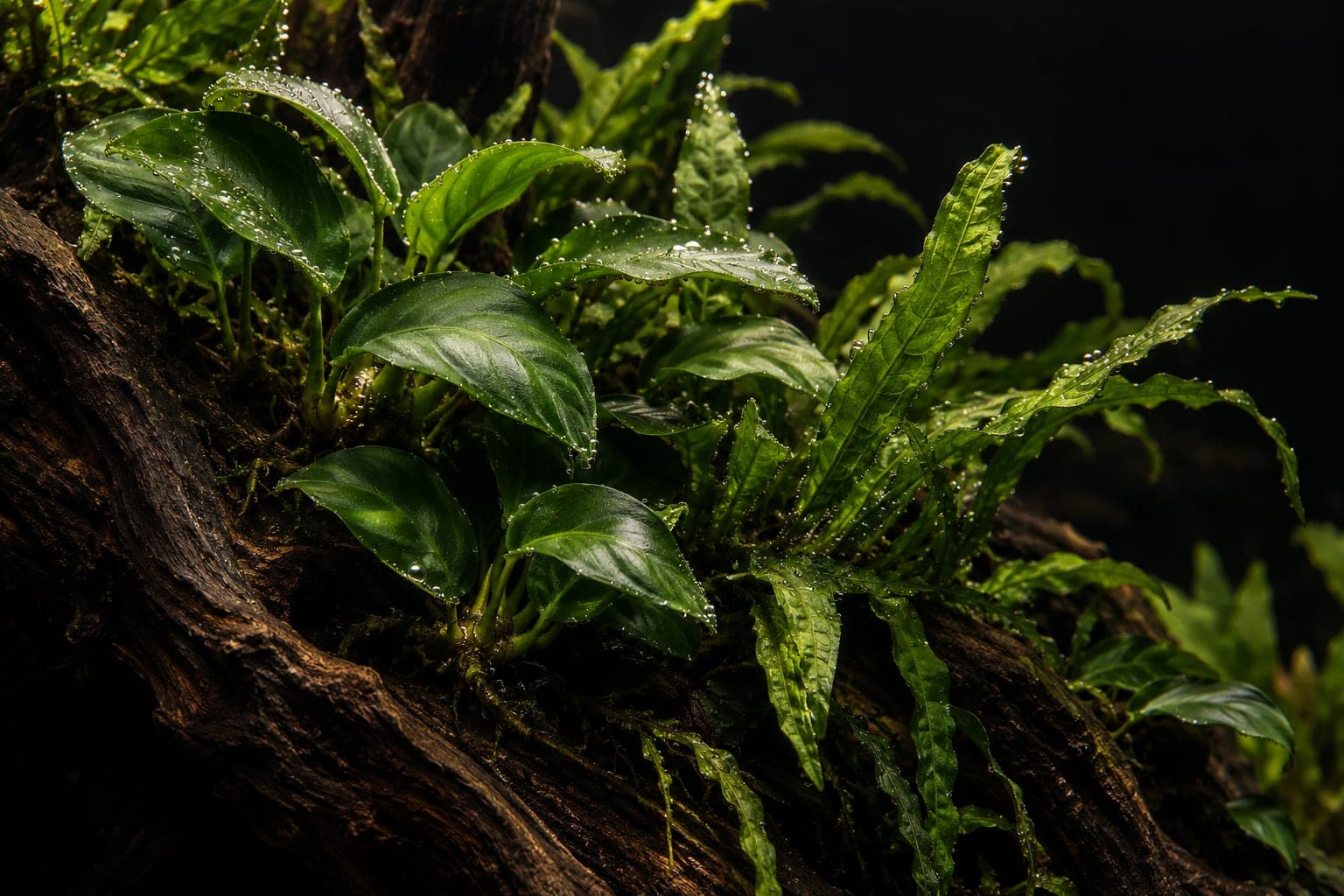
A shrimp tank benefits from being dense: mosses, floating plants, small roots. Mosses hold onto the micro-organisms shrimp feed on and provide hiding places during moulting, a time when the animal is vulnerable. Catappa leaves or other suitable dried leaves add extra grazing surfaces.
Common mistakes
- Introducing shrimp into a tank that hasn't cycled: ammonia and nitrite are lethal to them. Read our guide on the nitrogen cycle before buying anything.
- Acclimatising too fast: gradually add tank water to the bag, drop by drop, over one to two hours.
- Overfeeding: a pinch eaten within a few hours is enough; remove leftovers.
- Mixing different-coloured Neocaridina: they crossbreed and the offspring revert towards a brownish colour.
- Doing large water changes all at once: prefer 10 to 20% each week, with water at the same temperature.
Our recommendation
For a first colony, choose Neocaridina in a 20- to 30-litre tank, planted with mosses and easy plants, and wait until testing confirms the water has matured. You can then explore our shrimp section, or turn the tank into a real landscape with our guide to getting started with aquascaping.
Sources
- Nano Cube Complete, mini aquarium complete set — Dennerle
- SL-aqua More Nature Black Soil — Shrimp Supplies Europe
- Cherry Shrimp (Neocaridina davidi), Ecological Risk Screening Summary — U.S. Fish and Wildlife Service
- Larval performance of three amphidromous shrimp species in the genus Caridina — Crustacean Research
- Effects of temperature on the life history traits of the red cherry shrimp Neocaridina davidi — Scientific Reports
- Habitat selection and copper toxicity in the freshwater amphidromous shrimp Caridina multidentata — Journal of Crustacean Biology
Frequently asked questions
What's the minimum aquarium size for Red Cherry shrimp?
A tank of 20 to 30 litres is the most comfortable for starting out. Smaller volumes are possible, but water parameters change faster in them, leaving less margin for error.
How many shrimp should you put in a 20-litre aquarium?
A starting group of around ten Neocaridina suits a well-planted, mature 20-litre tank. The colony will grow on its own if conditions suit it; it's better to start modestly.
Can you keep shrimp with fish?
Yes, with very small, peaceful fish, but most fish will eat some of the young shrimp. For a colony to thrive, a dedicated shrimp tank remains the better choice.