

Which shrimp for a 20 to 30 litre nano aquarium?
Neocaridina, Amano or Caridina: which species to choose for a small tank, how many to introduce, which ones to combine and which to avoid when starting out.
In this guide
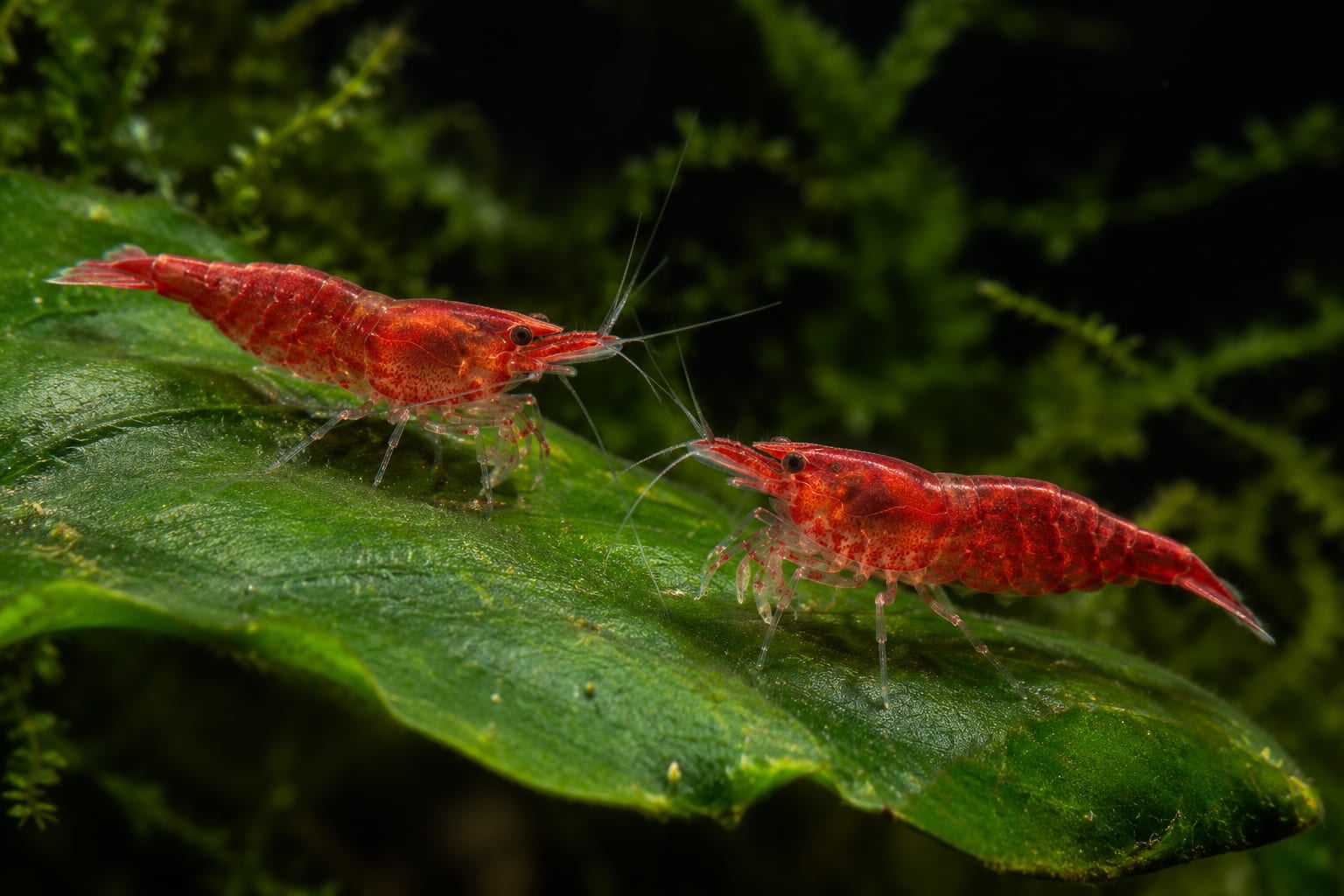
For a 20 to 30 litre nano aquarium, the best shrimp to start with is Neocaridina davidi, for example the "Red Cherry" variety. It accepts conditioned tap water in most areas, tolerates small variations, and breeds without any help. The Amano shrimp, often recommended against algae, grows bigger and does better from 30 litres upwards. "Crystal Red" type Caridina are stunning, but they need prepared water: keep them for a second tank. Here's how to choose with confidence.
Three questions to ask before you choose
What volume, really?
Count the actual water volume, not the one on the label: once the substrate, rocks and décor are in, a tank sold as 30 litres often holds around 25. The smaller the volume, the faster temperature and water quality swing. And shrimp cope poorly with sudden changes, far more so than with a value that's simply a little off the ideal.
What's your tap water like?
Water hardness, measured as GH, plays a direct role in shrimp moulting. Measure it before choosing a species, using test strips or a drop test, or check your local water authority's quality report. Moderately hard water suits Neocaridina; very soft, acidic water is needed for Caridina.
Do you also want fish?
Most fish, even small ones, eat some of the young shrimp. If you want a colony to build up, set up a dedicated tank. If the shrimp are just an addition to a peaceful fish tank, favour adult animals and very dense planting.
Neocaridina: the shrimp for a first nano tank
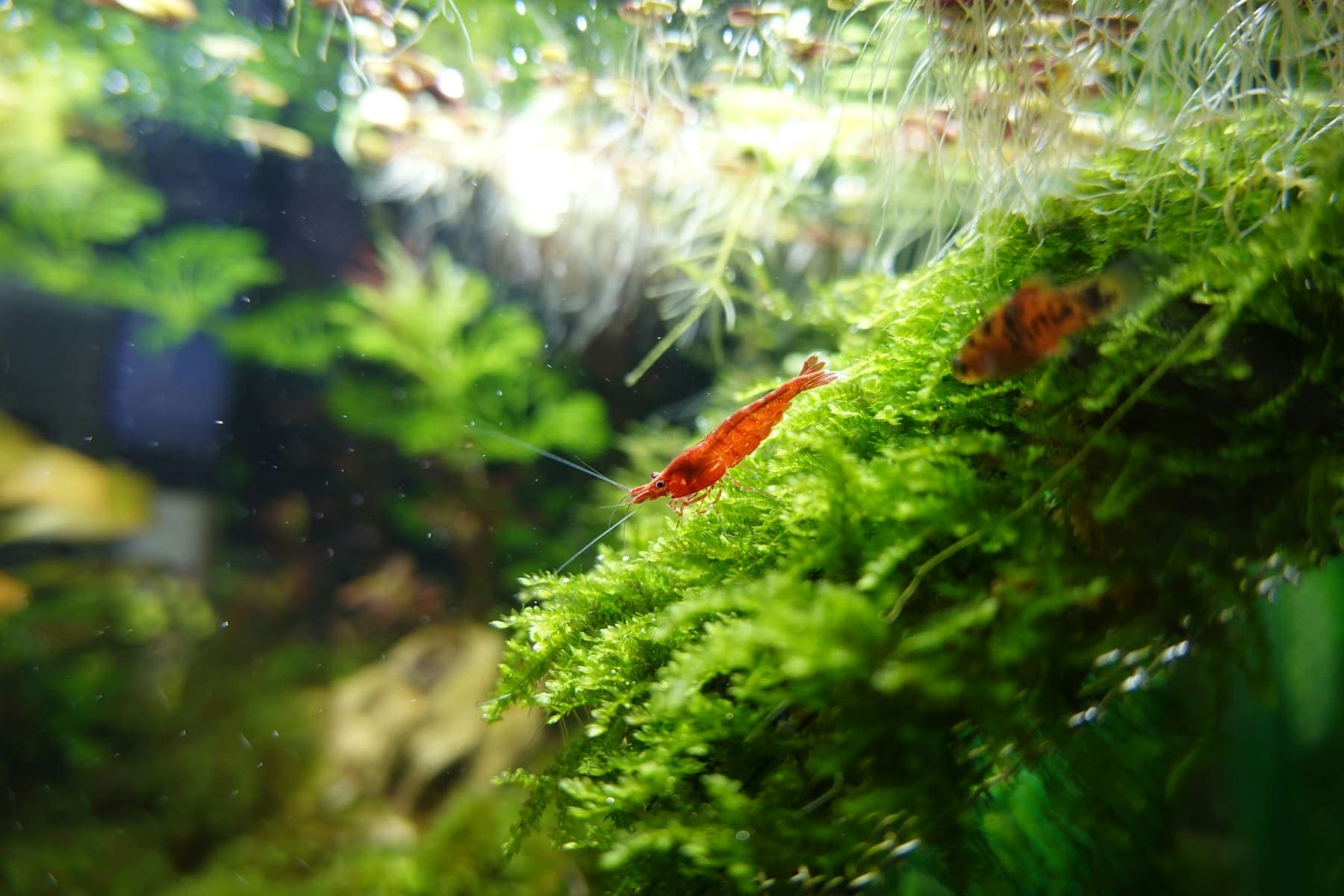
Neocaridina davidi measures on average 2 cm for males and 2.5 cm for females, rarely more. It spends its days grazing on biofilm, that thin film of micro-organisms covering plants and rocks, and cleaning up leftover food. Its lifespan is estimated at just over a year, and it breeds directly in fresh water: the young hatch already fully formed, with no larval stage. Our guide on breeding Red Cherry shrimp sets out the steps.
The conditions it needs
- a stable temperature of 21 to 27 °C;
- a pH of 6 to 7.5;
- moderately hard water, without excess;
- water free of ammonia and nitrites, so a tank that has completed its nitrogen cycle.
The colour varieties
"Red Cherry" for red, "Blue Dream" or "Blue Velvet" for blue, "Yellow" or "Sakura" depending on intensity: all these shrimp belong to the same species. They're colour selections, not different species. They therefore have the same needs, but they interbreed with each other.
How many should you introduce?
A group of ten shrimp is enough for a well-planted, mature 20 litre tank. It's a good starting point: enough for males and females to meet, few enough not to overload the water. If the conditions suit them, the colony will grow on its own within a few months. In a small volume, you even need to plan ahead: after a year, you may have to pass on some of the young to other fishkeepers.
Amano: a great cleaner, but not for a 20 litre tank
The Amano shrimp, Caridina multidentata, is prized for its appetite for filamentous algae. It measures 2 to 4 cm, sometimes a little more, and is active and hungry. It does real work in a maturing aquascape: in a test run by Tropica on a film of green algae and diatoms, the Amano ate roughly six times more than the Red Cherry shrimp.
Two points set it apart from Neocaridina, though:
- Its size: for a group of five, allow at least 30 litres; many fishkeepers recommend more, around 60 litres, for a more comfortable group.
- Its breeding: its larvae need brackish or marine water to develop. It therefore doesn't breed in a freshwater aquarium. There's no risk of overpopulation, but the population doesn't renew itself.
An Amano doesn't replace good balance. If the light is too strong or the tank too heavily fed, the algae will come back. And if algae run short, a hungry Amano may nibble tender plants: in that case, supplement with a suitable food.
Caridina "Crystal Red" and "Bee": for a second stage
"Crystal Red", "Black Bee" or "Taiwan Bee" type Caridina show very striking patterns. They're also more demanding:
- soft, lightly mineralised water, most often obtained from remineralised reverse-osmosis water;
- a slightly acidic pH, around 6 to 6.8, and carbonate hardness close to zero;
- a cooler temperature, around 20 to 24 °C;
- an active substrate that keeps the pH down.
This is entirely achievable, as long as you're willing to prepare your water and test it regularly. For a first tank, start with Neocaridina: you'll learn to read shrimp behaviour with a species that's more forgiving.
The comparison at a glance
- Neocaridina: 2 to 2.5 cm on average, conditioned tap water usually suitable, easy breeding. From 20 litres. The best choice for beginners.
- Amano: 2 to 4 cm, effective against filamentous algae, no breeding in fresh water. From 30 litres for five individuals, more comfortable beyond that.
- Caridina "Crystal Red" and related types: 2 to 3 cm, soft, acidic water to prepare, active substrate. For a fishkeeper already comfortable with water tests.
Can you mix several types of shrimp?
Several colours of Neocaridina: no. They interbreed, and after a few generations the offspring revert to a brownish or translucent shade, close to the wild form. Choose a single colour per tank.
Neocaridina and Amano: yes, in a volume large enough for the Amano. They live together without any trouble and don't interbreed.
Neocaridina and Caridina: not recommended. Their water needs are too different: one of the two species will inevitably end up living in conditions that don't suit it.
Can a shrimp nano aquarium do without a filter?
This is a common question. A very planted, mature, lightly stocked tank can work without a filter in experienced hands. For a first project, we advise against it: the filter houses much of the bacteria that break down waste, and it stabilises the water. A gentle filter, such as a sponge filter, also protects young shrimp, which won't risk being sucked in. Our comparison Which aquarium for freshwater shrimp? sets out the tank and filtration options.
Preparing for your shrimp's arrival
- Let the tank finish cycling. Allow four to six weeks of running, with tests confirming no nitrites over several days in a row. Our guide on the nitrogen cycle explains how to track it.
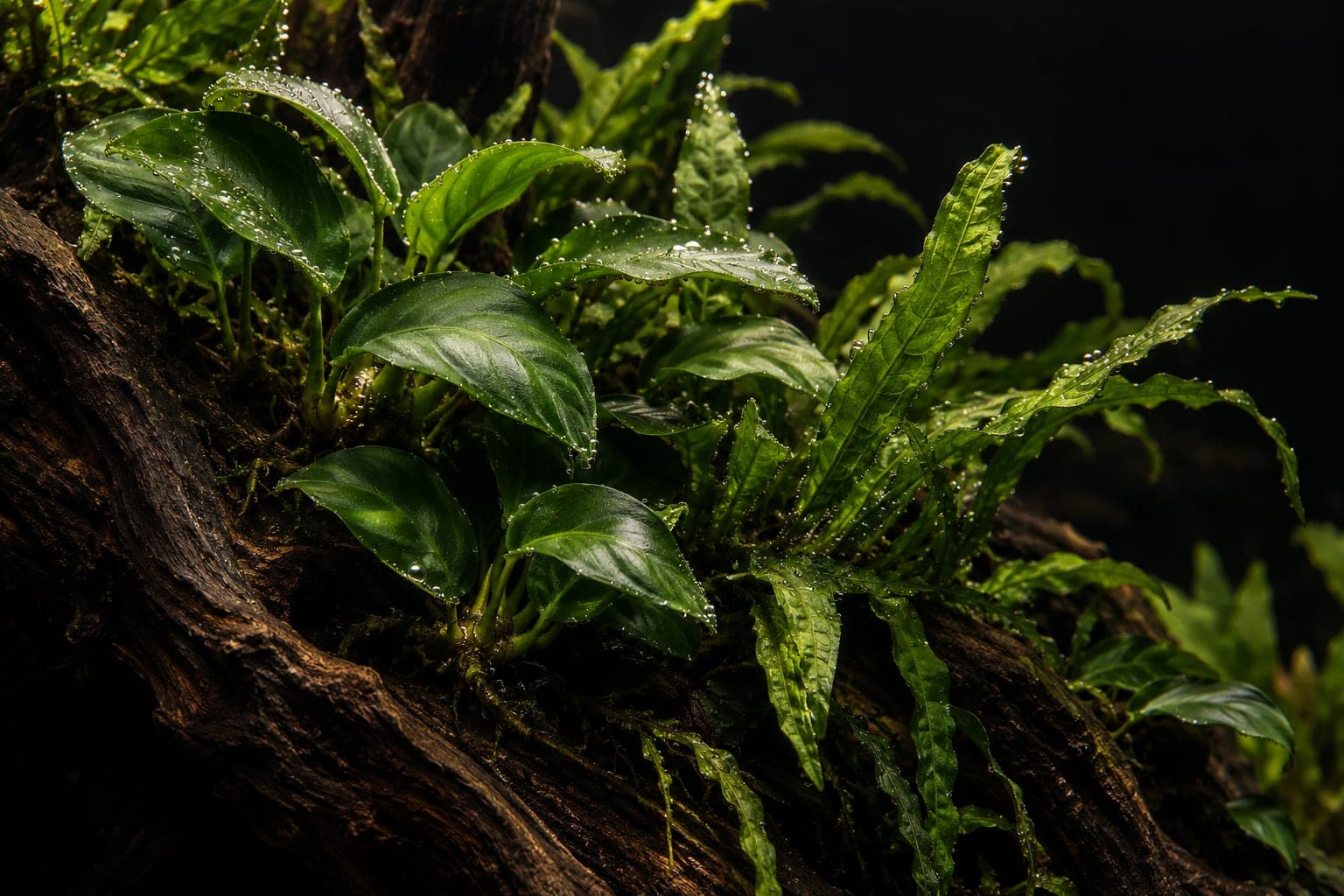
- Plant densely. Mosses, floating plants and small roots offer hiding places during moulting, a time when shrimp are vulnerable.
- Check your products. No treatment or fertiliser containing copper: even at a low dose, it's toxic to shrimp.
- Acclimatise slowly. Pour the shrimp with their water into a container, add the tank water drop by drop over one to two hours, until the volume has tripled, then transfer them with a net without pouring in the transport water.
- Feed sparingly. A small amount eaten within a few hours is enough. Leftovers foul the water in a small volume.
Never release shrimp into the wild
If your colony grows too large, never empty shrimp into a pond, a river or a ditch. Neocaridina can settle there, compete with local species and carry parasites. This isn't theoretical: wild populations descended from aquariums are already breeding in Germany, Poland, Hungary and Réunion, often in warmed waters. Give away or swap your young shrimp with other fishkeepers or a club.
Our recommendation
For a 20 to 30 litre nano aquarium, start with ten Neocaridina of a single colour, in a cycled tank planted with mosses and easy plants. Add a few Amano if your actual volume exceeds 30 litres and filamentous algae appear. The project A shrimp nano tank brings together the kit and the steps, and the shrimp section presents the animals and suitable food.
Sources
- Cherry Shrimp (Neocaridina davidi), Ecological Risk Screening Summary — U.S. Fish and Wildlife Service
- Larval performance of three amphidromous shrimp species in the genus Caridina — Crustacean Research
- Test of algae eaters — Tropica
- Habitat selection and copper toxicity in the freshwater amphidromous shrimp Caridina multidentata — Journal of Crustacean Biology
- Crystal Red Shrimp — Shrimp Science
- Effects of temperature on the life history traits of the red cherry shrimp Neocaridina davidi — Scientific Reports
Frequently asked questions
Which is the easiest shrimp for a nano aquarium?
Neocaridina davidi, for example the "Red Cherry" variety. It lives well between 20 and 26 °C, accepts moderately hard water, often conditioned tap water, and breeds in fresh water. A cycled, planted 20 litre tank suits it.
Can you keep Amano shrimp in a 20 litre aquarium?
It isn't the best choice. The Amano reaches 4 cm or more and does better in a larger volume: allow at least 30 litres for five individuals. In a 20 litre tank, favour Neocaridina, which also graze on biofilm and soft algae.
How many Red Cherry shrimp in a 30 litre tank?
Start with ten to fifteen shrimp in a cycled, well-planted tank. The colony will grow on its own if the water suits it. It's better to start modestly and let the population settle than to overload a small volume from the outset.
Why are my coloured shrimp turning brown over the generations?
Probably because several colours of Neocaridina are living together in the tank. They interbreed, and the offspring revert to the brownish or translucent shade of the wild form. A single colour per aquarium keeps the original shade.