

Nano-aquarium for a betta: volume, heating and layout
What minimum volume, what temperature, what filter and what plants for a betta: the conditions actually recommended, far removed from the vase and the bowl.
In this guide
A betta (Betta splendens) can live in a nano-aquarium, provided it's a genuine aquarium: at least 20 litres for a single male, heated, filtered with a gentle current, and well planted. This is the minimum volume recommended by the OATA, the British ornamental aquatic trade association, and the ideal volume according to the Australian RSPCA, a major animal welfare charity. The vase, the bowl or the small bare tank, still often on sale, don't meet its needs. Here's how to set one up properly.
What does a betta actually need?
The betta is a tropical fish that measures around 7 cm as an adult. Its reputation as a fish that "makes do with little" is misleading. In an aquarium, it needs:
- warm, stable water, so a heater;
- clean water, so a filter and a cycled tank;
- a gentle current: its long fins make it a poor swimmer against strong flow;
- plants and hiding places, to rest and feel safe;
- access to the surface: it regularly comes up to breathe air, so an air gap must be left between the water and the lid.
What minimum volume, and why not a vase?
The recommendations
- The OATA recommends at least 20 litres for a single male, and at least 60 litres for a group of females.
- The Australian RSPCA advises ideally 20 litres or more, with 10 litres as an absolute minimum. It notes that small tanks and bowls don't allow its physical and mental needs to be met.
Our advice: at least 20 litres of actual water volume, 30 litres for extra comfort. A slightly larger volume keeps temperature and water quality more stable, and forgives the odd oversight more readily. Remember to subtract the volume taken up by substrate and décor: a tank sold as 30 litres often holds less.
What the research shows
A study published in 2024 in the journal Animal Welfare compared the behaviour of bettas housed in a 1.5-litre bowl, in 3.3- and 5.6-litre tanks, and in a 19.3-litre tank, either furnished or bare. In the large, furnished tank, the fish were noticeably more active and showed fewer abnormal behaviours, such as staying motionless in open water or swimming in loops. In the same 19.3-litre tank left bare, these abnormal behaviours reappeared. Volume alone isn't enough, then: furnishing matters just as much.
Why the vase is a no-go
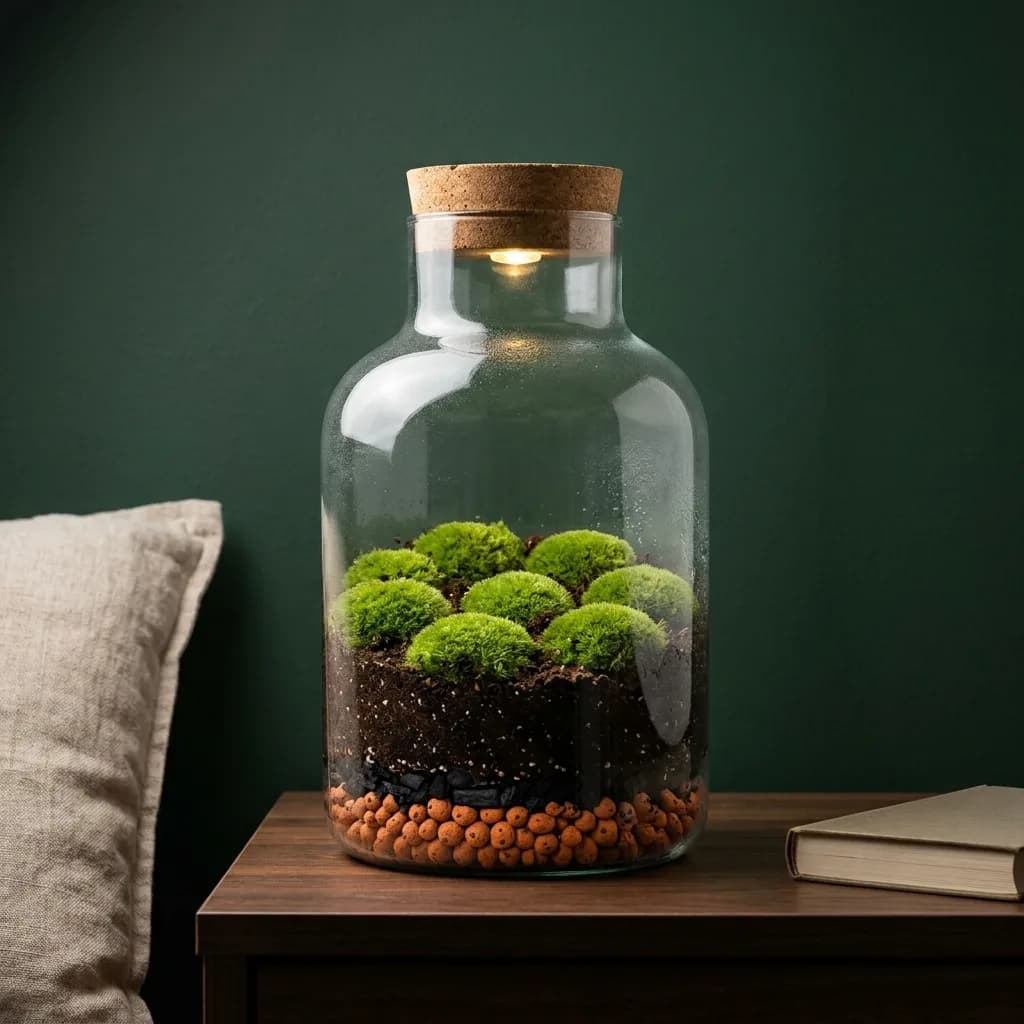
A vase or bowl of a few litres stacks up every problem at once: no way to properly fit a heater and filter, a temperature that follows the room's, waste that builds up within days, and no room to swim or hide. Even with frequent water changes, the fish fares badly in it.
Heating and filtration: how to set them up
Heating
A submersible heater is essential. The Australian RSPCA points out that it's the only way to maintain a constant temperature, and recommends keeping it between 24 and 26 °C. Most homes are cooler than that for a good part of the year. Choose a model suited to the tank's volume and check the temperature with an independent thermometer.
Filtration
A filter is equally essential: it houses the bacteria that break down waste. But a filter that's too powerful will wear the betta out. Choose an adjustable-flow model and, if the current is still too strong:
- point the outflow towards a pane of glass or the décor;
- place a plant or root in front of the outflow to break up the jet;
- reduce the flow to the minimum that still keeps the water moving.
As with any fish, let the tank finish its nitrogen cycle before introducing the betta.
The lid
A lid stops the fish jumping out of the tank. Leave an air gap between the surface and the lid: the betta comes up to breathe there.
What plants and décor?
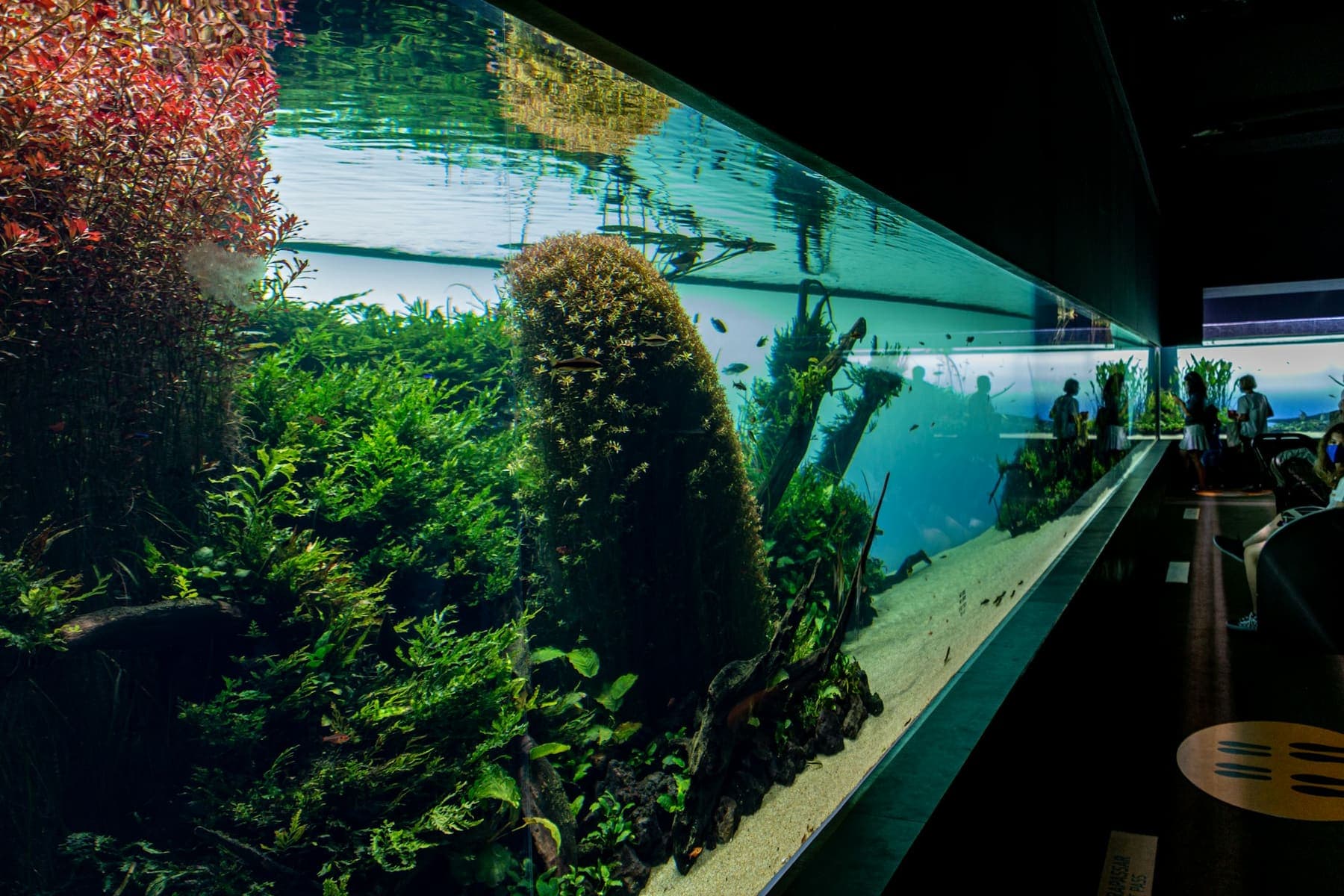
Live plants play a double role: they improve water quality and provide hiding and resting spots. In the study cited above, the fish spent much of their resting time perched on the décor and the plants.
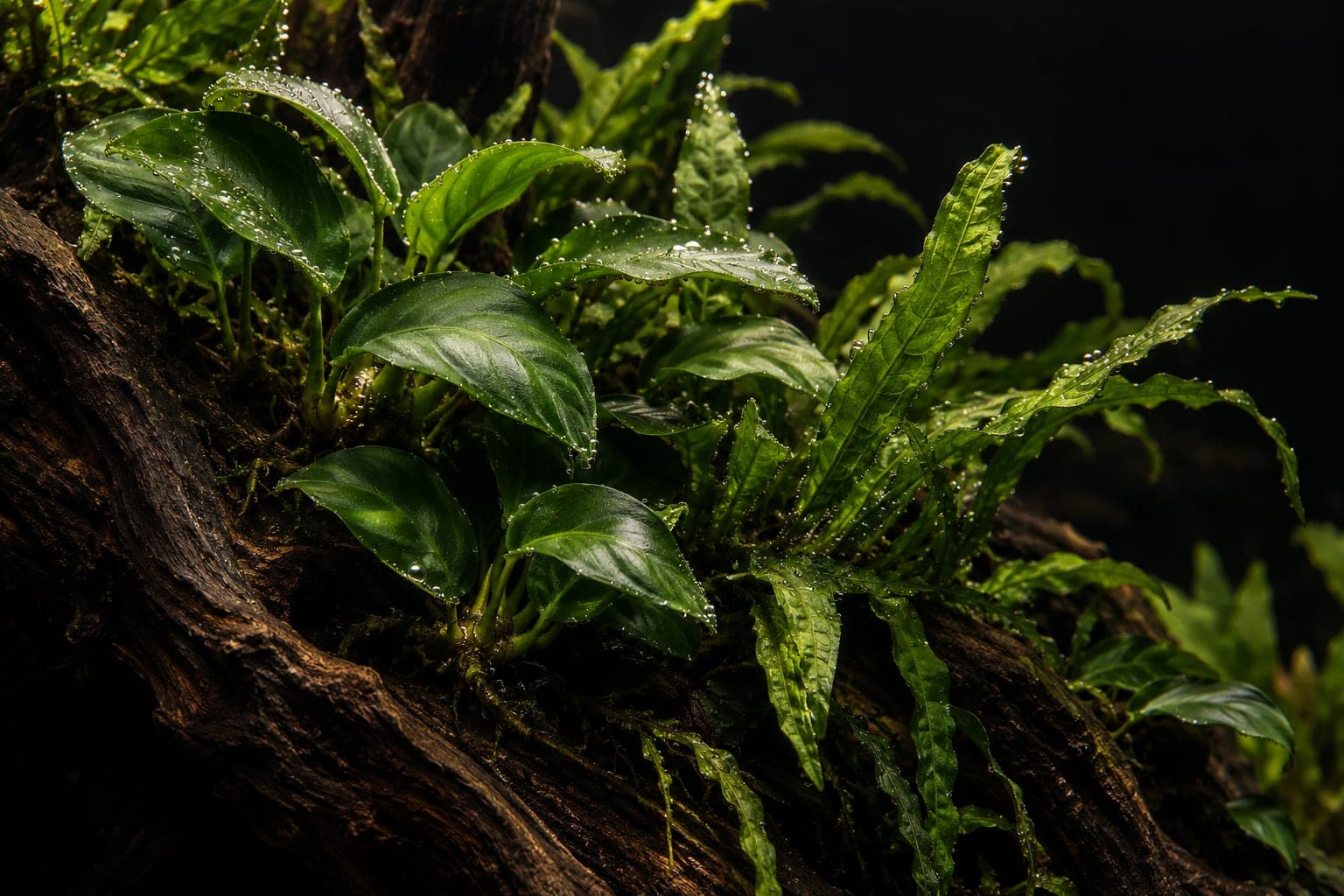
- Broad-leaved plants such as anubias, which it likes to perch on near the surface.
- A few floating plants, which filter the light. Leave plenty of the surface clear so it can breathe.
- A root or a cave, for shelter.
- No sharp or rough décor: its fins tear easily.
Easy-going plants that grow without CO₂ suit this kind of tank perfectly: our guide Easy aquarium plants without CO₂ presents a selection, and Setting up a 30-litre aquascape helps with composing the décor.
Who can it live with?
- Two males: never. They will fight until one is badly injured.
- Female bettas: the OATA recommends groups of at least four, in a tank of at least 60 litres. This isn't a nano-aquarium project.
- Other fish: the Australian RSPCA cites a few calm species, such as corydoras or neons, and only in a tank of at least 40 litres. In a nano tank, the betta should live alone.
- Snails: the simplest option for adding activity to the tank without risk.
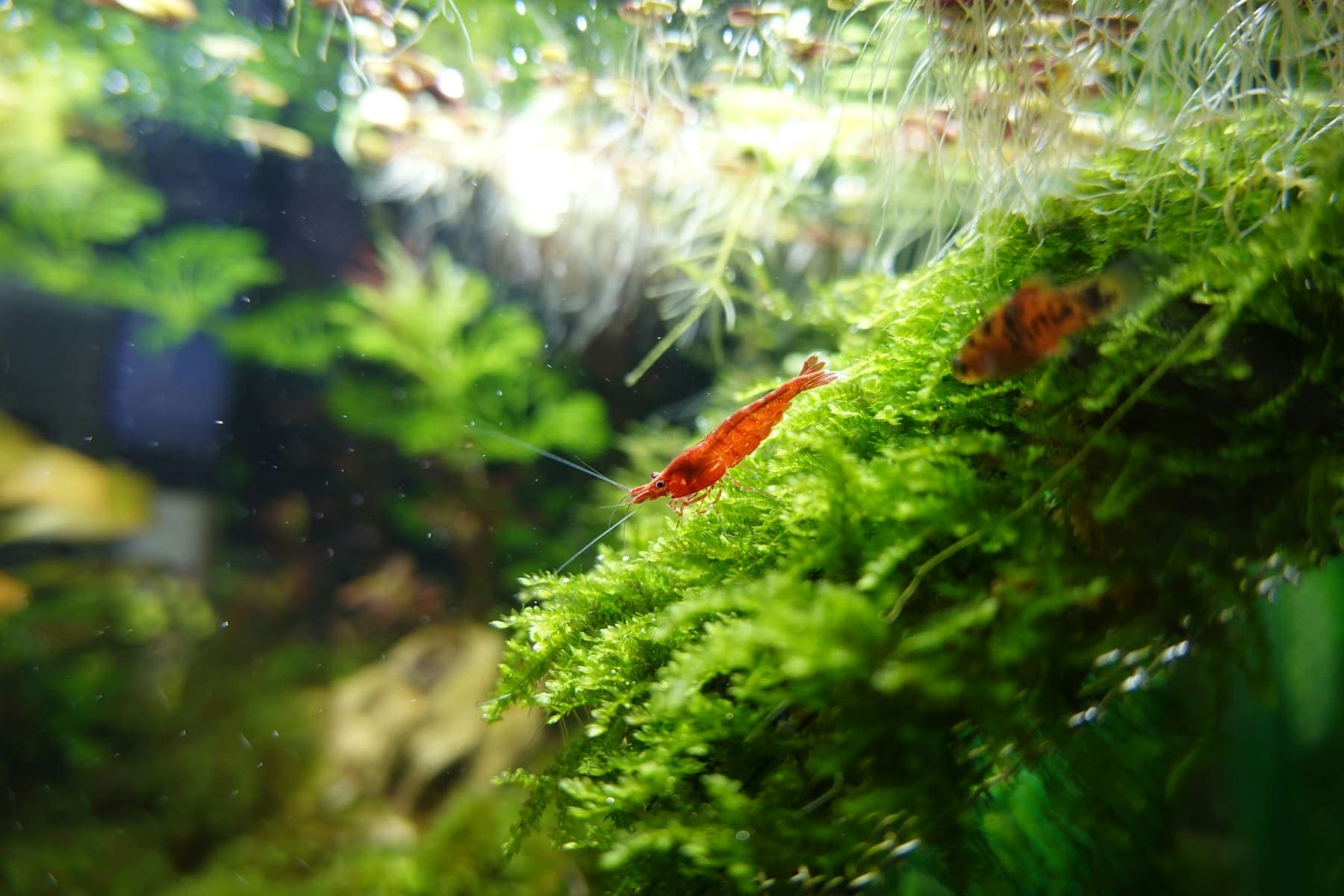
- Shrimp: some bettas ignore them, others hunt them, and almost all eat the young. A betta tank isn't a shrimp-breeding tank.
How to feed it without polluting the water
The Australian RSPCA recommends one meal a day, in a quantity eaten within two minutes. In a small volume, uneaten food breaks down quickly and degrades the water: remove leftovers, and when in doubt, feed less rather than more.
Common mistakes
- A vase or bowl instead of an aquarium.
- No heater, relying on room temperature.
- A filter that's too powerful, which exhausts it.
- A bare tank, with no plants or hiding places.
- Introducing the fish on the day the tank is filled, before the cycle is finished.
- Two males, or a male with lively fish that nip at its fins.
- Too much food.
Equipment for a suitable nano-aquarium
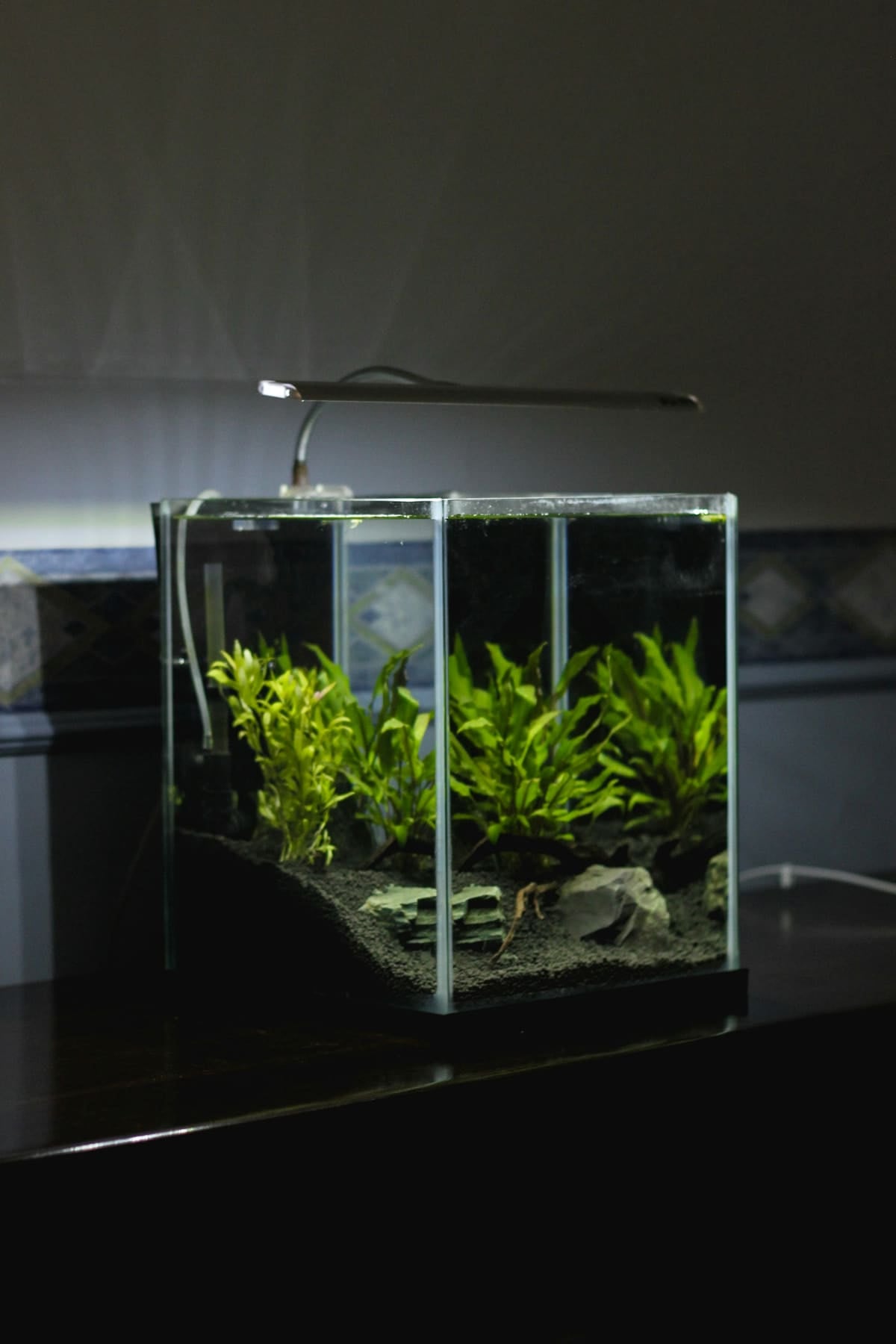
For a betta, start with a tank of at least 20 real litres. The Dennerle Nano Cube Opti-White, at 30 litres, offers this more comfortable volume. Add easy broad-leaved plants and a few floating plants, leaving some surface free.
The tank alone isn't enough: also plan for a submersible heater, a thermometer and an adjustable-flow filter. Find our aquariums in the nano-aquariums section.
Sources
- How to look after Siamese fighting fish (Bettas) — OATA
- How should I care for my Siamese fighting fish? — RSPCA Australia
- Life beyond a jar: effects of tank size and furnishings on the behaviour and welfare of Siamese fighting fish — Animal Welfare
- Your Betta Needs More Than a Bowl — University of Illinois, College of Veterinary Medicine
Frequently asked questions
Can a betta live without heating in a flat?
No. Even in a heated room, water temperature fluctuates and often drops below what suits it. A submersible heater is the only way to keep a stable temperature.
Is a 10-litre aquarium enough for a betta?
That's an absolute minimum according to the Australian RSPCA, not a recommendation. The OATA advises at least 20 litres for a single male, and that's what we recommend too.
Why does my betta build a bubble nest?
The male builds a bubble nest at the surface, even on his own. It's natural breeding behaviour, and doesn't indicate illness or any particular problem.
Can you put a betta in a Red Cherry shrimp aquarium?
It's risky for the shrimp. Depending on its temperament, a betta may hunt them, and it happily eats the young. If you're set on a shrimp colony, keep it in a separate tank.