

Feeding a hedgehog: what to give, and what never to
Under normal conditions a hedgehog does not need feeding: water is the only help that really counts. The banned foods, the rare situations that justify a top-up, and how to do it without harm.
In this guide
The short answer often comes as a surprise: as a rule, a garden hedgehog should not be fed. The LPO points out that the food people offer is often unsuitable, and that gathering these solitary animals around a bowl helps diseases and parasites spread. The help that really counts lies elsewhere: a dish of fresh water changed every day, a garden rich in insects and slugs, and no slug pellets. Milk, for its part, is to be ruled out entirely.
What a hedgehog eats on its own
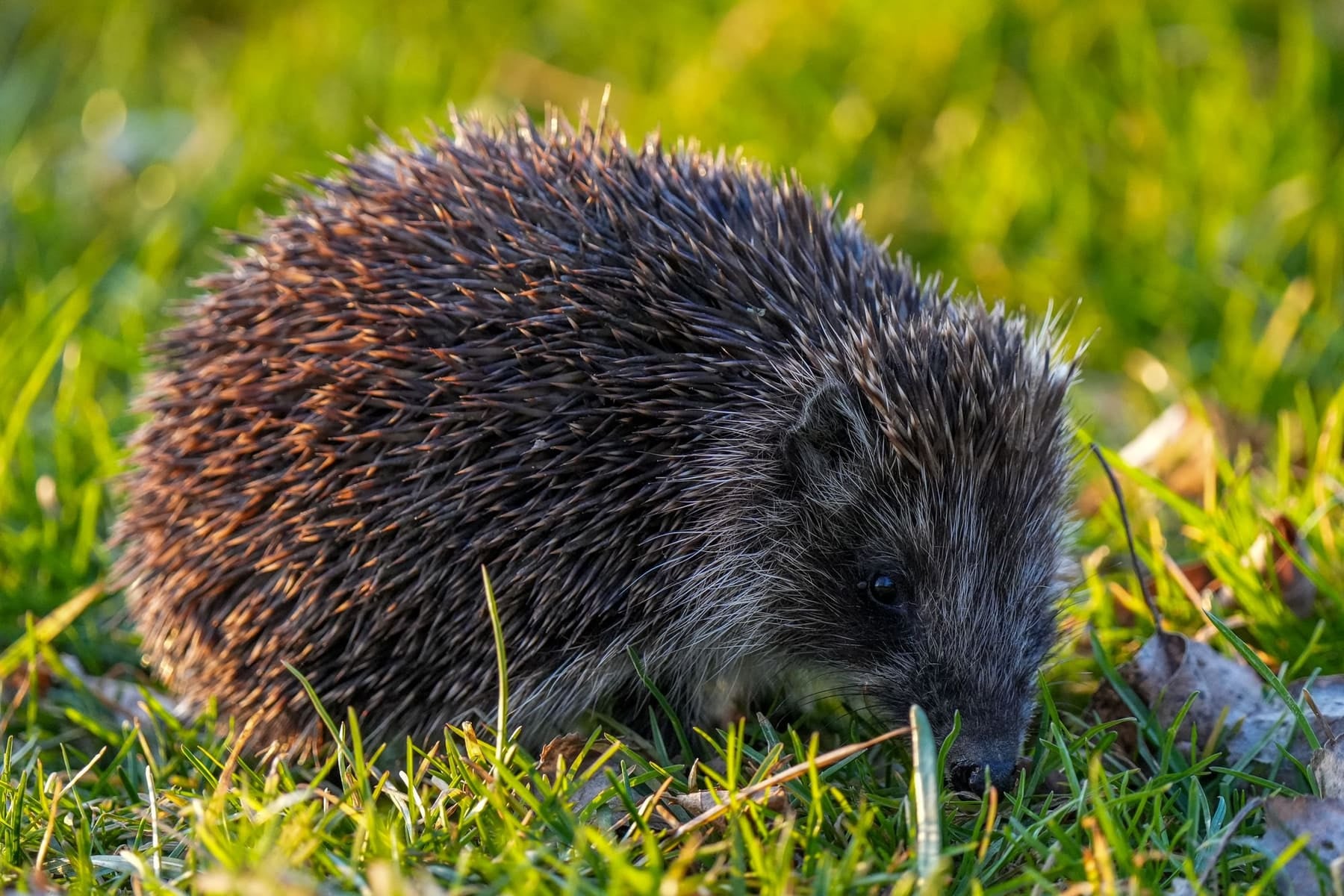
The European hedgehog (Erinaceus europaeus) is a nocturnal insectivore. Its natural menu is made up of beetles and their larvae, earwigs, caterpillars, earthworms, slugs, snails, millipedes and, now and then, eggs or carrion. It covers a good distance every night to find that food: about a mile, that is 1.6 km, according to the British charity Hedgehog Street.
That distance explains why a feeding bowl is a poor answer to a real problem. A hedgehog is not fed by one garden: it is fed by a network of gardens it moves through. Making fences permeable, with openings of around 13 × 13 cm at ground level, adds far more to its larder than any plate of food. The guide welcoming hedgehogs into the garden sets out these measures in detail.
Its legal status is worth repeating too: the hedgehog is a protected species in France, under the order of 23 April 2007. Catching it, killing it or deliberately disturbing it is prohibited, as is moving or keeping an animal taken from the wild. Welcoming it is not the same as taming it or keeping it.
Why regular feeding is a problem
Four reasons, all documented by the conservation charities.
The food offered is poorly suited. Shop-bought cat biscuits are often too high in salt and fat for an insectivore, and an unbalanced diet causes bone and digestive disorders, especially in growing youngsters.
The bowl brings solitary animals together. A feeding point concentrates several individuals in the same place, night after night, which helps parasites and diseases pass between them.
It creates dependence and distorts their bearings. An animal that finds easy food every evening stops foraging, shrinks its territory and is left helpless the day the bowl disappears, while you are away on holiday for instance.
It attracts other diners. Rats, stray cats, stone martens and foxes come too, with the neighbourly disputes and health risks that go with them.
Water: the only help that really counts
In dry spells, water is often scarcer than food, particularly during hot summers and dry autumns, when hardened ground puts worms out of reach.
A dish works if it meets three conditions:
- Shallow and with sloping sides, so that a young hedgehog or an insect that falls in can get out again without exhausting itself.
- Heavy and stable, set directly on the ground, in a quiet corner and away from a dense bush where a cat could lie in wait.
- Changed every day, and scrubbed with clean water once a week. Standing water passes on disease and serves as a nursery for mosquitoes.
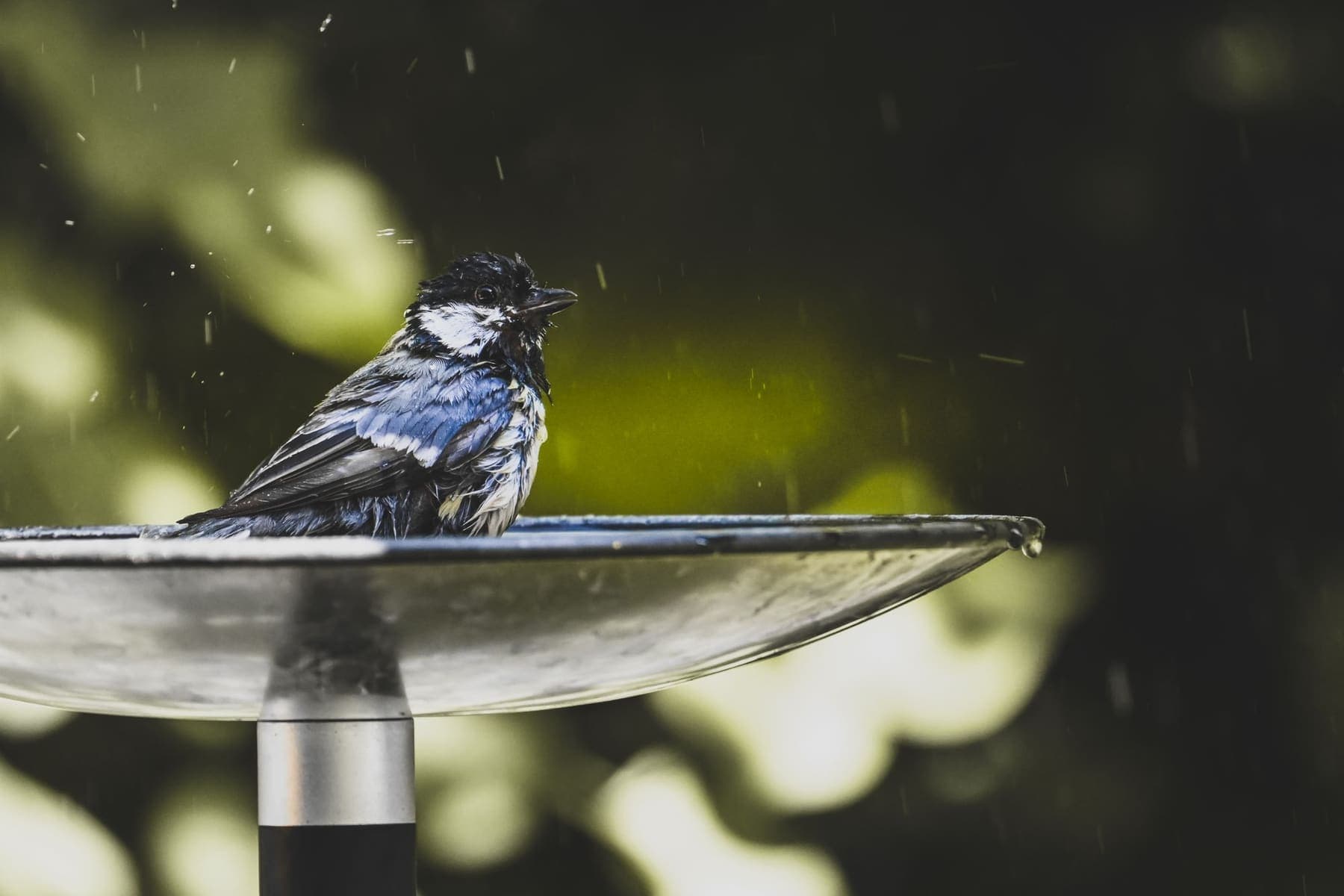
This stoneware dish, 35 cm across, 4 cm deep at most and with a sloping rim, meets those three points; a few pebbles set in the middle let bees and small birds drink without drowning. It benefits all the smaller wildlife, not just the hedgehog. Its product page gives a minimum rhythm of two days between water changes: for a water point a hedgehog visits at night, changing it daily remains the rule.
A larger body of water, a pond or a swimming pool, calls for one precaution instead: a rough plank, a piece of wire mesh or a few stones forming a ramp out. A hedgehog can swim, but it cannot climb a smooth wall and ends up drowning.
What you never give
| Food | Why |
|---|---|
| Milk, cream, cheese | The hedgehog digests lactose very badly: diarrhoea, dehydration, sometimes a fatal outcome. This is the most widespread and the most serious mistake |
| Bread, rusks, sweetened cereals | No nutritional value for an insectivore, and digestive upsets |
| Leftovers, cold meats, salty dishes | Too much salt and fat for a small mammal |
| Mealworms, peanuts, bird seed | Imbalance between calcium and phosphorus: eaten in quantity, they weaken the skeleton |
| Fish-based biscuits or wet food | Poorly tolerated and strong-smelling, they attract cats and rats |
| Fruit, vegetables, sugary treats | No place at all in an insectivore's diet, and digestive fermentation |
| Slug pellets and pesticides | They poison the hedgehog directly or through its prey, and remove its food |
To that list add something obvious that is often forgotten: never leave food permanently available, or a bowl forgotten in the sun.
The rare cases where a top-up is justified
Three situations, and three only.
- A very dry autumn, when hardened ground deprives the animal of worms and larvae just before hibernation.
- A youngster from a late litter, visibly light as the cold sets in, which still has to put on weight before hibernating.
- Instructions given by a wildlife rescue centre, after a phone call.
When in doubt, the right move is to ring a wildlife rescue centre first. They alone can say whether an animal genuinely needs help and what to give it.
If a top-up is justified, it goes like this: fish-free cat biscuits, in small quantity, moistened if need be, put out at the start of the night in a sheltered corner, away from cats. The dish of water always goes with the food. The next morning, anything left is taken away and the container washed. You stop as soon as the situation that justified the top-up has passed.
To watch without disturbing, a camera beats a torch: a night-vision trail camera shows who actually comes, and the settings that work save you nights of empty video.
Feeding without a bowl: making the garden rich in prey
This is the real subject, and it costs nothing.
- Drop the pesticides and the slug pellets. Slugs and snails are part of the menu; removing them amounts to emptying the larder, and pellets poison the predator on top of that.
- Leave a pile of dead leaves and a log pile in a quiet corner: invertebrates multiply there and the hedgehog comes to hunt.
- Mow less often and higher, and keep a strip of long grass along a hedge.
- Compost, preferably in a heap or a bin open at the bottom: a compost heap teems with worms and larvae.
- Plant a hedge of native species rather than a row of conifers.
A quiet shelter completes the set, for daytime, for summer litters and for hibernation from late autumn to early spring.
It goes in the quietest corner of the garden, under a hedge or against a log pile, lined with a handful of dry dead leaves. Once it is occupied, it stays shut: a hedgehog woken in the middle of hibernation burns through precious reserves.
One signal is worth knowing: a hedgehog active in broad daylight is almost always in trouble, as is an animal that is very thin, injured, or lying still out in the open. In that case, contact a rescue centre straight away, keep the animal quiet in a cardboard box using thick gloves, and give it neither milk nor food while you wait for instructions. To find out whether a hedgehog visits the garden without having to go looking, the guide signs a hedgehog is about explains what to look for, and the shelters and gateways are gathered in the Hedgehogs section.
Sources
Frequently asked questions
Can you give a hedgehog milk?
No, never, in any form. The hedgehog digests lactose very badly and milk causes diarrhoea that can prove fatal, especially in young animals. Cream and cheese are ruled out for the same reason. Fresh water is the only thing that should be offered.
Should hedgehogs be fed in winter?
No. The hedgehog hibernates from late autumn to early spring and does not feed during that period. Putting food out risks waking an animal that would then burn through its reserves for nothing. The help happens earlier, in autumn, by keeping the garden rich in prey.
Which cat biscuits should a hedgehog get, and how many?
Only in the rare situations that justify it, and after asking a wildlife rescue centre for advice: fish-free cat biscuits, in small quantity, put out at the start of the night in a sheltered corner. Whatever is left is taken away the next morning and the container washed.
Are mealworms good for hedgehogs?
No, in spite of their reputation. Eaten in quantity, they upset the balance between calcium and phosphorus and weaken the skeleton, particularly in young animals. Peanuts and bird seed cause the same problem and are not suitable for an insectivore.