

Algae in a nano-aquarium: identifying and controlling it
New-tank brown algae, green dust, filaments, black tufts or green water: identify the algae, find its cause and restore balance in a small tank.
In this guide
Algae in a nano-aquarium isn't a disease, but a signal: light, nutrients and plants aren't yet in balance. In a new tank, a brown film on the glass and rocks is almost inevitable during the first few weeks, and usually disappears on its own. After that, three settings are enough in most cases: a lighting period of 6 to 8 hours, measured feeding and regular water changes. Start by identifying the algae: each type points to a different cause.
Why a small tank is more sensitive
In 20 or 30 litres, overfeeding, an extra hour of light or an afternoon ray of sunshine has a much faster effect than in a large aquarium. Nutrients build up quickly, and algae, which react faster than plants, are the first to benefit. The good news is that the opposite is also true: a change of setting shows results within a few days.
Identifying the algae to find the cause
A brown film that wipes off easily
These are diatoms. They form a brown, powdery or slightly slimy deposit on the glass, rocks and leaves. They appear in almost all new tanks, while the plants are adapting to their new conditions. They are often linked to the silicates released by new substrate and rocks.
What to do: wipe the glass with a soft aquarium-only sponge, siphon the deposits during water changes and be patient. As the tank matures and the plants settle in, diatoms recede, usually within a few weeks.
Green dust on the glass
These small dots or this light green film are common, even in a balanced tank. They often indicate slightly strong or slightly long lighting.
What to do: clean the glass every week, slightly reduce the intensity or duration of lighting, and check that the tank doesn't receive direct sunlight.
Green filaments clinging to the plants
Filamentous algae form thin, sometimes long threads that wrap around stems and mosses. They take advantage of excess light combined with available nutrients, often while the plants are still growing slowly.
What to do: remove them by hand or by winding the threads around a soft toothbrush, without any product. Reduce the lighting by a few hours, add fast-growing plants and, if the volume allows, a few Amano shrimp.
Black or grey tufts, hard to the touch
These are often called "beard" or brush algae. They settle on the edges of slow-growing leaves, roots and equipment. They're often linked to unstable water, substrate heavily loaded with waste, or CO₂ fluctuations.
What to do: cut off affected leaves, clean equipment outside the aquarium, siphon the substrate and keep a very regular water-change routine. This algae recedes slowly: allow several weeks.
Water turning green
Cloudy, green water, like a thin soup, is caused by microscopic algae in suspension. It often follows overfeeding, too fast a start, or exposure to sunlight.
What to do: eliminate any direct sunlight, reduce feeding, carry out regular water changes and shorten the lighting period. Some aquarists try a few days of complete darkness; this method can clear the water, but it doesn't correct the cause and isn't harmless for the plants.
A sticky, strong-smelling blue-green film
These aren't algae, but cyanobacteria. They form slippery mats that come away in sheets and give off a strong smell. They often appear in areas where water circulates poorly or on a dirty substrate.
What to do: siphon off the mats, clean the substrate in the affected areas, check that the filter is working properly and that water circulates throughout the tank. Reduce feeding. If the problem persists, seek advice before using any treatment, especially if you keep shrimp.
The settings that make the difference
Light: duration, intensity, sunlight
This is the most powerful lever. In a tank of easy plants without CO₂, a duration of 6 to 8 hours a day is enough. Start at 6 hours even during the first few weeks, then extend gradually. High intensity without CO₂ or fertilisation almost always favours algae: on an adjustable light bar, start at a moderate intensity and only increase it in small steps, watching the plants. Use a timer, so the duration stays the same every day. Our guide to lighting a planted aquarium covers these settings in detail.
Direct sunlight, even one hour a day, is enough to unbalance a nano-aquarium. Move the tank or shade the window during the hours concerned.
Feeding
In a small volume, uneaten food quickly turns into nutrients for algae. Give only what's eaten within a few minutes for fish, a few hours for shrimp, and remove leftovers.
Water changes
Replace 20 to 30% of the water each week, with treated water at a similar temperature. This simple gesture exports excess nutrients. Rinse filter media in water taken from the aquarium, never under the tap, to preserve the useful bacteria.
The plants
Plants are algae's direct competitors. A sparsely planted tank leaves room to spare. Add fast-growing or floating plants: they consume nutrients and filter the light. Remove some of them once they cover the whole surface.
Living allies, with caution
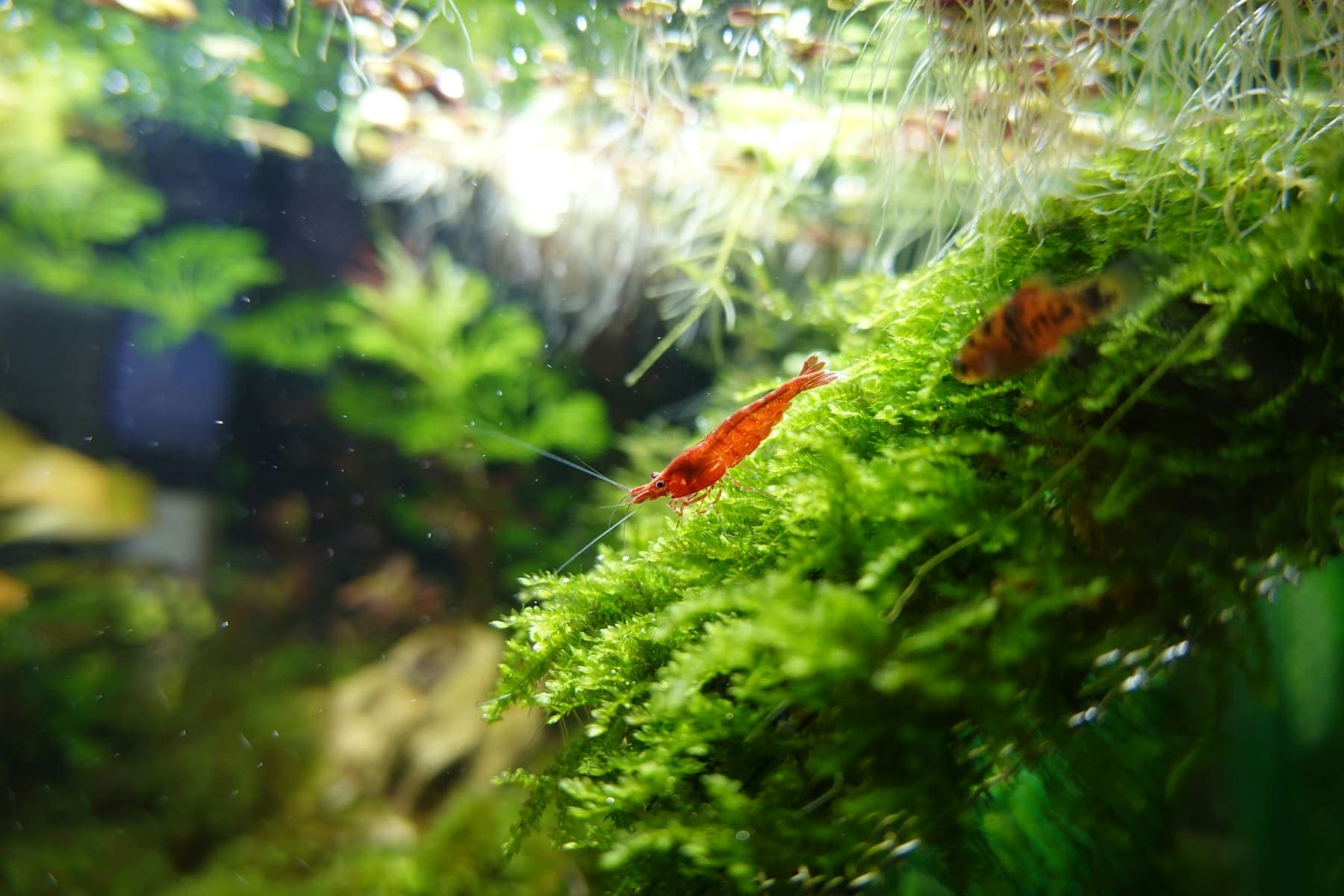
Neocaridina shrimp graze on biofilm and soft algae; Amano shrimp tackle filamentous algae, from 30 litres upwards for a group of five. In a Tropica test on a film of green algae and diatoms, the Amano proved noticeably more effective than the Red Cherry. Tropica also notes that each algae-eating species prefers certain algae: varying the species reduces the risk of one type of algae taking over. They help, but they don't fix a lighting or feeding imbalance. Above all, they should never be introduced to "clean" a tank that hasn't finished its nitrogen cycle: ammonia and nitrites would be fatal to them. Our comparison Which shrimp for a nano-aquarium? will help you choose.
A two-week action plan
- Day 1: identify the algae, remove as much as possible by hand, siphon the substrate and change 30% of the water.
- Day 1: set the lighting to 6 hours a day and reduce the intensity if it's adjustable.
- Day 2: test the water, especially nitrites and nitrates. High nitrates confirm excess nutrients.
- Days 3 to 7: feed less, observe every day, don't change anything else.
- Day 8: another 20 to 30% water change, clean the glass, trim affected leaves.
- Day 14: take stock. If the algae is receding, keep the settings; if it's stagnant, add plants or shorten the lighting a little further.
Change only one parameter at a time when possible: otherwise you won't know which one worked.
Common mistakes
- Using an algae treatment at the first sign: it treats the symptom, and some products are toxic to shrimp. Always read the label.
- Extending lighting to "help the plants": it's usually the algae that benefits most.
- Cleaning everything at once: a big clean of the filter and substrate on the same day destabilises the useful bacteria.
- Placing the tank near a sunny window: no setting compensates for direct sunlight.
- Worrying about diatoms in a new tank: they're part of the start-up process.
Going further
Our guide Getting started with aquascaping covers setting up a planted tank, and the nitrogen cycle explains the maturing process that precedes balance. The project My first aquascape brings together the equipment and initial settings, and the Equipment & maintenance section covers lighting, filtration and testing.
Sources
Frequently asked questions
Is brown algae in a new aquarium dangerous?
No. These diatoms appear in almost all new tanks, often linked to silicates from new substrate and rocks. Wipe the glass, siphon the deposits and be patient: they usually recede within a few weeks, as the plants settle in.
How many hours should you light a nano-aquarium to avoid algae?
For easy plants without CO₂, 6 to 8 hours a day is enough. Start at 6 hours during the first few weeks, with moderate intensity, then extend gradually. Set a timer to keep the duration the same every day and avoid any direct sunlight.
Are shrimp enough to get rid of algae?
No. Neocaridina and Amano shrimp eat some of the soft or filamentous algae, but they don't fix the underlying cause, often excess light or food. They should only be introduced into a tank that has finished its nitrogen cycle.