

Which substrate for a planted aquarium or aquascape?
Nutrient-rich soil, sand or gravel, active substrate for shrimp: how to choose the substrate for your planted aquarium, what depth to plan for, and how to refill it without clouding the water.
In this guide
For a planted aquarium or an aquascape, the simplest choice is a nutrient-rich soil, often called "aqua soil". It feeds the roots, is easy to plant into and works on its own, with no other layer. An inert substrate, sand or gravel, remains a good option if you want water that the substrate doesn't alter: you then need to supply nutrients through a nutrient layer underneath or through fertilisers. For Caridina shrimp, an active substrate, which acidifies the water, is the standard choice. Here's how to decide.
What's the difference between a nutrient-rich substrate and an inert substrate?
Nutrient-rich soil, or "aqua soil"
This is a granular soil, enriched with nutrients. Tropica presents its Aquarium Soil as a complete substrate that's used on its own, with no other base layer. Its 2 to 3 mm grains make planting easy, and its mineral structure of volcanic origin encourages rooting.
Two effects are worth knowing about:
- It changes the water. Tropica states that its soil lowers the pH and has a slight effect on water chemistry. This suits most plants, but not species that need hard, alkaline water.
- It releases nutrients early on. That's why the manufacturer recommends changing 25 to 50% of the water at least twice a week for the first four weeks.
Its reserves aren't unlimited. How long they last depends on the product and the number of plants: a heavily planted tank uses them up faster. Once growth slows, a fertiliser takes over.
Inert substrate: sand and gravel
Sand and gravel don't change the water chemistry and don't break down. But they contain almost nothing to feed the plants. Two solutions exist:
- a nutrient layer under the gravel. Tropica, for example, suggests a 1 cm layer of its nutrient substrate, topped with gravel — allow at least 4 cm to hold the roots in place. This substrate doesn't change the KH or the pH;
- root fertiliser capsules, pushed in at the base of hungry plants, topped up if needed with a liquid fertiliser.
An inert substrate also has a practical advantage: it copes better with frequent replanting and with fish that dig around in the bottom.
And plants that don't need a substrate?
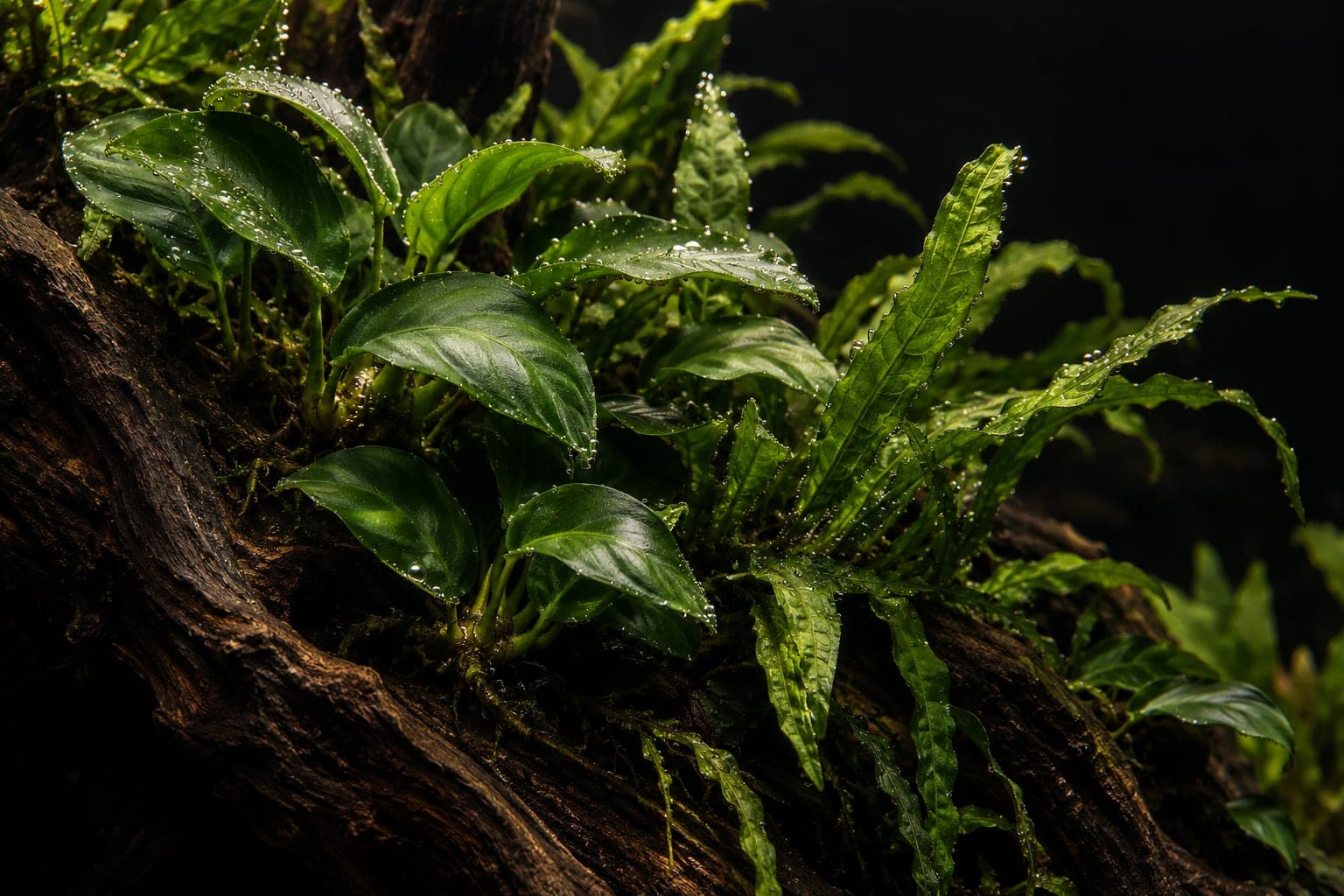
Anubias, aquatic ferns and mosses attach to rock or wood. They draw their nutrients from the water. A tank made up mostly of these plants can manage with an inert substrate and a light liquid fertiliser. Our selection of easy no-CO₂ aquarium plants features several of them.
Which substrate for an aquascape?
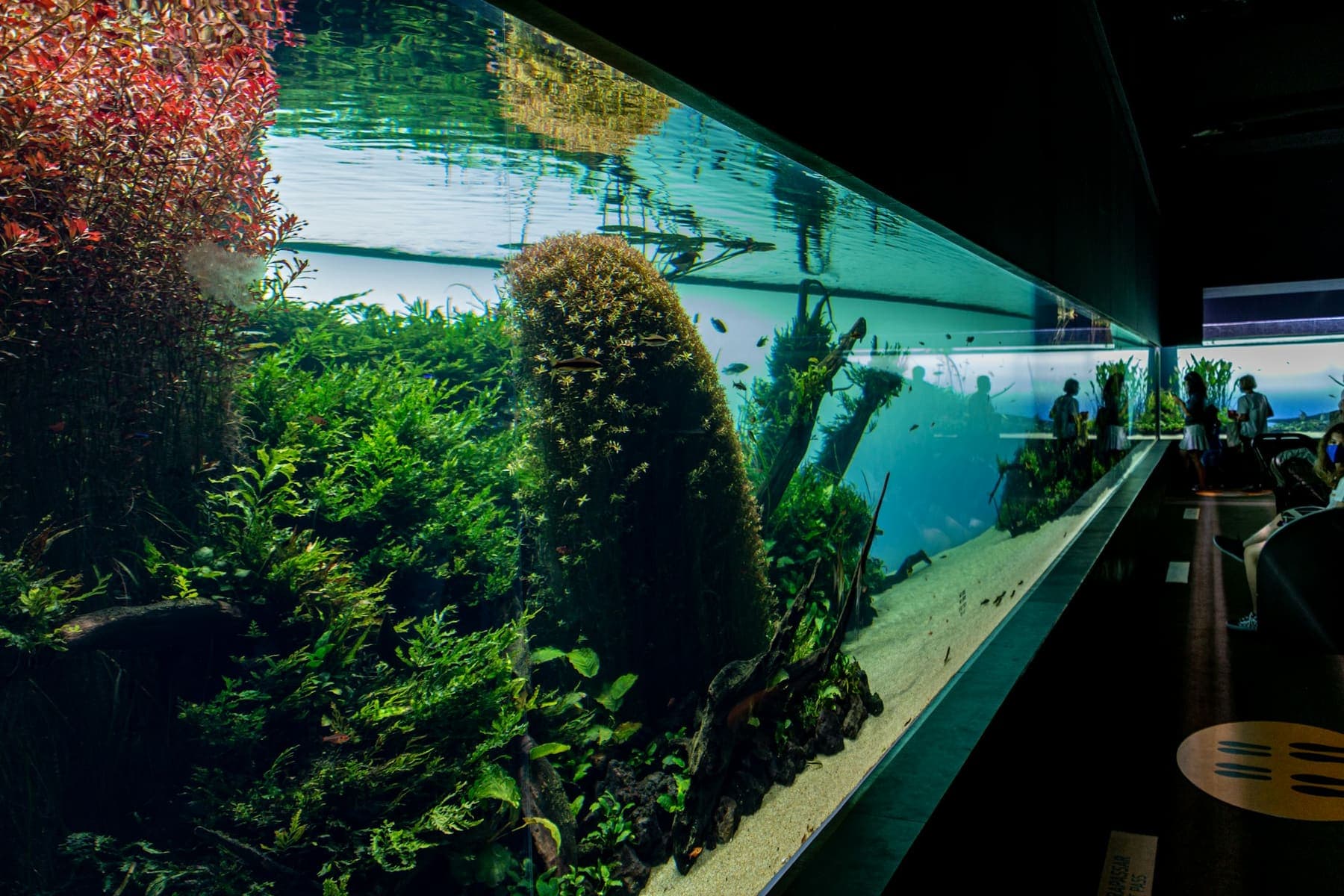
For most aquascapes, nutrient-rich soil is the best choice. It can be shaped into a slope, holds stem plants and carpeting plants in place, and gives plants a decisive head start in the first weeks, when they need to claim the ground before algae do.
Choose your grain size based on your foreground: fine grains hold small carpeting plants better, larger grains let water circulate through a thick layer. Colour matters too: a dark substrate makes the green of the plants and the colour of the shrimp stand out.
Light-coloured sand still works as decoration, for example to shape a path or a river in the foreground. Separate it from the nutrient soil with stones, or the two will mix together within a few weeks.
Which substrate for a shrimp aquarium?
It all depends on the species, and that's the question to settle first.
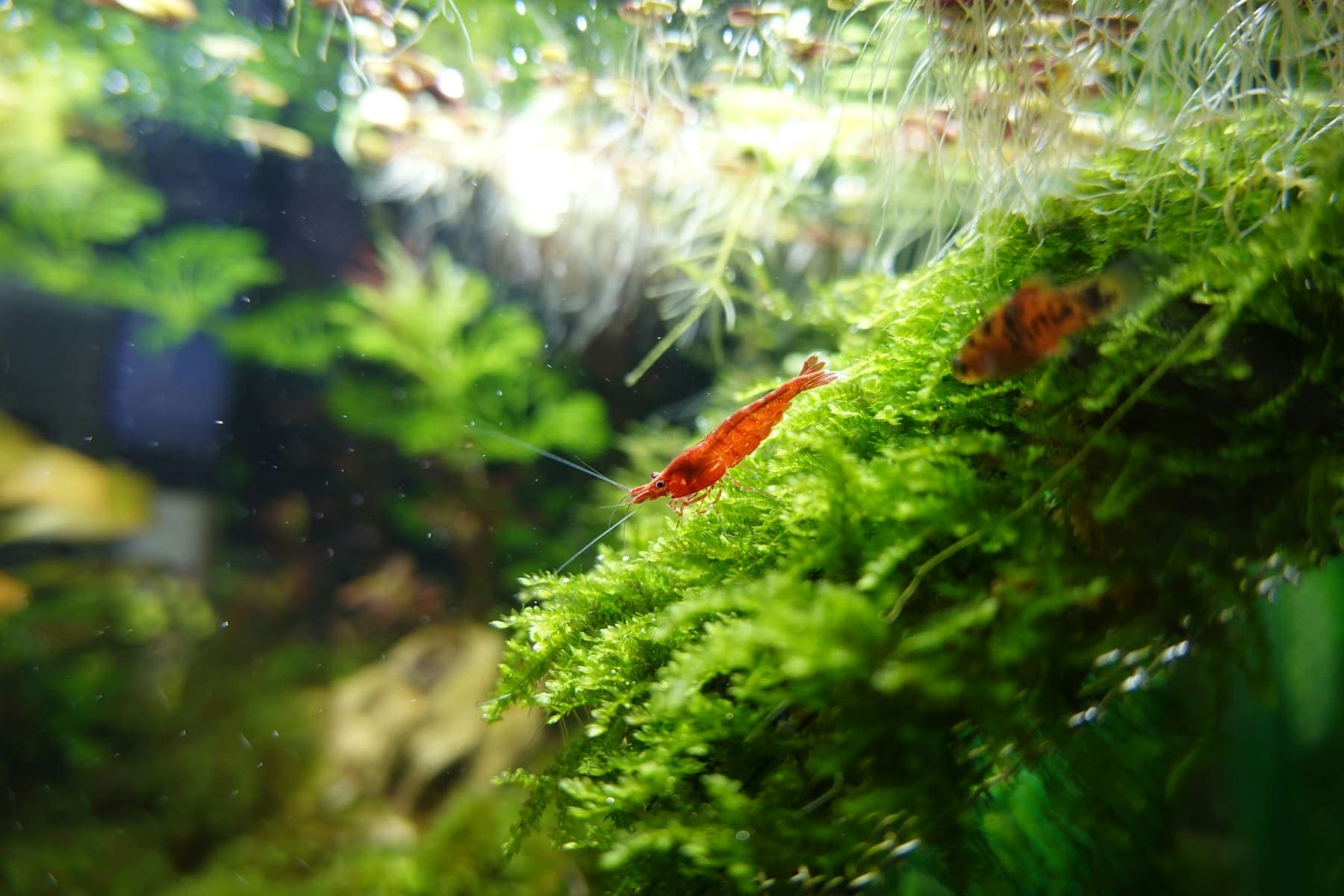
For Caridina ("Crystal Red", "Bee"), an active substrate is the norm. These shrimp live in soft, acidic water. According to its product sheet, SL-aqua More Nature Black Soil naturally lowers the pH and the KH, settling at a pH of between 5.5 and 6.5 depending on the starting water. The same sheet notes that it doesn't suit fish or shrimp that need a high pH.
For Neocaridina ("Red Cherry", "Blue Dream"), an active substrate isn't necessary. These shrimp do well in water close to neutral, often conditioned tap water. A standard nutrient-rich soil or an inert substrate both suit them. Our comparison Neocaridina or Caridina sets out the differences, and our guide which shrimp for a nano aquarium helps you choose the species.
In both cases, choose a substrate with fairly fine grains: young shrimp find biofilm to graze on in it.
What depth of substrate should you plan for?
There's no single depth, but manufacturers give some benchmarks:
- nutrient soil alone: Tropica gives the example of an 8 cm layer, and recommends building it up towards the back glass;
- active substrate for shrimp: SL-aqua recommends at least 4 cm of its soil;
- inert substrate over a nutrient layer: 1 cm of nutrient substrate according to Tropica, topped with at least 4 cm of gravel.
To work out the quantity, Tropica gives a formula: length × width × depth, in centimetres, divided by 1,000, gives the volume in litres.
- a 30 × 30 cm cube with an average of 5 cm: 4.5 litres;
- a 60 × 30 cm tank with an average of 5 cm: 9 litres;
- the same tank with an average of 8 cm: 14.4 litres.
Plan for a bit more than the calculation if you want a pronounced slope: the substrate built up at the back uses up volume quickly.
The kit
Tropica Aquarium Soil is used on its own, in a thicker layer at the back. It's the substrate we use for a first aquascape.
SL-aqua More Nature Black Soil is designed for freshwater, acidic shrimp tanks. Keep it for species that need those conditions.
You'll find substrates, rocks and tools in our aquascaping section.
How do you refill the tank without disturbing the substrate?
- Lay the substrate dry, sloped, then add the rock and wood.
- Dampen the substrate with a mister, without soaking it.
- Plant with very little water. Tropica recommends leaving just a few centimetres of water in the bottom and misting the plants while you work.
- Fill very slowly, pouring the water onto a plate, a plastic bag or a sheet laid on the substrate. The stream should never hit the substrate directly.
- Start the filter. Slightly cloudy water at the start is common. SL-aqua states that the cloudiness from its soil clears within a few hours with a filter running.
- Change the water often during the first weeks, following your substrate manufacturer's advice.
The tank must then go through the nitrogen cycle before any animals go in: our guide the nitrogen cycle, explained simply explains how to track it.
Common mistakes
- Adding a drainage layer under the substrate. An aquarium doesn't need one: a complete nutrient soil is used on its own.
- Choosing an active substrate for Neocaridina in hard water. It brings them nothing.
- An inert substrate with no supplement at all. Rooted plants starve within a few months.
- Vacuuming deep into the substrate. You stir up the nutrients and cloud the water. Clean the surface only.
- Adding animals as soon as it's filled. A new substrate changes the water for several weeks.
For the next step of the project, read our guide aquascape in a 20 to 30 litre nano aquarium.
Sources
Frequently asked questions
Can you put sand in a planted aquarium?
Yes. Sand doesn't feed the plants: place a nutrient layer underneath, or push root fertilisers in at the base of hungry plants. Anubias, ferns and mosses attached to rock don't need it at all.
How long does a nutrient-rich aquarium substrate last?
It depends on the product and the number of plants. SL-aqua, for example, states its soil supplies nutrients for the first six months. Once growth slows, add a suitable fertiliser.
Do you need to change a planted aquarium's substrate once it's spent?
It isn't necessary. A spent substrate still supports the roots and the bacteria. Root fertilisers and a liquid fertiliser are enough to feed the plants, without stripping the tank down.
Is a nutrient-rich substrate dangerous for fish?
No, once the tank has cycled. A new substrate changes the water for several weeks, and it lowers the pH: check that this suits the species you plan to keep before adding them.