Low-light terrarium plants: the ones that cope far from a window
A north-facing room, a hallway, a desk far from the glass: terrarium plants that tolerate low light, the ones that do not survive there, and when to add an LED.
In this guide
Far from a window, moss is the safest terrarium plant. Small ferns and selaginella come right after: they naturally grow in the shade of trees. Fittonia copes with medium light, not with a dark corner. Succulents and cacti do not survive without sun. If the room stays dark even at midday, a grow light becomes essential.
How much light, exactly
The eye adapts and deceives: a room that looks bright to us can be dark for a plant. Light drops very quickly as you move away from the glass.
| Location | Light for a plant | What lives under glass |
|---|---|---|
| Near an east or west window | Bright, no direct sun | Almost everything, except succulents |
| Near a north window | Medium | Mosses, ferns, selaginella, fittonia |
| 2 or 3 m from a window | Low | Mosses, ferns |
| Hallway, windowless bathroom | Very low | Nothing without a lamp |
Our tool to measure the light from a window helps you rate a spot.
Plants that tolerate low light
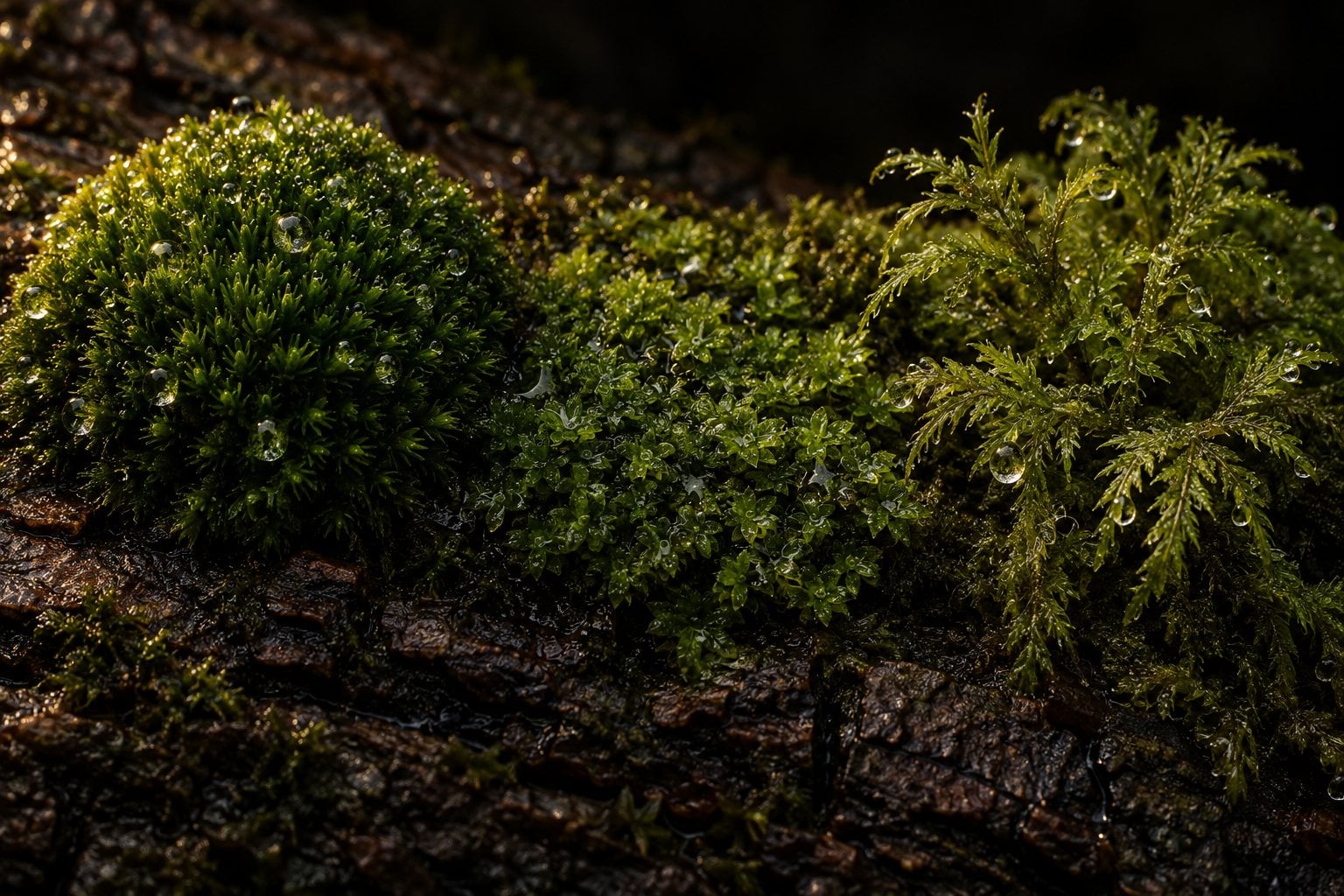
- Mosses. Cushion or flat, they naturally live in woodland. They turn brown if light is really lacking, but hold on where others give up.
- Small ferns. They like the humidity of a closed jar and soft light. Allow for a large container: some spread out.
- Selaginella. Close to ferns, it forms a dense, bright green carpet in the shade.
- Fittonia. It tolerates medium light. In the dark, its stems stretch and its colours fade.
Our profile of terrarium ferns covers the species.
Plants to avoid far from a window
- Succulents and cacti: without sun, they stretch and rot.
- Ficus ginseng: it loses its leaves when light is lacking.
- Plants with bright coloured foliage, such as hypoestes: their spots fade.
The moss terrarium, the answer for dark rooms
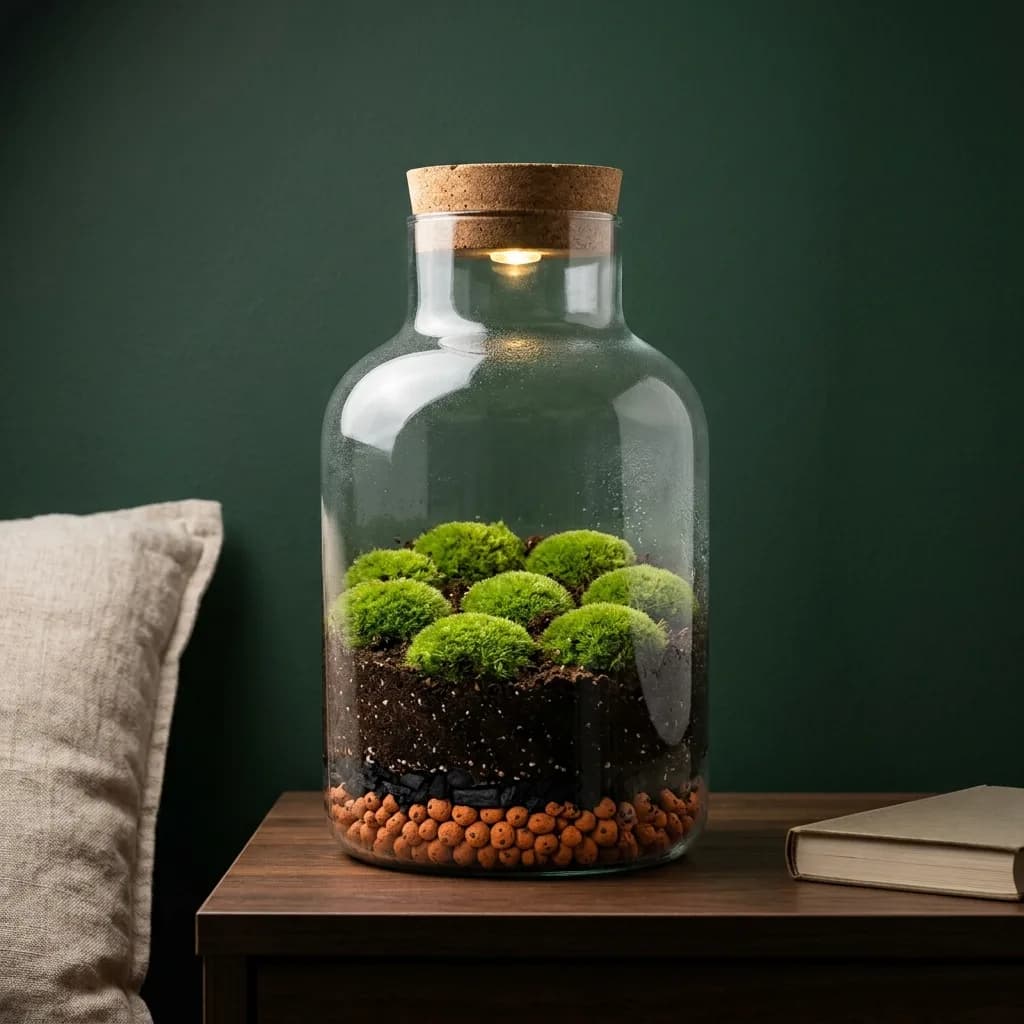
An all-moss closed terrarium is the most tolerant. Our Mousse & lumière kit combines eight cushions of live moss and an LED cork that shows off the jar in the evening.
Note that a cork LED is mood lighting: see how many hours to leave an LED cork on.
Signs of a lack of light
- Stems stretching and leaning towards the glass.
- Smaller, paler leaves on new growth.
- Moss turning brown in patches, without excess water.
- No condensation at all for days, because the plant barely transpires any more.
At the first sign, move the jar closer to the window. Turn it a quarter turn each week so growth stays straight.
Adding a lamp
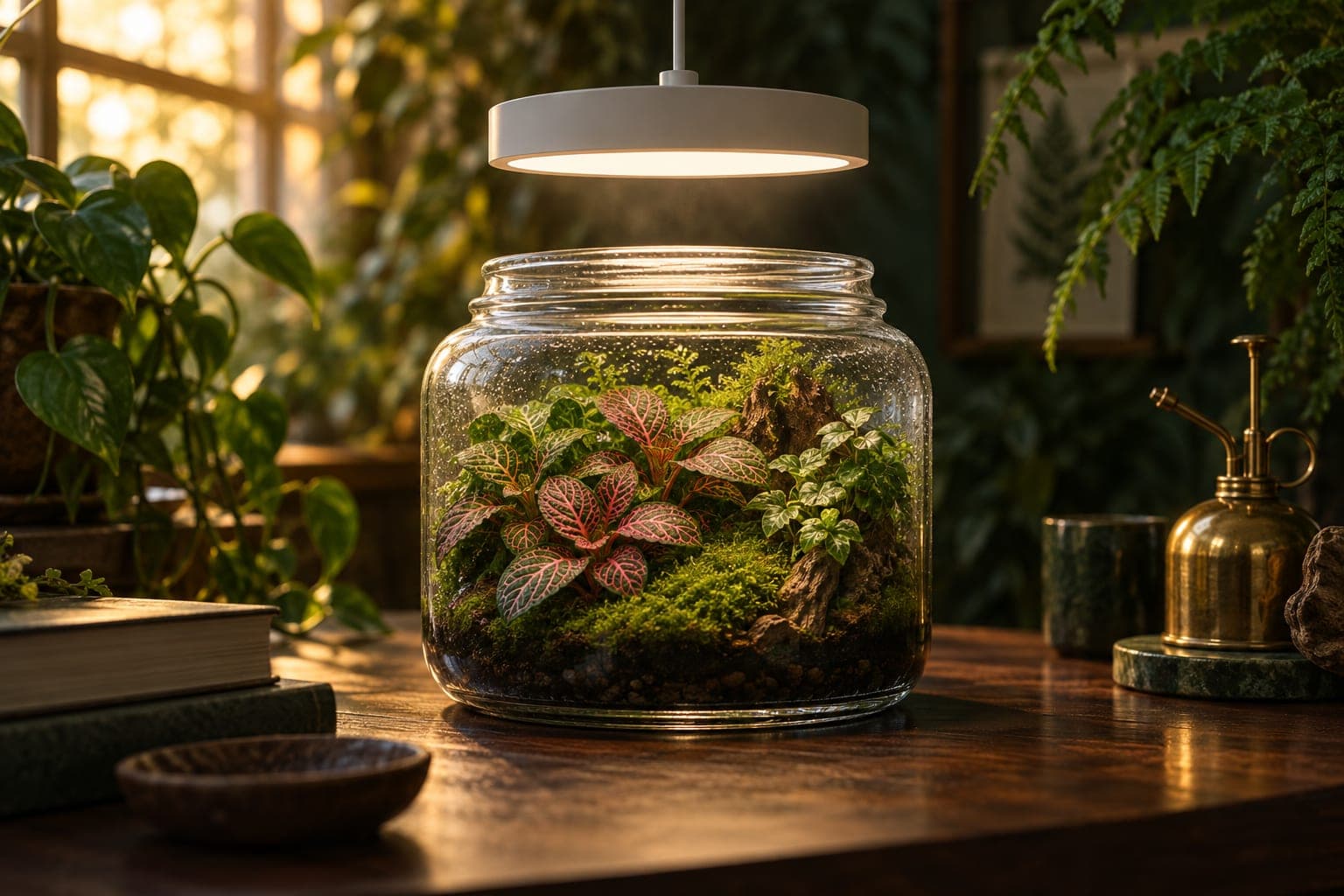
When no spot works, a grow light placed 20 to 30 cm above the jar replaces the window. Switched on 8 to 12 hours a day, it even allows a fittonia in a windowless bathroom. The setup is explained in lighting a terrarium.
In short
- Mosses, ferns and selaginella: the champions of low light.
- Fittonia: medium light, not a dark corner.
- Succulents, cacti and ficus: never far from a window.
- In a windowless room, a grow light is essential.
Sources
- Royal Horticultural Society (RHS), advice on light for houseplants and shade plants.
Frequently asked questions
Which terrarium plant copes best with shade?
Mosses, first of all. Next come small ferns and selaginella, which naturally grow under trees. Fittonia tolerates medium light but gets leggy in a dark corner.
Can a terrarium live without natural light?
Yes, if it gets enough artificial light. A grow light switched on 8 to 12 hours a day replaces a window. A simple decorative LED cork is not enough for leafy plants.
How far from a window should a terrarium be?
In a north-facing room, as close to the glass as possible. With an east or west window, one to two metres away. Facing south, keep it out of direct sun, which overheats the glass. More than three metres from a window, the light drops sharply.