




Aquascaping
Rocks, driftwood, substrates and tools for structuring an aquatic landscape: the hardscape needed to compose an aquascape.
Aquascaping: our advice
Building the structure of your aquatic landscape
In aquascaping, everything starts with the hardscape: the rocks, the driftwood and the shape of the substrate. This structure gives the landscape its form, well before the plants grow in. A good composition is built outside the water, moving the stones around until you find a line that guides the eye.
Choose inert rocks if you want to keep soft water, and rinse them before use. Driftwood needs soaking for several days, sometimes one to two weeks, to sink and release some of its tannins, which tint the water amber with no danger. As for the substrate, a nutrient-rich substrate feeds rooted plants; inert gravel suits plants attached to the décor.
Long tweezers and curved scissors make planting precise, even in a small tank. For the full method, from composition to filling with water, read Getting started with aquascaping, then follow the My first aquascape project.
The hardscape comes first
In aquascaping, hardscape refers to all the inert elements that form the landscape's structure: rocks, driftwood and substrate. It's composed before the plants go in, in an empty tank, taking the time to try several arrangements. One useful rule: a main stone clearly larger than the others, placed slightly off-centre, then secondary stones oriented the same way.
Choosing your rocks
Not all rocks behave the same way in water. Limestone rocks raise hardness and pH, which can bother certain plants and shrimp. A simple test: put a few drops of white vinegar on the dry rock; if it fizzes, it contains limestone. Inert rocks, such as Dragon Stone, suit most projects. Rinse them thoroughly before use.
Driftwood and wood
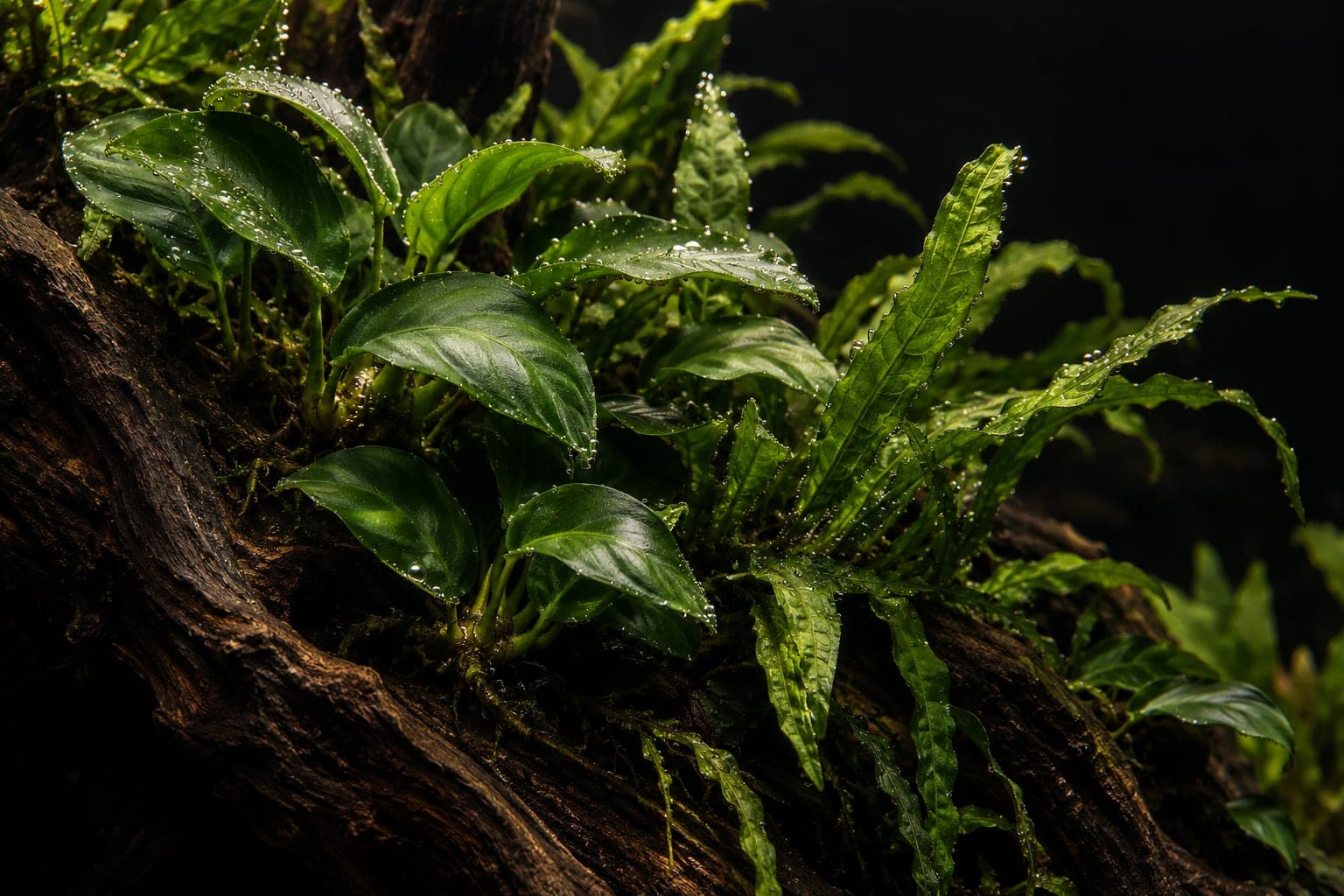
Driftwood adds vertical lines and an ideal support for attaching mosses and anubias. It releases tannins that tint the water amber: soaking for one to two weeks, with regular water changes, limits this effect. A whitish film can appear on the wood in the first few weeks; it's harmless and usually disappears on its own.
Nutrient-rich or inert substrate
A nutrient-rich substrate encourages rooting and slightly lowers pH and carbonate hardness. Inert gravel doesn't change the water and suits lightly planted tanks or plants attached to the décor. Allow 3 to 5 cm at the front and more at the back to create depth.
The right tools
Long tweezers let you plant without disturbing the substrate, and curved scissors trim carpets flush.
FAQ
Questions about aquascaping
Do I need to boil driftwood before submerging it?
It isn't compulsory. Soaking for one to two weeks is enough to make it sink and remove some of the tannins. Boiling a small piece simply speeds up the process.
How much substrate should I allow for?
Multiply the tank's length by its width and by the desired average depth, in centimetres, then divide by 1,000 to get litres. For a 60 × 30 cm tank with a 5 cm average depth, you need around 9 litres.
How can I tell if a rock will change the water?
Do the white vinegar test on the dry rock: fizzing indicates the presence of limestone. If in doubt, measure the water hardness in a bucket containing the rock for a few days.