




Aquatic plants
Easy plants, foreground carpets, mosses and floating plants for planting up an aquarium, from a nano tank to a large aquascape.
Aquatic plants: our advice
Aquatic plants that grow with no technique required
Plants are the heart of a balanced aquarium. They use up the nutrients from waste, oxygenate the water during the day and compete directly with algae. A tank that's well planted from the start gets through its first few weeks far more smoothly than an almost bare one.
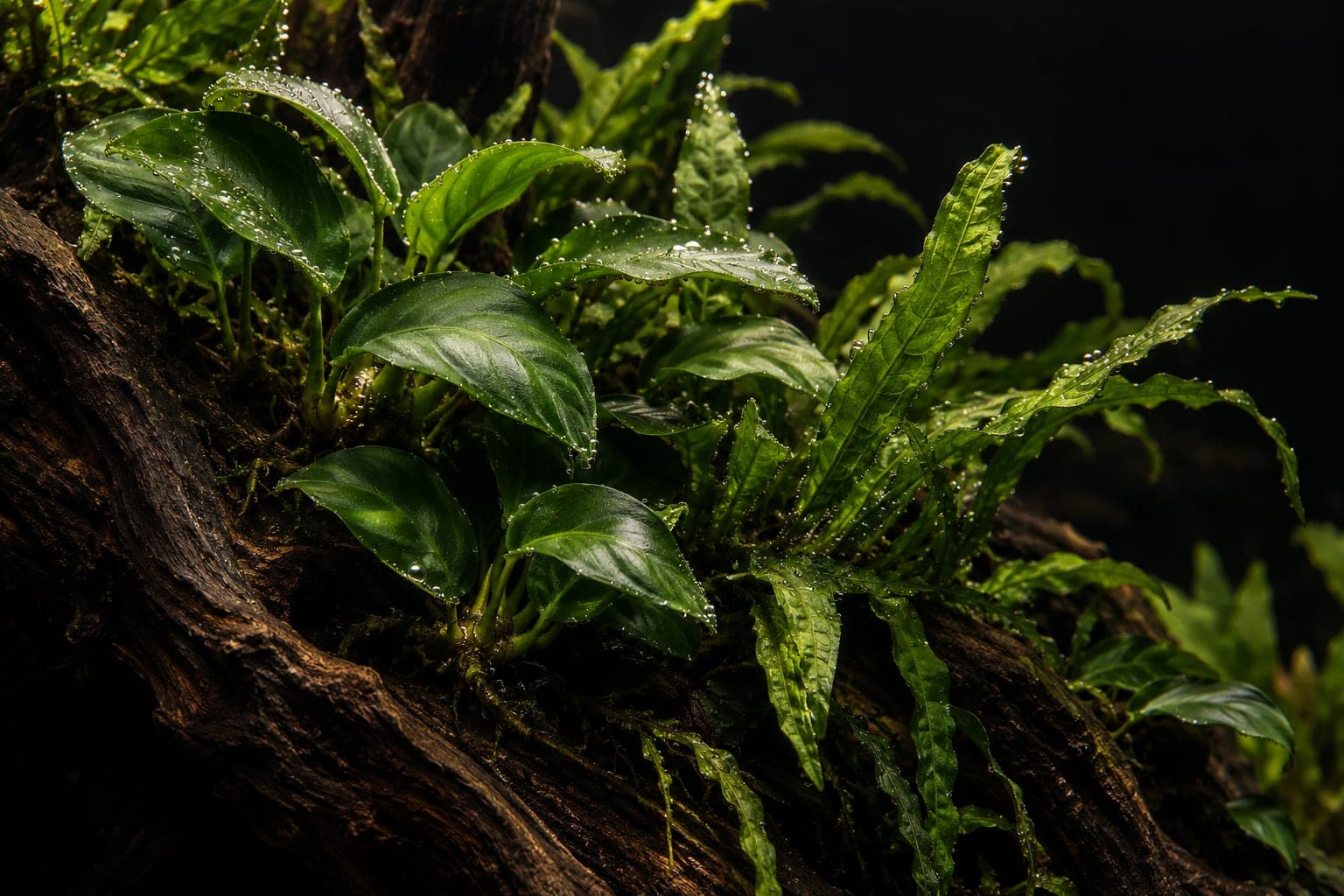
To start, choose hardy species that are happy with moderate lighting and no CO₂ injection: anubias and mosses, attached to a rock or a piece of driftwood, and floating plants that filter the light. They grow slowly but forgive mistakes. Foreground carpeting plants, often sold as tissue culture, give a striking lawn effect, but need more light, more consistency and, most often, CO₂.
Plant densely as soon as you fill the tank, trim regularly and remove damaged leaves. If algae settle in despite this, our guide to algae in nano aquariums helps you find the cause. The My first aquascape project offers a selection of easy plants that work well together.
Starting with hardy plants
For a first planted aquarium, choose tolerant species: anubias, Java fern, cryptocorynes or mosses. They're happy with moderate lighting, grow without CO₂ injection and can handle some fluctuation. The "First aquascape" collection brings together this type of plant, chosen to complement each other.
Attached plants and rooted plants
Anubias and ferns are epiphytes: their rhizome must not be buried, or it will rot. Attach them to a rock or a piece of driftwood with cotton thread or a cyanoacrylate gel glue. Rooted plants, by contrast, are planted in the substrate, ideally a nutrient-rich one.
The foreground, a more technical step
Foreground carpets, such as Monte Carlo or Eleocharis, create the lawn effect sought after in aquascaping. They need more light, a nutrient-rich substrate and, most often, added CO₂ to fill in densely. Tissue-culture plants, grown in a lab, arrive with no snails or algae: a good way to start off clean.
Mosses and floating plants
Mosses dress driftwood and rocks, and offer a valuable shelter for young shrimp. Floating plants use up some of the water's nutrients, which helps limit algae, and filter the light. Don't cover the whole surface: the plants below would be deprived of it.
When the plants arrive
Rinse the plants, remove damaged leaves and plant them promptly. A slowdown in growth for a few weeks is normal, while they adapt. Cryptocorynes sometimes lose their leaves after planting: leave the plant in place, they usually bounce back.
FAQ
Questions about aquatic plants
Do I need to fertilise a planted aquarium?
With a nutrient-rich substrate, this generally isn't necessary for the first few months. After that, a liquid fertiliser dosed sparingly sustains growth. If you keep shrimp, choose a copper-free fertiliser.
How do I attach moss or an anubias to a piece of driftwood?
Use cotton thread, which will eventually break down once the plant has taken hold, or a few dabs of cyanoacrylate gel glue applied outside the water onto a dried surface.
Are tissue-culture plants more difficult?
No. Rinse the culture gel thoroughly, divide the clump into small portions and plant them with tweezers. They simply need a few weeks to adapt to the aquarium's water.